Author Archives: Admin User

Person cleaning animal feed bowls

Government-Funded Animal Care Apprenticeships Explained

Recruiting skilled, committed staff in the animal care sector has never been more important — but it doesn’t have to come with a high upfront cost. Training an animal care apprentice through The College of Animal Welfare allows employers to grow their workforce while benefiting from significant government funding and financial incentives.

Apprenticeships: a cost-effective recruitment route

Animal care apprenticeships are government-funded training programmes designed to help employers develop staff with the exact skills their business needs. Whether you run an animal rescue, boarding kennels, doggy day care centre, zoo, or city farm, for example, apprenticeships allow you to invest in your future workforce while keeping costs manageable.

For most animal care employers in England, the government covers mostand sometimes all — of the training costs.

What financial help is available?

The funding that is available depends on your organisation and circumstances, but may include:

  • Government-funded training
    Most small and medium employers (SMEs) will only be required to pay 5% of the apprenticeship training costs, and it may be even free for those aged 16-21 years of age.
  • £1,000 financial incentive payment
    Employers training an apprentice under 19 years of age will receive a £1,000 incentive.
  • No recruitment fees
    If you want to recruit a new apprentice, we can help you to do so for free by advertising your vacancy on the National Apprenticeship Service website. We can even filter applications and arrange interviews for you if you wish!

Level 2 and Level 3 Animal Care Apprenticeships

At The College of Animal Welfare we offer:

Both programmes are designed to build knowledge, practical competence, confidence, and professional behaviours relevant to the apprentice’s role.

We make funding simple

We understand that funding can sound complicated and that’s why we are here to help. Our funding team can help to:

  • Explain costs and funding availability clearly from the outset
  • Handle paperwork and funding processes
  • Ensure there are no hidden surprises

If you’re like a free, non-obligatory, chat please call our Client Advisor Team on 01480 422060 / email: admin@caw.ac.uk.

Please note that the information in this post is correct at the time of publishing and may be subject to change.

Team celebration

New ILM Modular Leadership and Management Courses Coming this Summer

The ILM have announced a shake up of its leadership and management courses for 2026; moving towards a much more modular, human-centred, and “future-ready” structure.  The new courses will be offered at levels 2 (team leaders), 3 (junior managers) and 5 (middle managers and department heads).

The big shift is to be modular and flexible with the new suite allowing for a “pick and mix” approach:

  • You can often take single modules as short courses (perfect for specific skills like “Handling Difficult Conversations”) and then stack them later toward a full qualification.
  • There is a heavy shift away from “essay-style” assignments toward portfolio-based assessments and real-world projects that prove you can actually do the job, not just write about it.

The new  Level 2: Team Leaders & Supervisors
Target Audience: New or aspiring team leaders/mentors.

  • Focusing on core foundational skills, the modules now lean heavily into communication, self-management, and motivating a small team.
  • There’s a greater emphasis on “Digital Literacy” and “Emotional Intelligence” even at this entry level, reflecting the need for team leaders to manage hybrid teams and wellbeing.

The Level 3: First-Line & Junior Managers
Targeted towards practising managers with some experience but no formal training.  You can choose modules specifically around managing change, budget pressures, or coaching.

The key update to this level is – it is designed to bridge the gap between “doing the work” and “leading the people.” It includes modules on data-driven decision making and inclusive leadership (EDI).

The all new Level 5: Middle Managers & Department Heads
Targeting managers responsible for substantial resources, multiple teams, or project leaders. Focusing on the strategic insight and “Human-Centered Leadership.”  This level is now high-level (equivalent to the 2nd year of a degree). Key modules focus on:

  • Leading Innovation & Change: How to drive a department through volatile environments.
  • Strategic Planning: Looking at the “big picture” and organisational impact.
  • Action Learning: Using your own workplace challenges as the “module” itself to find solutions while you learn.

What’s “New” in the 2026 Content?

If you are looking at these now, you’ll see three major new threads woven through all modules:

  • AI & Automation: How to lead teams through digital transformation.
  • Hybrid Work: Managing performance when you aren’t in the same room as your team.
  • Wellbeing & Empathy: A shift from “command and control” to “support and empower.”

The Future of Leadership: The New ILM Modular Suite

The 2026 refresh of ILM Levels 2, 3, and 5 marks a significant shift from traditional “block learning” to a dynamic, modular approach. By moving toward stackable micro-credentials and portfolio-based evidence, the new suite ensures that leadership training is as agile as the modern workplace.

Key Takeaways

  • Flexibility First: The new modular structure allows for a “pick and mix” approach, enabling managers to target specific skills, like hybrid team management or digital literacy, exactly when they are needed.
  • Human-Centred Design: At every level, there is a renewed focus on Emotional Intelligence, wellbeing, and inclusive leadership, moving away from old-school “command and control” styles.
  • Future-Ready Skills: The updated curriculum directly addresses the 2026 landscape, including the ethical use of AI, navigating data-driven decision-making, and leading through environmental and organisational change.

Whether you are an aspiring team leader at Level 2 or a strategic head at Level 5, these updates ensure your management team remains equipped with globally recognised, practical expertise that translates directly into departmental success.

The College of Animal Welfare expect to be offering these new qualifications from Summer 2026. More details will follow.

Disability Confident Committed Logo

CAW Achieves Disability Confident Committed Status

We are delighted to share that we have officially achieved Disability Confident Committed status, the first level of the Disability Confident scheme. This is a meaningful milestone in how we continue to build an inclusive workplace where everyone can thrive.

What is Disability Confident?
Disability Confident is a Government initiative designed to support employers in improving how they recruit, retain and develop employees with disabilities or long-term health conditions. It is not about ticking a box, it’s about embedding thinking and behaviours that help every employee feel valued and empowered.

What Disability Confident Committed Means for Us

As a Disability Confident Committed employer, we have pledged to take deliberate actions to ensure our people practices are accessible, fair and supportive. This includes:

Inclusive Recruitment
We are reviewing and improving our recruitment processes to make them more accessible, using clear language and removing unnecessary barriers so that everyone can apply with confidence.

Accessible Job Advertising
We will make sure our job adverts communicate clearly that we’re committed to equality.

Interview Opportunities
Where candidates meet the minimum criteria, we will offer interviews to applicants who identify as disabled under the Disability Confident scheme, helping to give talented people the chance to shine.

Reasonable Adjustments
We will provide reasonable adjustments during recruitment and throughout employment, from adjusting interview arrangements to workplace changes, so people can perform at their best.

Supporting Colleagues Who Acquire a Disability
We have committed to supporting existing employees who develop a disability or long-term condition, helping them stay in work and feel supported through changes to roles, hours or working conditions where appropriate.

Laura Turnbull with dogs

Announcing the 2026 Laura Turnbull Bursary — Now Open for Applications

Applications for the 2026 Laura Turnbull Bursary, a £1,000 award established in loving memory of our inspirational alumna, Laura Turnbull, are now open. This bursary, co‑funded by Laura’s family and The College of Animal Welfare (CAW), seeks to carry forward her legacy by supporting innovative veterinary nursing projects.

Remembering Laura

Laura trained with CAW, qualifying in 2016 with the Best Final Year Veterinary Nursing Student Award. Midway through her studies, she faced a breast cancer diagnosis with courage and determination, continuing her studies and clinical work throughout treatment.

She went on to work internationally – improving veterinary standards, training teams, and delivering compassionate care, before joining Paragon Veterinary Referrals in Wakefield. Laura passed away in January 2023 at just 35, leaving behind a profound impact on her colleagues, patients, and the wider community.

Purpose and Impact of the Bursary

Established in Laura’s name, the bursary supports projects that reflected her passion and care for animals. These include:

  • Animal Research Projects: Encouraging innovative research to improve veterinary practices and animal welfare.
  • Community Outreach Projects: Supporting initiatives that promote veterinary nursing and animal welfare within local communities.
  • Alternative Medicine: Exploring and integrating alternative medical practices in veterinary care.
  • One Health Initiatives: Fostering interdisciplinary collaborations that benefit both human and animal health.

Who Can Apply?

The bursary is open to all current and former veterinary nursing students of The College of Animal Welfare. Applicants are invited to submit a project proposal and personal statement explaining how their work aligns with Laura’s values of dedication, compassion, and innovation. Applications are open until 30 September and an application form can be downloaded here. The winner will be announced at the College’s 2026 Student Awards Ceremony in November.

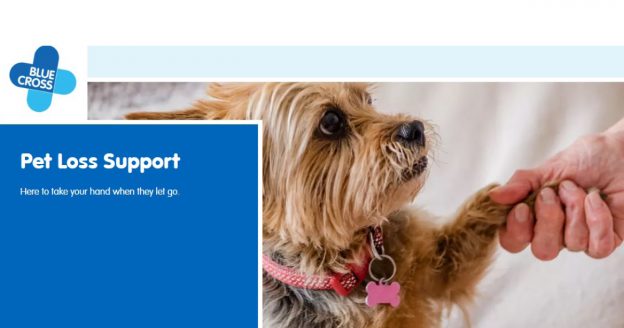
Yorkshire terrier with its paw in a man's hand

Volunteer Blog: Blue Cross Pet Loss Support

Gemma Binstead: Client Advisor
Blue Cross Pet Loss Support Volunteer

Recently we caught up with one of our Client Advisors here at The College of Animal Welfare, Gemma Binstead, to hear all about the volunteer work she does for the Blue Cross.


What inspired you to start volunteering, and how did you choose the organisation you work with?

My interest in pet loss and bereavement began during my PGDip and MSc in Companion Animal Behaviour Counselling, where my dissertation explored the strength of the human–animal bond and the impact of loss. This interest was deepened through my work in the veterinary sector and later at a pet crematorium, supporting clients facing euthanasia and bereavement, and through studying a diploma in companion animal bereavement counselling.  As with many animal lovers, I have also experienced the loss of beloved animals, so when I discovered that the Blue Cross Animal Charity offered a Pet Loss Support service, I knew I had to get involved.  I applied to become a helpline volunteer, was accepted, completed their specialist training course, and have now been volunteering on the helpline for a year and a half.

Can you tell us about the volunteering work you do and explain a bit about the organisation.

As a Blue Cross Pet Loss Support Volunteer, I work from home and complete a minimum of one three‑hour shift each week.  In this role, I answer calls from pet owners who are anticipating or have experienced the death or loss of their animal.  The helpline operates every day between 8.30am and 8.30pm and offers a free, confidential service.  Callers are welcome to contact the helpline as often as they need.

Blue Cross is a UK animal welfare charity founded in 1897 that helps sick, injured, and homeless pets, as well as the people who care for them. They provide veterinary treatment, rehoming services, behavioural support, and pet loss support to ensure pets enjoy a good quality of life at all times.  As well as becoming a pet loss support volunteer, Blue Cross offers a wide range of voluntary roles, including working directly with pets at their rehoming centres and veterinary practices, assisting in the charity shops, helping with horses, fostering animals, taking part in fundraising/events, and even flexible “bitesize” volunteering from home.  You can browse and apply for current opportunities through their dedicated volunteer webpage https://www.bluecross.org.uk/volunteer or you can call the customer care team on 0300 7909903.

What has been the most rewarding part of your volunteering experience so far?

Having experienced the loss of my own animals, I am able to empathise deeply with the thoughts and feelings callers bring to the service. Providing a safe, compassionate space where people can express their grief is so important, as pet loss is often a disenfranchised and misunderstood form of bereavement.  Many bereaved pet owners suppress their grief and receive far less support than those who have experienced the death of a human family member, partner, or close friend — such as sympathy cards, time off work, or practical help.  There are also no widely recognised or socially sanctioned rituals, such as funerals or ceremonies, which can help people say goodbye, mourn, and celebrate the life of their pet.

I find every shift deeply rewarding, particularly when callers sound noticeably less distressed by the end of the conversation and have begun to identify their own solutions and self-care strategies. By actively listening, validating their feelings, and supporting them as they explore ideas for tributes and memorials, volunteers can help them process and come to terms with their grief.

What skills have you developed through volunteering, and how have they helped you personally or professionally?

Through undertaking the training and taking calls, I have gained knowledge and skills in the causes and effects of pet loss, techniques for applying the person‑centred approach to emotional support, and how to recognise safeguarding concerns and respond both efficiently and effectively. I have also developed my ability to actively and empathetically listen, enhanced my self‑awareness, and learned the importance of self‑care — both for those grieving their pets and for myself as a supporter.

What advice would you give to someone who is thinking about volunteering but aren’t sure where to start?

If you are thinking about volunteering but aren’t sure where to start, I would suggest that you begin by considering the causes you care about and how much time you can realistically offer.  Research local or remote opportunities and try one that feels manageable.  Once you start, you will discover that volunteering doesn’t just help others, it also benefits you.  It is rewarding, can boost wellbeing, reduce stress, increase confidence, and help you feel more connected and purposeful.  The most important step is simply to begin and see how it feels.

Jenny Best and the Alzheimers Society Logo

Giving Back: A Volunteer Story

Jenny Best: Academic Advisor/Personal Tutor
Call Companion for the Alzheimer’s Society

Recently we caught up with Academic Advisor/Personal Tutor here at The College of Animal Welfare, Jenny Best, to hear all about the volunteer work she does for the Alzheimer’s society, we hope it inspires you to consider making a difference too.


What inspired you to start volunteering, and how did you choose the organisation you work with?
When I heard about this opportunity it was a no brainer for me as it is something that is very close to my heart and personal to me.  My dad had Alzheimer’s Disease for 11 years and my mum had vascular dementia for 4.5 years.  They were both suffering from these conditions at the same time, so I had two parents that both required very different care needs. I was the main point of contact and assisted with caring for them both at home. 

Seeing someone you love to deteriorate over a period of years was absolutely heart breaking, soul destroying and has changed me forever.  This is what inspired me to volunteer to help others by using my experience, knowledge and skills for a positive cause.  To be a lifeline at the end of the phone, to have someone that just knows what they are going through and understands. The Alzheimer’s Society provided me with lots of resources and support so I wanted to give this back.

Can you tell us about the volunteering work you do and explain a bit about the organisation?
There are currently 900,000 people living with dementia in Britain today and millions more caring for loved ones. Being a carer can be very isolating, emotionally and physically draining. By volunteering as a call companion this helps to contribute to alleviating the isolation and building meaningful connections with both carers & those with dementia. My role involves providing a warm, friendly and supportive chat to either a carer or to the person with dementia directly. It is a regular half hour scheduled telephone call usually weekly at a pre-arranged time. It is space to chat about their week, the weather, how they are feeling, a favourite TV show or whatever direction the call goes in.  Full training is provided for the role and regular check ins are provided with your call manager.   Volunteer must be at least 18 years of age.  If this is a role you would be interested in or would like more information, please contact the Alzheimer’s Society directly:

https://www.alzheimers.org.uk/get-support/companion-calls

What has been the most rewarding part of your volunteering experience so far?
Sharing experiences so the person at the end of the phone knows they are not alone and that some else understands and has been there.  There are laughs along the way, funny stories and sharing someone else’s journey for a little while.

What skills have you developed through volunteering, and how have they helped you personally or professionally?
I thought I was already a pretty good listener, but this really makes you listen to peoples stories, worries and concerns about their loved ones.  Learning how to be even more resilient as sometimes their stories bring up past memories for me. Developing a good sense of humour to laugh in times of hardship.

What advice would you give to someone who is thinking about volunteering but aren’t sure where to start?
Reach out to the Alzheimer’s Society and chat to them, they want the experience to be right for you too. They try you match you with someone that you have something in common with as a starting point for conversations. There are some case stories on the website too that you can watch and see if it might be for you.

https://www.alzheimers.org.uk/get-support/companion-calls

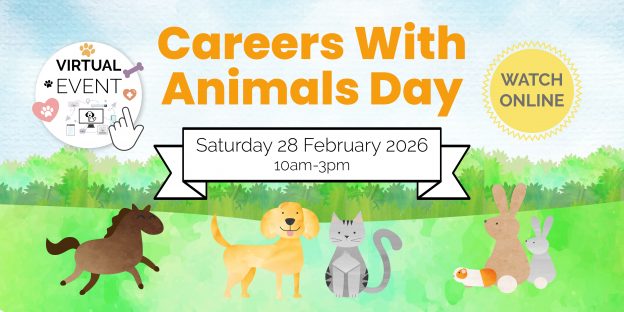
Decorative cartoon animals with a banner advertising careers with animals day 2026

Virtual Careers With Animals Day is back on Saturday 28 February 2026

If you’re looking for guidance about career and training options in the animal care and veterinary industry, there’s no better place to start than The College of Animal Welfare’s annual virtual Careers With Animals Day, taking place on Saturday 28 February 2026!

During this FREE, online event you’ll be able to listen to career talks from a range of fantastic industry organisations, ask questions and gain advice. You can join at any time from 10am-3pm on Saturday 28 February 2026.

This year’s event boasts another great line up of local and national speakers, including the Royal Veterinary College (RVC), The Horse Trust, Dog Centred Care, British Divers Marine Life Rescue – and many more! You can listen to a jam-packed timetable of careers talks being held throughout the day on careers ranging from veterinary nursing and dog behaviour to dog grooming and horse care. View the programme of career talks and speakers.

Whether you’re a school leaver working out what your next move is going to be, looking for a career change, or unemployed and eager to get back to work – everyone is welcome. The event will be taking place virtually, you can join at any time from 10am until 3pm on the day, and it is completely free!

Reserve your spot  

Substance misuse image

Stay Safe: Avoid Substance Abuse in College

College is an exciting time – new friends, new opportunities, and more independence. But with freedom comes responsibility, and one of the biggest risks to your health and future is substance abuse.

Why It Matters

  • Health Risks: Drugs and excessive alcohol can harm your body and mind.
  • Academic Impact: Missed classes and poor grades often follow substance misuse.
  • Legal Consequences: Possession or use of illegal substances can lead to serious trouble.

Smart Choices for a Safer College Life

  1. Know Your Limits: Do not feel pressured to experiment.
  2. Choose Positive Circles: Surround yourself with friends who respect your decisions.
  3. Plan Ahead: If you are going to social events, set boundaries and stick to them.
  4. Ask for Help: If you are struggling or feel pressured, reach out—support is available.

We are Here for You

Our college safeguarding strategy includes:

  • Confidential Support Services
  • Health and Wellbeing Programmes – While the holiday season can represent joy, gratitude and togetherness, it can also be associated with family and financial pressure, loneliness, anxiety and stress. These feelings can be difficult to cope with. If you need a little extra support for your mental health during this time, go to Togetherall and register for free. It’s available 24/7 and is a safe place to air your concerns, get things off your chest and connect with others that may be feeling just the way you do. Click here to find out more about Togetherall. 

Your safety matters. Make choices that protect your health, your future, and your goals. If you need help, you are never alone—reach out today.

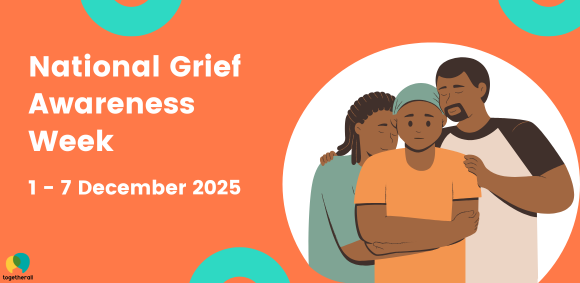
National Grief Awareness Week

National Grief Awareness Week: 2-8 December 2025

Grief is a universal experience, yet it remains one of the most difficult emotions to navigate. Losing a loved one can cause overwhelming sadness, anger, guilt, loneliness, and confusion, making support from others essential. While grief is commonly associated with the death of a loved one, it can also arise from other significant losses such as the end of a relationship, losing a job or major life changes. In this blog we will dive deeper into the importance of grief, how you can support those grieving and bereavement resources available.

Why is grief awareness week important?

  • Raising Awareness and education: It helps educate people on the impact of grief and how to offer meaningful support.
  • Encourages open and honest conversations about grief.
  • Provides support and resources: this week highlights the importance of seeking help and directs people towards support groups, counselling, and other resources.
  • Reminds us that grief has no timeline: Everyone grieves differently and there’s no “right” way to mourn. This week emphasises that healing takes time and cannot be rushed.

How you can support someone who’s grieving.

  • Check in regularly: even just a quick text or phone call can make a difference.
  • Acknowledge their loss but avoid saying phrases such as “They’re in a better place” or “Everything happens for a reason” as it feels dismissive and unhelpful.
  • Listen without judgment.
  • Offer practical help for example cooking meal, helping with errands, or assisting with daily tasks.
  • As mentioned before everybody grieves differently, some may want to talk while others need space, it’s important that you respect their needs.
  • Donate, fundraise or volunteer at bereavement charities so that can continue spreading awareness and support people going through grief.

Support and resources available for someone who is grieving:

  • Cruse Bereavement Support offers free information, advice, counselling, and support groups.
  • Citizens Advice have lots of information on wills, financial affairs, and funerals.
  • The NHS has information regarding what symptoms you should expect while grieving.
  • Marie Curie has a telephone bereavement support service.
  • Sue Ryder has an online bereavement community where you can ask questions, get support from other bereaved people, share your story, and offer advice and support to others. It has information, advice, and self-help tools to help deal with grief. As well as an online counselling service via video and text message.
  • AtaLoss has a free live chat with a bereavement counsellor.

In conclusion, national grief awareness week serves as a powerful reminder that grief is a shared human experience, and no one should have to navigate it alone. Whether you offer a listening ear, raise awareness, seek professional help, or donate/volunteer with bereavement charities every effort helps to make grief feel less isolating.

Support and resources for CAW students

As a student of The College of Animal Welfare, you get FREE access to a wide variety of resources and support via the togetherall app; there is a great short online course on how to cope with grief and loss. Togetherall also has forums so you can discuss any worries with others, and access trained counsellors 24/7. If you haven’t set up an account, you can do so FREE of charge with your CAW email address.

If you are struggling with your mental health or any aspect of college life, remember you can access up to six confidential counselling sessions free of charge: full details can be found here.

Laura Turnbull Bursary Winner 2025

Announcing the Winner of the 2025 Laura Turnbull Bursary

We are delighted to announce that Georgeanna Stephenson has been awarded the 2025 Laura Turnbull Bursary. The bursary was presented to Georgeanna at The College of Animal Welfare’s Student Awards Ceremony on Saturday 8 November.

We received a record number of applications this year, and we want to extend a heartfelt thank you to everyone who applied. The quality and passion demonstrated across all submissions were truly inspiring, making the selection process incredibly challenging.

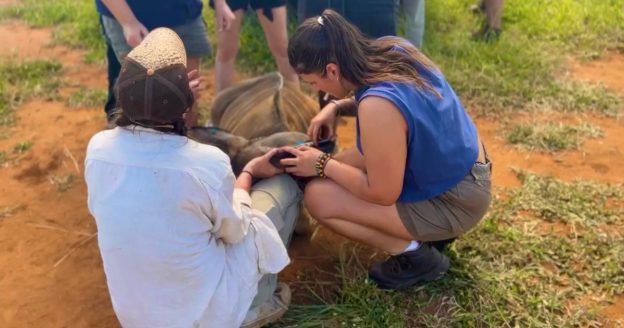
Georgeanna is a current Level 3 Diploma in Veterinary Nursing student whose dedication to animal welfare goes far beyond the classroom. Her application demonstrated exceptional commitment to veterinary nursing through years of volunteering in the UK and overseas, and future-focused aspirations, aiming to complete an intensive wildlife rehabilitation course in South Africa and ultimately dedicate her career to protecting and rehabilitating vulnerable species worldwide.

The judging panel felt that her passion for animal welfare and her determination to share knowledge truly reflect the values and legacy of Laura Turnbull.

Georgeanna will use the £1,000 bursary to return to South Africa next year, where she will continue her work in wildlife veterinary programmes and conservation projects. This experience will allow her to deepen her understanding of international animal welfare challenges and bring back valuable insights to inspire others in the veterinary nursing profession.

The programme Georgeanna will return to is Wildlife Adventure Africa. It is a wildlife veterinary programme run by an amazing family dedicated to conservation and restoring hope for all animals especially those in danger, in Limpopo South Africa. The programme is open to anyone with a passion to help animals and be educated in many ways from culture, wildlife, conservation, surviving in the bush, and generally being a part of the family and seeing the most amazing sights in South Africa in a truly breath taking and a one in a lifetime experience. One of Georgeana’s most memorable moments from a previous project was helping to dart a moving object out of a helicopter, followed closely by taking a bush walk alongside three gorgeous, orphaned cheetahs who love some attention but catch their own dinner in front of your eyes.

Georgeanna commented “Winning the bursary means a lot – not just for me, but for what the project stands for. It will give me the chance to grow as a vet nurse and to work with animals in a completely different environment. Knowing it’s in memory of Laura who cared so deeply about animal welfare and the dedication to really change the world, makes it even more special”.

The College and Laura’s family are delighted that the bursary will support Georgeanna on her journey and look forward to seeing the impact she will make in the field of veterinary nursing and wildlife conservation.

In addition to winning the bursary, Georgeanna has set up a fundraiser, to raise money and awareness for cancer research and to continue the sharing of Laura’s story and the bursary scheme  – https://fundraise.cancerresearchuk.org/page/wildlife-vet-nurse-for-breast-cancer-in-memory-of-laura-turnbull – please support her if you can.

Thank you again to all applicants for sharing your inspiring stories and ambitions. Laura Turnbull’s legacy lives on through your passion and dedication.