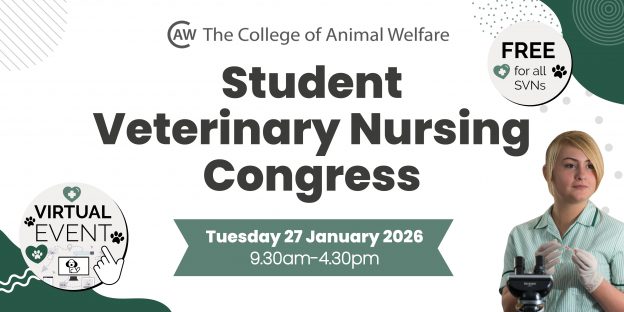
Student Veterinary Nursing Congress returns in January 2026
We’re pleased to announce that Student Veterinary Nursing Congress is back by popular demand and will be taking place on Tuesday 27 January 2026.
Student Veterinary Nursing (SVN) Congress is a free, virtual event specifically for veterinary nursing students. With its comprehensive programme, esteemed speakers, and the convenience of a virtual format, this congress provides an invaluable opportunity to advance your education, network with peers, and gain insights from leading industry professionals. Find out more and register for SVN Congress
5 lectures that support your veterinary nurse training
SVN Congress offers a well-rounded programme packed with informative sessions. From in-depth discussions on renal patient care to demystifying blood pressure monitoring, the event covers a wide range of topics useful to student veterinary nurses. Highlights also include sessions focused on recognising pain in cats, improving lives of rabbits and guinea pigs, and low stress handling approaches for canine patients.
Learn from expert speakers
Student Veterinary Nursing Congress 2026 boasts a fantastic lineup of expert speakers, who have all made significant contributions to veterinary nursing. These industry professionals will share their insights and experiences, as well as take part in live Q&A sessions to allow students to gain clarity on topics and receive personalised advice and guidance.
Here is what some of last year’s attendees most enjoyed about SVN Congress
“I enjoyed the interactive aspect of the expo, lecturers were very knowledgeable and gave me great insight”
“The variation of speaker topics, and the enthusiasm shown for particular areas discussed”
Register now to avoid missing out
SVN Congress is free of charge and is open to anyone currently studying Veterinary Nursing on a diploma, degree, or apprenticeship programme, including students currently training with other providers.
This event has limited capacity, and tickets are available on a first come first served basis, so we would recommend securing your spot ahead of time! Find out more and register for SVN Congress
Loans2Learn Now Available for All CAW Qualifications
We’re delighted to announce some exciting updates to our Loans2Learn scheme at The College of Animal Welfare (CAW).
Previously limited to certain courses, this funding option is now available for any qualification studied with us. That means no matter which programme you choose – from veterinary nursing to animal care, leadership and management, or beyond – you can spread the cost of your studies into manageable, affordable payments over a period of up to five years*.
We know that pursuing your career ambitions is a big commitment, both personally and financially. Loans2Learn helps to remove the financial barrier, allowing you to focus on gaining the skills and qualifications you need for the future. By extending this scheme across all of our qualifications, we hope to make education accessible to more learners than ever before.
* Please note the Learn2Loans scheme is only available to UK citizens who live in the UK and are aged 18 years or older.
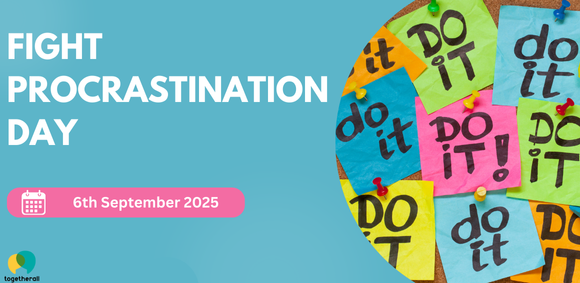
Fight Procrastination Day – 6th September 2025
We’ve all been there, deadlines looming, tasks piling up, and yet – somehow- you find yourself endlessly scrolling through social media or watching “just one more” episode. Sound familiar? If so, it’s time that you break free from that procrastination cycle by exploring why you procrastinate, how you can beat the habit and reclaim your time.
Why do we procrastinate? Understanding why you procrastinate is the first step to overcoming it. Procrastination is rarely as simple as just laziness, it has various underlying causes such as:
Fear of failure: the anxiety of not meeting expectations can cause us to avoid tasks completely.
Lack of motivation: if a task feels unimportant, boring, or tedious, we tend to put it off.
Perfectionism: the fear of not doing a task perfectly can make some people delay starting it altogether.
Feeling overwhelmed: when facing a big task, it can feel very daunting and overwhelming leading to avoidance.
Poor time management: without effective planning and prioritising, tasks can pile up, making it hard to even know where to begin.
Tips to overcome procrastination Now for the good part – how to actually fight procrastination! Here are some effective strategies:
Break it down: large tasks can feel daunting and overwhelming, try breaking them down into smaller, manageable tasks and tackle them one at a time.
Set clear goals and deadlines to help create a sense of urgency and direction.
Use the “eat the frog” method: do the most important or difficult task first thing, this way you’re less likely to procrastinate on it later.
Eliminate distractions by turning off your phone.
Try and figure out the root cause of your procrastination, in order to effectively solve or manage it.
Reward yourself – After completing a task, treat yourself to a break, snack, or time doing something you enjoy.
Most importantly don’t beat yourself up if you procrastinate, it’s a very common experience. Instead make sure to acknowledge it, learn from it and get back on track!
In conclusion, procrastination is a common but frustrating habit, one that 84% of people in the UK admit to struggling with. By understanding why, you procrastinate and using effective strategies to combat it, you can boost productivity and reduce stress. Start today by implementing these tips to build better habits for a more productive life!
Support and Resources for CAW Students As a student of The College of Animal Welfare, you get FREE access to a wide variety of resources and support via the togetherall app; there is a great short online course on how to stop procrastinating. Togetherall also has forums so you can discuss any worries with others, and access to trained counsellors 24/7. If you haven’t set up an account, you can do so FREE of charge with your CAW email address.
Announcing the 2025 Laura Turnbull Bursary — Now Open for Applications
Applications for the 2025 Laura Turnbull Bursary, a £1,000 award established in loving memory of our inspirational alumna, Laura Turnbull, are now open. This bursary, co‑funded by Laura’s family and The College of Animal Welfare (CAW), seeks to carry forward her legacy by supporting innovative veterinary nursing projects.
Remembering Laura
Laura trained with CAW, qualifying in 2016 with the Best Final Year Veterinary Nursing Student Award. Midway through her studies, she faced a breast cancer diagnosis with courage and determination, continuing her studies and clinical work throughout treatment.
She went on to work internationally – improving veterinary standards, training teams, and delivering compassionate care, before joining Paragon Veterinary Referrals in Wakefield. Laura passed away in January 2023 at just 35, leaving behind a profound impact on her colleagues, patients, and the wider community.
Purpose and Impact of the Bursary
Established in Laura’s name, the bursary supports projects that reflected her passion and care for animals. These include:
Animal Research Projects: Encouraging innovative research to improve veterinary practices and animal welfare.
Community Outreach Projects: Supporting initiatives that promote veterinary nursing and animal welfare within local communities.
Alternative Medicine: Exploring and integrating alternative medical practices in veterinary care.
One Health Initiatives: Fostering interdisciplinary collaborations that benefit both human and animal health.
Who Can Apply?
The bursary is open to all current and former veterinary nursing students of The College of Animal Welfare. Applicants are invited to submit a project proposal and personal statement explaining how their work aligns with Laura’s values of dedication, compassion, and innovation. Applications are open until 30 September and an application form can be downloaded here. The winner will be announced at the College’s 2025 Student Awards Ceremony.
We caught up with the winner of the 2024 bursary…
Middlesex VN Degree Ranked Best in UK – Two Years Running!
For the second year running the Middlesex University/The College of Animal Welfare collaborative BSc (Hons) Degree in Veterinary Nursing has been ranked Number One in the UK in the 2025 National Student Survey (NSS) results.
This amazing achievement is a glowing endorsement of the programmes’ continuing commitment to academic excellence, student support, and the preparation of student veterinary nurses for clinical practice using cutting edge learning techniques and technologies, such as virtual reality.
The programme received exceptional positivity scores (all well above the Office for Students national benchmark) across all key areas of the survey.
The numbers speak for themselves…
Teaching on my course: 98%
Learning opportunities: 94.5%
Assessment and feedback: 91.9%
Academic support: 97.3%
Organisation and management: 87.8%
Learning resources: 92.8%
Student voice: 95.5%
Students’ Union: 91.7%
Mental wellbeing services: 89.2%
Programme Leader, Claire Defries, shared her excitement: “We are absolutely thrilled to retain our position as the top rated NSS veterinary nursing programme in the UK.” She added, “This incredible achievement reflects the dedication of the entire programme team and unwavering passion and commitment of our students. We are committed to continuing to provide an outstanding learning experience that prepares our graduates to thrive in a rewarding and vital profession”.
A huge thank you goes to our students who took the time to share their voices in the survey. Their feedback drives our programme forward and helps us continue to lead the way in veterinary nursing education across the UK.
Empathy or Sympathy and which is right at work?
Empathy and sympathy are often used interchangeably, but they represent different ways of relating to others’ emotions and experiences. Understanding the distinction between the two is crucial for fostering genuine connections and support, especially in the workplace.
Empathy involves understanding and sharing the feelings of another person. It requires stepping into their shoes, acknowledging their emotions, and validating their experiences without necessarily sharing those same feelings. Empathy is about connecting with others on an emotional level and demonstrating genuine care and concern for their well-being.
Sympathy, on the other hand, involves feeling sorry or pity for someone else’s hardships or misfortunes. While sympathy acknowledges the other person’s emotions, it may not necessarily involve understanding or sharing those feelings. Sympathy often comes from a place of compassion but may lack the depth of emotional connection that empathy entails.
Why empathy matters at work
In the workplace, showing empathy rather than sympathy can foster stronger relationships, increase trust, and enhance team dynamics. Here are some ways to demonstrate empathy at work:
Active Listening: Practice active listening by giving your full attention to the speaker, maintaining eye contact, and nodding or providing verbal affirmations to show that you are engaged and understanding their perspective.
Validate Emotions: Acknowledge the other person’s feelings and experiences without judgment. Let them know that their emotions are valid and that you understand why they feel the way they do.
Express Understanding: Communicate empathy by expressing understanding and empathy for the other person’s situation. Use phrases such as “I can imagine that must be difficult for you” or “It sounds like you’re feeling overwhelmed, and I’m here to support you.”
Offer Support: Show genuine concern for the other person’s well-being and offer support in any way you can. This could involve asking how you can help, offering to lend a listening ear, or providing practical assistance with their workload.
Share Similar Experiences: If appropriate, share your own experiences or emotions that relate to the other person’s situation. This can help them feel less alone and validate their feelings, knowing that others have been through similar challenges.
Respect Boundaries: Respect the other person’s boundaries and preferences when offering support. Some individuals may prefer to process their emotions privately, while others may appreciate having someone to talk to. Be mindful of their comfort level and follow their lead.
Follow Up: Show ongoing support and empathy by following up with the person after the initial conversation. Check in periodically to see how they’re doing and offer continued support as needed.
By practicing empathy at work, you can create a more supportive and compassionate work environment where employees feel valued, understood, and cared for. This can lead to stronger relationships, improved morale, and increased productivity among team members.
Want to lead with empathy?
If you’re in a leadership role—or aiming for one—developing your emotional intelligence is key. Our leadership and management courses, accredited by the Institute of Leadership and Management (ILM) and offered at levels 3 and 5, will enable you to take better advantage of opportunities for development, build your confidence and develop your leadership skills and capabilities.
Whether you are a current leader looking to refine your skills or an aspiring leader aiming to make a successful transition, our courses offer the support and training you need. Our courses offer a flexible and convenient online learning experience, designed to fit around your busy schedule. Live online taught sessions are complemented with online course materials that will enhance your skills and confidence in making strategic management decisions, elevating your professional status as an effective leader and manager.
You could complete an online ILM Level 3 Award in Leadership and Management in just 12 weeks!
Whether you’ve recently stepped into a supervisory role or want to build your confidence and skills to move into a management position in the future, the ILM Level 3 Award in Leadership and Management is your ideal starting point.
Designed to equip you with practical leadership skills and real-world management strategies, ILM qualifications are respected by employers around the world – ideal for anyone aiming to progress as a leader or manager. An affordable and achievable introduction to leadership and management training.
Not quite ready to commit to a course yet? We have a number of shorter resources available to you.
Power Up Newsletter – leadership tips and insights, practical strategies, resources, news and more direct to your inbox. Subscribe here.
Free management resources for veterinary practice staff – helping you lead with confidence and clarity.
Whether you’re leading a team or aspiring to, empathy is your superpower. Start building it today—with our support.
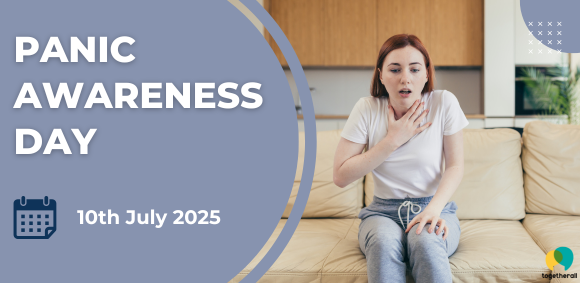
Panic Awareness Day: 10 July 2025
Panic Awareness Day, observed annually on the 10th of July, is dedicated to raising awareness about panic disorders and attacks, conditions that affect millions worldwide but is often misunderstood. This crucial day aims to reduce stigma, promote mental health resources, and educate people on how to manage panic attacks and support others who experience them.
What is a panic disorder? A panic disorder is a type of anxiety disorder where you have recurrent and unexpected panic attacks. A panic attack is a sudden episode of intense of fear/anxiety and is often accompanied by physical symptoms such as:
A racing heartbeat
Shortness of breath
Dizziness
Sweating
Trembling
Numbness or tingling
Chest pain
Nausea
Muscle tension
Dissociation
Many people describe the feeling as if they are losing control or even having a heart attack. These attacks can occur without warning and sometimes without any identifiable triggers.
The impact a panic disorder can have on somebody The effects of a panic disorder extend far beyond just the attacks, people with this disorder often avoid certain events, places, and situations where they might experience an attack. This avoidance can significantly impact their daily lives and limit their activities, leading to feelings of isolation and frustration.
Here are some techniques that you could use to help manage and cope with panic attacks:
Breathing exercises: one of the quickest ways to calm down during a panic attack is to try focusing on your breathing. You could use apps like Calm and Headspace to guide you through deep breathing exercises and meditation.
Cognitive Behavioural Therapy (CBT): is a talking therapy that can help you manage your problems by changing the way you think and feel.
Physical Exercise: regular physical activity can help reduce anxiety levels and improve overall mental health.
Medication: you can be prescribed anti-anxiety medication or antidepressants by your doctor to help this condition.
Try doing some yoga to help you relax.
Support groups: it might be nice to connect with other people either online or in your local area that are going through the same thing as you.
How you can get involved
Educate yourself: Learn more about panic disorders and how to support those who experience them.
Spread awareness: share information about panic disorders and attacks by having open conversations with people around you or via social media.
Donate: support mental health organisations that provide resources and support for individuals with panic disorders.
Support others that are affected by panic by being nonjudgmental and offering a listening ear.
In conclusion, panic awareness day provides a platform to educate the public and support those affected by panic disorders and attacks. By raising awareness and understanding we can help reduce the stigma and misconceptions that surrounds this condition, therefore empowering individuals to seek help, manage symptoms and improve their overall wellbeing.
Support and Resources for CAW Students As a student of The College of Animal Welfare, you get FREE access to a wide variety of resources and support via the togetherall app; there is a great short online course on how to manage panic. Togetherall also has forums so you can discuss any worries with others, and access to trained counsellors 24/7. If you haven’t set up an account, you can do so FREE of charge with your CAW email address.
If you are struggling with your mental health or any aspect of college life, remember you can access up to six confidential counselling sessions free of charge: full details can be found here.
My experience of working as an RVN with a chronic disability and neurodivergence
Zoé Langley RVN ISFMCertFN
I’ll start off by saying, not every neurodivergent or disabled person has the same experiences or faces the same barriers, this is just my experience training and working as an RVN with Autism and Fibromyalgia Syndrome (FMS).
I received a workplace diagnosis for Autism in May 2024, as is often the experience for people seeking a neurodiversity diagnosis in the UK, I have not been able to reach the stage of diagnosis with the NHS.
Growing up, I was the typical “Gifted Child” who was more mature than her age. Despite this, I often found I had difficulties engaging with my peers and forming friendships. I felt weird, like an outsider or alien, speaking a different language to those around me. Having not been considered for an autism assessment, as a “normal presenting” child, I had no idea why I could not, no matter how hard I tried, form lasting friendships with my peers, and later, colleagues.
Diagnosing Autism Spectrum Disorder (ASD) in women is very different to assessing a male, and ASD is underdiagnosed in the female population in both the USA and the UK. So, although ASD Diagnosis is improving, as a child in the 1990s I would not have been considered a candidate for diagnosis. This has led to the term “Lost Girls” being coined on social media – referring to the female population with undiagnosed ASD in childhood who are now identifying themselves or receiving a diagnosis in adulthood.
As an adult, I am quite open to discussing how Autism effects my sense of identity, how it created barriers and limitations in day-to-day life, but also the benefits to having a brain that is “wired differently”. However, there is still a persistent stigma around those with ASD. Female Autistics often face the same kind of response after they identify themselves, “You don’t look autistic” or “You talk too much to be autistic”. Whilst these comments are often meant in good faith, reassuring us that we can’t possibly be autistic because we’re too normal, these comments can be hurtful to hear as it feels like our identity is being questioned. I can only speak for my experience as a female autistic, but I can pass as a “normal person”. Although, this takes a lot of effort and has been ingrained in my personality since childhood.
A common term in neurodivergent circles is the term “masking”, this refers to a tendency to create personalities shaped by the environment you are in. There is a mask to be worn for every occasion.
With family, the devoted daughter who has no strong opinions on anything mask comes on.
In nurse clinics, the “Professional RVN” mask comes on.
In a clinic setting the “Friend and colleague” who can rapidly adapt to change and meet daily practice requirements comes on.
Masking takes constant cognitive effort to maintain, and in the veterinary environment, which can also be physically and mentally exhausting, I would often come home exhausted and occasionally non-verbal. When I’m at home or with close friends, I can allow my mask to come off, allowing those people I trust to see who I truly am. I now have some very close friends, some also ND, who WANT to spend time with me – not a mask – me! If you had told me when I was in secondary school I would have best friends who actively seek my company, and not just third-wheeling a friend group, I would have told you that you were lying.
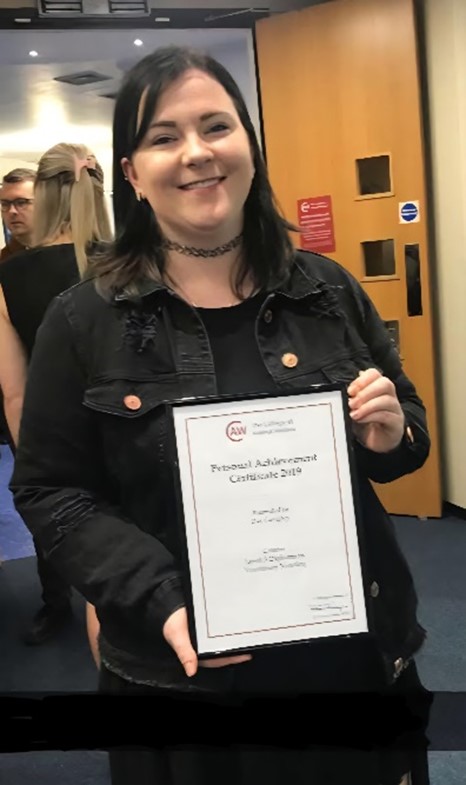
Receiving a Personal Achievement Award from CAW
In practice, the primary challenges I faced were two-fold: Communication & perfectionism.
As with anyone, when talking about topics I am interested in and have a lot of knowledge about, I can get very excited – very animated. One of my main interests is Cat Friendly handling. Unfortunately, when this happens, a bit of mask slippage can occur. Colleagues and managers would often tell me I am too aggressive, too blunt, and sometimes condescending. I had not seen the social nuances that would have told any other person this person did not appreciate my tone or choice of topic, or that they were finding the conversation confrontational rather than informative (which was my intention).
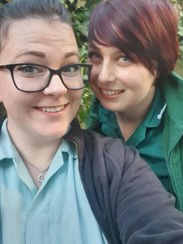
Me and my clinical coach on the day I finished my NPL
Studying at The College of Animal Welfare was a haven for me. I could pour all my energy towards a qualification, I also helped other students revise more difficult material. My forte was the theoretical knowledge, exams, assignments – the lot! I loved them, and still do. My desk neighbour was more practically inclined, with years of experience but struggled more with written work. We made the perfect team, I discovered my love for teaching in those moments. My tutors were wonderfully supportive and identified each one of our strengths and weaknesses and built upon our strengths. I still vividly remember our class coming up with a song to remember each step of the WHO handwash. Our tutor never told us to be quiet, or to focus on paper-based revision – she actively encouraged us to use whatever methods we needed to help the information stick. I only know the scientific name for walking dandruff because we used to say “Kayleigh tell ‘er she’s got dandruff!” (Cheyleteilla).
When I started a new role in a veterinary hospital the Hospital Manager had asked me to work with them to obtain gold ISFM status. This meant lots of time mapping out current practice protocols, areas for improvement and providing CPD on cat handling and cat friendly practice in house. As a new member of the team, the other vets and nurses were already curious, perhaps slightly cautious of how I would affect the team dynamic. My brain knew this, it had learnt this from previous experiences. However, I was just given a project I was incredibly passionate about, and I thought the team would surely be grateful for my knowledge and contribution, after all we all want to practice the best patient care we can, right? Whilst I’m sure all RVNs DO want to practice gold standard care, the team predictably shunned my efforts and alienated me from the rest of the team. I did achieve the gold accreditation, but I was left to do all the work myself and the announcement was met with equal measure disdain and excitement.
The element of requiring perfection in my nursing care and hospital protocols was also a significant barrier. As my brain is wired to function very logically and pragmatically, I found my brain almost had a sort of directory of gold standard SOPs compiled from what I had learnt in both college and on the job. I could recall anatomy and physiology information quite rapidly and apply it to cases, my nursing care and new concepts (although I would often forget “more important” information, like my age). However, communicating these concepts and areas of improvements to other members of the team was incredibly challenging. When I was training, I now recognise I would have autistic meltdowns when I could not apply logic to understand a concept. If it doesn’t make sense, how can it be correct? How can I remember this information if 1+1 now equals 4? Enquiring how or why something works the way it does was often met with defensiveness. Colleagues would misunderstand my need for complete depth of understanding as challenging their own knowledge or sometimes, even challenging their qualifications.
As an RVN, I would query protocols or procedures which were not “Gold Standard” or potentially outdated. I would discuss improvements I would like to be made or things the practice could improve on to provide better patient care. Often, I was met with the age old “we’ve always done it this way”, occasionally I would be met with more flippant remarks like “Is nothing ever good enough? Can you not just leave things alone?”. Unfortunately, in areas I am passionate about, I cannot leave something alone, unless I understand the reasons why we can’t make certain changes or understand the evidence for keeping the protocol the same. I especially could not leave protocols, or the lack of, alone if I felt they negatively effected patient wellbeing.
Eventually, we came to a compromise, the hospital put me in charge of clinical audits. Assessing areas of the practice to identify areas of improvement. I loved carrying out clinical audits, the information was factual and could lead to robust evidence-based improvements in practice. No subjective opinions or mindsets could affect my clinical audits!
During my time training as a student, I also started developing pains in my limbs and hands. I went to the doctors, who sent me for physiotherapy, neurological function tests, blood tests, rheumatology etc. No one could find out why I was experiencing burning, bolts of pain and aches in my limbs, why I felt like I had to sift through sand to find my thoughts, and why I seemed exhausted all the time. It took me seven years to get a Fibromyalgia Syndrome diagnosis from a private health care provider. During this time, I was trialled on different medications to manage my symptoms. I eventually started Amitriptyline, a neurological depressant often prescribed for migraine sufferers, which could only be taken at night because it causes drowsiness. Unfortunately, the dose needed to be increased every six months or so to control my symptoms as my body became resistant to its effects. The higher the dose, the more difficult it became for me to wake up in the morning.
I went from being a chronically punctual, detail orientated, organised person to someone who could barely get to work on time. This obviously had a significant impact on my mental health, I suffered from anxiety and depression due to the effects of the medication, undiagnosed neurodivergence, home-life factors, and experiencing the symptoms of a chronic pain condition without a diagnosis.
Receiving my Fibromyalgia diagnosis allowed me to come to terms with my physical symptoms and I began to accept I have a life-long disability. Realising I am Autistic allowed me to forgive myself.
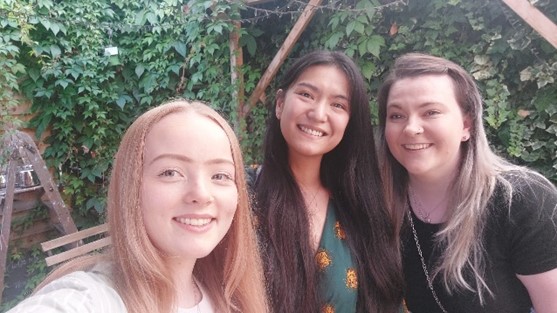
Me and my most recent students as a clinical coach
There is still some stigma surrounding those who are “self-diagnosed” or “self-identified” with neurodivergences. Whether you have a formal diagnosis or are self-diagnosed, your identity is valid. Identifying myself as Autistic, I underwent a workplace assessment (not an official diagnosis, but a tool for employers to understand your needs) which agreed I was likely ASD. This was a small part of my assessor’s day, but this helped me put my entire life into context. I understood WHY I felt like I was speaking a different language, I understood WHY people found me abrasive, I understood WHY I had such difficulty making lasting friendships. I understood WHY I am different, I’m not weird or broken, I am proudly autistic.
If you feel you identify with some of the topics I have discussed, or simply have an unshakeable feeling of being different to everybody around you, consider getting a neurodiversity assessment. This does not have to be from the NHS, this could be through your workplace or via The College of Animal Welfare if you are a student.
If you are a student at The College of Animal Welfare and wish to find out what support is available to you, or identify with anything that Zoe has written and want to chat to someone, please feel free to contact Lucy or Chloe, our Learning Support Team on learningsupport@caw.ac.uk.
They are here to listen, advocate for you, and work alongside you to create the conditions you need to thrive in your studies. They can help you to explore what adjustments, resources, and guidance are available to support your unique strengths and needs.
Overview of the VetSkill Level 4 Animal Medicines Advisor (AMA) Course
By Emily Mathias, Course Tutor
Hi, I’m Emily, I am a qualified veterinary nurse and became a companion animal SQP (Suitably Qualified Person), or C-SQP, in January 2015. Over the past decade, my SQP qualification has opened up countless job opportunities and provided me with valuable knowledge, helping me in a variety of roles. Most recently, I’ve been a tutor for the SQP qualification at The College of Animal Welfare.
What is an SQP or AMA?
An SQP or AMA is a qualified professional who can dispense animal medicines. They gain this qualification from an approved training organisation, such as The College of Animal Welfare. Once qualified, SQPs are legally able to dispense and prescribe various medications, including certain flea and worm products.
The field of Animal Medicines Advising is constantly evolving. New medicines are regularly introduced, legislation is updated, and information on contraindications and adverse effects continuously changes how medicines are dispensed and what they can do for patients. The role of an C-SQP can encompass pharmacy management, general dispensary duties, and ensuring adherence to relevant medicine legislation and regulations. It’s a role that demands responsibility and a commitment to ongoing Continuing Professional Development (CPD).
How Can an SQP Benefit Your Veterinary Practice?
If you are looking to enhance pharmacovigilance and improve your dispensary management, and need a trained team member who can answer medicine-related queries and assist with managing dispensed medications and prescriptions, then the SQP course could be the perfect fit for your team.
The SQP role is suitable for both non-clinical staff like practice managers and receptionists, as well as veterinary care assistants and registered veterinary nurses (RVNs). Did you know that RVNs without an SQP qualification are not legally entitled to prescribe or dispense medications from the POM-VPS category, which includes many common flea and worm products?
An SQP can significantly lighten the load for clinical staff and ensure the smooth running of your reception when it comes to dispensing medications. Once qualified, an SQP will have a strong awareness of regulations and be proficient in managing deliveries, rotating stock, and understanding the legalities surrounding the disposal and dispensing of medications.
Our Distance Learning SQP Course
Our distance learning course is powered by our Virtual Learning Environment (VLE) and supported by dedicated tutors. The SQP qualification provides learners with the knowledge and confidence to thrive in fast-paced dispensaries, especially as the demand for routine preventative medicine continues to dominate the pharmaceutical industry.
The VLE offers presentations, videos, links, and lessons to help learners delve deeper into dispensary operations. Through scenario-based learning and mock exams, alongside one-on-one tutor support, learners will build upon their existing knowledge to meet the high standards set out by the Veterinary Medicine Regulations.
Exams
There are three exams, one for each corresponding unit:
Unit 1 (AMA01 – Base Unit): Covers the legislative aspects of SQP practice. This is an online multiple-choice question (MCQ) exam.
Unit 2 (AMAC02 – Anatomy and Physiology): This is another online MCQ exam. (RVNs can map this unit from their RVN status and are exempt from sitting this exam).
Unit 3 (AMAC03): This final unit culminates in a 20-question scenario-based exam, which includes a prescription writing task. This will be practiced with your tutor before the final exam.
All exams can be taken remotely, so there’s no need to travel to an exam center. All support is provided via Microsoft Teams.
Once qualified, a companion animal SQP can use the post-nominal C-SQP. They are required to complete CPD annually, maintain their registration, and adhere to the SQP code of professional conduct when handling medicines or written prescriptions. They will also have a strong understanding of adverse reactions and be proficient in using a Product Information Database (PID) to identify the correct product for any enquiry.
Drowning Prevention Week – 14 to 21 June 2025: Staying Safe Around Water
As summer approaches and the temperatures rise, many of us – especially children and young people – are drawn to water for fun, relaxation, and relief from the heat. But with this seasonal shift comes a serious and growing concern: water safety.
Drowning Prevention Week, running from 14th to 21st June 2025, is a vital campaign aimed at raising awareness and equipping people of all ages with the knowledge they need to stay safe around water.
Why It Matters
Recent statistics are sobering:
46% increase in accidental drowning fatalities among children compared to the five-year average.
41 children lost their lives last year
83% of those fatalities were boys.
Nearly half of all drownings occur during June, July, and August.
The Risks Are Real
Even strong swimmers can find themselves in trouble in open water. Cold water shock, hidden currents, and unexpected underwater hazards are just a few of the dangers that aren’t always obvious from the surface.
Young people may also feel pressure to take risks – jumping into rivers, swimming in quarries, or trying to impress peers – all of which can quickly turn deadly.
Key water safety messages
Local waterways: Waterways can have strong currents, hidden hazards, polluted water, and cold water shock. Always be aware of these risks.
Stay SAFE – STAY AWAY FROM the EDGE
Know and share the Water Safety Code:
STOP & THINK – Always be aware of potential dangers in the water, read warning signs, and understand what they mean.
STAY TOGETHER – Never swim alone.
FLOAT – If you fall in, float or swim on your back, stay calm, and breathe regularly.
CALL 999 – in an emergency call 99 for help.
In an emergency, call 999.
What3Words: If you see someone in trouble by the water, call 999 immediately and tell them the what3words address to help emergency services know exactly where to send help. The app is free to use and can be accessed on both Android and Apple devices.
Do not be peer pressured into swimming where you aren’t comfortable, especially if you are not a strong swimmer.
Don’t swim alone or in unsupervised areas.
Final Word
Drowning is fast, silent, and tragically preventable. By spreading awareness and providing children and young people with the tools to assess and manage risks, we can help stop these tragedies before they happen.
Stay informed. Stay alert. Stay safe.
Hi there...
We use cookies and local storage for live-chat, logging in, online purchases, site usage statistics and personalised content.