
Senior Equine Groom (Level 3 Apprenticeship)
Start dates
Start at any time
Location
Ideally you should be located with a 90 minute radius of our Huntingdon centre. If you are outside of this area, please contact us.
Duration
18-24 months
Formats
Online learning with tutor support
Why choose us?
 Disability Confident Committed EmployerMatrix Standard - Demonstrating the provision of quality Information, Advice and GuidanceOfqual regulated qualificationsDedicated learning support team
Overview
This apprenticeship programme is ideal for those who are working in the equine industry in a supervisory position, looking to build on existing knowledge and skills to take their career to the next level. During the apprenticeship you will solidify your abilities to plan and coordinate the care of horses, and lead teams to achieve tasks and objectives whilst maintaining a safe working environment.
At The College of Animal Welfare, we believe every student deserves the opportunity to achieve their ambitions. Our supportive and flexible approach to learning is designed to help you thrive. As one of the UK’s largest providers of animal related education, we combine engaging online learning with guidance from experienced tutors who are passionate about helping students grow in confidence, knowledge and practical ability throughout their apprenticeship journey.
What do our students say?
Course details
What will you study?
You will gain the essential knowledge, skills and behaviours needed of a senior equine groom to ensure you maintain safe working practices and take responsibility for yourself, others and the animals in your care.
Knowledge and Skills
You will gain a comprehensive understanding of wide range of knowledge and skills including:
- Safe Working Practices
- Yard and Field Routines and Duties
- Horse Anatomy, Physiology and Welfare
- Horse Handling, Care and Appearance
- Nutrition & Fitness
- Travelling Horses
- Non-Ridden Exercise
- Behaviours
Behaviours
You will look at safe working, work ethic, responsibility, team work and communication.
Pathways
In addition to the core knowledge, skills and behaviours you will undertake further learning relevant to your job role and interests. There are five specialised routes you can choose from, each of which have specific knowledge and skills associated.
Breeding
Additional knowledge and skills include stud contracts, reproductive anatomy, preparing a foaling environment, weaning processes and fostering processes.
Driving
Areas studied include the correct use of full, breast and empathy collars, open and quick release tugs and a variety of driving bits, preparing a turnout for exercise and competition as well as the cleaning of competition harness.
Racing
You will select to follow either the Senior Racing Exercise Groom or the Senior Racing Yard Based Groom pathways and learn areas such as specific exercise regimes, the breaking and training process, riding at speed and implementation of individual racehorse training programmes.
Riding
Specific skills and knowledge will cover areas such as cleaning and preparation of saddlery and equipment for work and competition, equitation theory, use of exercises such as transitions and riding horses of varying fitness levels.
Non-Riding
Knowledge and skills will be gained in areas such as preparing equipment for work and competition, preparing horses for work and competition including selecting and fitting correct discipline specific saddlery and equipment, planning events, business diversification and customer care.
Functional Skills
If you are an apprentice under 19 years of age you will be required to undertake Functional Skills Level 2 in English and Maths unless exempt.
Off-The-Job Training Hours
You will undertake a minimum of six hours a week of off-the-job training hours, this is learning that takes place during your normal working hours. These could comprise of working through online course materials, time spent on your portfolio, undertaking relevant webinars etc.
Assessment
During your apprenticeship you will compile a portfolio of evidence to demonstrate your knowledge, skills and behaviours.
Once you have completed your portfolio, Functional Skills (if applicable) and a minimum of 12 months of training, you will be able to undertake the End Point Assessment EPA). The EPA consists of:
- Knowledge Test: An online or paper based MCQ test taken at the workplace or approved centre.
- Practical Observation: An observation of the apprentice by an independent assessor.
- Professional Discussion: A structured interview between the apprentice and the independent assessor.
Your performance in the EPA will determine the apprenticeship grade of fail, pass or distinction.
Start dates
This apprenticeship can be started at any time, once you have secured employment in a suitable equine environment.
Entry requirements
There are no formal academic entry requirements. However, you will need to be living and working in England in a suitable equine environment, within a 90 minute radius of our Huntingdon centre. If your place of work is outside of this area, please contact us as we may still be able to meet your training needs.
You should be employed in a supervisory or managerial position to undertake this course i.e. head groom or yard manager. If you are not working directly in a supervisory role but wish to undertake this qualification to enhance your prospects of progressing into such a position, please contact us to discuss your suitability for the programme.
International qualifications
Students with foreign qualifications are required to have their certificates translated using a UK ENIC Statement to confirm if they have previously achieved Level 2 English and Level 2 maths for their apprenticeship. If a student has not previously achieved this, they will need to complete Functional Skills English and/or maths as part of their apprenticeship. More information about how to apply, how it works and prices can be found on the UK ENIC’s website here.
Please note: As our courses include online learning components, students are required to have access to a PC or laptop with a reliable internet connection.
Fees and funding
Apprenticeship course fees are payable by the employer. Fees are dependent upon the size of the organisation you are employed in.
Course fees for Growth and Skills (Apprenticeship) Levy Paying Employers
(organisations with an annual pay bill of more than £3 million)
These employers will pay the full apprenticeship amount of £6,000 using their digital account.
Course fees for Non-Levy Paying Employers
(organisations with an annual pay bill of less than £3 million)
These employers will pay 5% (£300 in one payment) towards the cost of the apprenticeship using their digital account.
Please note that apprenticeship fees are fully funded (free) for those aged 16-24 years, working in a non-levy paying organisation.
These are current figures and may be subject to change. The differences in course fees reflect the level of funding that is available as a result of government policies and priorities. These may be as a result of age, employment status, previous education achievements, or location for example, and are outside the control of The College of Animal Welfare.
If you have not achieved your qualification by the planned end date detailed in your individual learning plan, your employer will be able to pay monthly direct debit payments to allow you to continue to receive support and access to your course until certification of your award.
Your future
On completion of your apprenticeship you will have gained the knowledge, leadership skills and abilities to effectively plan and coordinate the care of horses and allocate resources to achieve this.
You may wish to continue broadening your knowledge by undertaking regular Continuing Professional Development courses or looking at higher education, such as a foundation degree in horse management (subject to individual university entry requirements).
Student stories
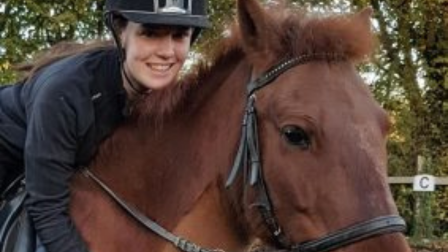
Equine apprenticeship student, Sophie Baudot, gained a distinction in her End Point Assessment (EPA) picking up the highest mark ever seen by the EPA organisation. Achieving a distinction in an end-point assessment is no small feat. It demands a thorough understanding of equine care and exceptional practical skills. Well done Sophie! Read more...
brochure Open days Similar
courses
Course highlights / facilities
 Access to our Virtual Learning Environment
 Experienced distance learning tutors
 Access to our extensive eLibrary
Government funding available
Access to our extensive eLibrary
Government funding available
Frequently asked questions
Do I need to already work in an equine setting before applying?
Yes. In order to undertake this apprenticeship, you must be living and working in England in a suitable equine organisation in a supervisory/managerial role, such as a riding school, horse charity or racing yard.
What are off-the-job training hours?
Off-the-job (OTJ) training hours are mandatory, paid learning hours for apprentices that take place during normal working hours to help them to gain new skills and knowledge outside of their normal daily work duties. This could be working through online course materials, undertaking webinars, time spent on your portfolio etc. Each apprentice has to undertake a minimum of six OTJ hours per week (this may be pro-rata for part-time employees).
My employer isn’t willing to pay for me to do this apprenticeship, can I pay for it myself?
Unfortunately not, apprenticeships must be paid for by the employer. It is also important that your employer is supportive of you undertaking the apprenticeship as they would have to allow you a minimum of six hours a week of off-the-job training.
I want to do this apprenticeship but am not employed, can you help me to find a job?
At the current time, you would need to find your own employment in an equine related role to begin this apprenticeship. We are sometimes asked by employers to help them to recruit an apprentice; any apprenticeship vacancies we know about will be advertised on our Apprenticeship Vacancies webpage – you can also sign up to receive new apprenticeship job alerts via this page.
Ready to enrol?
Create an account and start your application today.
Full Course Brochure
Enter your details to download the full course brochure. We'll email you with information about the course.
You can unsubscribe at any time. We respect your privacy and handle your data with care. Please see our privacy policy.