Author Archives: Alison German

Send a Vet Nurse to India: Student experiences

By Kirsty Dougherty, BSc (Hons) Veterinary Nursing student – Edinburgh Napier University/The College of Animal Welfare

My first impressions of India were of smiling people, crazy driving and beautiful scenery -the sun shone, it was warm and life was instantly better.

On arrival at the University campus we were met with a large poster with our picture on it and the words “A hearty welcome to Team Edinburgh”. There was a colourful inauguration ceremony with speeches and presents and we saw a genuine interest in why we were there from all the kind and receptive vets and students.

We entered the veterinary hospital on our first day to showcase what a VN can do with the hopes that by the end of our visit we would be missed and that the supporting, caring role of the VN would be better understood by the Indian staff who were interested in developing their own VN training and qualification programme.

We were faced with many challenges in the unfamiliar environment but in proper VN style we set about cleaning and organising but with minimal supplies. You do not appreciate the true value of blue roll until you have none! The residents of the in-patient ward had varying long term chronic conditions so with a deep breath and remembering that this was why we had come, we did all we could to improve the immediate and long term conditions for these dogs. We scrubbed, sweated and problem solved our way through the week and were rewarded by seeing a big improvement in the demeanour and comfort of the animals there.

The surgical facilities were impressive with fancy monitoring equipment and it was sometimes hard to reconcile this with the less developed ward areas and levels of peri-operative care. After talking to the vet students however, we realised that many of them had been placed onto the veterinary medicine course due to their grades and that becoming doctors or engineers had been the first choice for many. I think we would all agree that veterinary nursing and veterinary medicine can be a difficult, dirty and tiring job but that we do it, and love it because we have a passion for animals that constantly makes it worthwhile. It becomes easier to understand just how difficult it must be for these students if they do not have that same motivating love for animals that gives us our drive, and that sees us through the hard times. In addition to this, there are also very understandable cultural attitudes to dogs that have to be taken into consideration. I was talking to a young shopkeeper who had just shooed away a stray dog and he told me “It’s not that I don’t like dogs, it’s just that I’m scared of needles.”

This really highlighted to me the difficulties faced by normal people living with the very real risk of Rabies. Over a third of the world’s 60 000 deaths from this horrible, preventable disease occur in India, the majority of which are in children under 15. We had to have three rabies vaccinations before we left and two members of our team had to have further injections whilst we were there. This all comes at a cost and for many Indians the means and facilities for medical treatment just aren’t there.

It is no wonder then that dogs are seen so differently from our safe, cuddly, lucky pets at home.

Despite all this we did meet people who really cared about their patients and who were willing to learn new techniques and improve standards. This is why a veterinary nursing programme would be so beneficial, the will is there and with some passionate people, further education and a framework of skills on which to build, the lives of hospitalised patients could be massively improved. I hope that by seeing the love, care and enrichment we gave to the dogs we will have inspired people and that the ripples of compassion will spread to the helpers, students, vets and patients and throughout the hospitals we visited and beyond.

I loved my time in India, I learnt so much and wish we had more time to spend there. I worked with some great people and animals and had lovely views with monkey visitors. We had power cuts in the middle of surgery, there were laughs, tears and many, many unforgettable experiences. The sun shone, it was warm and I feel proud to have been a part of Team Edinburgh.

Send a Vet Nurse to India: A student perspective

By Lydia Barry, BSc (Hons) Veterinary Nursing student – Edinburgh Napier University/The College of Animal Welfare

After two long flights and a car journey where our lives flashed before our eyes on numerous occasions, we arrived at the first campus in the beautiful Pookode. At first, over taking on blind bends and the constant beeping of horns was surreal, but a few days later and I oddly seemed to enjoy it.

India was hot, beautiful and chaotic. The people inquisitive, yet very polite when asking for selfies. All concerns of inter cultural communications were dissolved within the first day. The veterinary doctors and students spoke impeccable English, making every effort to accommodate us with a ‘Hearty Welcome’ and a continuous supply of tea, cookies and the odd curry and banana leaf (which really tested the best of poker faces). At both campuses, problem solving with regards to communication was easily overcome when two vital members of staff did not speak English. Putting our drawing skills to the test, we created numerous images of dogs going to the toilet at a tree amongst others. It was at this point where we all realised the simplicity but enormity of the task that laid ahead.

There was a definite contrast between the two hospitals with regards to both business and clinical decision making. Pookode being the most rural campus was the quieter, with occasional surgery but plenty of inpatients. After a quick tour, Hayley and Heather separated the lecturers to different areas and myself and the other students planned to rotate during the week. In the UK, my passion lies in the medical management of inpatients so I volunteered to be on the first rotation of the IP area.

The kennels were full of sick and injured street dogs with conditions varying from radial paralysis to skin infections. The quality of life for these patients was questionable however we quickly realised the difference in clinical management of cases. Cases that required surgical intervention such as amputation were refused for differing reasons. This included cultural resistance, contradictory views on autonomy and human views on the ‘correct’ appearance of animals. Euthanasia was also a tricky treatment option due to ethical and cultural resistance from both the general public and the veterinary staff. This came as a bit of a shock, but it reiterated the everyday struggles of individual veterinary clinicians in comparison to that in the UK where welfare is often achieved by the option of euthanasia.

In comparison, Mannuthy was a much busier urban vets where numerous surgical procedures occurred on a daily basis. Once again, the kennels were full of dogs which had minimal disease processes that were waiting for rehoming. When speaking to clinicians here, amputation and enucleation was widely accepted whereas euthanasia was still opposed to. It was interesting to see the massive difference in views between two schools of the same university which were only hours apart.

Feline patients were rare. We encountered three stray cats during the trip: Joe, Rocky and Annie. Being a cat lover, I found these cases very difficult but rewarding. Joe presented with a necrotic limb following a road traffic accident and with gentle persuasion, the team amputated his limb by using the operation as a teaching exercise to encourage the veterinary students and also clinicians that this option was a relatively straightforward, inexpensive and successful procedure which resulted in Joe’s release two days later. As well as teaching the Indian staff, I learnt a lot. Using problem solving techniques such as warming the patient outdoors, using a plant pot for a drip stand and bandaging with white open weave.

Such problem solving techniques were tested even further throughout the trip, particularly within the kennel area. Many of the patients had no stimulation and were restricted to a lonely kennel environment. Using plastic water bottles, tyres and leaves to create scavenging techniques for food and using car mats for beds were just some of the methods of creating a more enriched environment. After watching the dogs interact, we housed certain pairs together to create a social environment. The veterinary students and labourers who worked in the kennel area were impressed and amazed at the difference. I was too, it was amazing to see the difference we had made through the implementation of hospital sheets, collars, labels and enrichment. It was rewarding to see the student’s taking the patient’s for walks, cleaning consult tables between patients and giving the dogs an all new concept: ‘Tender Loving Care’. The students loved this notion, giggling when we said ‘TLC Time’, but eventually learning the importance of loving and caring for patients.

All of these ideas reiterated the importance of the role of the veterinary nurse in the day to day care of veterinary patients. Whilst veterinary nurses do not exist here, there is an animal husbandry course that is similar. The veterinary clinicians seemed to appreciate this and were all very much keen to begin the training programme!

The two weeks flew by working with an amazing team. After being asked continuously for photos, being in the Hindu News and having many emotional moments, it was amazing to see the end result.

2015 CAW VN Consultation Survey: See the results!

Earlier this year, The College of Animal Welfare (CAW) carried out an online survey to gain views on the current veterinary nursing training qualifications that lead to RVN Registration with the Royal College of Veterinary Surgeons (RCVS).

The aim of the survey was to identify what those working with the qualification, and in practice, thinks works well and what needs to be changed. CAW would like to thank everyone who took part; your responses will help us provide feedback to the RCVS and awarding bodies offering the veterinary nursing qualification.

The results are now available and can be found on the College’s website.

– Ends –

For more information please contact:
Alison German RVN
Marketing Executive
The College of Animal Welfare
Tel: 01480 422060
Email: agerman@caw.ac.uk

Notes to editors:
The College of Animal Welfare is one of the UK’s largest providers of veterinary nurse and animal care training and education; operating from four training centres around the UK.

The College has a well-earned reputation for excellence and has created a number of unique achievements that have created new opportunities for learning.

For more information about The College of Animal Welfare please visit www.caw.ac.uk

2015 CAW VN Consultation Survey: See the results!

Earlier this year, The College of Animal Welfare (CAW) carried out an online survey to gain views on the current veterinary nursing training qualifications that lead to RVN Registration with the Royal College of Veterinary Surgeons (RCVS).

The aim of the survey was to identify what those working with the qualification, and in practice, thinks works well and what needs to be changed. CAW would like to thank everyone who took part; your responses will help us provide feedback to the RCVS and awarding bodies offering the veterinary nursing qualification.

The results are now available and can be found on the CAW website.

International Day of Persons with Disability: 3 December 2015

What is disability?

Disability is a name given to the barriers that exist for some people, because their bodies and minds work differently. We need to remove these barriers so that everyone can be included. Here are some examples of how barriers can be removed:

  • A person who uses a wheelchair may not be able to access a building with steps. Add a ramp to the building and everyone can use the same entrance.
  • Some people learn by reading information, others learn by listening to it, others require pictures or diagrams. When information is presented in more than one way, barriers are removed and everyone has the opportunity to learn.
  • Some people find it difficult to make decisions about things when they are rushed, but can do it more easily when they have support and time to think. Making sure that everyone has time to think and ask questions means that everyone can make decisions about their own lives.

Tips for getting along

People with disability go to school and college, like having fun, and are part of families. You probably know at least one person with disability or maybe you have disability yourself. Remember that we are all different, so not all the following tips will apply to everyone:

  • Just be yourself, say hi and make friends as you would with anyone else.
  • When you talk to a person with disability, face them and talk to them. Their support person, parent or carer is a different person.
  • When you talk to someone who is deaf or has a hearing impairment, make sure they can see your mouth.
  • Always introduce yourself when you are approaching or saying hello to someone with vision impairment.
  • Some people may have plenty to say but need more time to respond in a conversation, so be patient.
  • Do not hold onto a person’s wheelchair or move someone in a wheelchair without their permission, because their wheelchair is part of their personal space.
  • Do not pat or speak to someone’s guide dog or service dog. The dog needs to concentrate when working, so always ask the owner first if it is okay to say ‘hello’ to the dog. If they say no, respect their wishes.
  • When sending an email to a person who is blind, use text rather than pictures.
  • If you are not sure whether someone needs help, just ask.

The International Day of Persons with Disabilities draws awareness to persons with disabilities and the problems they are faced with in their everyday lives. It is estimated that persons with disabilities around the world make up 10% of the population, and 80% live in developing countries.

But, even where disability laws are in place, its effectiveness can be held back by negative attitudes towards disabled persons.

Because so many types of disabilities exist, understanding them all individually can be a difficult task. But here is your chance to learn more.

Are you disabled or do you know someone who is? Everyone has different skills, and interests, so why not find a way to celebrate that, whatever it is?

The Paralympics are a great example of how disabled people can show off their talents to the rest of the world. For more information on disability rights and disability aid visit the International Day of Persons with Disabilities website.

The theme for 2015 is “Inclusion matters: access and empowerment for people of all abilities”. The aim includes making cities inclusive and accessible for all and including persons with invisible disabilities in society and development.

Send a VN to India: Final Reflections

By Karen Hibell, The College of Animal Welfare

I have heard many times that India is a country of contrast, and more recently from many locals as we were greeted in the street; welcome to ‘God’s own country’. Everyone was interested in how far we had travelled, our thoughts of their country, but more importantly a selfie with our very own Doctor Coe; who was more than obliging.

Hinduism accounts for approximately 50% of the population, with the remaining spread between Christianity and the Muslim faith. This provides the state with a diverse culture, full of tradition and colour.

After a day travelling, I am still not quite sure what hit me first when we arrived from the lush green landscape of Pookode to Thrissur, the 20th largest city in India. Also known as the cultural capital of Kerala. The smells, the sounds of people going about their everyday business in the bus station or the market, the chaotic approach to roundabouts or the incense burning in the hotel. India is a medley that stimulates the senses and the adventurous spirit.

Kerala is beautiful. Bordered by the Arabian Sea to the west and the Western Ghats to the east; this forested region is amongst the world’s top 10 biodiversity areas. Known also as the Malabar coast, the official language is Malayalam. Its geography has influenced the development of the state within its own microcosm, resulting in Kerala being one of the most developed parts of India.

No day was the same; the diverse range of species and lifestyles resulted in the observation of examinations and treatments of family dogs, street dogs and livestock; dogs, cattle, goats and chickens on the same day. Clinics such as artificial insemination and the early neutering of dogs, separated only by the central courtyard of the hospital. Canine leptospirosis and distemper are common place here, and we saw a number of patients being treated within the hospitals during our stay; after fluid therapy returning home with their owners. Debilitating parasitic conditions, such as Babeosis; a tick-borne protozoan infection incurred a series of daily treatments for the patient.

I travelled to India on a teaching project; little did I know how much I would learn from India and the people I travelled with.

British values student poster competition – Win a Kindle Fire 10!

What are our British values?

We need your help to design a poster to be displayed at our centres and used on our website to help us promote the importance of adhering to the five British values:

  • Democracy
  • The rule of law
  • Individual liberty
  • Mutual respect
  • Tolerance of different faiths and beliefs

The winning entrant will win a brand new Kindle Fire HD 10!

Kindle Fire HD 10

Your poster should be A4 and created either digitally or by hand and submitted by 31 December 2015. You can email it to marketing@caw.ac.uk, hand in to college, or post to The College of Animal Welfare, Headland House, Chord Business Park, London Road, Godmanchester, Cambridgeshire PE29 2BQ for the attention of Alison German.

Good luck everyone!


Terms and conditions

This is a competition run by The College of Animal Welfare. It is open to anyone who is a current student at The College of Animal Welfare.

Entries

  1. Entry will be open from Wednesday 2 December to Wednesday 31 December 2015.
  2. We reserve the right to end this competition at any point at our discretion.
  3. Entries must be your own work and not subject to copyright (including any images used in the poster).
  4. Entries should include your name and contact details (either within the email or on the back of the poster if drawn by hand).
  5. Digital entries should be submitted as a PDF or image file attached to the email.
  6. One entry per person is permitted.
  7. Poster entries will be retained by The College of Animal Welfare and may be used to promote British values.

The winner and prize

  1. There will be one winner. The winning poster will be decided by the Principal of The College of Animal Welfare.
  2. The winner will be announced the week commencing 4 January 2016.
  3. The winner will receive a Kindle Fire HD 10 16GB.
  4. The prize is non-transferable. There is no cash alternative.


There’s still time to train as a veterinary nurse this January!

Are you looking to train as a veterinary nurse? If so, there is no need to wait until next September, you could start your training in January!

The January start programme is run at our Huntingdon, Potters Bar and Leeds centres. To enrol you should be employed in a veterinary practice that is approved to train veterinary nurses, a Training Practice (TP) or Auxiliary Training Practice (aTP), and have a minimum of five GCSEs at Grade C or above in Maths, English Language and Science (or acceptable equivalent qualifications).

If you are 16-18 years of age at the start of the programme you could be eligible for full funding if undertaking the Level 3 Diploma in Veterinary Nursing as part of an Advanced Apprenticeship. And for those 19 and over we offer the option of paying for your course on a monthly direct debit basis.

Visit our website to find out more about training to become a veterinary nurse or call us on 01480 422060.

College Students Recognised at Awards Ceremony

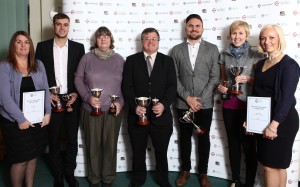
Some of the winners at The College of Animal Welfare Student Awards Ceremony

Some of the winners at The College of Animal Welfare Student Awards Ceremony

Students from The College of Animal Welfare and CAW Business School had their hard work and achievements recognised at the College’s annual Students Awards Ceremony on Saturday 28 November.

The Awards Ceremony was a celebration of achievements that students have made during the past year, not only at the College’s Godmanchester centre but also at its other centres in Potters Bar, Leeds and Edinburgh, as well as students who are learning in their work place all over the country.

Each student who received an award had worked hard to reach a high standard and, in some cases, overcome personal challenges.

Barbara Cooper, Principal of The College of Animal Welfare, said: ‘The Awards Ceremony is one of the biggest highlights of our year. All of the award winners have worked really hard and thoroughly deserve this recognition’. She continued ‘I would like to congratulate all of our award winners and wish them every success for the future’.

The award winners were presented with a commemorative trophy during the ceremony at the College’s centre in Chord Business Park on London Road in Godmanchester.

College Students Recognised at Awards Ceremony

Some of the winners at The College of Animal Welfare Student Awards Ceremony

Some of the winners at The College of Animal Welfare Student Awards Ceremony

Students from The College of Animal Welfare and CAW Business School had their hard work and achievements recognised at the College’s annual Students Awards Ceremony on Saturday 28 November.

The Awards Ceremony was a celebration of achievements that students have made during the past year, not only at the College’s Godmanchester centre but also at its other centres in Potters Bar, Leeds and Edinburgh, as well as students who are learning in their work place all over the country.

Each student who received an award had worked hard to reach a high standard and, in some cases, overcome personal challenges.

Barbara Cooper, Principal of The College of Animal Welfare, said: ‘The Awards Ceremony is one of the biggest highlights of our year. All of the award winners have worked really hard and thoroughly deserve this recognition’. She continued ‘I would like to congratulate all of our award winners and wish them every success for the future’.

The award winners were presented with a commemorative trophy during the ceremony at the College’s centre in Chord Business Park on London Road in Godmanchester.