Author Archives: Amber Tennant

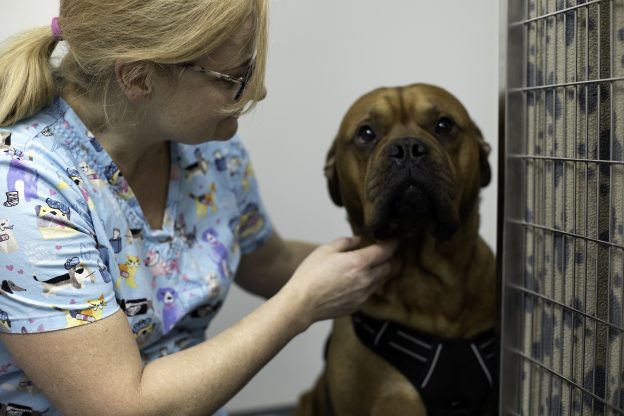
Veterinary care support apprenticeship pathway blog image

NEW Veterinary Care Support apprenticeship pathway available now!

The College of Animal Welfare is delighted to announce it now offers a veterinary care support apprenticeship pathway (VCS), available as part of the Animal Care and Welfare Assistant level 2 apprenticeship standard launched in August 2018. 

The addition of this pathway will provide a current, tailored training opportunity for those who currently work in a VCS role with little to no formal training, as well as a route into employment for people who want to work in a VCS role in the future.

Throughout the programme, apprentices will learn the skills, knowledge and experience needed to thrive as a VCA by undertaking on-the-job training in a veterinary practice. Apprenticeship materials will be delivered online via the college’s Virtual Learning Environment (VLE), with email and telephone support provided throughout the qualification by an allocated Distance Learning Tutor.

Government funding means that smaller practices (those with an annual payroll of less than £3 million) pay just £250 towards their apprentices’ training fees. What’s more – if the practice has less than 50 employees and their apprentice is under 19 years of age, there are no fees to pay and they’ll get a £1,000 grant too!

Nina De Franco, Head of Veterinary Studies at The College of Animal Welfare, said: “Veterinary Care Support professionals are essential members of today’s modern veterinary practice, working alongside surgeons and nurses to provide vital care to small animal patients. This pathway opens up a new training option for those working in veterinary support roles, as well as providing a training solution to employers that is current, relevant and fit for purpose.”

The new apprenticeship pathway is available now. To find out more about the new pathway visit www.caw.ac.uk/vc or call the college on 01480 422060.
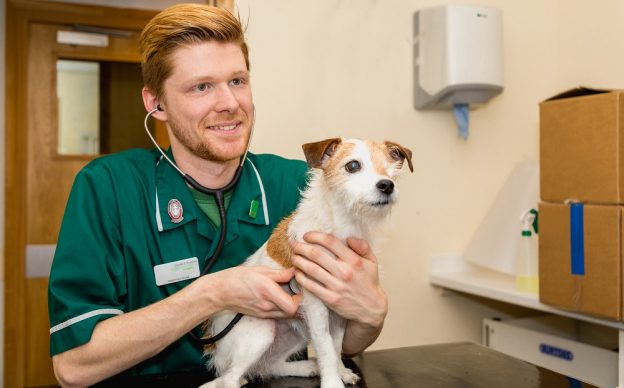

Male RVN in practice - careers with animals day

Cuts to apprenticeship fees make training veterinary nurses more affordable

The government has recently announced that as of 1 April 2019, employers with an annual pay bill of less than £3 million will now only be required to contribute half the rate they previously did towards apprenticeship fees. Small (non-levy paying) employers contribute to apprenticeship fees in a ‘co-investment’ with the government in which the government will now cover 95% of the course fees.

Veterinary nursing apprenticeships now only cost a total of £750 for small employers and are suitable for current staff, or new trainees.

Taking on an apprentice has a whole host of benefits and allows a veterinary practice to develop an employee who meets business needs. A combination of theory and practical learning in the workplace allows apprentices to put their knowledge into practice, gaining valuable industry experience and an immediate contribution to the team.

Frank Taylor, Vice-Principal of Veterinary Studies at The College of Animal Welfare said: “It’s amazing to hear that the government has halved apprenticeship fees for non-levy employers. Apprenticeships are a great way for students to develop both the theory and practical skills they need to succeed; making hiring an apprentice that bit more affordable will definitely benefit the veterinary industry.”

Involved in training approximately 20% of the UKs veterinary nurses The College of Animal Welfare is now looking for the next generation of veterinary nurses and the September intake is now open. For more information visit www.caw.ac.uk/vn or call 01480 422060.

Stuck for ideas this Easter Bank Holiday Weekend? Apply for a TOTUM card to help you make the most of your holidays!

TOTUM Card

Did you know if you’re a student at The College of Animal Welfare you may be entitled to apply for a TOTUM card?

With an average saving of over £500, the TOTUM card (previously NUS extra) could be the perfect way for you to make the most of your holidays and save on your purchases. The TOTUM card is available for eligible students for only £12 a year. You could save on:

  • Travel and accommodation (selected airlines, holiday companies and hotels worldwide)
  • Food and Drink (Co-Op, Pizza Express, Las Iguanas etc)
  • Tickets (Odeon, Cineworld, Ticket Master etc)
  • Music, Films and Gaming (Amazon, Game etc)
  • Fashion (Warehouse, New Look, Missguided.co.uk etc)
  • Books and Stationary (Inks4Students and Cartridge People)
  • Health and Beauty (Superdrug, Vision Express etc)
  • Technology and Gadgets (Apple, Dell, Ink Cartridges etc)

Please note the offers/discounts available are not fixed and may vary or be withdrawn at any time.

A one-off fee of £12/£22/£32 entitles you to a TOTUM Card valid for 12/24/36 months from the date of purchase.

Please call us on 01480 422060 / admin@caw.ac.uk to find out if you are eligible to apply for a TOTUM Card and to receive a Voucher Code needed to apply. You can then click here to start your application!


Autism Awareness Day 2019

World Autism Awareness Day 2019!

Today is World Autism Awareness Day, an annual, internationally recognised day to help raise awareness of autism and celebrate the achievements and talents of people living with the condition. Read on to find out more about autism…

What is Autism?

Autism is a lifelong condition which affects how people communicate and interact with the world.

https://www.youtube.com/watch?v=Lk4qs8jGN4U

How common is autism?

Autism can affect people from all nationalities and social backgrounds; and is much more common that most people think. There are around 700,000 autistic people in the UK.

Signs

Autism is a spectrum condition, which means that it affects people in different ways, however most autistic people see, hear and experience the world differently from other people. Some common characteristics are:

  • Difficulties with social communication and interaction – Autistic people may find it hard to join conversations or to make friends. Many autistic people have a very literal understanding of language, and may find it difficult to use or understand facial expressions, tone of voice or jokes and sarcasm.
  • Repetitive behavior, routines and activities – Autistic people can find the world very unpredictable and may prefer having fixed daily routines and repetitive body movements so they know what is going to happen every day.
  • Sensory sensitivity – Autistic people may also be under- or oversensitive to certain sounds, lights and colours. For example, they may find certain background sounds, which other people ignore, unbearably loud or distracting.

The signs are present over time and have a noticeable effect on daily life.

Causes

A definitive cause of autism is still being investigated, however research into causes suggests that a combination of factors such as genetic and environmental may account for differences in development. Autism is not caused by a person’s upbringing, their social circumstances and is not the fault of the individual with the condition.

How you can help

Autism is not an illness or disease and cannot be “cured”, however there are ways to support autistic people, their families, carers and friends. You can help by:

For more information about Autism please visit www.autism.org.uk

West Highland White Terrier Grooming Seminar: Wednesday 22 May

We’re delighted to be hosting a West Highland White Terrier grooming seminar on Wednesday 22 May!

This seminar will demonstrate a trim using scissoring technique and comb attachments, and is ideal if you are working towards your City & Guilds Level 3 Diploma, or would like to see an alternative way to do the West Highland White head shape.

The seminar is running from 6-8pm, with refreshments available from 5.30pm. Book online today on our CPD website!

Tori Page delivers a talk at Clinical Coach Congress 2019

Clinical Coaches left motivated and inspired by Clinical Coach Congress 2019

Our annual Clinical Coach Congress, held from 18-19 March 2019, was a huge success and saw over 80 clinical coaches come together to share ideas and listen to lectures on student veterinary nurse training!

Delegates left the event feeling inspired and motivated, commenting: “I took away lots of great ideas and feel very motivated from the course, not only, as a [clinical coach] but as a member of the team.”, “I feel motivated and inspired by the speakers and have lots of useful tips and further reading material.” and “I enjoyed the lectures and enthusiasm from the speakers and feel much more motivated as a clinical coach.”

Clinical Coach Congress 2019 moved to the wonderful East of England Arena and Events Centre in Peterborough. This year’s congress included lectures on teaching techniques, coaching styles, student motivation, professional accountability, exam techniques – and much more. A commercial exhibition was held throughout the congress, and day one of the event closed with the launch of VetSkill’s Level 3 Diploma in Veterinary Nursing (Companion Animal); giving delegates the perfect opportunity to learn more about the new qualification and network with fellow clinical coaches.

Plans for Clinical Coach Congress 2020 will soon be underway. If you would like to keep up-to-date with news on next year’s Clinical Coach Congress can register their interest at www.caw.ac.uk/ccc

Clinical Coach Congress 2019 stage and delegates

Clinical Coaches left motivated and inspired by Clinical Coach Congress 2019

The College of Animal Welfare’s annual Clinical Coach Congress, held from 18-19 March 2019 and sponsored by Millpledge Veterinary, saw over 80 clinical coaches come together to share ideas and listen to lectures on student veterinary nurse training.

Delegates left the event feeling inspired and motivated, commenting: “I took away lots of great ideas and feel very motivated from the course, not only, as a [clinical coach] but as a member of the team.”, “I feel motivated and inspired by the speakers and have lots of useful tips and further reading material.” and “I enjoyed the lectures and enthusiasm from the speakers and feel much more motivated as a clinical coach.”

Clinical Coach Congress 2019 moved to the wonderful East of England Arena and Events Centre in Peterborough. This year’s congress included lectures on teaching techniques, coaching styles, student motivation, professional accountability, exam techniques – and much more. A commercial exhibition was held throughout the congress, and day one of the event closed with the launch of VetSkill’s Level 3 Diploma in Veterinary Nursing (Companion Animal); giving delegates the perfect opportunity to learn more about the new qualification and network with fellow clinical coaches.

Congress organiser, Tracey Croucher, said “We would like to thank all the speakers, exhibitors and delegates who attended Clinical Coach Congress this year, for making the event such a success. This event has now been running for 14 years and it’s always a pleasure to see so many enthusiastic clinical coaches come together and look at how to best support student veterinary nurses in practice”.

Plans for Clinical Coach Congress 2020 will soon be underway. Those interested in keeping up-to-date with news on next year’s Clinical Coach Congress can register their interest at www.caw.ac.uk/ccc

– Ends – 

Notes to editors:

The College of Animal Welfare is one of the UK’s leading providers of veterinary nurse and animal care training and education; operating from four training centres around the UK.

The College has a well-earned reputation for excellence and has created a number of unique achievements that have created new opportunities for learning.

For more information about The College of Animal Welfare please visit www.caw.ac.uk

International Day for the Elimination of Racial Discrimination (21 March)

Today is International Day for the Elimination of Racial Discrimination!

On this day, in 1960, police opened fire and killed 69 people at a peaceful demonstration in Sharpeville, South Africa, against the apartheid pass laws. Proclaiming the day in 1966, the United Nations General Assembly called on the international community to redouble its efforts to eliminate all forms of racial discrimination.

Although we have come a long way towards achieving racial equality since the United National proclaimed the day, there is still a long way to go. Take a look at simple things you can do day-to-day to challenge racial discrimination:

Start with yourself

It’s important to remember not everyone is raised in the same way and that we are all a product of our backgrounds. Be open to learning more about your own bias and make an effort to get to know other people – including their points of view, and the motivations and thought processes behind why they are the way they are.

Speak up against discrimination 

Don’t ignore discriminatory behaviour in others, even if you are close to them. Speaking up against discrimination when you see or experience it will help raise awareness, educate people and challenge others’ views.

Support others

Support others who are experiencing discrimination and encourage them to take the appropriate action needed to improve their situation; this could be anything from taking records of discrimination, pushing forward with workplace/legal procedures or seeking advice where necessary.

If you feel you are being discriminated against on placement, at work, or in College; please contact us. The College has a zero tolerance policy towards racial discrimination, whether intentional or unintentional. Incidents of discriminatory behaviour are a serious matter and will be dealt with appropriately.

Animal care apprentice blog cover image

National Apprenticeship Week: Grow your team with an animal care apprentice!

It’s National Apprenticeship Week!

If you’re looking to expand your team and take your business to the next level, there’s no better way to do so than investing in an animal care apprentice!

With the National Minimum Wage for Apprentices being just £3.70 per hour, it really is an affordable way to take on new staff. You will also be providing valuable experience and training opportunities for someone keen to start working with animals. What’s more…

You will cut your recruitment costs!

Boosting your team with an apprentice is a great way to bypass the added recruitment costs associated with outsourcing or recruiting skilled labour. You can save even more on recruitment costs when you take on an apprentice with The College of Animal Welfare. As part of the recruitment process, we can advertise, filter applications for you and even arrange your interviews if you wish – all for FREE! Take a look at the recruitment process

No need to attend College! 

As our apprenticeship programmes are work-based, you will not lose your apprentice to college time. Instead, all their learning will be delivered in the work place with support from a Work-based Learning Assessor. They will visit your apprentice on a regular basis, and provide telephone and email support between visits. Even better – apprentices no longer have to be full-time employees and can undertake an apprenticeship part-time too!

Gain an extra pair of hands for less!

Employers who take on an apprentice aged between 16-18 years of age will also receive a £1,000 incentive towards training fees. Further reductions available for organisations with less than 50 contracted employees. And, with the National Minimum Wage for Apprentices standing at £3.70 (April 2018), you can develop an apprentice for much less than it would cost to recruit for qualified labour.

Grow an employee who meets your business needs! 

Our apprenticeship will allow your apprentice to study core knowledge, skills and behaviours and then choose a specific pathway depending on their job role and interests; allowing you to tailor your apprentice to specific business objectives and needs.

Why choose The College of Animal Welfare as a training provider?

The College of Animal Welfare is one of the UKs leading providers of veterinary nurse and animal care training.

We are very proud of the fact that all of our staff delivering our animal care courses have significant industry experience and knowledge under their belts; they all share a common passion for pushing the profession forward.

Your apprentice will learn all the skills and knowledge needed to drive your business forward and become the best animal carers they can be. They will benefit from…

  • Tuition, support and assessment provided in the workplace, online and via email and telephone contact
  • Support and guidance from an allocated, qualified Work-based Learning Assessor
  • Access to our unique Virtual Learning Environment (VLE) and extensive eLibrary resources

If you would like to speak to a member of our team directly regarding animal care apprenticeship training, please contact us at admin@caw.ac.uk or on 01480 422060.

Further sources

Not looking to recruit? Develop your current staff instead!

Contrary to popular belief, apprenticeships aren’t just for people new to a job! They are a great path for people at any stage of their career – from those re-entering the workforce, to those wanting to reskill or change careers. If you would like to train an existing member of staff, your employee will need to select the programme they are interested in and apply online.

Animal care apprenticeships blog cover image

National Apprenticeship Week: Kick-start your career with an animal care apprenticeship!

It’s National Apprenticeship Week!

If you’ve always wanted to work with animals, have you considered making it happen by undertaking an animal care apprenticeship?

Contrary to popular belief, apprenticeships aren’t just for people new to a job! They are a great path for people at any stage of their career – from those re-entering the workforce, to those wanting to reskill or change careers.

Our new animal care and welfare assistant apprenticeship programme can give you the opportunity to gain work experience in an animal care environment, and give you the key practical skills and knowledge needed to kick-start a career in the industry. What’s more…

You’ll get paid for making the world a better place for animals – right from the get go!

As an animal care apprentice, on-the-job training means you will be paid for your efforts, and benefit from having a regular income. Apprentices will immediately start earning a wage when they begin employment.

Your employer will cover the cost of your training! 

An animal care apprenticeship is a debt free route to a career in animal care. Not only will you be earning a wage, you will have no course fees to pay as these are all paid by your employer! In other words, you will be gaining valuable experience in the workplace for FREE!

You can start at any time of the year

as you do not need to attend college. Instead, all your apprenticeship materials will be delivered via our Virtual Learning Environment (VLE) and you will be allocated a work-based learning assessor who will support you throughout the qualification via email and telephone contact and regular visits to your place of work.

You will benefit from tailored learning

The apprenticeship will allow you to study core knowledge, skills and behaviours and then choose a specific pathway depending on your job role and interests. You can choose from rehoming, animal interaction and handling, wildlife rehabilitation, breeding – and many more.

Why choose The College of Animal Welfare as a training provider?

The College of Animal Welfare has a well-earned reputation for excellence. Your apprentice will benefit from:

  • Tuition, support and assessment provided in the workplace, online and via email and telephone contact
  • Support and guidance from an allocated, qualified Work-based Learning Assessor
  • Access to our unique Virtual Learning Environment (VLE) and extensive eLibrary resources

If an animal care apprenticeship is the route for you, the first step is looking for an animal care apprenticeship vacancy and understanding more about the programme. Take a look at these sources to get started:

The College of Animal Welfare is hosting its popular Careers with Animals Day at its centre near Huntingdon on Saturday 30 March 2019! Don’t miss out on the opportunity to find out more about the training and employment opportunities within the veterinary care and animal care sectors. Entry is completely free of charge! Find out more at www.careerswithanimals.co.uk