Kimberley O’Neill is a former student at The College of Animal Welfare, having achieved the Level 2 Diploma for Veterinary Care Assistants in 2015. To mark World Autism Awareness Day, Kim has kindly agreed to share her story of her experiences with Asperger’s Syndrome.
I was diagnosed with Asperger’s Syndrome, a mild form of autism, at the age of 18. Up until then, my autistic traits were put down to my hypothyroidism and my medication never being completely level. It came to light when I was 16 after I’d been suffering with depression. One day autism popped into my mum’s head as a family friend mentioned it when I was a child and asked if she’d considered it. She looked it up on the internet and a long list of autistic traits popped up and even the littlest thing of me walking on my tiptoes was on there, which is apparently a red flag! Once I was diagnosed, I felt happier as I always knew something wasn’t quite right. I felt different but I didn’t know how to explain it or what it was that made me feel different and the diagnosis gave me an answer.
Before my diagnosis, I didn’t have much confidence and wouldn’t go out or do anything; I only rarely would with my family. I didn’t have any friends and to be honest, I wasn’t bothered, I was happy in my own company pretty much all my life outside of school, college and work. It became even more obvious when I had depression, and so when I went to the psychologists again for the fourth time in my life, they assessed me for an autistic spectrum disorder for two years. When I was told I did have Asperger’s Syndrome, I cried and then laughed and then cried again, I felt so annoyed that it took until then to finally agree with my mum there was something wrong.
I went to the psychologists at the age of 7 as my mum knew something wasn’t right due to trouble in school, having panic attacks every morning and being anxious almost 24/7 along with many other things at home. Every day was like my first day when it came to approaching the school gates! I went again to the psychologists at the age of 14 as I seemed depressed and not really social etc and I wasn’t going to school. I had dropped out in year 7 because I just couldn’t cope with it; the social aspects and unexpected changes in the day such as lunch time detention left me a nervous wreck. Other kids picked up on this and didn’t help in the slightest; they made day to day life at school even more unbearable. Social services got involved when I dropped out and then I was home tutored until I went to a Kirklees education services centre to be schooled until they reintegrated me back into mainstream at the end of year 9, just in time for my GCSE’s.
At the age of 16, I was back visiting the children and adolescent mental health services for the fourth time. This time because mum put her foot down and told them to assess me for an autistic spectrum disorder. It took two years for them to get all my background information together, yet again & then decide to carry out an assessment and realise my mum was right for over ten years and we finally got an answer. The reason I wasn’t diagnosed at the typical age of 5 or childhood at all was because I’d developed my own coping methods to deal with the problems I had; such as, if someone told a joke or was sarcastic and I didn’t understand it, I’d go along with it and laugh and look downwards, avoiding any eye contact. This is one of many methods I had and so because of this, and the fact I couldn’t explain my thoughts and feelings myself to anyone well, especially not the doctors, the paediatricians, the psychologists, the teachers and the social worker and mum could only do it to an extent, it wasn’t picked up.
During the time an autistic spectrum disorder had come to light, I wanted a dog and kept asking for a good year or so if I could have one. Just after my diagnosis and just before my 18th birthday, I saw mum on the laptop and asked what she was doing, she told me she was looking for a dog for my 18th birthday! My dad had wanted to get me one for as long as I had asked for one, if not longer, as he knew it would give me something to do, it would maybe get me speaking to others and gaining confidence and social skills I didn’t have much of and actually give me a companion, he knew it would help. Once Tilly, my Springer Spaniel Labrador, or Springador as they’re known apparently, came into my life, my life changed. I became happier, I had a reason to get up in the morning. I had a friend. I got talking to other dog walkers, one in particular who became a close friend for a couple of years and then my first boyfriend who I was in a relationship for 3 and a half years.
Animals have always interested me and even from the age of 3, I remember saying I wanted to be a vet or work with animals. It was the one major interest that stuck with me, which is another trait, to have an interest and never tire of it! After doing an animal care diploma and a BTEC Animal Management course, I moved on to train as a veterinary care assistant and finished with an overall grade at Merit. I found college life fairly easy to cope with as long as I was organised and knew deadline dates for assignments and could organise my workload. When I first started the course, what bothered me most was the commute as I had to get a train and a bus to and from college. I used to worry about what if the train or bus was late or didn’t show up and what would happen then, which is a common problem for people with Asperger’s Syndrome, they’re unable to see a plan B. If plan A fails, a meltdown is sure to follow! Once I got used to my new routine, my worries eased and even if I did miss the bus, I was able to happily wait for the next one. After a half term break or if I had time off, I sometimes felt a little apprehensive and nervous as I didn’t know exactly what to expect, even though I’ve learnt as I have got older, not a lot will have changed since I was last there, if at all. It’s a shame I didn’t see it like this in school!
As my Asperger’s Syndrome is quite mild (high functioning), people are often surprised when I tell them I have it, however, I still have problems with social communication, social interaction and social imagination, the triad of impairment as it’s known. The problems I have with social communication still affect me now. I sometimes get confused by facial expressions and gestures and I never know what to talk to people about and sometimes don’t realise when a conversation has ended and carry on talking. People who use sarcasm sometimes confuse me and it can take me a minute or so to realise they were being sarcastic and not literal, it can be frustrating at times but as I’ve got older and learnt things myself, I can deal with it better than others. Social interaction is the biggest problem I have, even though it may not seem like it. As much as I was able to talk to people in college and my work placement, in my home life, I don’t really bother with anyone apart from my family and family friends. I have a couple of friends that I’ve managed to keep from school but I’m happy to do my own thing. Social imagination affects me in the sense that I sometimes have difficulty imagining different alternatives to situations or predicting what will happen next and imagining someone’s feelings in a situation or interpreting their thoughts.
I’m now 24 – 25 in 2 weeks! Since my diagnosis, I still don’t know much about Asperger’s Syndrome and I’m not entirely sure how it affects me, as I’m just me so it’s hard for me to pin point how I may act differently. I have noticed some things that I struggle with, such as social interaction with people I don’t know and now I know why and I am able to explain what the problem is if I have one. Even though I still struggle to explain why at times, I’m getting better and learning every day!
Since finishing my veterinary care assistant course at The College of Animal Welfare, I got myself a full time job as a VCA in a new practice. As much as this went well for the first couple of days, it didn’t last. I struggled with my new routine more than I thought I would. I was looking forward to starting my new career in veterinary care but I struggled. The staff, as lovely as they were, I found hard to make friends with, the way that the practice did things such as cleaning surgical equipment was so different to what I was used to, I made so many “mistakes”. I just didn’t like my job role there and they didn’t seem to have the patience to help me with things and would just leave me to my own devices. So after a couple of weeks, I decided to leave. I became depressed after leaving as I felt like I’d let everyone down. After doing so well with my course too, it really knocked me back.
Since then I decided I would try and find the help and support I’ve needed since being diagnosed and then left to figure out my ASD for myself and struggling again. I wrote a letter and had a meeting with my local MP about the struggles I have faced with my ASD and suggested changes that need to be made – especially as he has taken a keen interest in changing things for those with autism. I am now also volunteering for a mental health group and am getting involved in anti-stigma talks in schools etc to help raise awareness. I also help with workshops and help people feel better and more confident, even if it is just for that hour or so. I have also started dog handling for a German Shepard training school and they are hopefully going to help me qualify as a dog handler/behaviourist which is something I have been interested in for a long while, especially since getting my dog! I have also found an organisation called Remploy who are in the process of getting me back on my feet work wise and will support me once I’m back in work.
Asperger’s Syndrome to me has been both a blessing and a curse. It’s helped me gain a better understanding of myself and why I’ve struggled with social situations in particular, along with a few other problems throughout my life so far and the traits I have now realised have a reason behind them. It’s the traits that can be frustrating at times though, especially in social situations when I notice I’ve been a little awkward or come across a little odd. Then again, what is normal anyway? Who really wants to be normal – it’s boring!
Some people who don’t understand the autistic spectrum disorder will often say everybody is a little autistic. Maybe so, but if that really was the case, people would understand me and everyone else with an autistic spectrum disorder properly, and wouldn’t wonder why a person with autism or Asperger’s, for example, was overly loud in a library or said something inappropriate at a bad time but didn’t seem to care. Or why I, for example, like routine and get upset if plans are made but not made clear and precise, or why I don’t like the feel of some types of flooring on my feet so have never walked round in bare feet around the house! My feet are extra sensitive! They wouldn’t wonder and they wouldn’t just give the reason being “oh, it’s because he/she has an autistic spectrum disorder”.
An autistic spectrum disorder is the reason for a person’s behaviour to people on the outside; it’s a label, a stigmatism that has all these behaviours and quirks packaged neatly in a box which has been named as an autistic spectrum disorder. They even have a month to raise awareness of it, to try to help people living with day to day struggles of social impairment and their OCD like order with things, to help them cope with life day to day others don’t even bat an eyelid to, and to have better understanding. If everybody was a little autistic or people really understood, there wouldn’t be a label or a stigma with it, there wouldn’t be a month for it, people with the disorder would be accepted and understood properly and not just understood because they have a label for who they are.
You may have heard people with Autism/Asperger’s, or any other disorder under the umbrella, just want to be accepted by people. It’s not exactly acceptance in my opinion, as people then accept you have something which may make you seem a little eccentric. So again, the label is there and takes away the qualities of somebody’s personality. Such as, someone dressing in bright coloured clothes because they have an ASD, rather than because are eccentric in personality and would have done exactly the same if they didn’t have an autistic spectrum disorder. It’s never just because the person likes doing something with an ASD, the name of the disorder is literally the reason for everything. Having this reason however, is the free pass out of any sticky social situations you may accidently get yourself into such as “he has autism, he didn’t mean what he said in that way” or “oh sorry, I have Asperger’s, that’s why I took your sarcasm literally, I didn’t realise you were joking”.
For me personally, I want people to understand the difficulties and autistic spectrum disorders, but I also want people to understand why they have these difficulties; what’s running through the persons mind in a meltdown, what’s causing them to get upset about the simplest thing, not just calm them down and make them do what they’ve just spent the past 20 hours worrying about and then had a breakdown when the time has then come to doing the thing they’ve dreaded so much. I hope this has given people reading this a little more of an insight into Autism and Asperger’s Syndrome and helps to raise awareness that people don’t need to be aware, they just need to understand a little more.
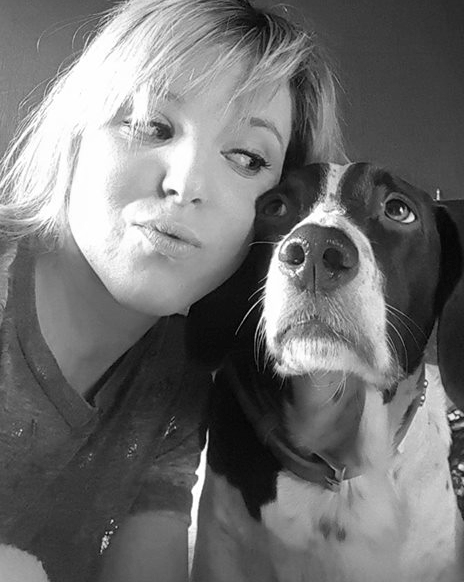
The photo below is of me and my dog, who without, I probably wouldn’t be where or who I am today. She has given me a reason to keep going day to day and she never fails to keep me smiling! Plus, my training as a veterinary care assistant is still in use – Tilly has recently been diagnosed with epilepsy. When she had her first couple of seizures in front of me, I was heartbroken, she’d come to me for comfort and then had a seizure. It was so unexpected! However, I knew exactly what to do and did all I could until we got her to the vets. She’s now on medication and despite this, she’s still her happy, healthy self and really, that’s all that matters.



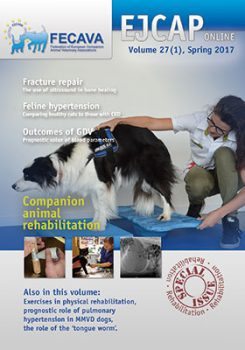 The spring issue of the European Journal of Companion Animal Practice (EJCAP) is available to view online.