Author Archives: Leanne Egland

RCVS Logo

RCVS launches consultation on VN Day-One clinical skills

As RCVS Awards will be closed by the end of this year, the Royal College of Veterinary Surgeons (RCVS) is taking the opportunity to review and reduce the number of required skills in order to make it more relevant to clinical practice.

The current Day-One Skills document was developed by RCVS Awards in 2010, and provides a list of those skills student veterinary nurses are expected to have gained by the end of their training, and to be competent and confident in when they first go into practice.

Julie Dugmore, Head of Veterinary Nursing, explains: “The current document was developed from an awarding body perspective and not that of the regulator, so it specifies a large number of non-clinical skills, for example, handling and moving equipment safely, which, while important, are somewhat out of our regulatory remit.

“Given the wide variety of veterinary practice settings, it is important that we, as the industry regulator need to review the skills list to ensure consistency, that it reflects current practice, and that it only includes those skills deemed necessary for registration purposes.

“A clearer focus on safe and effective clinical skills would support our primary regulatory role: that of protecting animal welfare and the public interest.”

The consultation sets out the proposed Day-One Skills, and asks for feedback on their relevance, accuracy and completeness. Comments would be welcomed from higher education institutions, awarding organisations, centres, and training practices, as well as veterinary nurses and veterinary surgeons.

The consultation is available via the RCVS website. Deadline for responses is 5pm on 29th July 2015.
RCVS Logo

RCVS advice service trials extended opening hours

The Royal College of Veterinary Surgeons (RCVS) Professional Standards Advice Team will be trialing extended hours, meaning that a member of staff will be available to answer calls about the Code of Professional Conduct and it’s supporting guidance until 7pm.

The trial will last for 3 months starting in June, which calls will be taken between 9.15am and 7pm, Monday to Friday.

On average the Professional Conduct Department deals with 7,500 calls a year as well as around 2,000 written requests.

Laura McClintock, Standards and Advisory Manager, says: “The aim of the trial is to determine if the profession would take advantage of these extended hours and, therefore, if our team should permanently extend it’s operating hours to provide a better service to the profession.”

The team aims to provide clear, concise and consistent advice to help veterinary surgeons and veterinary nurses understand their professional responsibilities and support compliance with the code. It also clearly distinguishes between professional requirements, legal requirements and suggested good practice and may offer suggestions about how professional responsibilities can be applied in practice.

The Professional Standards Advice Team can be contacted on 020 7202 0789 or, alternatively, email profcon@rcvs.org.uk

‘Veterinary Nurses (Protection of Title) Bill’ submitted to House of Lords

Royal College of Veterinary Surgeons (RCVS) Council member Professor the Lord Trees has submitted a Private Members’ Bill to the House of Lords which would legally protect the title ‘veterinary nurse’

Lord Trees commented: ‘It is very exciting, and a privilege to be entering a Private Members’ Bill to protect the title veterinary nurse into the ballot for Private Members’ Bills in Parliament. If we are drawn high enough in the ballot and if we can get Parliamentary time – two important ‘ifs’ – I am confident that the Bill will receive total cross-party support.

‘It would mark the final brick in the wall of creating a fully-fledged, recognised and protected veterinary nursing profession. This is what the veterinary nursing profession merits and the public deserves.’

If drawn sufficiently highly in the ballot, the Bill will be debated in the Lords and the Commons and, if approved by both Houses, would become law.

The House of Lords ballot will be drawn before the summer recess.

If registered veterinary nurses would like to back the campagin to protect the title and raise awareness, further details can be found at www.rcvs.org.uk/vntitle

Will hospice care become part of standard practice?

Now that hospice and palliative care has become mainstream in human medicine, a similar development might be occurring in veterinary medicine.

Kath Dyson, a former veterinary surgeon, writes that veterinary palliative care, while a relatively recent phenomenon, has been growing in stature, particularly in the United States. A joint Royal College of Veterinary Surgeons and British Veterinary Association project, about the fact that an increasing number of UK vets offer hospice care. However, she also notes differences between palliative services offered in human and veterinary medicine as well as debates within the profession over the advantages and disadvantages of palliative care versus euthanasia.

Kath Dyson said: “In animal hospice it is the pet’s owner who takes on all the financial, practical and emotional costs involved, whereas human patients have a lot more support available. Euthanasia is always an option in veterinary medicine, and indeed euthanasia of an animal can legally be carried out by anyone, so long as it is done humanely.”

Overall she argues that additional expertise from veterinary surgeons in end of life care will help the profession be “even better able to provide truly lifelong care to all their animal patients.”

Veterinary nurse recognised for pioneering awareness-raising work

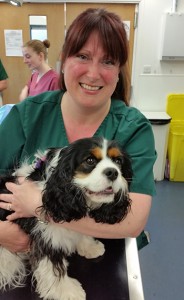
Dot Creighton with dogDot Creighton, a former president of the British Veterinary Nursing Association has been announced as this year’s recipient of the Royal College of Veterinary Surgeons (RCVS) Veterinary Nursing Golden Jubilee Award. Dot was nominated for the Award by fellow veterinary nurse Lindsey Raven-Emrich, who praised her enthusiasm and input to the profession.
Dot devised the concept of VN Awareness Day as a way of making animal owners and local communities more aware of veterinary nurses and what they do. This subsequently developed into an awareness week and now National VN Awareness Month, which takes place every May.

Kathy Kissick, Chair of VN Council said, “Dot has worked tirelessly to raise awareness of the veterinary nurse, both within the profession and with the general public. She has always supported the student veterinary nurse in training and leads by example at all time inspiring nurses to stay in or return to practice even when life changes their circumstances.

“Dot is an inspiration to many, many nurses and always commits 100% to the welfare of the animals in her care and to her clients. I congratulate her on achieving this award.”

Dot, who is currently working in practice in Essex, said she was delighted to win the award at such a crucial time for the profession. She added, “It couldn’t be a more exciting time to train to be a veterinary nurse- we have a robust training scheme, we are pushing and advancing the boundaries of veterinary nursing practice, we are seeing veterinary nurses branch out into different fields of clinical practice and most importantly, the new Royal Charter officially recognises veterinary nursing as a regulated profession.”

The Award will be given to Dot at this year’s RCVS Day which takes place on Friday 10th July in Westminster.

Rabbit Awareness Week – 1 in 5 vets concerned about lonely pet rabbits

Following a British Veterinary Association survey last year showed 1 in 5 British vets are concerned about rabbits kept as pets, and are urging owners to think about lonely rabbits and rabbit welfare generally during Rabbit Awareness Week (9th – 17th May 2015)

22% of companion animal vets responded that people should be discouraged from keeping rabbits unless these animals can be properly looked after.

Many of the vets who responded to the survey voiced concerns about single rabbits kept in hutches by themselves. Rabbits are very social animals and need contact with their own kind. Being kept on their own causes these animals to experience boredom, frustration and fear.

Last year’s PDSA Animal Wellbeing report highlighted how widespread and serious ‘Bugsy Alone’ syndrome is, reporting that in 2013, 65% of pet rabbits were living alone.

BVA President John Blackwell commented:
“Do your research first – ask your vet and read through helpful documents such as the Animal Welfare Foundation’s free Caring For Rabbits leaflet.

“Rabbits need the companionship of other rabbits and should never be kept alone with guinea-pigs.

“Potential rabbit owners also need to think about where their rabbits will live and what they eat. They need to be able to hide from danger and they need to be able to run, jump and dig as they would in the wild.

“We know as vets the pleasure that pet ownership can bring to the whole family, including children. But the golden rule is always to put the animal’s welfare first so that you have a happy, healthy animal who is part of the family.”

RCVS President’s marathon run raises £13,000 for charities

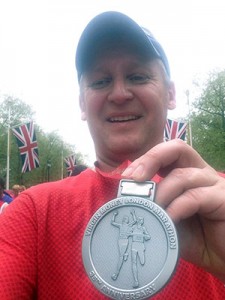
Stuart Reid with Marathon MedalProfessor Stuart Reid, the President of the Royal College of Veterinary Surgeons and Principal of the Royal Veterinary College has raised nearly £13,000 for mental health and animal welfare charities.

The Professor completed the 26 mile run in 4 hours and 51 minutes and, in the process raised money which will be split between his three nominated charities which are the RVC Animal Care Trust, the Veterinary Benevolent fund and mental health charity Mind.

Stuart Reid commented: “To be perfectly honest it was probably a bit daft to run a marathon in my Presidential year but when I see how much we have raised I know it was the right thing to do.

“I have been utterly humbled by the generosity and the words of encouragement on my Virgin Money Giving website and via text and Twitter and it is clear my chosen charities have touched a chord with many. I am so very grateful to everybody who chipped in. There’s plenty to do so let’s get on with addressing our mental health issues.”

RCVS Logo

RCVS and VN Council Election Results Announced

The Royal College of Veterinary Surgeons (RCVS) has announced the results of the 2015 RCVS Council and Veterinary Nurses Council elections.

RCVS Council

  • Niall Connell
  • Lynne Hill
  • Peter Robinson
  • Timothy Greet
  • Joanna Dyer
  • Katherine Richards

VN Council

  • Lucy Bellwood
  • Elizabeth Cox

Turnouts in both elections rose this year, compared to 2014 with 4,838 Veterinary Surgeons and 1,379 Veterinary Nurses voting.

RCVS Registrar Gordon Hockey, comments: “My sincere thanks to all those who stood for election this year and to all those who voted, and many congratulations to the successful candidates. Once again we have an excellent mix of people joining Council, who will be able to bring a diverse range of skills and experience to Council discussions and activities. I very much look forward to welcoming them to Council at our AGM in July.”

Chair of VN Council Kathy Kissick, says: “It’s encouraging that voter numbers have risen slightly in this year’s election, especially in such an auspicious year where the introduction of the new Royal Charter for the RCVS, means that we are now formally regulated by the College and recognised as true professionals in our own right. My congratulations to both Lucy and Liz on their success.

‘Quiz the candidates’ video’s for the elected candidates are still available to watch via the RCVS website.

RCVS Logo

Free lunchtime webinar on common concerns raised about vets and veterinary nurses

On Monday 11 May 2015 at 1pm, the Royal College of Veterinary Surgeons (RCVS) will be holding a webinar on some of the common concerns raised about veterinary surgeons and registered veterinary nurses and how these can be avoided.

The webinar titled ‘Don’t let complaints get you down‘, will be presented by Eleanor Ferguson, the RCVS Head of Professional Conduct, and Jerry Davies, MRCVS, Chair of the Preliminary Investigation Committee.

The presentation will last approximately 45 minutes after which there will be an opportunity for delegates to ask Eleanor and Jerry questions.

If you would like to register for the webinar, click here

The webinar will be published on the RCVS dedicated webinar page, for those who are unable to participate on 11 May.

Veterinary profession gets ready for compulsory microchipping as year-to-go countdown begins

With less than a year to go before the microchipping of dogs in England, Scotland and Wales becomes mandatory, vets across the country are getting set to help dog owners prepare for the new regulations.

DEFRA has agreed that registered veterinary nurses are already sufficiently qualified to implant microchips, and will therefore be exempt from further training requirements when new legislation comes in for England. Wales and Scotland are currently considering the details of implementation.

These changes in regulation follow the introduction of compulsory microchipping in Northern Ireland in 2012. This means that from spring 2016 there will be compulsory microchipping of dogs across the entire UK and veterinary surgeons and veterinary nurses across the country are preparing to make sure owners know their obligations and that their pets are safely microchipped.

The Department for Environment, Food and Rural Affairs (DEFRA) has now finalised the new reguations for England, which include a provision that dog breeders and other individuals who wish to implant microchips and have no previous approved training, must undergo a compulsory training course.

While veterinary surgeons were exempted from this training, DEFRA initially envisaged that veterinary nurses would be required to undertake it. In a joint letter, that followed by negotiations with DEFRA, the Royal College of Veterinary Surgeons, the British Veterinary Association and the British Veterinary Nursing Association, stressed that registered veterinary nurses are already sufficiently trained to be able to safely implant a microchip, and would be doing so under the direction of a veterinary surgeon.

RCVS Vice-President Neil Smith, who met with DEFRA officials alongside RCVS Head of Veterinary Nursing Julie Dugmore, said: “As RVNs are regulated by the RCVS, compulsory microchipping training would have been an unnecessary regulatory burden. It would have also been an additional financial burden to practices, which would have had to be passed on to clients. I am very pleased that DEFRA recognised this and agreed to exempt veterinary nurses from further training so long as they are under the direction of a veterinary surgeon.”

BVNA President Fiona Andrew added: “We would take this opportunity to remind our RVN colleagues that in order to be deemed competent under the terms of the RCVS Code of Professional Conduct they should be able to provide details of the previous training they have taken part in or should update their skills to comply with the Code.”

A spokesperson for DEFRA added: “DEFRA is very keen to avoid imposing any unnecessary burdens; our discussions with the RCVS, BVA and BVNA are a good example of the sort of collaborative working that helps to ensure we get the most workable legislation possible.”

For more information and to download posters promoting the new legislation click here