As an ISFM member you will receive a monthly online Feline Vet Nursing journal and regular webinars by feline experts.
Find out more at http://www.icatcare.org/nurses/membership
As an ISFM member you will receive a monthly online Feline Vet Nursing journal and regular webinars by feline experts.
Find out more at http://www.icatcare.org/nurses/membership
The Royal College of Veterinary Surgeons (RCVS) have informed us that student veterinary nurses who sat the RCVS OSCEs in September and are expecting their results on the 16 October will now receive their results earlier than expected.
The results will now be sent out by first class mail on Monday 6 October. If, for any reason, you do not receive your results by Monday 13 October please contact the RCVS who will issue another letter to you. Colleges will also receive your examination results and copies of your mark sheets. The pass list will be also published on the RCVS website by noon on Thursday 16 October.
Good luck everyone!
Animal organisations call on responsible consumers to report bad ads to websites
Over 100,000 inappropriate, misleading or illegal adverts were removed in just six months this year by some of the UK’s biggest classified advertising websites following a hugely successful pilot scheme run by the Pet Advertising Advisory Group (PAAG) to regulate online pet sales. A six-month monitoring scheme was undertaken by trained volunteers from a number of animal welfare organisations in membership of PAAG. This vast number shows the level of commitment given by the participating websites to improving animal welfare and demonstrates how cooperation between PAAG and online classified websites can make a huge difference to the welfare of pets and the protection of consumers.
As the six month pilot scheme draws to a close, PAAG – which is made up of representatives from the UK’s leading animal welfare groups and trade associations – believes that animal lovers now have a huge opportunity to make a difference for the thousands of animals advertised online each day. The group is thus calling on the public to join the fight against bad adverts, reporting anything suspicious they find whilst browsing online classified pages directly to the sites themselves and informing PAAG where sites refuse to remove illegal or unscrupulous adverts from their pet sections.
From underage animals, banned breeds, illegally imported or endangered species to animals offered in exchange for inanimate objects, the adverts removed in the pilot scheme all contravened PAAG’s Minimum Standards which were launched in September 2013. Endorsed by Defra and supported by the Scottish Government, the Minimum Standards aim to improve the welfare of pets sold online by encouraging websites to filter out illegal, unethical and unscrupulous advertisements.
The classified advertising websites involved in the pilot scheme: Gumtree, Pets4Homes, PreLoved, Vivastreet, FridayAds and EPupz removed adverts highlighted by their own filters and those reported to them by PAAG Volunteer Moderators.
Clarissa Baldwin, Chairman of PAAG, says:
“The truly staggering number of adverts that have been blocked in the pilot scheme is a real eye-opener in terms of the scale of the problem in the UK… Unfortunately, despite the fantastic efforts of a number of the biggest UK websites, thousands of other websites continue to accept illegal, unethical and unscrupulous adverts. We are urging any classified website in the UK offering pets for sale to sign up to the Minimum Standards so that progress can be made towards ensuring that all adverts on these websites are from reputable individuals or breeders.”
Animal Welfare Minister Lord de Mauley said:
“We can all play a part in ensuring the welfare of pets sold online. If anyone sees a suspicious pet advert, from the sale of under-age animals to banned breeds, I would urge them to report it directly to the host site. If the advert isn’t removed quickly, they should contact the Pet Advertising Advisory Group straight away.”
The Minimum Standards are just the first step on the road to solving the problems related to the online sale of pets. Anyone with a serious concern about the welfare of an animal in an advert should notify the RSPCA, SSPCA, USPCA and PAAG at admin@paag.org.uk
To find out more information, please visit the paag website.
A recent British Veterinary Association (BVA) survey shows that 1 in 5 British vets are concerned about rabbits kept as pets. BVA’s Voice of the Veterinary Profession survey asked companion animal vets what types of pets the general public should be discouraged from keeping. Surprisingly high on the list were rabbits, with 22% of companion animal vets responding that people should be discouraged from keeping rabbits unless these animals can be properly looked after.
Overwhelmingly, the message from vets is that while many people think rabbits are easy to look after and ideal pets for children, rabbits have complex needs and the traditional idea of the rabbit in the hutch can mean misery for these pets. Many of the vets who responded to the survey voiced concern about single rabbits kept in hutches by themselves. Rabbits are very social animals and need contact with their own kind.
Being kept on their own causes these animals to experience boredom, frustration and fear. Survey comments from vets included:
“Rabbits should not be solitary animals left in the hutch 23 hours a day.”
“Rabbits often get forgotten and are kept as single pets.”
“Rabbits are often bought for children who grow bored of them – rabbits can live for a very long time in a small hutch and often get quite neglected.”
The most recent PDSA Animal Wellbeing (PAW) report highlights how widespread and serious this ‘Bugsy Alone’ syndrome is, reporting that in 2013, 65% of pet rabbits were living alone.
Vets who responded to the BVA’s Voice of the Veterinary Profession survey also commented on poor diets and poor husbandry as problems they commonly see when treating pet rabbits. One vet said: “Many rabbits have poor husbandry, nutrition and clinical care. The traditional hutch does not meet their physical, social or environmental needs.”
BVA President and small animal vet Robin Hargreaves commented:
“Pet owners, particularly parents trying to buy a suitable pet for their child, have the very best intentions. But I would urge them to stop, think and ask before purchasing any animal, and give careful consideration to their ability to fully provide for its welfare needs as well as the child’s relationship with the animal…“Do your research first – ask your vet and read through helpful documents such as the Animal Welfare Foundation’s free Caring For Rabbits leaflet….“Potential rabbit owners also need to think about where their rabbits will live and what they eat. As prey animals, they need to be able to hide from danger and they need to be able to run, jump, and dig as they would in the wild.
Click here to download The Animal Welfare Foundation’s (AWF) Caring for Rabbits leaflet.
Click here to downlad the PDSA Animal Wellbeing report.
Applications for the January 2015 Start Advanced Apprenticeship in Veterinary Nursing (Level 3 Diploma) are now open.
This day release/blended learning programme is for students employed in a veterinary practice (TP).
More information can be found on our website.
Standardisation events are essential for all clinical coaches that are supporting The College of Animal Welfare (CAW) veterinary nursing students. All CAW clinical coaches must attend at least one standardisation event per year in accordance with the signed Memorandum of Agreement. These are held every month and are free of charge.
The College of Animal Welfare’s standardisation sessions provide an excellent opportunity to exchange ideas and opinions with other clinical coaches from a variety of practices. Meet up with other clinical coaches, share best practices, and find out the latest news and developments in veterinary nurse training with The College of Animal Welfare. You will also have the opportunity to work on any problem areas to ensure that clinical coaches are working towards the same targets and standards.
The Nursing Progress Log (NPL) is the log of practical skills carried out by the student veterinary nurse and it is important that clinical coaches are up to date with current procedures and guidelines, for example:
A combination of lecturer input; practical demonstration and participation; and group discussion will be included to ensure that all attendees find the session enjoyable and motivating.
Active clinical coaches will receive email notification in advance of their standardisation due date, along with dates of future standardisation events. If the clinical coach does not attend a standardisation event they will receive an email requesting them to book onto an event. If the clinical coach still hasn’t attended standardisation they will automatically be booked onto the next available event and will receive an email detailing this. If the clinical coach fails to attend this standardisation event the QAS will contact them to inform them that NPL access will be removed immediately.
Failure to attend standardisation could result in access to the NPL being removed and an alternative clinical coach will need to be sourced. If an alternative clinical coach cannot be found then a representative from The College of Animal Welfare will step in and the practice will be charged as per the Training Practice fees.
Dates and locations for standardisation events are available on The College of Animal Welfare website.
If you have any questions regarding standardisation please contact your Quality Assurance Supervisor.
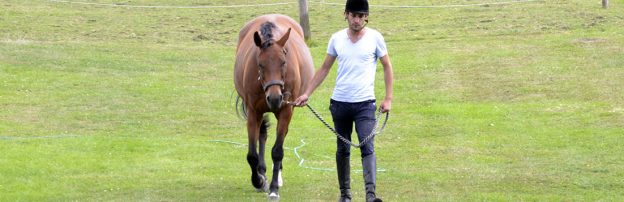
The Royal College of Veterinary Surgeons (RCVS) have confirmed that the following equine skills are mandatory for all students on the small animal pathway:
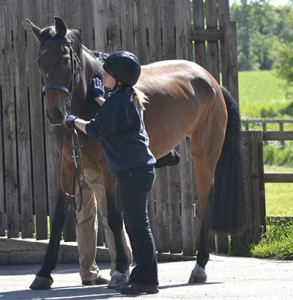 Demonstrate the correct technique for handling, holding and restraining animals for examination
For The College of Animal Welfare (CAW) students who don’t have access to horses, CAW will be arranging equine sessions at a local equine establishment. These sessions usually take place outside of term time so students will need time out of practice to attend.
The equine Nursing Progress Log (NPL) units that are mandatory and must be completed are:
VN3 – equine anatomy
VN4 – Skills 1, 2, 3, 4, 5 and 6.
VN5 – Skill 2.
The equine NPL units that students on the small animal pathway are exempt from are:
VN9 – Skills 12 and 13.
VN10 – Skills 1, 2, 3 and 4 (Joint Fluid & Peritoneal Fluid) and 7 (Total Protein).
Clinical coaches can mark these skills with ‘Student chooses not to undertake this skill’, and the skill will appear as competency confirmed.
If you have any queries relating to the NPL please contact your course tutor or Quality Assurance Supervisor (QAS).
The annual renewal fee for veterinary nurses to remain on the Royal College of Veterinary Surgeons (RCVS) Register/List of Veterinary Nurses is now due.
Both registered and listed veterinary nurses need to pay the annual renewal fee of £61 by 1 November 2014. All veterinary nurses need to confirm their Register/List details and correspondence address; registered veterinary nurses will also need to declare any convictions and confirm that they have complied with the RCVS requirement for continuing professional development (CPD) of 45 hours over a three-year period.
Any registered or listed veterinary nurses who have not paid their annual renewal fee by 31 December 2014 will be removed from the Register/List of Veterinary Nurses.
This year both registered and listed veterinary nurses can pay their annual renewal fee and manage their details online more quickly and easily through the ‘My Account’ area at www.rcvs.org.uk/login. A list of Frequently Asked Questions about the registration process can also be found on the RCVS website at www.rcvs.org.uk/vnfaq
Security details for accessing the ‘My Account’ area have been sent to all registered and listed veterinary nurses. Any veterinary nurses who have not received their annual renewal fee letter or login details by 1 October 2014 should contact the RCVS Registration Department on 020 7202 0707.
As of April this year, the annual renewal fee for registered and listed veterinary nurses has also been classed as a tax deductible expense. Details of how to claim income tax relief on expenses are available from the HM Revenue & Customs website (www.hmrc.gov.uk).
Veterinary nurses in need of further guidance on paying their annual renewal fee should contact the RCVS Finance Department on finance@rcvs.org.uk or 020 7202 0723.
From Wednesday October 1 2014 the National Minimum Wage rates are to be increased. The new hourly rates will be as below:
The increase was proposed by the Low Pay Commission following the government questioning how it would be possible to increase the lowest wages without impacting upon employment.
All increases must be implemented for both existing staff as well as for new recruits.
For further information about these changes please visit the gov.uk website.
The PDSA’s 2014 Paw Report survey is now open. If you are working in the veterinary profession, please take some time to take part as the results will be used to help engage the public with pet health and welfare messages to improve animal welfare.
The survey can be found at www.yougov.com/pdsa and you could even win an ipad!