Author Archives: Amber Tennant

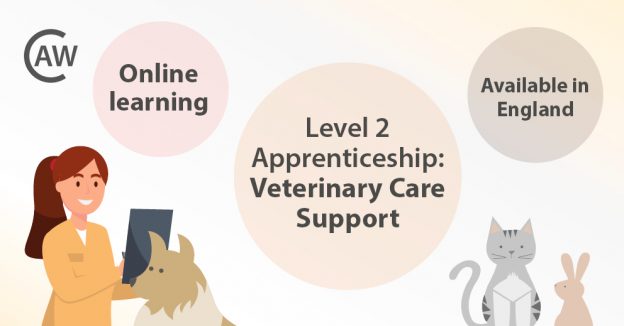
Veterinary care support apprenticeship pathway blog image

Is a veterinary care support role for you?

Whether you’re just out of school and looking to kick-start a career with animals, have always wanted to work with animals and looking for a career change, or unemployed and looking to get back into the industry, veterinary care could be the perfect career for you!

Why train in veterinary care?

Veterinary Care Support staff are crucial members of today’s modern veterinary team, working alongside veterinary surgeons and veterinary nurses to provide vital nursing care to small animal patients. The role is varied and every day you will be involved with:

  • Exercising, grooming and feeding hospitalised animals (inpatients)
  • Monitoring and providing supportive care to inpatients
  • Preparing theatre and relevant equipment
  • Cleaning and preparing accommodation for animals
  • Restraining animals for treatment
  • Reception duties, including advising clients on preventative health care e.g. flea treatment
  • Record keeping

Although hours can be long and the work physically and emotionally demanding, the rewards that come from being part of a team that work together to nurse animals back to health, make the job extremely worthwhile and fulfilling!

What’s more – career progression is excellent!

Many VCAs go on to complete additional qualifications such as the Level 2 Certificate in Assisting Veterinary Surgeons in the Monitoring of Animal Patients programme, or even go onto train as a veterinary nurse by undertaking the Level 3 Diploma in Veterinary Nursing, as an apprenticeship or standalone qualification.

Start your training today on our NEW Veterinary Care Support Apprenticeship programme!

If you’re set on training to become a veterinary care support professional, we are delighted to announce we now offer a *NEW* Veterinary Care Support (VCS) apprenticeship programme!

This apprenticeship will provide a tailored learning experience allowing you to develop the skills, knowledge and experience needed to thrive as a VCA by undertaking on-the-job training in a veterinary practice. You will learn skills such as:

  • common medical, behavioural and surgical care requirements
  • the principles of care and related procedures and how to deal with these
  • clinical parameters of common species seen in a veterinary environment
  • legislation and limitations in relation to role and responsibilities in a clinical environment
  • legislation in relation to the dispensing and administering of medication
  • end of life care processes, procedures and support
  • how to deal with emotional customers/clients
  • exercise/socialise animals and provide appropriate enrichment relevant to their specific needs
  • provide food and water to animals and monitor intake
  • maintain, update and reference correct records in accordance with current legislation

The new apprenticeship is available now. To find out more about the new programme visit our website or call us on 01480 422060!


LEP Apprenticeship Grant for Employers

There is no better time for a business to take on their first apprentice. From 1 April 2019 the training costs of an apprenticeship to a business has dropped by 50%. This means the government will pay 95% of the cost of the apprenticeship, leaving just 5% payable by the employer!

What’s more…

Grants of up to £2,500 are available for small businesses (249 or fewer employees) to recruit an apprentice.

If you’re based in Bradford, Calderdale, Kirklees, Leeds, Wakefield or York you can apply for the apprenticeship grant for employers (AGE) from Leeds City Region Enterprise Partnership (LEP).

Am I eligible to apply?

  • A core grant of £2,000 is on offer, allocated on a first-come, first served basis and you’ll need to meet the full grant eligibility criteria
  • Businesses with 249or fewer employees within local authority areas of Bradford, Calderdale, Kirklees, Leeds, Wakefield and York
  • Have never offered apprenticeships before
  • Are offering new employment as an apprenticeship opportunity to 19-24 year olds with associated apprenticeship training via a training provider approved by the Education Skills Funding Agency (ESFA)
  • The Apprentices must be following a recognised Apprenticeship Standard or Framework
  • Are paying the national minimum wage for the age of the apprentice from day 1 of their apprenticeship training (above the apprenticeship wage of £3.90).  This equates to £6.15 per hour for 18-20 year olds, £7.70 per hour for 21 – 24 year olds.

An additional top up grant of £500 is on offer if:

Find out more on the Leeds City Region Enterprise Partnership (LEP) website

Apply for the LEP AGE grant

Hedgehog Awareness Week Infographic Full Size

Hedgehog Awareness Week 2021: How to help hedgehogs

It’s Hedgehog Awareness Week 2021!

Hedgehog numbers have fallen by 30 percent in just over 10 years, and there are now thought to be fewer than 1 million left in the UK. You can help this threatened species to thrive by making small changes in your garden, such as:

  • Making your pond safe for hedgehogs by providing a ramp or shallow area so they can easily exit
  • Providing nesting sites such as log/leaf piles, wilderness areas and man made hedgehog homes
  • Checking for hedgehogs before lighting bonfires, strimming and mowing the lawn
  • Installing gapped fencing or dig a channel beneath your garden boundaries to create easy access for hedgehogs
  • Leaving out food such as meat-based dog or cat food and a dish of water
  • Keeping household rubbish above ground level to prevent entanglement

If you’re concerned about a hedgehog, The British Hedgehog Preservation Society can offer advice and help you find a rescue centre near you. To find out more visit the BHPS website.

If you would like to find out more about how you can get involved in saving this threatened species, The ‘Hedgehog Street’  is a joint campaign by the People’s Trust for Endangered Species (PTES) and the British Hedgehog Preservation Society (BHPS), which provides useful information, suggests activities and sends out regular bulletins. More information can be found on the Hedgehog Street website.

Hedgehog awareness week infographic - how to help hedgehogs3


Deaf Awareness Week 2019

This year’s Deaf Awareness Week is here!

There are around 11 million people with hearing loss in the UK, with an estimated 900,000 people with severe or profound hearing loss.*

This week is the perfect opportunity to raise awareness of hearing loss and deafness across the UK, how to help people living with hearing loss, and encourage those who have noticed the first signs of hearing loss to seek help.

Signs of hearing loss

Contrary to popular belief, it can sometimes be hard to tell if you’re losing your hearing and often other people notice it before you do. Early symptoms of hearing loss include:

  • difficulty hearing other people clearly and misunderstanding what they say, especially in noisy places
  • asking people to repeat themselves
  • listening to music or watching TV with the volume higher than other people need
  • difficulty hearing on the phone
  • finding it hard to keep up with a conversation
  • feeling tired or stressed from having to concentrate while listening

If you notice any problems with your hearing, read more about treatments for hearing loss and make sure you book an appointment with your GP so you can find out the cause and gain advice on the most appropriate treatment.

How you can help

Hearing loss can lead to withdrawal from social situations, emotional distress, and depression. Research also shows that it can increase the risk of loneliness and dementia.* You can help by:

  • Spreading understanding about hearing loss and deafness
  • Learning and using British Sign Language (BSL)
  • Donating to, volunteering or fundraising for charities which provide information, advice and support to people who live with deafness or hearing loss, such as Action on Hearing Loss
  • Donating to, volunteering or fundraising for charities which train hearing dogs to support deaf people, such as Hearing Dogs for Deaf People
  • Practicing good communication skills such as maintaining eye contact, speaking clearly and at a normal pace and keeping your mouth uncovered to facilitate lip-reading

A1405_DAW19_Did-you-know


Train to become a dog groomer on a Saturday at The College of Animal Welfare!

If you’re tired of your 9-5 job and want a career that you’re passionate about, training to become a dog groomer could be your next career move!

City & Guilds accredited dog grooming courses run at the College give learners the experience and knowledge needed to secure long-term career prospects within the dog grooming industry. What’s more…

From June 2019 we will be running our City & Guilds Level 2 Certificate for Dog Grooming Assistants course on a Saturday for the very first time, meaning getting qualified around a busy schedule is easier than ever before!

Learners undertaking this course will train with guidance from qualified dog groomers in our state-of-the-art grooming suites in Huntingdon or Leeds. Further information on the Saturday day release courses starting in June 2019 can be found at www.caw.ac.uk/dg or by calling us on 01480 422060.

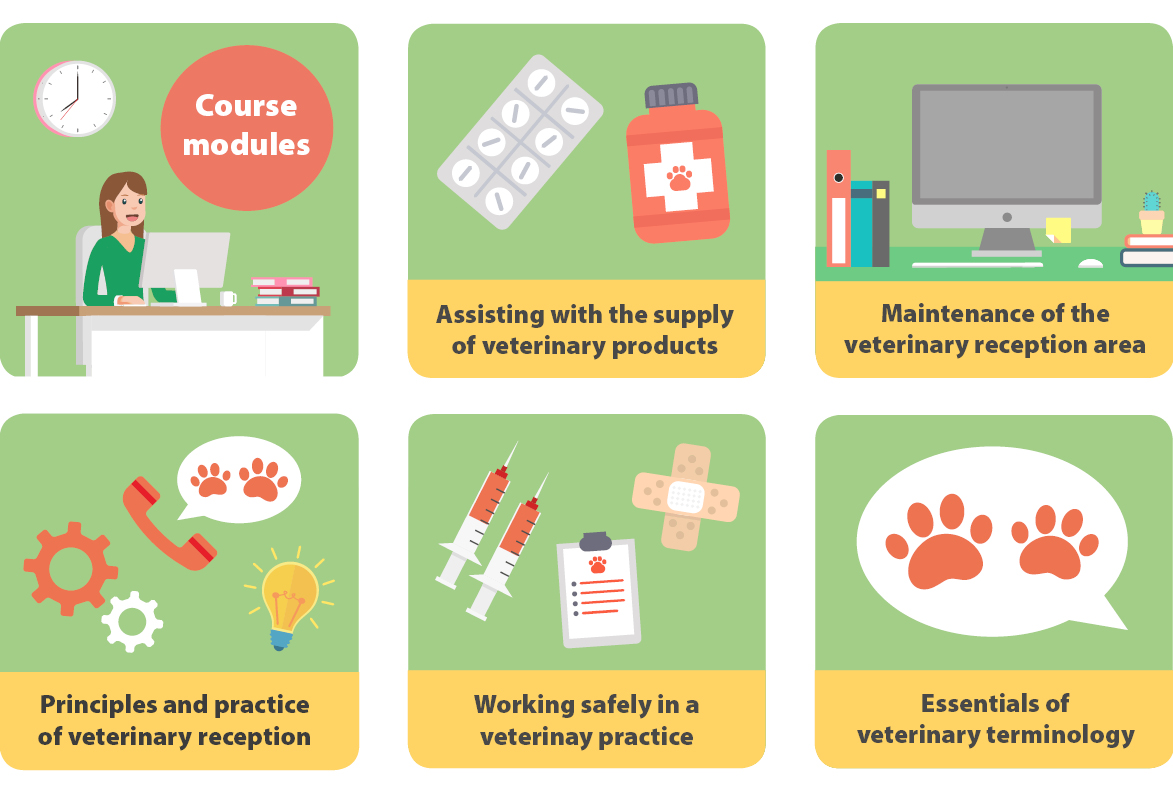
veterinary care support apprenticeship infographic

Veterinary Care Support Level 2 Apprenticeship: By employers, for employers

We recently launched a new Veterinary Care Support (VCS) apprenticeship pathway, designed to provide a tailored learning experience for those who currently work in a VCS role with little to no formal training, as well as a route into employment for people who want to work in a VCS role in the future!

Read on to see what this means for apprentices and employers alike…

Current, tailored learning for VCS apprentices

The new pathway has been developed by employers, for employers. As such, apprentices undertaking the veterinary care support (VCS) pathway will learn the skills, knowledge and experience needed to thrive as a VCA by undertaking on-the-job training in a veterinary practice. They will learn skills such as:

  • common medical, behavioural and surgical care requirements
  • the principles of care and related procedures and how to deal with these
  • clinical parameters of common species seen in a veterinary environment
  • legislation and limitations in relation to role and responsibilities in a clinical environment
  • legislation in relation to the dispensing and administering of medication
  • end of life care processes, procedures and support
  • how to deal with emotional customers/clients
  • exercise/socialise animals and provide appropriate enrichment relevant to their specific needs
  • provide food and water to animals and monitor intake
  • maintain, update and reference correct records in accordance with current legislation

Reduced fees for veterinary practices training VCS roles via apprenticeships

The government have agreed to fund 95% of the apprenticeship fees for small employers (those with an annual payroll of less than £3 million) so, if this applies to you, it leaves you with only £250 to pay! What’s more if you have less than 50 employees and your apprentice is under 19 years of age there are no fees to pay and you’ll get a £1,000 grant too!

If you are a large employer (with an annual payroll bill of more than £3 million) the £5,000 apprenticeship fees are payable via the apprenticeship levy money in your digital account.

Robust Assessment of VCS apprentices…

To achieve the apprenticeship the apprentice will:

  • Complete a portfolio
  • Undertake Functional Skills in English and Maths (unless exempt)
  • Pass a final End Point Assessment (EPA) consisting of a practical assessment and professional discussion.

What else do you need to know? 

The apprenticeship is expected to take 18 months to complete if the apprentice is working for 30 hours a week or more.

All apprentices must spend 20% of their working time allocated to ‘off-the-job-training’. This can include time being allocated to work on activities such as reflective logs or portfolio tasks, or perhaps undertaking a research project or reviewing working processes. There are many ways in which to use this allocation to the advantage of both the apprentice and your business!

The new apprenticeship pathway is available now. To find out more about the new pathway visit www.caw.ac.uk/vc or call the college on 01480 422060.

veterinary care support apprenticeship infographic

MSD Animal Health Research Bursary open for applications

If you’re a student or qualified veterinary nurse, you could be in luck! MSD Animal Health’s first veterinary nurse research bursary is open for applications.

One £1,000 research bursary is up for grabs by the SVN or RVN in the UK with the best research project application. Opportunities to win additional prizes will also be available at MSD’s research bursary day in June 2020.

Applications are open until Friday 10th May.

For more information visit the MSD Animal Health website. 

Veterinary care support apprenticeship pathway blog image

NEW Veterinary Care Support apprenticeship pathway available now!

The College of Animal Welfare is delighted to announce it now offers a veterinary care support apprenticeship pathway (VCS), available as part of the Animal Care and Welfare Assistant level 2 apprenticeship standard launched in August 2018. 

The addition of this pathway will provide a current, tailored training opportunity for those who currently work in a VCS role with little to no formal training, as well as a route into employment for people who want to work in a VCS role in the future.

Throughout the programme, apprentices will learn the skills, knowledge and experience needed to thrive as a VCA by undertaking on-the-job training in a veterinary practice. Apprenticeship materials will be delivered online via the college’s Virtual Learning Environment (VLE), with email and telephone support provided throughout the qualification by an allocated Distance Learning Tutor.

Government funding means that smaller practices (those with an annual payroll of less than £3 million) pay just £250 towards their apprentices’ training fees. What’s more – if the practice has less than 50 employees and their apprentice is under 19 years of age, there are no fees to pay and they’ll get a £1,000 grant too!

Nina De Franco, Head of Veterinary Studies at The College of Animal Welfare, said: “Veterinary Care Support professionals are essential members of today’s modern veterinary practice, working alongside surgeons and nurses to provide vital care to small animal patients. This pathway opens up a new training option for those working in veterinary support roles, as well as providing a training solution to employers that is current, relevant and fit for purpose.”

The new apprenticeship pathway is available now. To find out more about the new pathway visit www.caw.ac.uk/vc or call the college on 01480 422060.

Male RVN in practice - careers with animals day

Cuts to apprenticeship fees make training veterinary nurses more affordable

The government has recently announced that as of 1 April 2019, employers with an annual pay bill of less than £3 million will now only be required to contribute half the rate they previously did towards apprenticeship fees. Small (non-levy paying) employers contribute to apprenticeship fees in a ‘co-investment’ with the government in which the government will now cover 95% of the course fees.

Veterinary nursing apprenticeships now only cost a total of £750 for small employers and are suitable for current staff, or new trainees.

Taking on an apprentice has a whole host of benefits and allows a veterinary practice to develop an employee who meets business needs. A combination of theory and practical learning in the workplace allows apprentices to put their knowledge into practice, gaining valuable industry experience and an immediate contribution to the team.

Frank Taylor, Vice-Principal of Veterinary Studies at The College of Animal Welfare said: “It’s amazing to hear that the government has halved apprenticeship fees for non-levy employers. Apprenticeships are a great way for students to develop both the theory and practical skills they need to succeed; making hiring an apprentice that bit more affordable will definitely benefit the veterinary industry.”

Involved in training approximately 20% of the UKs veterinary nurses The College of Animal Welfare is now looking for the next generation of veterinary nurses and the September intake is now open. For more information visit www.caw.ac.uk/vn or call 01480 422060.

Stuck for ideas this Easter Bank Holiday Weekend? Apply for a TOTUM card to help you make the most of your holidays!

Did you know if you’re a student at The College of Animal Welfare you may be entitled to apply for a TOTUM card?

With an average saving of over £500, the TOTUM card (previously NUS extra) could be the perfect way for you to make the most of your holidays and save on your purchases. The TOTUM card is available for eligible students for only £12 a year. You could save on:

  • Travel and accommodation (selected airlines, holiday companies and hotels worldwide)
  • Food and Drink (Co-Op, Pizza Express, Las Iguanas etc)
  • Tickets (Odeon, Cineworld, Ticket Master etc)
  • Music, Films and Gaming (Amazon, Game etc)
  • Fashion (Warehouse, New Look, Missguided.co.uk etc)
  • Books and Stationary (Inks4Students and Cartridge People)
  • Health and Beauty (Superdrug, Vision Express etc)
  • Technology and Gadgets (Apple, Dell, Ink Cartridges etc)

Please note the offers/discounts available are not fixed and may vary or be withdrawn at any time.

A one-off fee of £12/£22/£32 entitles you to a TOTUM Card valid for 12/24/36 months from the date of purchase.

Please call us on 01480 422060 / admin@caw.ac.uk to find out if you are eligible to apply for a TOTUM Card and to receive a Voucher Code needed to apply. You can then click here to start your application!