Author Archives: Amber Tennant

The First 90 Days - How to Help SVNs Settle into Practice and Succeed

The First 90 Days: How to Help SVNs Settle into Practice and Succeed

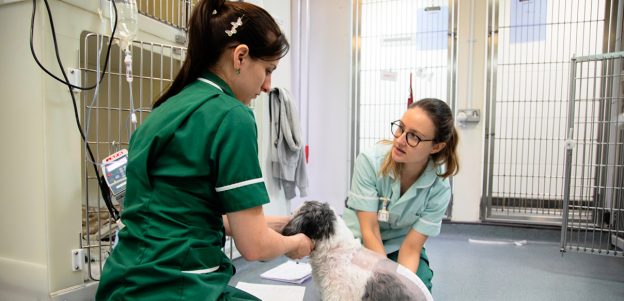
Taking on a student veterinary nurse (SVN) is a fantastic opportunity to support the next generation of Registered Veterinary Nurses (RVNs). For many students, their placement is the first real taste of working in a veterinary practice setting. These early weeks are critical in shaping how they feel about the role, the profession, and their own capabilities.

The first 90 days of a veterinary nursing placement can lay the foundation for a confident, competent, and committed student, but it can also become a period of anxiety and self-doubt. Practices that offer structure, support, and encouragement during this time are giving their students the best possible start. Here’s how you can do just that, and how we can support you every step of the way:

1. Plan a warm, structured onboarding

Starting in a new environment can be overwhelming for any student – new faces, new routines, and new expectations. A thoughtful, well-planned induction helps SVNs feel like valued members of the team right from the beginning. A warm welcome paired with clear structure can help reduce anxiety and boost early confidence. Consider including:

  • A clear induction plan: Outline key protocols, where to find equipment, emergency procedures, and who to go to with questions.
  • A structured timetable: Plan a mix of observation, supervised tasks, and reflective time across the first few weeks.
  • Early introductions: Make sure the whole team is aware of the student’s arrival and role, and assign a supportive “go-to” person beyond their clinical supervisor if you can.

2. Set clear and kind expectations

Students want to succeed, but without clear guidance, they may feel unsure of what’s expected of them. By setting out expectations from the start in a friendly, supportive way, you can avoid misunderstandings and help the student feel more secure in their role. Be sure to discuss:

  • Key goals for the first month or term: Help them understand what they should aim to be practicing or observing.
  • Supervision levels: Explain which tasks they can assist with and when supervision is required.
  • Feedback structure: Let them know how, and when, they’ll receive feedback, and that you welcome questions or concerns.

The clearer the roadmap, the easier it will be for the student to settle into a productive rhythm.

3. Build confidence through gradual responsibility

Confidence isn’t built overnight. Many SVNs feel nervous in their early weeks, especially when faced with clinical skills they’ve only practiced in a classroom. The key is to introduce responsibility gradually, giving students opportunities to succeed while still feeling safe and supported. Start small and build up by:

  • Beginning with observation, then moving on to simple, supervised tasks.
  • Celebrating small wins, such as successfully preparing a surgical pack or assisting in a consult.
  • Encouraging questions and reflection, helping them feel their curiosity is a strength, not a weakness.

Confidence grows when students feel trusted, and when they know you’re there to catch them if they fall.

4. Create a feedback-friendly culture

One of the most valuable tools you can give a student is feedback. However, for it to be effective, feedback needs to be regular, specific, and framed constructively. Creating an environment where students feel safe receiving and responding to feedback will help them grow faster and more confidently. Make feedback part of your regular routine by:

  • Scheduling weekly or twice-monthly check-ins to talk through recent learning, challenges, and progress.
  • Using a feedback notebook or app so both you and the student can track development over time.
  • Focusing on the positives as well as areas for improvement, and offering clear steps they can take to progress.

When feedback is a normal and expected part of the placement, rather than something reserved for when things go wrong, students are more likely to embrace it.

5. Know when to reach out for help

Even with the best onboarding, some students may find aspects of  practice difficult. They may be struggling academically, facing personal challenges, or simply taking longer to settle. It’s important not to let concerns build in silence, as early support can prevent issues from escalating. If you notice your student is struggling, remember that your training provider is there to support you.

For example, at The College of Animal Welfare (CAW), we can offer tailored advice, guidance on managing concerns, or simply be a sounding board. There are also pastoral and academic support options available, including coaching, wellbeing referrals, and additional tutoring where needed.

Raising concerns early, with compassion and sensitivity, shows your commitment to the student’s success, and allows us to work with you to find the best solution.

How we support our clinical supervisors every step of the way

Supporting a student is a big responsibility, and we want practices to feel confident and equipped. That’s why we offer a comprehensive support package to all training practices and placement providers working with our SVNs.

  • Free clinical supervisor training
    Access essential training to prepare for your role, which is completely free for CAW-affiliated practices.
  • Ongoing support from a dedicated IQA
    Our Internal Quality Assurance (IQA) team is here for you every step of the way, whether you need advice, a second opinion, or help managing a student issue.
  • Discounts on CPD, including our annual Clinical Supervisor Congress
    Stay up to date with best practice, network with peers, and earn 7 hours of CPD at our Clinical Supervisor Congress, with exclusive discounts for CAW TPs.
  • Online resources and peer forum
    Our Virtual Learning Environment (VLE) hosts a wide range of clinical supervisor tools, guidance documents, and access to a dedicated Clinical Supervisor forum where you can share ideas and experiences with others.

Request a call back to discuss training SVNs in your practice.


The first 90 days in practice are a defining chapter for student veterinary nurses. With structured support, open communication, and a positive, encouraging environment, you can help them transition from cautious beginners to confident learners – and ultimately, capable future colleagues.

Remember, if you’re a CAW Training Practice, you’re never alone in this journey. Whether it’s onboarding questions, concerns about progress, or simply needing reassurance, we are here to support you every step of the way. If you’re preparing to welcome a new CAW SVN or have questions about student support, reach out to your IQA contact or get in touch with us at admin@caw.ac.uk.   

If your practice is considering training an SVN for the first time and looking for advice, we’d be happy to chat through the process with you. You can contact us by calling 01480 422060, requesting a call back, emailing admin@caw.ac.uk or starting a live chat on our website.
Supervising an SVN What you can and can’t expect from them

Supervising an SVN? What you can and can’t expect from them

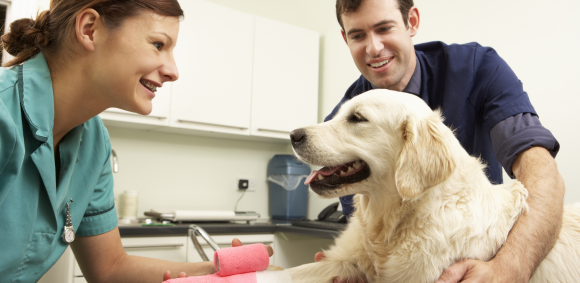
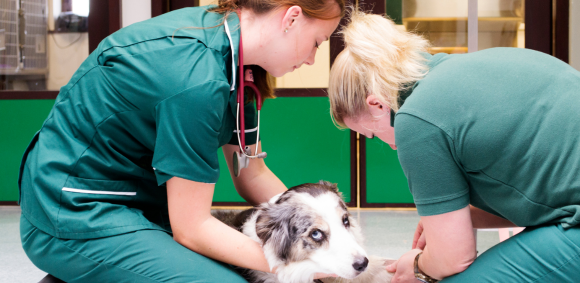
Supervising a student veterinary nurse (SVN) is a rewarding responsibility, but it can also raise questions about what’s appropriate to expect at each stage of their veterinary nurse training. Some students come in with a lot of confidence; others may be quiet, cautious, or unsure. Without clear expectations, it’s easy for SVNs to feel overwhelmed or for practices to underutilise them unintentionally.

This article offers a realistic look at what students are typically ready for at different stages of their veterinary nurse training and how you can strike the right balance between challenge and support. It’s also a reminder that learning is a process, and every student progresses differently.

Understand the stages of veterinary nurse training

Knowing what your student has covered academically will help you tailor their practical experience. The veterinary nursing curriculum tends to build gradually — with first-year students focusing on observation and essential nursing techniques, and second or third years tackling more advanced clinical tasks. It’s worth reviewing their college timetable or asking them directly:

  • What modules or practical skills have they covered so far?
  • Are there any upcoming assessments they need to prepare for?
  • What do they feel confident doing and what are they still building?

This simple conversation can help shape realistic daily expectations and ensure your student gets opportunities aligned with their stage of learning.

What you can expect from a student veterinary nurse

SVNs are expected to develop steadily across their placement, but they are not fully qualified team members (yet). Here’s what you can reasonably expect from a student, with the understanding that confidence and competence may vary:

  • A positive attitude and willingness to learn
  • Professional behaviour and appropriate communication
  • Engagement with feedback and supervision
  • Gradual progress in key practical skills
  • Honesty if they don’t know or aren’t confident

You can also expect them to be proactive within reason. Encouraging curiosity (e.g. asking questions, reflecting on cases, seeking clarification) helps students develop their critical thinking and grow into the veterinary nurse role.

What you shouldn’t expect

It’s important to avoid assuming that because a student has “been here a while,” they can perform at the level of a qualified veterinary nurse. They are still learning, so it’s critical to maintain appropriate supervision and support. You shouldn’t expect:

  • Full independence in tasks without appropriate sign-off
  • Knowledge of all practice protocols or equipment
  • The ability to manage complex cases alone
  • Confidence in new or rarely-practiced procedures
  • The same pace, stamina, or clinical judgement as qualified staff

Setting expectations too high can lead to stress, burnout, or fear of making mistakes. It’s better to build confidence gradually than to risk a student feeling out of their depth.

How to avoid underutilisation

On the flip side, some students aren’t given enough opportunities. This is often because team members are unsure what they’re allowed to do. Under-challenging a student can lead to frustration and slow development. To make sure your student gets the most from placement:

  • Review their current skill level with them and plan opportunities accordingly
  • Invite them to shadow more experienced staff in new areas
  • Let them repeat tasks they’ve learned in college to reinforce learning
  • Give them small responsibilities with supervision, such as preparing a surgical pack or supporting in consults

Small, consistent exposure helps students grow in competence and confidence. Always make sure you’re working within the RCVS guidelines for student scope of practice and keeping appropriate records in their Nursing Progress Log (NPL). If you’re unsure of what your responsibilities are at any point, your training provider can provide advice and guidance.

Communicate and review regularly

Students thrive when expectations are clear, consistent, and regularly reviewed. You can support their development by having open conversations about how things are going, what they feel ready to try, and where they need more support. Try to schedule:

  • Weekly or fortnightly check-ins to reflect on progress
  • Feedback sessions following assessments or key tasks
  • Opportunities to talk about upcoming college deadlines or placements

If you’re unsure about whether a student is progressing as expected, don’t hesitate to reach out to your training provider for guidance.

Is your student veterinary nurse struggling? Read more about what to do when things don’t go to plan and the support we can provide.

How we support clinical supervisors / clinical coaches in practice

Helping students reach their potential is a team effort, and we’re here to help you as a clinical supervisor. Here’s what you can access through The College of Animal Welfare (CAW) as a clinical supervisor supporting our students:

  • Free clinical supervisor training
    Prepare for the role with confidence. Our supervisor training is available at no cost to CAW-affiliated practices.
  • Support from your dedicated IQA team
    We’re always happy to advise on student capability, development plans, and appropriate supervision.
  • Access to discounted CPD
    Our Clinical Supervisor Congress offers 7 hours of CPD and practical insight into best practice supervision.
  • Resources and forum access via our VLE
    Use our online learning platform to access resources and connect with other supervisors for shared experience and advice.

Request a call back to discuss training SVNs in your practice.


Striking the right balance with a student isn’t always easy. However, with clear communication, realistic expectations, and a bit of flexibility, you can help them develop the confidence and skills they need to succeed.

Remember that supervision doesn’t need to be perfect, and when in doubt, you don’t have to go it alone. Your training provider is always there to guide, support, and help you get the most from your student placement.

RCVS Compliance for TPs

What Veterinary Practices Need to Know About RCVS Compliance When Training SVNs

Training student veterinary nurses (SVNs) is a rewarding and impactful way to grow your team and contribute to the profession, but it also comes with responsibilities. For practices registered as Training Practices (TPs) or auxiliary Training Practices (aTPs), staying compliant with RCVS standards is essential not only to maintain your accreditation but to ensure your students are getting the high-quality veterinary nurse training they deserve.

If you’re a head veterinary nurse, clinical supervisor, or practice manager involved in supervising SVNs, here’s a practical guide to help you stay on the right track – and how working with a supportive training provider can make the process smoother and more efficient:

What does the RCVS expect from Training Practices?

As a Training Practice (TP), you need to meet certain criteria that ensure SVNs gain the experience, supervision, and skills needed to enter practice as competent Registered Veterinary Nurses (RVNs). These are outlined in the RCVS Standards Framework for Veterinary Nurse Education and Training. Key requirements include:

  • Appropriate facilities and equipment: Your practice must have the clinical resources needed to support SVNs in developing their Day One Skills – this includes areas such as diagnostics, anaesthesia, surgical nursing, and patient care.
  • Trained clinical supervisors: At least one member of staff must hold the relevant training to act as a clinical supervisor and be actively supporting the student throughout their veterinary nurse training.
  • Suitable caseload: The practice should see a varied and sufficient caseload to allow students to experience a wide range of clinical situations and species relevant to their veterinary nursing qualification.
  • Regular supervision and review meetings: Clinical supervisors must hold regular reviews with the student and provide feedback, guidance, and appropriate mentoring and assessing throughout their training.
  • Up-to-date record keeping: Accurate, up-to-date training records and progress documentation must be maintained and accessible for both internal and external quality assurance checks.

What if your practice doesn’t meet all the criteria?

Not every veterinary practice will be able to provide exposure to all Day One Skills. For example, you may not have sufficient laboratory facilities or perform certain types of surgery. In these cases, your practice may still be able to register as an auxiliary Training Practice (aTP).

An aTP supports students for part of their training, with a plan in place to cover any gaps in experience through a linked Training Practice or external placements. This flexible approach allows more practices to get involved in training, even if they can’t meet every requirement in-house.

If you’re not sure if your practice can qualify as a TP or aTP, our team is happy to advise, just request a call back here.

Common compliance pitfalls and how you can manage it to stay compliant

Even well-organised teams can face challenges when it comes to student supervision. Here are some of the most frequent issues we see and how you can manage it:

Compliance challengeHow to manage itHow we support CAW TPs and aTPs
Lapsed clinical supervisor training, or uncertainty around the clinical supervisor role and responsibilitiesKeep a record of supervisor certification expiry dates and ensure refresher training is planned in advance.  We provide free Clinical Supervisor training and standardisation events for all CAW Training Practices and those supporting our students. This keeps your training current and your supervision consistent with RCVS expectations. We also have a dedicated forum where you can ask questions and share experiences with other supervisors.
Incomplete documentationAllocate regular time for updating training records, and establish a simple system for logging assessments and student progress.    Our Internal Quality Assurance (IQA) team is always on hand to offer guidance, and to check in throughout the year to help ensure your records are up to date and audit-ready.
Limited caseload or missing skill areasIf your practice lacks certain case types that an SVN requires to complete their training, you will need to plan supplementary placements or rotations at other sites to cover this.    If your practice can’t cover every Day One Skill, we can provide advice and outline what areas will need to be completed elsewhere. Specific documentation of the arrangement with another TP is required, your dedicated IQA can assist with this.
 Lack of time for supervision or progress reviews  Schedule supervision time as part of your rota planning. Consider using templates or checklists to structure reviews consistently.  We understand time pressures. That’s why we offer mentoring tips and shared resources to help you deliver meaningful supervision.
Uncertainty around RCVS audits or requirementsFamiliarise yourself with the RCVS requirements and use any available audit tools or mock review checklists to prepare.Our onboarding process walks you through what to expect, and our team is always available to support you with preparation advice, and quality assurance insights.

Being proactive and well-organised can go a long way in maintaining compliance, even in busy or resource-limited settings.

Compliance for clinical supervisors

While the student is the primary learner, the role of the clinical supervisor is central to their success – and the demands of this role shouldn’t be underestimated. If you’re new to supervision, or taking on an SVN for the first time, you should:

  • Undertake recognised training as a clinical supervisor
  • Stay informed about RCVS expectations and updates
  • Access peer support and share experiences with others in similar roles where possible
  • Make use of available resources to guide your supervision

Maintaining competence as a clinical supervisor isn’t just about compliance – it’s about being confident in your ability to support and assess students effectively.

The CAW advantage: Extra support for clinical supervisors

As a training provider, we’re committed to empowering teams to train students effectively. Clinical supervisors supporting The College of Animal Welfare (CAW) students gain access to a wide range of benefits that make their role easier and more rewarding:

  • Free Clinical Supervisor Training and Standardisation Events Stay qualified and confident with our free CPD-accredited training for all clinical supervisors in CAW-linked practices.
  • Dedicated IQA Support Our Internal Quality Assurance team is just a phone call or email away. Whether you have a quick question or need guidance on a complex issue, we’re here to help.
  • Exclusive CPD Discounts – Including Clinical Supervisor Congress Join our annual virtual Clinical Supervisor Congress at a discounted rate. Enjoy expert speakers, networking opportunities, best practice insights, and 7 hours of CPD all from the comfort of your home or practice.
  • Access to the Clinical Supervisor VLE and Forum Our advanced Virtual Learning Environment (VLE) offers a range of resources to help you support your student(s). You can also connect with other clinical supervisors via our dedicated forum for advice and shared experience.

Training SVNs doesn’t have to be overwhelming

Training an SVN can be one of the most rewarding aspects of your role – not just for the student, but for your whole team. By understanding and maintaining RCVS compliance, you’re helping to ensure that veterinary nurses qualify with the experience, skills, and confidence they need to thrive in practice.

Interested in becoming a Training Practice or looking for a new training provider?

If you’re unsure whether your current setup meets the requirements for TP or aTP status, or you want to review your supervision process, please get in touch. We’d love to talk about how we can support you, your team, and your future RVNs. Investing a little time in getting things right will make the whole experience smoother for you and more valuable for your student.

Request a call back to discuss training SVNs in your practice.

From Student to Star RVN Mapping the Ideal SVN Journey in Practice

From Student to RVN: Mapping the SVN Journey in Practice

For many aspiring veterinary nurses, the journey begins long before their first day in practice. Often it starts with a childhood love for animals, or a personal experience that ignited a passion for caring for them. However, whilst enthusiasm is essential, transforming that passion into professional competence is a longer process. It requires not only structured veterinary nurse training but also a supportive practice team to help guide, encourage, and challenge the student at every stage.

If you’re a head veterinary nurse, clinical supervisor, or practice manager, you play a crucial role in shaping this journey. How a student veterinary nurse (SVN) is welcomed, supervised, and developed in practice can make the difference between someone who simply qualifies and someone who flourishes into a confident, capable Registered Veterinary Nurse (RVN). Here’s what the ideal journey looks like and how your team can help make it a success from day one:

Stage 1: Starting the veterinary nurse training journey

SVNs typically arrive with huge enthusiasm and a strong desire to care for animals, but the reality of a busy clinical setting can quickly feel overwhelming. The first few weeks are often a whirlwind of new faces, equipment, terminology, and responsibilities, and students may find themselves questioning whether they belong. Early experiences here set the tone for their entire training journey.

Your role as a practice:
Take time to create a genuinely welcoming environment. Introduce the student properly to the team, explain how the practice is structured, and set clear expectations for their role. Showing patience and understanding during this settling-in period can boost their confidence and reduce the risk of early dropout.

Tip: Beyond their clinical supervisor, pairing them with a “buddy” or informal mentor for the first few weeks gives them another go-to person for everyday questions and reassurance, easing the transition into practice life.

Stage 2: Building clinical foundations

As students move through their first year of veterinary nurse training, they begin developing the practical skills that form the backbone of veterinary nursing. From animal handling and restraint, to preparing medications and supporting surgery, this is where knowledge starts to turn into action. For many, this stage is a mix of excitement at being hands-on and frustration at how much there still is to learn.

Your role as a practice:
Your clinical supervisor, supported by the wider practice team, should offer structured, consistent supervision. Demonstrate not just the “how” of each task, but also explain the “why” behind it by linking actions to patient safety, animal welfare, and wider clinical outcomes. Encouraging curiosity and critical thinking at this stage lays the foundations for independent practice later on.

Tip: Use training logs and structured observation tools to track progress. Regular check-ins make it easier to identify gaps early, and they also show students their progress, which is vital for morale and motivation.

Stage 3: Developing independence and confidence

By the second year of veterinary nurse training, SVNs are often ready to take more initiative and build independence. They may start tackling more complex procedures, managing their own cases under supervision, and preparing for assessments such as OSCEs. This is the stage where students really begin to feel like part of the team, but it’s also when self-doubt can creep in as responsibilities grow.

Your role as a practice:
Encourage students to take on responsibility while making sure they feel supported and never alone. Strike a balance between allowing them to make decisions and stepping in with guidance when needed. Acknowledging their progress and giving constructive feedback helps them develop the professional judgement and confidence they’ll need as qualified Registered Veterinary Nurses (RVNs).

Tip: Build in short, regular review sessions to reflect on clinical cases together. This not only reinforces learning but also helps students recognise how far they’ve come, which keeps motivation high.

Stage 4: Preparation for qualification

The final stretch of veterinary nurse training is both the most exciting and the most daunting. At this point, students are consolidating everything they’ve learned, refining their efficiency, and preparing for final assessments. It’s common for SVNs to feel imposter syndrome at this stage, doubting whether they’re truly ready to step into the role of RVN.

Your role as a practice:
Focus on polishing their skills and providing opportunities to practise under pressure. Simulate OSCE scenarios, encourage them to run through procedures independently, and offer reassurance when nerves get the better of them. Perhaps most importantly, begin treating them like the RVN they’re about to become, as this shows trust and instils belief in their own abilities.

Tip: Celebrate your students’ progress and remind them how much they’ve achieved. Sometimes the most valuable thing a practice can give is a vote of confidence, and you can do this by letting them know you see them as a capable future colleague.

How we support veterinary practices to train SVNs

While the above stages look smooth on paper, real-life training journeys often include unexpected bumps: workload pressure, skill gaps, low confidence, or uncertainty about what’s expected. That’s why it helps to have a training provider that supports both the student and the practice every step of the way. At The College of Animal Welfare (CAW), we offer:

  • Free clinical supervisor training and standardisation events
  • Ongoing support from a dedicated IQA team
  • Guidance with the TP approval process where applicable
  • A resource-rich VLE and clinical supervisor forum
  • Discounted CPD like our Clinical Supervisor Congress

We aim to take the pressure off your shoulders, so your student gets the best possible training experience — and you get a future RVN who’s ready to hit the ground running.

Request a call back to discuss training SVNs in your practice.


Every great veterinary nurse starts as an animal lover, but it’s the right supervision, structure, and support that shapes them into a skilled RVN.

By understanding the stages of their journey and providing the right environment, your practice can play a defining role in a student’s future and help ensure the profession continues to thrive with compassionate, capable new nurses.

Tristan

Exotics, Research, and Conservation: Tristan’s Veterinary Nursing Story

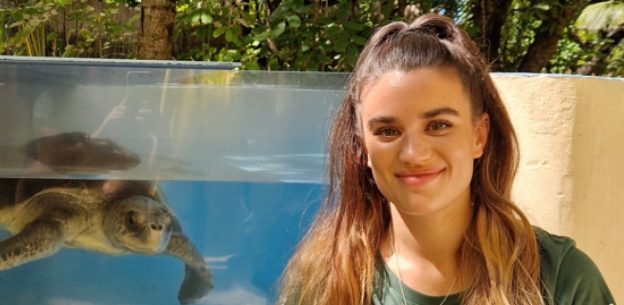
Meet Tristan Neto BSc (Hons) RVN APVN (Reptile, Small Mammal & Avian), who completed the BSc Hons Veterinary Nursing Degree with us.

From caring for exotics in a referral hospital, to working hands-on with sea turtles in the Maldives, Tristan has carved out a career that blends veterinary nursing with wildlife conservation.

We caught up with Tristan to hear about her path into exotics nursing, her biggest achievements so far, and her advice for anyone considering training as a veterinary nurse:

Why did you choose to study veterinary nursing?

I chose to study veterinary nursing as I loved the idea of spending my working life being hands on with patient care, allowing you to see their improvement.

I was also keen to eventually combine my love for conservation and veterinary medicine, through working with wildlife and providing nursing care and client education as part of a conservation effort.

Can you give us an overview of your career journey?

I started with first opinion practice at Vets4Pets, getting experience with small mammals, then specialising more and more in exotics, moving to an exotics unit in a hospital and then into an exotics referral hospital.

While in referral, I completed my advanced nursing certificate in avian, reptile, and small mammal nursing, as well as a marine mammal medic course with the British Divers Marine Life Rescue (BDMLR).

From there, I managed to then get my dream job combining veterinary nursing, conservation, and research, working with sea turtles in the Maldives.

What do you think has been your biggest achievement in your career so far?

My biggest achievement has probably been the work I did in the Maldives, working hard to improve and provide a high standard of medical care to our turtle patients, and the reward of seeing most of them released. As well as all the species research we did to help us further advance the medical care that we could provide.

What advice do you have for someone looking to do this career?

Never be afraid to go for your dream job! Sometimes your passion is enough to get you through the door and learn along the way, even if you don’t have all the experience!

Interested in training as a veterinary nurse? Find out how…

Vn Webinar

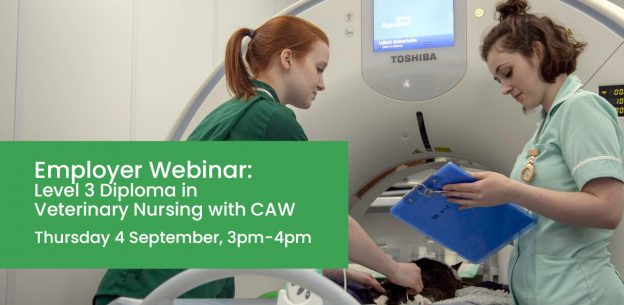
Employer Webinar: Level 3 Diploma in Veterinary Nursing with CAW

Are you a Head Veterinary Nurse, Clinical Supervisor or Practice Manager exploring veterinary nurse training options for your practice?

Join us on Thursday 4th September (3pm-4pm) for a free, informative session that covers how our veterinary nurse training works specifically from an employer’s perspective. We’ll explain the structure of our diploma programme, what’s expected from practices, and the benefits of getting involved in training the next generation of RVNs.

What we’ll cover:

  • Our Level 3 Diploma in Veterinary Nursing (Live Online Learning) Find out how our live online learning model works — combining interactive virtual study with hands-on practical skills training at UK-wide centres, located in: Bodmin, County Durham, Derby, Chorleywood, Edinburgh, Guernsey, Horsham, Solihull, Wigan, Stoke-on-Trent, Basildon, Huntingdon, Leeds, and North London.
  • Training Practice (TP) approval process Understand the simple steps to becoming an approved Training Practice and how we support you throughout the process.
  • Support for practices and clinical supervisors Discover the comprehensive support we provide to help you mentor SVNs confidently and effectively.

We’ll close the session with a live Q&A, giving you the opportunity to ask questions directly to our experienced team.

Who should attend?

This session is ideal for anyone involved in staffing and training decisions in veterinary practice, including:

  • Head Veterinary Nurses
  • Clinical Supervisors
  • Practice Managers
  • HR professionals
  • Current CAW Training Practices (TPs)
  • Practices considering switching training providers
  • Practices exploring becoming a TP for the first time

Whether you’re an established Training Practice (TP), considering switching training providers, or exploring the possibility of supporting student veterinary nurses (SVNs) for the first time – this webinar is for you.

Register here.

Intro to Tellington TTouch

Introduction to Tellington TTouch® for Dogs – Sunday 26 October 2025

We’re delighted to welcome Alex Wilson of Xtra Dog Academy to our Huntingdon centre on Sunday 26 October 2025, for a full-day Tellington TTouch workshop.

Alex will guide you through the many different types of the Tellington Method, including observations, bodywork, and leading techniques. You’ll also get the chance to explore the equipment used in TTouch.

The day will feature a presentation on how TTouch can be applied in the grooming parlour environment. However, this workshop is open to anyone with an interest in Tellington TTouch.

Participants are welcome to bring their own dogs. However, we kindly ask that you only book a ‘with dog’ ticket if you are confident your dog is non-reactive. Spaces with dogs are limited and will be allocated on a first-come, first-served basis. Please make sure to select the ‘with dog’ ticket when booking if you wish to bring your dog.

This is a full day workshop and refreshments and a light lunch will be provided.

You can book a space for just £75 here. CAW dog grooming students can attend for the discounted price of £50 – please contact us for a discount code to apply at the online checkout.

Ana M

Ana shares her dog grooming journey

Ana Manara is currently training to become a dog groomer with us. We caught up with Ana to hear about her experience on our courses so far, how she’s balancing study with full-time work, and what’s next as she builds her new career:

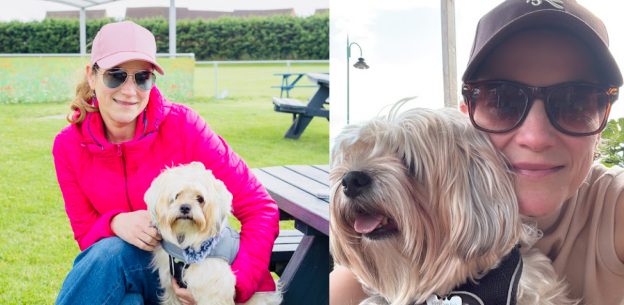
My name is Ana, and I’m currently studying the Level 3 Diploma in Dog Grooming at The College of Animal Welfare. I work full-time in a children’s home, a role that has taught me a lot about care, patience, and responsibility. Even though my professional background is not in animal care, I’ve always had a deep love for dogs and decided to follow my dream of becoming a groomer.

I started with the Level 2 course at the college and absolutely loved it. The support I received from the tutors gave me the confidence to continue to Level 3. Since English is not my first language and I had no grooming experience when I began, I felt nervous – but the staff were incredibly supportive and always took time to explain things clearly. I also received help with flexible study hours and a payment plan, which made it possible for me to balance full-time work, studies, and family life.

The part of the course I enjoy the most is the practical grooming – from bathing and drying to learning different styling techniques. Working with a variety of breeds has been exciting and rewarding. The most challenging part so far has been building confidence with nervous or wriggly dogs, but with patience and guidance, I’m getting better every day.

What I appreciate most is the welcoming, supportive environment at the College. I would like to express my heartfelt thanks to all the tutors and staff who have stood by me from the beginning. Their encouragement and flexibility made it possible for me to keep studying and follow this new path.

My dream is to open my own home-based grooming salon, where I can provide a calm, loving, and professional grooming experience. I’m excited about the future and committed to continuing my learning and development.

For anyone thinking of starting this course – I’d say go for it. If you love animals and want to make a positive change in your life, this is the perfect place to start. You’ll be supported every step of the way.

Thinking about training as a dog groomer? Find out how…

Why RVNs and Vets Make Brilliant Teachers and How to Become One

Why RVNs and Vets Make Brilliant Teachers (and How to Become One)

If you’re a Registered Veterinary Nurse (RVN) or veterinary surgeon, chances are you’ve explained a procedure to a nervous client, supported a student through a tough day, or guided a colleague through a new skill – probably without even thinking of it as “teaching.” RVNs make some of the best teachers, often long before they officially step into an education role.

Whether you’re considering becoming a clinical supervisor, moving into lecturing, or just want to explore new ways to share your knowledge, teaching could be a natural next step. Here’s why RVNs and vets are uniquely suited to it and how you can get started with work-based training and teaching qualifications:

1. You’re already teaching – you just might not call it that yet

Think about how often you’re explaining, demonstrating, reassuring or checking understanding in your daily role. Whether it’s showing an SVN how to prep for theatre, talking a pet owner through post-op care, or mentoring a new team member, you’re constantly passing on knowledge in structured and supportive ways. That’s teaching in its most practical form.

2. You know how to communicate clearly and compassionately

Good teachers aren’t just experts in their subject. They also know how to make that knowledge accessible. As an RVN or veterinary surgeon, you already tailor your communication to suit different people: clients, students, receptionists and more. You break down complex information into understandable chunks, stay calm under pressure, and adjust your approach depending on who you’re speaking to. That adaptability is a huge part of what makes a great educator.

3. You’re patient, practical, and solutions-focused

Veterinary work demands resilience, empathy, and a calm head – all of which are essential for teaching too. Students and new learners need time, repetition, reassurance, and space to make mistakes. RVNs and vets understand that learning is rarely a straight line. Your practical experience means you’re not just teaching theory, but giving people real-world insight and helping them feel capable in a clinical setting.

4. You understand what it feels like to be a learner

Most RVNs and vets remember their own veterinary training well, including the clinical supervisors who supported them, the ones who challenged them, and the times when things felt overwhelming. That memory gives you empathy and perspective when you’re helping someone else along the same path. Ultimately, because you’ve been in the same shoes, it also helps you create a learning environment that’s both kind and effective. Being in a career that involves lifelong learning also means you’ll be more comfortable when it comes to undertaking a formal teaching qualification.

So, how do you become a teacher as a veterinary professional?

If you’re interested in sharing your veterinary skills more formally, there are a few ways to get started.

You might begin by becoming a clinical supervisor and mentoring Student Veterinary Nurses (SVNs) in practice. This role allows you to guide and assess students as they work towards their veterinary nursing qualifications. Alternatively, if you’re drawn to classroom-based teaching, you might explore opportunities in veterinary nursing colleges or further education. You can read frequently asked questions about becoming a clinical supervisor here.

Either way, building your confidence and skills as a teacher can be hugely helpful. Many people start by completing introductory teaching qualifications such as the City & Guilds Level 3 Award in Education and Training, which gives you the tools to plan sessions, support learners with different needs, and reflect on your own teaching style – even if you’ve never stood at the front of a classroom before.

A helpful resource: Guide to Becoming a Veterinary Nursing Lecturer

Our comprehensive Guide to Becoming a Veterinary Nursing Lecturer offers step-by-step advice for veterinary practice professionals considering a career in education. It covers essential topics such as teaching qualifications needed, typical career paths, roles and responsibilities, and suggestions for enhancing your CV and interview readiness. Whether you’re aiming for college-level teaching or guest lecturing, this guide helps clarify what to prepare and expect, demystifying the transition from clinical practice to education. Download the Guide to Becoming a Veterinary Nursing Lecturer here.

Being a great teacher isn’t about knowing everything. It’s about being curious, compassionate, committed to helping others grow, and eager to improve your own practice by undertaking formal training or teaching qualifications – all things RVNs and vets already excel at. If you enjoy supporting others, explaining things clearly, and seeing people succeed because of your guidance, teaching could be an incredibly rewarding next step in your career. Whether that’s coaching in practice, teaching in a college, or running CPD in the future, it starts with recognising the teacher you already are.


Level 3 Award in Education and Training at The College of Animal Welfare

If you’re passionate about education and looking to step into a teaching role, the City & Guilds Level 3 Award in Education and Training is an excellent starting point.

This recognised teaching qualification is suitable for veterinary professionals who want to gain the teaching skills needed to become lecturers, clinical supervisors, or trainers within the veterinary industry.

Whether you’re looking to move into full-time lecturing or simply enhance your ability to mentor and educate students in practice, this course will equip you with the confidence and expertise to deliver engaging and effective teaching.

Why choose this course?

  • Tailored to your teaching goals Gain essential teaching and assessment skills with a course suited to your experience and career goals.
  • Online learning All your course materials, support and assessment will be provided online, allowing you to fit training around your other commitments.
  • Recognised teaching qualification Open doors to teaching roles in colleges and private training providers.
  • No teaching experience required You don’t need to be in a teaching role to enrol, making this the perfect way to explore a career in education.
  • Practical and engaging Learn how to plan lessons, assess learners, and create inspiring training sessions.

Explore the Level 3 Award in Education and Training here.

Why Veterinary Nursing Is More Than Just a Job

Why Veterinary Nursing Is More Than Just a Job

When you think about veterinary nursing, you might picture someone cuddling kittens, holding a paw during surgery, or assisting in a busy clinic. While all of those moments are part of the veterinary nurse role, the veterinary nursing profession is far more than a series of tasks or a job that ends when your shift does. It’s a career built on compassion, resilience, and an unwavering dedication to the wellbeing of animals and the people who love them.

Veterinary nurses support patients who can’t speak for themselves

Animals can’t tell us when they’re in pain, confused, or scared. Veterinary nurses become their voice by observing subtle changes in behaviour, spotting early signs of illness, and ensuring they receive the care they need. Whether it’s calming an anxious dog, supporting a fragile rescue cat, or rehabilitating a wildlife patient, veterinary nurses are advocates in every sense. Read more about the role of a veterinary nurse here.

A veterinary nursing career offers continuous learning and professional growth

Becoming a veterinary nurse is not a static career choice. Veterinary nurses are constantly refreshing their knowledge as well as learning about new treatments, surgical techniques, diseases, behavioural science, nutrition, and more. It’s a dynamic field that pushes you to stay curious and adaptable. Many nurses even go on to specialise in areas like anaesthesia, emergency care, dentistry, or exotics — showing just how far a veterinary nursing career can go. Explore career options for veterinary nurses here.

Veterinary nursing involves building strong relationships with teams and clients

Vet nurses are a vital part of the veterinary team, working closely with vets, receptionists, animal care assistants, and clients. They’re the link between the patient and everyone else. They provide comfort to worried owners, update them after procedures, and offer guidance during difficult times. It’s a role built on trust that makes a real difference.

Balancing emotional highs and lows

Being a veterinary nurse means facing joy and heartbreak, often on the same day. One moment you’re celebrating a puppy’s recovery from surgery; the next, you’re supporting a grieving family during a pet’s final moments. This emotional intensity isn’t easy, but it’s part of what makes the work so meaningful. It nurtures empathy, resilience, and perspective.

Veterinary nurse career opportunities in clinic settings and beyond

Once you’ve qualified, there are so many directions a veterinary nursing career can take. Some veterinary nurses decide to specialise clinically, becoming experts in areas like anaesthesia, emergency care, or feline medicine. Others discover a passion for education and go on to teach or mentor student nurses. Leadership roles such as Head Nurse or Practice Manager are well within reach, especially for those with strong organisational and team-building skills.

There are also growing opportunities in research, where veterinary nurses are contributing to clinical studies and evidence-based practice, and in non-traditional roles such as charity work, pharmaceuticals, and international animal health projects. Wherever your interests lie, there’s room to grow, lead, and make a difference. Explore career options for veterinary nurses here.

A career in veterinary nursing centres around care and purpose

At its core, veterinary nursing is about helping others — both animal and human. It’s about easing pain, improving lives, and showing kindness when it’s needed most. That sense of purpose is what keeps many vet nurses going, even during the most challenging days.


If you’re considering a career as a veterinary nurse, know this: you’re not just choosing a job. You’re choosing a varied and fulfilling profession that is all about caring and doing what’s best for your patients.

Interested in training as a veterinary nurse? Find out more here…