Author Archives: Amber Tennant

National Pet Month: What vets and vet nurses wish UK pet owners knew about their animals…

national pet month blog featured imageNational Pet Month 2017: What vets and vet nurses wish UK pet owners knew about their animals…

According to a new poll released by the Veterinary Animal Welfare Coalition for National Pet Month, recognising when a pet is overweight is the top issue vets and vet nurses wish UK pet owners knew about their animals.

More than one in five of veterinary professionals (23%) said the number one thing they wished their client knew about their pet was diet-related. Suggestions ranged from considering “Am I feeding them the right food?” to “Pets need a lot less food than we think!”, and “We have to protect them from themselves and not give into that ‘look’, especially where food is concerned!”

The answers given fell into 26 different themes, covering a number of pet care issues. The top five most frequently mentioned things veterinary professionals wished all pet owners knew were:

  • How to recognise when your animal is overweight
  • That flat-faced breeds suffer lots of health and welfare issues
  • How to recognise signs that your animal is in pain
  • You have a responsibility to care for your pet properly and follow the five animal welfare needs
  • That your veterinary team is the best place to go to for advice on all areas of pet care, including what may be the most suitable pet for you

Further details can be found on the BVA website. More information on National Pet Month can be found here.

 

Golden Jubilee Award winner 2017: Kathy Kissick!

golden jubilee award winner Kathy Kissick

Golden Jubilee Award Winner 2017: Kathy Kissick!

Kathy Kissick has been announced as winner of this year’s Golden Jubilee Award. Alongside a long list of impressive achievements throughout her career, Kathy has worked with The College of Animal Welfare on multiple occasions in order to improve the experience of veterinary nurses and clinical coaches, just recently delivering a presentation at TP Congress 2017.

The award is the highest honour The Royal College of Veterinary Surgeons (RCVS) can bestow upon a veterinary nurse. On winning the award, Kathy said: “I am delighted, honoured and humbled to accept the Golden Jubilee award and hope that I can continue to inspire veterinary nurses, throughout their careers, to always do the very best for their patients, clients and colleagues but not to forget to follow their dreams.”

Kathy was nominated by Lynne Kerrigan, a colleague and former student of Kathy’s. In her nomination Mrs Kerrigan said: “She has become a role model for both aspiring and qualified veterinary nurses through her relentless passion and tenacity to raise the profile of veterinary nursing and her continuous drive to achieve improved recognition and protection of the title veterinary nurse.”

Kathy will receive the accolade at this year’s RCVS Day, the RCVS’s Annual General Meeting and Awards Day, which takes place on Friday 7 July at the Royal Institute of British Architects. Further information can be found on the RCVS website.

Hundreds of people flock to Careers With Animals Day

Saturday 25 March saw hundreds of people of all ages and backgrounds visit The College of Animal Welfare to attend its annual Careers With Animals Day, hoping to find out how they can turn their dream of working with animals into a reality.

With around 500 visitors dropping in to speak to exhibitors and attend careers talks, a fantastic day was had by all. Tracey Croucher, Short Course and Events Manager at the College, who organised the event, commented: “The popularity of this event continues to grow year on year- it was great to see so many people coming together to find out more about working with animals! We were lucky to have exhibitors from a wide variety of fantastic organisations come along to support the event, and we would like to thank them all for their help in making the day such a huge success.”

For those who missed the event, but are interested in finding out more about working with animals, the College’s next open day is on Wednesday 10 May in Huntingdon. Further details can be found at www.caw.ac.uk or by calling the College on 01480 422060.

– Ends –

For more information please contact:
Alison German RVN
Marketing Executive
The College of Animal Welfare
Tel: 01480 422060
Email: agerman@caw.ac.uk

Notes to editors:

The College of Animal Welfare is one of the UK’s leading providers of veterinary nurse and animal care training and education; operating from four training centres around the UK.

The College has a well-earned reputation for excellence and has created a number of unique achievements that have created new opportunities for learning.

For more information about The College of Animal Welfare please visit www.caw.ac.uk

EJCAP spring issue now available to view online

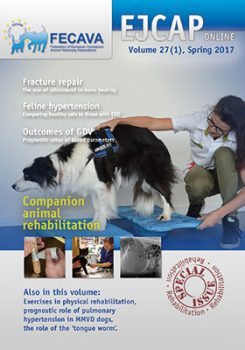
ejcap blog imageThe spring issue of the European Journal of Companion Animal Practice (EJCAP) is available to view online.

Published four times a year by the Federation of European Companion Animal Veterinary Associations (FECAVA), the journal is accessible to veterinary practitioners, students and nurses in Europe and beyond. This issue focuses on companion animal rehabilitation as well as interactive papers on hypertension in cats with chronic kidney disease, prognostic variables in dogs with GDV and the link between pulmonary hypertension and congestive heart failure.

For further details visit the EJCAP website.


Health and Fitness Tip of the Week: Teeth

Did you know that in primary schools in the UK, 8 or 9 children in every class will have tooth decay? That equates to approximately 3.3 million children between the ages of 0-14 years old.

What can we do to improve dental health in our children?

  • Brush your teeth for 2 minutes every day using a fluoride toothpaste
  • Have a balanced diet with limited sugary foods and drinks
  • Visit the dentist regularly

This problem is not isolated to children. It is estimated that over 80% of the population have at least one filling, 31% of adults have tooth decay and 6% of the population do not have any of their natural teeth.

How can we avoid tooth decay? As well as brushing your teeth twice a day, use floss or interdental brushes to get to the plaque between your teeth, avoid snacks between meals and chew sugar-free gum for up to 20 minutes after a meal. Chewing gum produces more saliva which helps cancel out any acid that attacks your tooth enamel.

Don’t forget to visit your dentist as regularly as they recommend.

References
http://www.nationalsmilemonth.org/facts-figures/
https://www.dentalhealth.org/tell-me-about/topic/mouth-conditions/dental-decay
https://www.dentalhealth.org/our-work/dental-buddy

5% annual renewal fee rise for veterinary surgeons and veterinary nurses

Annual renewal fees for veterinary surgeons and veterinary nurses will increase by 5% for 2017-2018. The increase follows a six-year renewal fee freeze for veterinary surgeons and veterinary nurses, which have remained at £299 (for UK-practising vets) and £61 respectively.

This increase will change the renewal fees for the registration categories as follows:

  • UK-practicing vets: £314
  • Practicing outside the UK: £157
  • Non-practicing: £51
  • Veterinary nurses: £64

For further information, visit the RCVS website.

Remember to vote in the RCVS and VN Councils elections!

The Royal College of Veterinary Surgeons (RCVS) is encouraging veterinary surgeons and veterinary nurses to, not only, vote, in this year’s RCVS and VN Councils elections, but to vote online. The elections will feature both a new voting platform and regular personalised email reminders from Electorial Reform Services (ERS) Ltd which will make it easier to vote online. These emails will include a unique link to the voting platform and the ability to log in securely straight away, without having to remember where you left your ballot paper in order to find your security codes.

Ballot papers and candidates details will be posted on Wednesday 22 March 2017 to all veterinary surgeons and veterinary nurses eligible to vote, and online voting will open on Friday 24 March 2017. All votes must be cast, either online or by post, by 5pm on Friday 28 April 2017.

If you are a veterinary surgeon and have not received your ballot papers by Friday 31 March, please contact Luke Bishop on l.bishop@rcvs.org.uk. If you are a veterinary nurse and have not received your ballot papers by Friday 31 March, please contact Annette Amato on a.amato@rcvs.org.uk Further information can be found on the RCVS website.

World down's syndrome day logo

World Down’s Syndrome Day (21 March)

Down’s Syndrome is a genetic condition that typically causes some level of learning disability and characteristic physical features; around 775 babies are born with the condition each year in England and Wales, and approximately 6,000 in the US; making Down’s Syndrome one of the most common chromosomal conditions. Children and adults with Down Syndrome have mild to moderate impairments and experience developmental delays, however they also have many talents and World Down’s Syndrome Day is about celebrating the contribution that people with Down’s Syndrome make to society, and understand how we can better help people with Down’s Syndrome integrate into every-day life. Below are some facts about Down’s Syndrome…

  • The exact cause of the extra chromosome that triggers Down syndrome is unknown.
  • In 1983, the average life expectancy of a person with Down syndrome was a mere 25-years-old. Today, it’s 60.
  • Children and adults with Down syndrome share some common features, but naturally the individuals will more closely resemble their immediate family members.
  • Since the 1970s, public schools are required by law to provide a free and appropriate education to children with Down syndrome.
  • The likelihood of giving birth to a child with Down syndrome increases with maternal age, however, 80% of babies with Down syndrome are born to women under 35 years of age because this age group gives birth most frequently.
  • While behavior, mental ability, and physical development varies from person to person, many individuals with Down syndrome grow up to hold jobs, live independently, and enjoy normal recreational activities.

Further information about Down’s Syndrome can be found on the NHS website.

RCVS launches new CPD pilot

The Royal College of Veterinary Surgeons (RCVS) hosted two continuing professional development (CPD) pilot days on 28 February and 1 March 2017, training volunteers to trial a proposed new outcomes-based system of measuring and recording learning and development.

This trial is the result of a six-week consultation held by the College in June 2016, asking for the profession’s views on a proposed new system of CPD – one that concentrates less on hours logged and more on interactive, reflective learning and measuring the impact that CPD has on the individual’s practice and patient health outcomes.


Further information can be found on the RCVS website.

Health and Fitness Tip of the Week: Managing Stress


Everybody knows what it is like to feel stressed. Stress can be a useful drive that can help us to be more productive and feel more energised*, however chronic stress that becomes overwhelming over time can, not only, make existing mental health problems worse, but contribute to the development of mental health problems too.* If you’re feeling like you’re struggling to cope with your stress, consider the following…

  1. Take control

Confronting the source of the problem is empowering. Passive thinking like “I can’t do anything” will only make your stress worse. The first step to feeling better is to identify the cause of your stress and then think about how to find a solution.

  1. Be active

Two hours of moderate-intense aerobic activity per week (such as fast walking or cycling) will improve your self-esteem and wellbeing.

  1. Connect

Reach out to people around you—family, friends and  colleagues. This allows us to share feelings and support others. The more you give, the happier you will feel. Even the smallest act can count, like a smile or a “thank you;” or larger ones such as volunteering in the local community. Doing something kind stimulates the reward area of the brain, creating positive feelings.

  1. Keep learning

Gaining new skills by setting targets and hitting them can inspire a sense of achievement and confidence.  Challenge yourself, whether at work or in your personal life.

  1. Be Mindful

Be aware of your thoughts and feelings, and when your thoughts take over the present moment. Remember these are simply thoughts that do not need to control us. Be aware, even as you about your daily routine, by appreciating the journey to work or taking a lunch time walk.

  1. Work smarter

Rather than working harder, prioritise your activities and leave the least important task for last. You may need to accept that your inbox will never read “zero” at the end of the day.

http://www.mind.org.uk/information-support/tips-for-everyday-living/stress/what-is-stress/?o=6278#.WMFPX5MpWcw