Calling all vet practices! If you have any out-of-date suture material, we would be very grateful if you could send it to us to make use of for training purposes. You can do this via your QAS during practice visits, via students coming in to College, or by posting to our Huntingdon centre at: The College of Animal Welfare, Headland House, Chord Business Park, London Road, Godmanchester, Cambridgeshire PE29 2BQ. Thank you in advance for your help.
Author Archives: Amber Tennant
New DNA testing scheme for the Giant Schnauzer approved
Following consultation with the breed’s health co-coordinator, a new official DNA testing scheme for prcd-PRA in the Giant Schnauzer has been approved by The Kennel Club. The Kennel Club consistently reviews DNA testing schemes in conjunction with breed clubs to ensure breeders are supported with resources which help them to make responsible breeding decisions.
Test results, once added to the dog’s registration details, will trigger the publication of the result in the next available Breed Records Supplement. The result will appear on any new registration certificate issued for the dog and on the registration certificates of any future offspring of the dog, and also on the Health Test Results Finder on the Kennel Club website. Results for dogs already tested can also be recorded, but owners are required to submit copies of the DNA certificates themselves.
If the owner includes the original registration certificate for the dog (not a copy) then a new registration certificate will be issued, with the DNA result on it, free of charge. DNA test certificates should be sent to Health and Breeder Services, The Kennel Club, Clarges Street, London, W1J 8AB or scanned and emailed to hbs@thekennelclub.org.uk. Further information can be found on The Kennel Club website.

World Religion Day (15 January)
This year falling on 15 January, World Religion Day is about celebrating religious diversity, as well as encouraging religious and non-religious people alike to better understand the beliefs of others, and recognise the similarities that all religions share.
First proclaimed by the Baha’i faith in the US in 1950, it has since been celebrated annually on the third Sunday of January with events, concerts, celebrations and inter-faith dialogue aimed at peace and understanding. Below are some facts about the global religious landscape, and how it is projected to change in years to come…
- Christianity, Islam and Hinduism are the three most commonly followed religions in the world.
- There are around 4,200 religions across the world.
- Between 2010 and 2050, the global Christian population is projected to increase by 35%, and the Muslim population is projected to increase by 73 percent.
- Latin America is home to nearly 40 percent of the world’s total Catholic population.
- By 2050, four out of every 10 Christians in the world will live in sub-Saharan Africa.
- India is projected to have the largest Muslim population of any country in the world in 2050, surpassing Indonesia.
- Worldwide, more than eight in ten people identify with a religious group.
- Roughly one in six people around the globe have no religious affiliation.
- More than three quarters of the world’s population that are “unaffiliated” with a particular religion are concentrated in Asia and the Pacific.
E&D Competition of the Month: World Religion Day
Remember that World Religion Day is this month’s prize competition topic. To be in with a chance of winning a £20 amazon voucher, simply submit an effort you have made to engage with this topic to College. This competition is open to all CAW students and staff, submissions should be sent to marketing@caw.ac.uk, or handed in at your centre, by Wednesday 25 January 2017.
Nominations for RCVS and VN Councils elections 2017 still open
The Royal College of Veterinary Surgeons (RCVS) has issued a reminder noting that the deadline is approaching for nominations from veterinary surgeons and veterinary nurses who would like to stand as candidates in next year’s RCVS Council and Veterinary Nurses Council elections respectively.
The nomination period for both RCVS and VN Councils runs up until 5pm on Tuesday 31 January 2017. In order to stand, candidates for either Council will need to submit a nomination form, a short biography and personal statement, and a high resolution digital photo.
Each candidate also needs two nominators. For RCVS Council candidates these should be veterinary surgeons who are on the College’s Register but are not current RCVS Council members and for VN Council candidates they must be registered veterinary nurses who are not currently on VN Council.
The election period starts around mid-March and will run until 5pm on Friday 28 April 2017. Ballot papers will be sent to veterinary surgeons and veterinary nurses who are eligible to vote in the week commencing Monday 13 March 2017.
Nomination forms and guidance for prospective RCVS Council candidates can be found here. The equivalent documents for VN Council candidates can be found here.
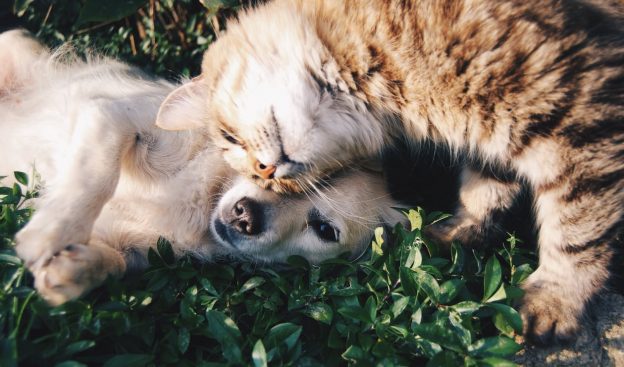
4 things to consider before becoming a pet owner
So you’ve decided that now is the right time to welcome a new friend to the family. Whilst this choice is an exciting one to make, you have to be prepared to provide your pet with everything it needs to live a fulfilling, happy life. Pet ownership should never be pursued on impulse; it isn’t fair on the animal that becomes abandoned if, after the excitement of bringing a new pet home has subsided, the owner realises they cannot cope with the responsibilities that come with owning a pet. Before making a decision, consider the following…
Space – All animals need sufficient space to exercise. If you’re living in small accommodation, why not consider an animal that requires less living space; for example pets such as hamsters or gerbils that can fit more comfortably into a smaller home.
Time – You need to make sure you understand the time and commitment required to care for different animals effectively. Do you work full-time? If so, what will this mean for your new pet? Pets such as dogs will not appreciate being left alone for long periods of time, and they will need your attention every day for training and exercise. If you’re living a busy life, or travel away from home often, you should consider pets that are less demanding day-to-day, such as fish (remember you would still be required to clean fish tanks!), or ensure you have suitable arrangements in place such as a dog walker or pet sitter.
Money – Quite simply, what can you afford? The care of domestic animals such as dogs and cats will cost considerably more than a fish or gerbil, and you will need to factor in pet insurance and foot the bill for both expected and unexpected veterinary costs throughout your pet’s life. Make sure you understand the financial obligations that come with different animals. Do some research online, or talk to other pet owners to get an idea of how much they spend.
Other people – Are you living with other people? What will the addition of a new resident mean for them? Will they love your new pet as much as you will? If you’re living with other people, whether it be flatmates, family members or small children, make sure that you raise your plans with them and that these conversations occur. This will prevent any resentment building, or any surprises when you bring your new pet home – such as a cat allergy you didn’t know about!
New year – new start?
If you’re considering getting a pet, have you considered adopting? Many animals in care have been victims of cruelty, or have been abandoned. Many of them have never experienced life in a loving home – but you could change that. Your local rescue organisation should be able to talk you through all aspects of pet ownership and find a pet that suits both your, and the animal’s, needs.

£20 amazon voucher up for grabs each month!
At The College of Animal Welfare, we aim to encourage as many people as possible to engage with topics that will challenge assumptions, increase awareness, and help us to become better people.
In the past we have asked you to help us shape the way we address bullying in College, and to help us spread the word about British values as part of a one-off competition. Next year – we’d like you to participate every month!
From January 2017, each month we will be giving students and staff the opportunity to win a £20 amazon voucher!
To be in with a chance of winning this prize, you simply need to submit an effort you have made to engage with and/or raise awareness of a monthly College topic to marketing@caw.ac.uk, or hand in a submission to your centre.
The topic will be announced at the beginning of each month and submissions are being left open to your interpretation, meaning you can enter anything you feel is relevant to the topic in any given month. For example, you could submit:
- Blogs or videos
- News reports
- Personal stories
- Posters
- Artwork
- Fundraising efforts
- Poems
Our first topic will be announced on Wednesday 4 January 2017 on our blog and Facebook page.
2016 Learner Satisfaction Survey Now Underway: Have your say!
Each year, The College of Animal Welfare is required to gain the views of its funded learners on their experiences of studying at the College. This is your opportunity to tell us what you think; your feedback plays an important part in developing the quality of your education and training.
The survey asks for your opinion on a range of aspects, such as how satisfied you are with the teaching on your course and whether you would recommend us to a friend. The information you provide is used by OFSTED when making decisions about which providers to inspect, and when.
Who needs to complete the survey?
All learners at The College of Animal Welfare who are funded are required to complete the survey. Your tutor will provide you with your Unique Learner Number (ULN) and the College Provider Number. Once you have these you can start the survey online here:
http://www.ipsos-mori.com/learnersatisfaction
The survey shouldn’t take more than 10 minutes of your time to complete. Please do participate in this important survey. By sharing your views, you will help the College to further improve. Many thanks in advance.
Health and Fitness Tip of the Week: Alcohol
Did you know alcohol kills 1 person every 10 seconds? As the festive holidays close in, we have more reasons to celebrate. Around 3000 people are killed every year by drunk drivers and there are 1.2 million alcohol related hospital admissions per year. Alcohol misuse can lead to heart disease, stroke, liver disease, cancers and pancreatitis. Alcohol affects the hippocampus part of the brain that controls things such as balance, behaviour, vision and memory. Make sure you are aware of your limits when you plan to drink alcohol and don’t mix your drinks; for example spirits, beers and wines.
http://www.nhs.uk/conditions/Alcohol-misuse/Pages/Introduction.aspx
http://aquarius.org.uk/alcohol/aaw2014/
http://time.com/96082/alcohol-consumption-who/
The College of Animal Welfare 2017 Wall Planner Winners
A special thanks to everyone who submitted a picture of their pet/s for our 2017 wall planner. There were many great submissions making it extremely difficult to select the final 12… So much so that we decided on a total of 14 entrees to be displayed in the wall planner!
In no particular order, the winners are…
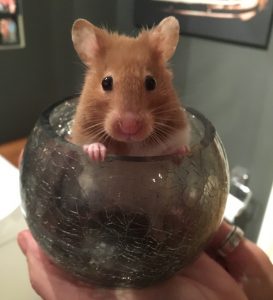
Emily Coward and pet hamster Cookie:
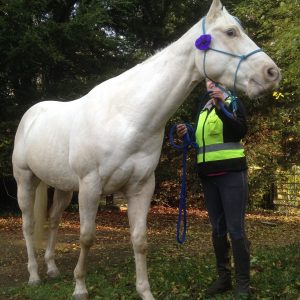
Mandy Tamba and her horse George:
Emma Ford and Boston Terrier Robyn:

Holly Horspool and Jack Russell/Lhasa Apso Marty:

Lucy Turner and her dogs, George and Penny:

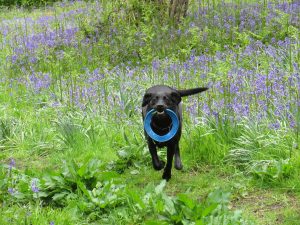
Karen Maynard and her beautiful Westies Chloe and Lily:

Amber Tennant and cat Bubbles:

Gayle Mitchel and black Labrador Rocky:

Alison German and her Border Collies Paige and Jist:

Laura Kemp and chocolate Labrador puppy Archie:

Louise Thompson and rabbit Ellie:
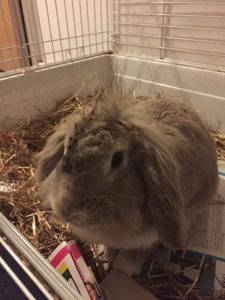
Tracey Stone and her horse Smiler:

Claire Gregory and Cocker Spaniel Lily:
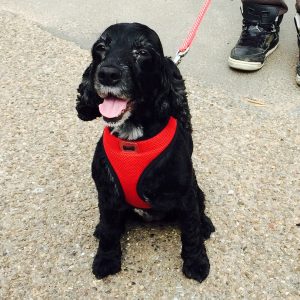
And finally, Tori Page and Labrador Scout:

Thanks again to everyone who submitted a photo.
All of the winners will be notified by email and get a free copy of the wall planner, including the two extra entrants who made it in.
Academic excellence celebrated at CAW Student Awards 2016
Students and staff had their hard work and achievements celebrated at our annual Student Awards Ceremony on Saturday 26 November 2016.
The annual event recognises all forms of success within College; whether it be academic excellence, overcoming personal challenges or making a real difference in their group or to the College as a whole. Award winners came from across all four of our centres in the UK; including distance learning students and those learning in their workplace.
In addition to the presentation of awards, the ceremony also hosted a Royal College of Veterinary Surgeons (RCVS) Veterinary Nursing Declaration Ceremony, where newly qualified and registered veterinary nurses made their professional declaration.
The winners were presented with their awards during a ceremony at our Huntingdon centre. A full list of award winners can be found on our website.