Author Archives: Amber Tennant

Behaviour Congress

You’re invited to Behaviour Congress!

Save the date because our very first Behaviour Congress is coming to your screens on Thursday 7th April! 

New for 2022, Behaviour Congress is a one day virtual event focused on animal behaviour. During congress you will gain 7 hours of CPD and listen to lectures by our expert speakers, who will be sharing their knowledge and expertise on:
  • Reducing Stress in Hospitalised Feline Patients
  • Managing Behaviour in a Multi Cat Household
  • Fear and Anxiety in Dogs and Cats
  • Phantom Pregnancy – The Silent Killer
  • Behaviour modification for dogs who are fearful or neutral at the vet: The Academy’s Husbandry Project

Download the agenda 

Why attend Behaviour Congress?

Perfect for veterinary nurses looking to develop their knowledge and understanding of animal behaviour, by attending Behaviour Congress you will:

  • Listen to lectures from a range of speakers who will be sharing their experiences and knowledge
  • Q&A sessions mean your questions will be answered by the speakers themselves
  • Gain practical takeaways that you can implement in your practice
  • Gain information, product knowledge and offers from our virtual exhibitors
  • Earn 7 hours of evidenced CPD
  • Gain online access to recordings of all the lectures and lectures from previous congresses up until the next event

Book before 11 February 2022 for the Early Bird rate!

If you book your place before 11 February 2022, you can take advantage of our early bird discount and attend congress for just £125+VAT – saving £60! 
Social Media Use Tips

8 Ways to Build a Better Relationship with Social Media

With everything on social media available at our fingertips, it is difficult to imagine a world without it – apps like Facebook, Tiktok, Instagram and Twitter have become a huge part of our lives.

Social media offers us lots of new ways to connect, however; you may find that sometimes you see things on social media that make you feel angry, worried, sad or stressed. If left unaddressed, these feelings can build up and begin to negatively impact your mood in everyday life. According to recent research by NHS Digital, 17% of 11-16 year olds said the number of likes, shares and comments they got on social media affected their mood.*

If you ever feel like you’re unable to switch off, or find it difficult to cope with the negativity you can find on social media, you’re not alone. We all struggle to keep our virtual spaces positive sometimes. Here, we’re explaining some of the ways you can manage your social media use, so that you can begin to create social media habits that better protect your wellbeing. Let’s make a start:

  1. Think carefully before you post

It can be tempting to take to social media in the heat of the moment, however; it’s important to carefully think about your content before you put it up for others to see. This is because, in the digital world, it is much more difficult to take back your words. People will see what you post and with the ability to screenshot and share content, simple deleting a poster later on may not be enough to remove it if you later regret what you shared.

  1. Keep your corner of the internet positive

You can help keep your relationship with social media positive by posting positive content and avoiding trolls and disrespectful online debates. Think about whether the content you wish to share – whether it be an article, post or video – is helpful or harmful to others.

  1. Be selective about what’s on your social feed

In the same way that you want to keep your own feed positive, it’s important to be selective about who you follow, so that you’re not being exposed to content that makes you feel bad. If someone’s posts consistently make you feel bad about yourself or make you feel angry and frustrated, don’t hesitate to unfriend or unfollow that person.

  1. Check your sources

In a space where anyone can publish anything, it can be harder to find reputable sources of news and information. According to research by Reuters Institute for the Study of Journalism, 70% of UK participants were concerned about what is real or fake on the internet, with 15% saying they have been exposed to completely made up news.* So, it’s important to be conscious of what you’re sharing and make sure any news you post to your friends or followers is accurate. 

  1. Look to other people’s posts for inspiration rather than comparison

Social media is a place where many people publically celebrate their successes and capture the very best moments of their lives for the world to see. When all you see is the happy, fun and exciting highlights of someone’s life, it can make your own daily life seem worse by comparison and feed into feelings of inadequacy, isolation or Fear of Missing Out (FOMO).

However, it’s important to keep in mind that these snippets aren’t representative of someone’s full life, and the person posting them has problems and struggles like everyone else. So, rather than directly comparing your life to someone’s sparkly social media feed, looking to these posts as inspiration to work towards your own goals could be a healthier way to view posts on social media.

Click here to continue reading and gain more advice…

Key Facts About Animal Apprenticeships

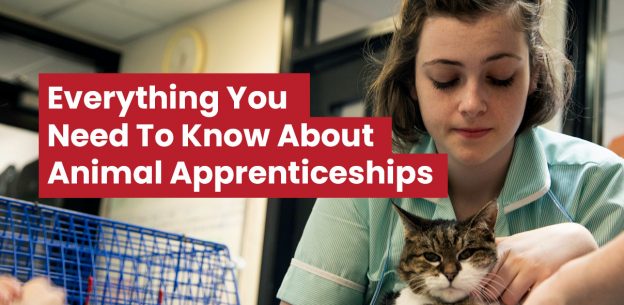
Animal Apprenticeships: Everything You Need to Know (England)

For those aspiring to an exciting career working with animals, animal apprenticeships could be an excellent way to gain hands on experience with animals, pick up practical skills and knowledge and earn a wage – all at the same time.

Here, we go through everything you need to know about apprenticeships working with animals. Let’s get started:

What is an apprenticeship?

An apprenticeship is a training programme where you gain practical skills and knowledge by working in a real job, whilst studying a nationally recognised programme at the same time. In many cases, you will also study towards a recognised qualification as part of your programme of study. Simply put, you get paid, you get experience and you get a complete qualification that is relevant to your role!

You will be employed within an organisation and a designated college will then support you in completing your apprenticeship.

Quick facts

  • Get paid: An apprentice must be paid at least the National Minimum Wage for Apprentices if they are under 19 years of age, and in the first year of their apprenticeship for anyone over the age of 19 (thereafter the normal national minimum wage applies).* Employers can choose to pay more if they wish, and many apprentices earn more than this.
  • Get a real job – Apprenticeships can be full time or part-time.
  • Full time course: The minimum length of an apprenticeship is 12 months but many last longer than this.
  • Any age: There is no upper age limit for studying an apprenticeship, but you must be at least 16 years of age to start.
  • Study at work: A minimum of 6 hours per week of your time at work will be spent on “off-the-job” training. Find out more about off-the-job training
  • Level of study: Apprenticeships start from level 2 and go up to degree level. Many apprentices begin at level 2 and work their way up as they gain experience.

Delivery and assessment

Apprenticeship courses can be delivered in many different ways. Common terms that you may come across include:

  • Day release: Attend college one day per week
  • Block Release: Attend college in blocks, for example
    one week at college every month
  • Blended Learning: Study both online and in college
  • Distance Learning: Study outside of the classroom using online materials, with virtual support from a tutor
  • Work-based Learning: Learn in the workplace full-time and receive support from an assessor.
  • Functional skills: In addition to the main qualification selected, Functional Skills qualifications in English, Maths will also be studied if you are under 19 years of age, unless exempt.

Apprenticeships are assessed by a combination of methods. These may include observations, reflective logs, a portfolio, written assessments and examinations. Additionally, all apprentices in England are assessed at the end of their training via an End Point Assessment (EPA).

EPAs are different for each apprenticeship, however they usually include:

  • a practical assessment
  • a project
  • an interview and presentation
  • written or multiple choice tests

Who are apprenticeships for?

Animal Apprenticeships Guide 1

Contrary to popular belief, apprenticeships aren’t just for people new to a job! They are a great path for people at any stage of their career – from those re-entering the workforce, to those wanting to reskill or change careers.

So, if you’re considering a career working with animals, perhaps after years of working in a completely different field, studying an apprenticeship could be your ticket to a new role in the animal industry.

In order to undertake an apprenticeship in England, you need to be:

  • Aged 16 years or over
  • Living and working in England
  • Not already in full time education

Additional entry requirements vary depending on the job and apprenticeship course in question.

What kind of animal apprenticeships are available?

Whether you’re interested in caring for animals in a veterinary practice as a veterinary nurse, working with dogs in a dog grooming salon or looking after cats in a cattery – there are apprenticeships available in many animal related subjects, that can help you achieve your career goals. Here at The College of Animal Welfare, we offer animal apprenticeships in:

What are the benefits of animal apprenticeships?

For those aspiring to an exciting career working with animals, undertaking an animal apprenticeship could be an excellent way to get started. Take a look at the key reasons why an apprenticeship could be the perfect career move…

  • Professional training and qualification Some apprenticeships offer the opportunity to study towards a trusted, industry qualification as part of your programme of study. More than this, you’ll pick up professional skills that are recognised and respected by employers.
  • Bright career prospects Many apprentices stay with their employer, gaining more responsibility and a higher salary! According to research by the National Apprenticeship Service, 85% of apprentices will remain in employment on completion of their apprenticeship, with 64% of those staying with the same employer.*
  • No course fees Your course and training fees will be covered by your employer. You won’t have to pay a penny!
  • Develop networks You will gain amazing insight into your industry and develop professional networks!
  • Pave the way to higher study Many apprentices go on to study a higher level apprenticeship, or study at university.
  • Become one of the team You will receive a regular income, paid holiday and all the other benefits that come with a job!

Is an animal apprenticeship right for you?

Animal Apprenticeships Guide 2

Is working with animals for me?

Before pursuing any new job or career, it’s important to do your research, to make sure that the career you’re interested in fits with your personal qualities, goals and ambitions. You can decide whether a career working with animals is for you by:

  • Attending careers events and college open days
  • Taking a short class or course in animal care
  • Researching careers with animals online
  • Gaining experience working with animals
  • Asking people who’re already working in the animal industry

Read our blog post about deciding if working with animals is for you

Is apprenticeship training for me?

Apprenticeship training can be an effective way to get a foot in the door on a new career; however, they aren’t the right path for everyone. You should consider factors such as:

  • Finances: How will you cover the cost of living as an apprentice?
  • Transport: How will you get to work or to college? You may need to consider travelling or relocating for the right opportunity.
  • Finding a role: Apprenticeships working with animals can be competitive, so you may have to be willing to wait for the right role, or be proactive in finding a position yourself.

How to Find an Apprenticeship Working With Animals

The first step to becoming an apprentice is gaining employment. There are several ways you can do this:

  • Search via the Find an Apprenticeship service. Most apprenticeship vacancies are displayed on the ‘Find an apprenticeship’ website. This website is where training providers post apprenticeship vacancies. On this website you can search by location or keywords to find your ideal vacancy. Once you have found an apprenticeship that interests you, create an account via the website to apply!
  • Sign up for our apprenticeship email alerts to be the first to hear about new apprenticeship vacancies.
  • Search for apprenticeship vacancies in your local newspaper or online using websites such as Indeed or Reed.
  • Attend free careers events run by your local school, library or job centre, to discuss the apprenticeship vacancies available locally.
  • Contact companies directly and find out if they would consider taking on an apprentice.

Once you have found a suitable position you can then contact the training provider to arrange starting the apprenticeship.

How to Choose the Right Animal Apprenticeship for you

Animal Apprenticeships Guide 3

All apprenticeships are a little bit different, so it’s crucial to do your research to ensure you find the best apprenticeship for you.

Whilst apprenticeships come with lots of opportunity, you also have to appreciate that you’ll be starting a new job and getting to grips with studying a programme. So, it’s an important decision to make – no matter what path you want to follow, always do you research first.

Key points to investigate 

  • What is the apprenticeship and job role – does it fit what you’re looking for?
  • Find out about the employer – is it the type of company you want to work for?
  • Find out about the training providers, colleges, or universities that offer animal apprenticeships, and where you could be studying.
  • What qualifications, subjects, and grades are they looking for?
  • What essential and desirable skills and experience do they ask for, and what qualities are they are looking for in applicants?
  • For you, what are the three most and least positive aspects of this apprenticeship or job opportunity?

Applying for Animal Apprenticeships

Animal apprenticeships can be really competitive. Once you’ve found a suitable apprenticeship for you, it’s important to make sure your application is up to scratch ready for your application.

CV Writing

CV writing skills are key for job seekers looking to increase their employability prospects. Master them, and you’ll be on the way to landing your chosen apprenticeship. Your CV is one of the most important professional documents you produce – but it’s also one of the most difficult to get right. It needs to look professional, be easy to read and show off the best of your skills and experience. Take a look at our comprehensive advice and CV writing tips

Interviewing

If you’ve been invited to interview, this is your chance to show the organisation what you have to offer and why they should pick you to undertake their animal apprenticeship. You are likely to feel a little nervous about your interview – don’t worry, this is normal! However there are several things you can do in advance to help you feel more prepared:

  • Research the organisation. What size are they? What products or services do they offer? Have they recently won any awards or accreditations? Often checking out their website is a good place to start, they may even have a ‘News page’ so you can see their latest activities!
  • Check the location of the interview and plan how you are going to get there. Aim to arrive 10 minutes early so you don’t feel rushed. Make sure you allow for any traffic delays.
  • Have your interviewers contact details to hand, this means that if you are unexpectedly delayed you can call ahead to let your interviewer know.
  • Most interviewers will ask if you have any questions. Prepare some questions that you want to ask.
  • Consider typical interview questions (as below) and prepare your answers. Where possible give example of things that you have done that show you have the right skills for the role.

Interview questions fall into four main categories:

  • Questions about you
  • Work experience and knowledge questions
  • Questions about why you want THIS job
  • Competency-based questions about the role.

Things to think about on the day:

  • Be clean and presentable. Dress code should be smart formal, therefore you should try and avoid casual clothing!
  • Take a pen and notebook with you – your mobile should not be on display and be on silent during the interview.
  • Be attentive. Smile and shake hands with the interviewer.
  • When answering questions speak clearly and don’t swear! Take your time to answer the question, if necessary take a deep breath and pause rather than jump in with an answer. If you are unsure of the question then ask for clarification.
  • Once the interview has been completed don’t forget to thank the interviewer for their time and ask when a decision is likely to be made.

Additional Apprenticeship Resources

Please note that the information in this post is correct at the time of publishing and may be subject to change.

Follow us on social media to be the first to see new blog posts and careers advice…

[ss_social_follow networks=”facebook;twitter;instagram;pinterest;linkedin”]

Subscribe to receive updates about apprenticeships working with animals

* indicates required
School of Animal and Environmental Studies

School of Veterinary Studies

Newsletters

General

Tips to get a better sleep

10 Tips to Get a Better Night’s Sleep

Most of us know what it feels like to have an occasional sleepless night – you go to bed after a long day, keen for a restful sleep – only to find yourself tossing and turning late into the night, and feeling increasingly frustrated as each hour goes by.

Unfortunately many of us have struggled to sleep during the pandemic and recent research by NHS Digital shows that young people in particular are experiencing an epidemic of sleeping problems.

Sleep is an integral component of mental and physical wellbeing – having a restful night allows your body to recover, ensuring that you wake up refreshed and ready to take on a new day. By contrast, poor quality sleep can leave you feeling drained and less able to concentrate, as well as make you more vulnerable to low mood. In a recent report commissioned by the Mental Health Foundation, nearly half (48%) of adults and two-thirds of teenagers (66%) agreed that sleeping badly has a negative effect on their mental health.

Whether it’s a noisy environment preventing you from a falling asleep, or a stressful day keeping your mind whirring – take a look at our top tips to help you catch those all important Zzzzs…

  1. Plan and create a consistent sleep routine

Going to bed and getting up at roughly the same time every day can aid long-term sleep quality, as it helps to programme your brain and internal body clock to get used to a set routine. According to the NHS, most adults require 6-9 hours of sleep every night, so start by working out what time you need to get up in the mornings and go from there.

Additionally, it’s important to apply consistency to your waking up time too. Although it may be tempting to stay in bed for longer to make up for a poor night’s sleep, this may influence your sleep routine negatively in the long run. 

  1. Watch what you eat and drink before bed

Try to avoid going to bed if you’re feeling hungry, as a grumbling stomach be enough to keep you awake. At the same time, it’s important to avoid heavy or large meals within a couple of hours of heading to bed, as any digestive discomfort could make it difficult to fall asleep. More than this, it’s worth dodging stimulants such as nicotine, caffeine and alcohol close to bedtime, as the stimulating effects can take hours to wear off and disrupt your sleeping routine.

  1. Create a room that is set up for a comfortable night

Our environment can have a huge influence on our ability to sleep. Your room should be a peaceful place that allows you to relax and wind down. Temperature, lighting and noise should be controlled as much as you reasonably can, so that your bedroom environment promotes good quality sleep. You could do this by:

  • Tidying your room so the space is clear and non-stimulating
  • Trying out different scents that may be relaxing to you in your room, for example spraying lavender on your pillow
  • Asking family members or housemates to be quieter after a certain time
  • Having noise cancelling earplugs and an eye mask to hand if outside noise/light is difficult to control
  • It you have a pet that sleeps in the room with you and often disturbs you in the night, consider moving them elsewhere
  1. Find your own ways to relax and wind down before bed

Wind-down routines can be an effective way to reduce physical and mental stimulation so that you feel more relaxed when the time comes to go to bed. However, we are all different. What some people find calming, others find disruptive. So, have a think about what helps you feel relaxed, and come up with a short routine you can adopt to help promote relaxation and calm before bed. For example, you could read a book or listen to some relaxing music. Remember, a wind down routine is very personal, so don’t hesitate to mix it up or try something new if it isn’t working for you.

  1. Organise your thoughts by writing down worries and stresses

If you tend to bring your worries and stresses to bed with you, try to give yourself the opportunity to resolve your concerns before bedtime. This way, you won’t keep yourself up late worrying about problems that are best left for the morning. You could do this by taking some time to jot down what’s on your mind and any actions or problems you need to consider for the days ahead. Once you’ve done that – you can put the notes away and go to bed knowing you won’t forget anything and can return to your thoughts in the morning with a fresh perspective.  

Click here to continue reading and gain more tips for better sleep…

Level 2 dog groomer apprenticeship

10 Benefits of Dog Grooming Apprenticeships

Recently we announced the launch of our highly anticipated Dog Groomer Level 2 Apprenticeship, an unmissable opportunity for budding dog groomers to embark on a rewarding career in the industry. If you’re aspiring to a career working with dogs, you might ask – what are the benefits of apprenticeship training and is it the right path for me?

Studying a dog grooming apprenticeship is an excellent way to gain practical skills and knowledge, work experience and a wage – all at the same time. Not only this, contrary to popular belief, apprenticeships aren’t just for people new to a job! They are a great path for people at any stage of their career – from those re-entering the workforce, to those wanting to reskill or change careers. So, if you’re searching for a career you’re really passionate about, perhaps after years of working in a completely different field, studying a dog grooming apprenticeship could be your ticket to a new vocation.

Here, we explore more of the reasons why a dog grooming apprenticeship can be great path for aspiring dog groomers. Read on to find out more…

1. You’ll get paid to care for dogs every single day – right from the get go!

As a dog grooming apprentice, on-the-job training means you will benefit from having a regular income. Apprentices will earn at least the National Minimum Wage for Apprentices, however many employers choose to pay more than this, and many apprentices’ earnings rise as they become more experienced and take on more responsibility. But wait, there’s more…

2. Dog grooming apprentices do not need to pay for their training

A dog grooming apprenticeship is a debt free route to a career in dog grooming. Not only will you be earning a wage, you won’t need to pay anything towards the apprenticeship fees. Apprenticeship fees are all paid by your employer! In other words, you will be able to gain new skills and experience in the workplace for FREE! What’s more – as a dog grooming apprentice at CAW you will be eligible to purchase a TOTUM card for just £12, meaning you could make big savings on many of the top brands, including Amazon, The Co-operative Food and Cineworld!

3. Our employer-focussed dog grooming apprenticeship covers industry recognised skills

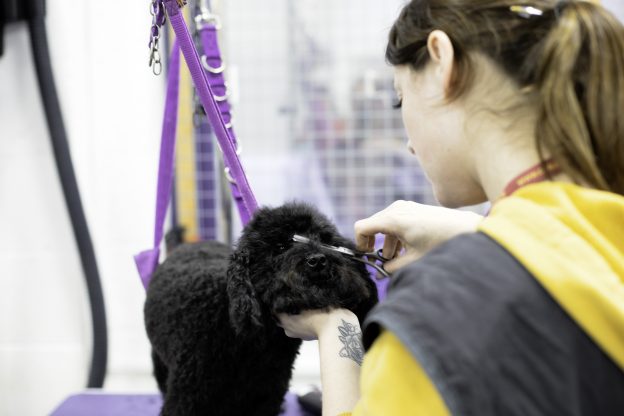
Our Dog Groomer Level 2 Apprenticeship has been developed with employers in mind. This means you will be learning the skills that dog grooming employers really need. Over the course of your apprenticeship you will cover everything from bathing and drying dogs, moving and lifting dogs around the salon, breed characteristics and behaviour, preparing dogs for grooming – and much, more!

4. Apprenticeships offer real job prospects

Becoming an apprentice has proved to lead to real job opportunities for many. Research by the National Apprenticeship Service shows that 85% of apprentices remain in employment on completion of their apprenticeship, with 64% of those staying with the same employer.* So, if job security is at the top of your list of priorities, an apprenticeship could be the most secure way to develop with further education and training.

5. Classes will be delivered virtually, meaning there is no need to visit college

Our level 2 dog groomer apprenticeship is studied on a work based learning basis, allowing you to gain those crucial, hands-on practical skills needed of a successful dog groomer. This means you may start the apprenticeship at any time of the year, and will not be required to attend college for tuition. You will instead learn in the workplace, and attend weekly virtual classes and demonstrations, delivered by our expert practical skills trainers who are well versed in delivering quality online learning.

Click here to continue reading and discover more benefits…

Dog Groomer Level 2 Apprenticeship

Grow your own dog groomer to work in your salon, with our Dog Groomer Level 2 Apprenticeship!

If you’re keen to expand your dog grooming business and grow your very own dog groomer to work with you, have you considered recruiting an apprentice to study our Dog Groomer Level 2 Apprenticeship?

This newly launched apprenticeship covers the key skillsknowledge and behaviours needed of a successful dog groomer, enabling you to grow a competent staff member that meets the needs of your salon. Plus, with the National Minimum Wage for Apprentices being just £6.40 per hour (April 2024)*, it really is an affordable way to take on new staff. You will also be providing valuable experience and training opportunities for someone keen to start working in the industry.

Take a look at some of the reasons why investing in a dog grooming apprentice could be the next step for your business…

You’ll save money on recruitment costs

Boosting your team with an apprentice is a great way to bypass the added recruitment costs associated with outsourcing or recruiting skilled labour. You can save even more on recruitment costs when you take on an apprentice with The College of Animal Welfare. As part of the recruitment process, we can advertise, filter applications for you and even arrange your interviews if you wish – all for FREE! Take a look at the recruitment process

You won’t lose your apprentice to college

As our Dog Groomer Level 2 Apprenticeship is work-based, you will not lose your apprentice to college time. Instead, all their learning will be delivered in the work place with support from a Work-based Learning Assessor. They will visit your apprentice on a regular basis, and provide telephone and email support between visits. Your apprentice will also attend weekly virtual classes. These are delivered by our experienced, knowledgeable tutors who are well versed in providing quality online learning.

Gain an extra pair of hands for less

Employers who take on an apprentice aged between 16-18 years of age will receive a £1,000 incentive towards training fees. Further reductions available for organisations with less than 50 contracted employees. And, with the National Minimum Wage for Apprentices standing at £6.40 per hour (April 2024)*, you can develop an apprentice for much less than it would cost to recruit for qualified labour.

Grow a dog groomer that meets the needs of your business

As this is a work-based apprenticeship, you will be able to nurture your apprentice to meet your business need. Over the course of your apprenticeship your apprentice will learn everything from bathing and drying dogs, moving and lifting dogs around the salon, breed characteristics and behaviour, preparing dogs for grooming – and much, more!

Not looking to recruit? Develop your existing staff instead!

Contrary to popular belief, apprenticeships aren’t just for people new to a job! They are a great path for people at any career stage, including those wanting to reskill or change careers. If you already have a candidate in mind or would like to train an existing member of staff, your employee will need to apply for the apprenticeship online.

Why choose The College of Animal Welfare as a training provider?

The College of Animal Welfare is one of the UKs leading providers of veterinary nurse and animal care training.

We are very proud of the fact that all of our dog grooming lecturers have significant industry experience and knowledge. They all share a common passion for pushing the profession forward.

Your apprentice will learn all the skills and knowledge needed to drive your business forward. They will benefit from…

  • Tuition, support and assessment provided in the workplace, online and via email and telephone contact
  • Support and guidance from an allocated, qualified Work-based Learning Assessor
  • Access to our unique Virtual Learning Environment (VLE) and extensive eLibrary resources

If you would like to speak to a member of our team directly regarding dog grooming apprenticeship training, please contact us at admin@caw.ac.uk or on 01480 422060.

Further sources

*New* Dog Groomer Level 2 Apprenticeship launches

We’re delighted to announce the launch of our highly anticipated Dog Groomer Level 2 Apprenticeship, an unmissable opportunity for budding dog groomers to join the industry, and dog groomers to expand their team.

Whether you are dreaming of becoming a dog groomer or want to expand your business and grow your very own dog groomer to work in your salon – this apprenticeship could be the perfect way to get started. 

A career as a dog groomer is interesting, fun and hugely satisfying! An apprenticeship is a perfectly suited training path towards becoming a dog groomer due to the hands on nature of the job. Qualifying via this route will give you the chance to put your skills into practice, while gaining the understanding and experience to become a knowledgeable dog groomer. As a dog grooming apprentice, you will be employed in a dog grooming environment and also earn a wage. 

Do you want to find out more about the dog grooming apprenticeship that has just landed in England? Click here to get the low-down this eagerly awaited new apprenticeship programme and apply today…

Want to find out more about a career as a dog groomer? Click here!

How to manage exam stress

10 Ways to Manage Exam Stress

It’s only natural to feel a bit stressed before exams get underway.

Whilst for some going through an exam is a breeze – revision comes naturally and it is easy to stay calm – for others: sweaty palms, procrastination and nerves are all too common.

Whether you’re feeling confident about your exams, or need a bit of extra reassurance and guidance – there are practical ways you can prepare as exam time looms. Take a look at our advice to improve your productivity, manage exam stress and increase your chances of succeeding during exam season:

  1. Start your revision early and prioritise your tasks

Making an early start on your revision can help you come prepared for your exams. By starting sooner rather than later, you’ll have enough time to go over the material at a steady pace. If you feel overwhelmed, remember that revision is about refreshing your knowledge of topics you’ve already learned – it’s not about learning anything new.

More than this – prioritising your time, subjects and workload will help reduce your stress levels, as you’ll be breaking down a big task into more manageable chunks. As a starting point, you could put together a simple table with the dates of each exam you have, and the topics you need to revise for each. This will give you a clear idea of how much time you need to dedicate to each exam – which can help you structure your revision plans.

  1. Boost your exam time management

Getting the timings right during an exam can be tricky. Spend too long on a question, and you might run out of time at the end and leave questions unfinished. Equally, if you panic and rush through questions too quickly, you may end up finishing the exam too early and missing out key details and vital marks.

Again, this is where revision and practice can really help. Go through some mock exam questions, and be strict with yourself over timings so you don’t run over time. It might take a bit of time and more than one try, but eventually you’ll know how long you should leave yourself to answer each question, and be able to use that time to your advantage confidently.

With all this practice, by the time you reach your exam, you’ll be confident managing your time and, as a bonus, will have a good idea of what kind of questions to expect.

  1. Eat, sleep and exercise well

We all know that life can get busy, and that’s before you throw revision and exam preparation into the mix! However, to help you manage exam stress, it’s crucial to look after your body and mind during this time. Exercising regularly can help to clear your head, whilst fuelling your body with a well-balanced diet will boost your energy and help stressful tasks seem more achievable. Going to bed at a reasonable time ensures your brain has sufficient time to recharge and really absorb what you’ve learnt. It is also worth cutting back on alcohol, caffeine and cigarettes during revision season, to help keep your mind focussed.

  1. Recognise when you’re panicking

Having a panic is common, whether it’s before, during, or even after, your exam. If you feel like you might be panicking: take a deep breath, take a moment to acknowledge this feeling, have a sip of water, and then go back the problem at hand. Remember that every problem usually has a solution, even if you fail to pick it up at first glance.

  1. Take breaks and plan things to look forward to

Studying long hours won’t necessarily get you the results you’re aiming for. Plus, overworking leaves you vulnerable to exhaustion or even burnout long before exam time arrives. You need to give your mind a chance to rest and recharge after a revision session. To this end, schedule time away from your studies to wind down and do something you find relaxing and fun. This could be as simple as going for a walk or reading a book.

Take time away from social media

To avoid any unnecessary distractions, it may be best to log out of social media for a little while. Social media can become a major source of procrastination. A quick check of your Facebook or Instagram can quickly turn into hours of swiping through your social feeds. Not only this, but it is likely that many of your classmates are in the same boat. They may be talking about how much they’re studying (or not studying) on social media, which provides an added distraction!

  1. Keep up a routine

Keeping up a regular routine can help give you a sense of predictability, which can be really helpful when preparing for something like an exam, which is in many ways unpredictable. For example, going to bed and getting up at the same time every day, having regular time to rest and having dedicated times during the day for studying.

  1. Believe in your abilities

When faced with a stressful challenge, we often focus too much on what could go wrong. However, by shifting the focus to what is already going right, you can help yourself to maintain composure and lift your confidence.

As you have worked hard and prepared well, there is no reason to worry about your ability to face the challenges of exam time. So, when you find yourself experiencing negative thoughts, try to replace them with positive ones by thinking back to what you’ve achieved already. For example, instead of saying “If I don’t get [this grade] on this exam, I am a failure.” You could say “Whatever I achieve, I am proud of the hard work and effort I have put in.” It’s also worth remembering that results are not the only measure of success, and they don’t define you as a person.

  1. Focus on you and don’t compare yourself to others

As Theodore Roosevelt famously said, “comparison is the thief of joy”. Try not to make assumptions about how others are doing, or compare your performance to others. On the surface, it may look like others are spending more time on revision than you, or just not stressing out about their exams as much. However, we all cope with exams differently and that is ok. In reality, your friends and classmates are in exactly the same position as you. No one’s results are guaranteed – so it is likely they are feeling just as worried as you are.

  1. If you feel like you are struggling, talk to someone

It’s ok to reach out for further help and support if you need it. There are so many people, organisations, and services out there to help you cope during difficult times. When struggling, talk to friends, family, or your personal tutor about how you are feeling.

Alternatively, if it’s available to you, don’t be afraid to seek professional help and support. You could consider seeing your GP or mental health professional for extra help and a referral.

Further mental health support at The College of Animal Welfare

If you’re a student or staff member with us, and you’re struggling with stress, please don’t hesitate to reach out to your teacher, head of course or line manager – they are there to help and support you.  We also offer lots of additional mental health support that you can access free of charge. To find out more visit www.caw.ac.uk/wellbeing

Follow us on social media to be the first to see new blog posts:

[ss_social_follow networks=”facebook;twitter;instagram;pinterest;linkedin”]

Careers With Animals Day

Virtual Careers with Animals Day is back this October!

Save the date because, after a successful digital debut in January, virtual Careers with Animals Day is coming back to your screens on Saturday 9th October 2021!

This free, online event is ideal for those looking for guidance about career opportunities working with animals. Hosted on Microsoft Teams, you’ll get the chance to listen to career talks from a range of key organisations in the animal care and veterinary industry, ask questions and gain advice about working with animals – all from the comfort of home. October’s event will be particularly useful if you’re interested in training and career opportunities working with animals in Northern England.

Whether you’re a school leaver working out what your next move is going to be, an adult looking for a career change, or unemployed and eager to get back to work – everyone is welcome. The event will run on Saturday 9th October, from 9am until 4pm and entry is completely free of charge. A link to attendance will be released in the coming weeks.

If you would like to register your interest in the event visit our website or join our Facebook event page. 

Tips for juggling family life with veterinary nurse training

5 Tips for Managing Childcare and Veterinary Nurse Training

If you’re a parent and interested in studying veterinary nursing with us, you may already know that due to the work-based nature of the industry, most veterinary nurse training courses require you to work and study full-time.

Juggling childcare with full time work and study can be difficult at the best of times, without throwing child sickness and childcare emergencies into the mix. So, you may be wondering: how will you find the time to work, study and look after your kids?

With many of us balancing work, studies and childcare responsibilities simultaneously, here we take a look at some of the ways you can help yourself manage your training requirements with childcare and family life:
  1. Have a childcare plan in place that works for your family and in case of emergency

Before you take on a full time veterinary nurse training course that involves full time work/study, you need to carefully consider what childcare will work best for you and your family, and ensure there is cover for when you need it.

There are lots of different childcare options open to you, such as:

  • Hiring a babysitter or nanny
  • Using a nursery, playgroup or before/after school club
  • Hosting an au pair
  • Seeking the help of friends and relatives
  • Working out a rota or system with your partner, if you have one

It’s important to carefully consider what is most suited to you and your child’s needs, depending on their age and personality. For example, a regular babysitter may offer flexibility over hours. With nurseries, you get the security of having cover most of the year and your child will have the opportunity to interact with other children. You may also be eligible for free childcare hours from the government.

Whatever childcare arrangements you make, ensure it fits in with your needs. Balancing work, training and family life is hard enough without also worrying about who is looking after your child.

  1. Speak to your training provider and employer about flexibility options

Many veterinary nursing courses are full time, however it is worth having a conversation with your employer and training provider to see how they can help you meet your training, work and family requirements. For example, here at The College of Animal Welfare we offer a virtual college attendance option from some of our centres, which could help with childcare arrangements. Additionally, it is worth understanding the different college attendance options available at your chosen training provider, to see if one suits your childcare arrangements more than another.

It is also worth having a conversation with your practice to see if there are accommodations they could make with your working hours to suit your childcare arrangements.

  1. Plan a bullet proof routine for your mornings

The morning rush is something that many parents find stressful, and can impact your readiness for veterinary nurse training day-to-day. So, you may be thinking: how can I make the morning routine less stressful so I am ready for my day at college/work? You can help to streamline your mornings with additional preparation in the evenings. This means you and your family doing what you can to ease the workload in the evenings. For example ironing, packing non-perishable food in lunchboxes, getting dinner money ready, signing letters, choosing your next-day outfit, preparing work and study material and so on. With less to do in the morning, it may help you feel more prepared for the day ahead.

  1. Share out household chores and childcare

Who does the majority of the domestic chores (such as cleaning, cooking and childcare) in your household? If that person is you, and there is more than one person in the household, can you share out this work in a fairer way so that you have more time to dedicate to your veterinary nurse training? For example, you could work out a rota. You could even give your kids some chores to do if they’re old enough. Additionally, if you have a partner, you should discuss who will cover emergency childcare to ensure it isn’t always one person taking time off or leaving early to cover emergencies.

  1. Don’t expect perfection, set priorities and allow time for yourself where you can

Don’t chase perfection, as it will only lead to burnout. It is better to focus on the essentials in your family and home/study life than to collapse from total exhaustion. If you have a project that is due for work or college, set time limits for yourself. Once you complete your list of priorities, you will feel more relaxed and will have more time to spend with your family. Most important of all, make space for yourself to recharge your batteries at the end of each day – even if it’s only 15 minutes of quiet time. If you have very little time at the end of the day, could you make some time to relax at the weekend?

Remember that communication is essential in every aspect of life. It’s ok to reach out for support if you need it. If you feel that you are having difficulty juggling your commitments, talk to those around you for help and support. Your co-workers, course tutors, significant others, family and friends may be able to help.

Wellbeing at The College of Animal Welfare

At The College of Animal Welfare, we offer a range of wellbeing resources and services to our students and staff. In addition to free counselling for all students, we also provide 24/7 access to mental health support app Togetherall and many more additional wellbeing resources and information. Find out more about the support we offer at: www.caw.ac.uk/wellbeing  

Veterinary Nurse Training at The College of Animal Welfare

If you’re interested in training as a veterinary nurse, we offer a range of veterinary nurse qualifications. The College of Animal Welfare is one of the largest veterinary nurse training providers in the UK. Find out more about our veterinary nursing programmes

Further Reading