Author Archives: Amber Tennant

Clinical coach ways to support your student veterinary nurse

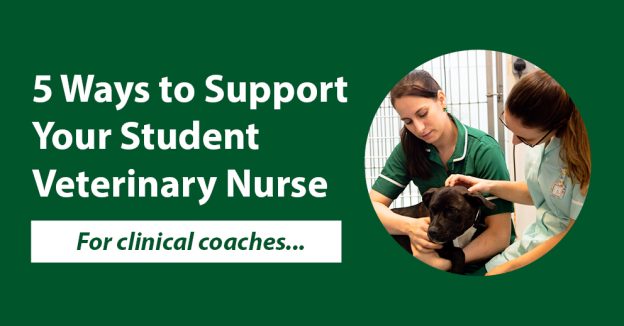
5 Ways to Support Your Student Veterinary Nurse

Working as a clinical coach is extremely rewarding, but training the next wave of Registered Veterinary Nurses (RVNs) is no easy task and brings its own challenges. You need to set timely targets, plan and structure efficient training systems, build good working relationships and maintain personal boundaries.

Whether you’ve recently taken on the role of clinical coach, have been supporting Student Veterinary Nurses (SVNs) for years, or would like to move into such a role in the future; you have probably asked yourself at some point: what can I do to best support my student?

Take a look at our top tips for supporting your students in practice here…

  1. Get to know your student

Sit down with your student early to understand more about how they learn best, where they’re at currently in their veterinary nurse training, and if they have any particular professional interests they wish to pursue during or after their training.

Stage of veterinary nurse training

Knowing where your student is in their training early on can help you start off on the right foot in relation to support. For example, if they are new to practice life you may wish to give them space to settle in before having an informal chat about the NPL/e-portfolio and make a plan for the following weeks. Whereas if they aren’t new to practice then you can begin NPL/e-portfolio planning straight away.

Learning style

Everybody learns differently, some verbally, some practically, some with diagrams. Do they find learning from a book easier than hands on practical work, for example? Once you know what your student prefers, you can cater to that and come up with easier ways for them to learn the skills they need to.

Professional interests

Is there a particular area of nursing your student really enjoys or wants to learn more about? If so, keep that in mind in relation to training and Continuing Professional Development (CPD). Encouraging professional passions is just as important as getting the NPL completed! You could even set your own mini revision tasks or quizzes to help them learn more about a particular area.

  1. Make time for your SVN!

Although busy practice life sometimes means that 1-2-1 time with your student may be hard to find, it’s important to make time to talk to your SVN about their progress and the NPL/e-portfolio.

It may be worth setting up short, but weekly, meetings to ask your student about life in practice and college work. This way you’ll keep track of how they’re doing, and also how they’re feeling about college and work. This is also an opportunity for your student to ask questions and let you know if they are struggling with anything.

You can also use this time to plan their tasks for the following weeks and give them a timeframe to work from, this will keep them focused instead of feeling overwhelmed by the day-to-day tasks. Try to keep a record of these discussions too so you have a reference for the next meeting.

  1. You’re not on your own – get the team involved!

Although you are the designated clinical coach, it’s important to remember that the rest of your team can be involved in training. You have the option to delegate certain tasks to those who may have a particular skillset. Say, for example, one of your colleagues is an expert IV placer. It would make sense for your student to practice with that colleague, and then you can observe the final results and if the IV is placed to your satisfaction then you can sign off the student as competent.

It might also be useful when it comes to supporting NPL or e-portfolio completion to have a list, that all team members can access, detailing criteria to be covered (for example, they may need a list of radiographic views from the x-ray room). This way everyone can see what cases the student requires and so are able to alert them if something suitable comes in. This might be especially useful for cases which you may not see as often as others (an exotic / wildlife species, for example).

You could also put post it notes on drugs or equipment that the student needs to use, which will encourage other staff members to involve the student if their work includes these items. This way every little opportunity to cover the NPL/e-portfolio is taken advantage of. Making sure everyone is aware of difficult cases to cover also helps so that the whole team can help in identifying suitable cases that the student can be involved with.

  1. Patience and kindness are virtues

Every registered veterinary nurse began their journey as a student. Remember that you were once in their shoes, and that practice can be an intimidating and scary place for new students. Clinical coaching is not just about delivering the clinical skills – a friendly face, a pat on the back and a cup of tea are essential parts of the unwritten curriculum.

  1. Ask for help!

If you can see that your student is failing to achieve in a particular area, there’s no problem with seeking the guidance of another coach, who may be able to give you advice on how to best educate in a particular area.

Additionally, don’t be afraid to ring up your Primary Centre if you’ve got any worries! A good Primary Centre will have no problems answering questions and offering advice. There is no such thing as a stupid question and the training should cover a lot of the basics.

Want to learn more about how to best support your students? Join us at Clinical Coach Congress!

Clinical Coach Congress is the largest event of its kind, dedicated exclusively to supporting clinical coaches that are training student veterinary nurses in practice.

During the congress you will be able to listen to a jam packed timetable of relevant talks, as well as gain lots of best practice information and tips on coaching/mentoring your student. Not only this, you will gain valuable CPD hours!

Clinical Coach Congress may be particularly useful if you’re new to the role of a clinical coach and looking for some guidance, or if you’re more experienced and looking to develop your role further and discuss ideas with fellow clinical coaches.

Find out more

 

International Day of Persons with Disabilities

3 Ways to Make Your Workplace More Inclusive for People with Disabilities

According to government data, 19% of working age adults are disabled.

As an employer, manager or team leader, it is your responsibility to ensure that employees feel comfortable in the workplace.

Read on to find out what you can do to make your workplace more inclusive to people with disabilities.

Improve Workplace Accessibility

Creating an accessible workplace is all about providing employees with the most suitable, helpful tools and equipment needed to ensure they can carry out their responsibilities with ease and comfort.

Improved accessibility benefits everyone and creates a far safer and happier environment where people can get their work done and enjoy time spent at work. Here are some of the most common ways you can make a workplace more accessible for people with disabilities:

  • Installing ramps or elevators
  • Ensuring parking, doorways and bathrooms have wheelchair accessibility
  • Using braille at some of the essential points or areas in the workplace
  • Make use of assistive technology such as colour-coded keyboards, refreshable Braille displays, specialized screen reader software, assistive listening devices, speech recognition and sign language apps, and browsers that provide user-friendly and customizable Web interface
  • Install larger screens or make use of assistive technology such as screen readers and magnifiers on computers for those with visual impairment
  • Providing height adjustable desks and chairs
  • Introducing proper cable management and accessible plug sockets to benefit employees with limited mobility

Educate Staff about Discrimination and Inclusive Behaviour

An aware workforce is also an empowered workforce. It is essential to encourage an ongoing dialogue with all employees about the importance of disability inclusion and accessibility. Providing good education and awareness will help to dispel biases and discrimination. Employees should also be given basic information about how they can help their disabled colleagues in cases of emergency.

Ensure Recruiting and Application Process is Accessible and Inclusive

Your hiring processes should be accessible and inviting to applicants with disabilities. Here are some of the most common ways you can make your hiring process more accessible for people with disabilities:

  • Ensuring job postings and online application process is accessible, for example making the job posting available in different formats
  • Stating in the job description that qualified individuals with disabilities are welcome to apply and reasonable accommodations will be made should their application be successful
  • Ensuring interview and testing locations are accessible
  • When you hire someone with a disability, or an existing employee acquires a disability through illness or injury, be creative about reasonable accommodations. There isn’t an exhaustive list of what an employer has to do or can do, it is a process that is unique to each person. For example, one person may need a specific type of desk, another may benefit from the flexibility of working from home sometimes.

An inclusive workplace can boost productivity, improve employee morale and help contribute to the development of staff. With proper effort and steps in place, this is something that all companies can strive for and achieve.

The College of Animal Welfare do not discriminate unlawfully either directly or indirectly against a job applicant or one of its own employees. The College is committed to equal opportunities: appointments are open to members of the community on an equal basis. Please visit our website to view our current vacancies

Equine Careers Working with Horses

5 Career Options Working with Horses

If your passion lies with horse care, the good news is that there are many equine careers that offer you the opportunity to work directly with horses.

Jobs working with horses can be very sociable and fun, and is fantastic way to earn a wage from doing something you love. Take a look at just a few of the equine careers you could look to pursue:

Equine Veterinary Nurse

Equine Careers for Horse Lovers

If you have your heart set on making a difference to the lives of horses every day, you could consider training as an equine veterinary nurse. Equine veterinary nurses are key members of an equine veterinary practice, working alongside vets to provide care and treatment to horses.

Your work would be varied and tasks you may be involved in day-to-day include preparing horses for surgery, nursing sick horses, dressing wounds, carrying out diagnostic tests and completing paperwork.

Our equine veterinary nurse training runs from our centre in Huntingdon, and applications are now open for the next programme starting in February 2020.  

Find out more about becoming an Equine Veterinary Nurse

Horse Groom

Horse Groom Job ProfileA career as a horse groom could be the right path for you if you’re looking to care for horses on a daily basis. Horse grooms make sure that horses are healthy and in good condition by looking after their daily needs. This means you will regularly carry out duties such as giving horses food and water, replacing bedding, mucking out stables, cleaning and clipping horses’ coats, treating minor wounds and exercising the horses each day.

We offer a range of horse care qualifications suitable for those wishing to work as a horse groom.

Find out more about becoming a Horse Groom

Horse Riding Instructor

Horse Riding Instructor Career ProfileBecoming a horse riding instructor is a natural choice for skilled horse riders looking to pass on their knowledge and experience to less experienced riders of all ages, levels and abilities. Your work could involve teaching people who wish to ride as a hobby, helping experienced riders to prepare for competitions, developing training programmes and helping riders to correct problems.

Find out more about becoming a Horse Riding Instructor

Farrier

Farrier Job ProfileIf you’re looking to provide a more specialist service to horses, a career as a farrier could be for you!

Farriers use a variety of tools to care for the feet of horses, donkeys and mules; as well as make and fit horseshoes.

The role involves discussing the horse’s shoeing requirements with the owner, checking the horse’s leg, foot and hoof, cutting away any excess hoof growth and making sure the horse is properly balanced, making horseshoes by hand or machine, and using a hammer and anvil to fit the horseshoes. You may also work with vets and equine hospitals to provide corrective shoeing and surgical farriery!

Find out more about becoming a Farrier

Mounted Police Officer Job ProfileMounted Police Officer

Mounted police sections and army units support our forces on the ground and provide support and duties on ceremonial occasions.

As a mounted police officer you would be responsible for supporting a variety of initiatives including safeguarding , educating and building the public’s trust and confidence, as well as policing demonstrations and large events. You would also care for tack and equipment and provide general care and husbandry for the horses. 

This would be an ideal career for those looking to combine a passion for serving their country with a respect and love of working with horses. 

Find out more about a career in the mounted forces

Find out more about Careers Working with Horses at Careers With Animals Day

The College of Animal Welfare hosts its popular Careers with Animals Day twice per year. Whether you’re a school leaver working out your next career move or an adult looking for a career change – the event provides the opportunity to find out more about the training and employment opportunities within the veterinary care and animal care sectors. Find out more about Careers With Animals Day and see the next event dates 

Equine Veterinary Nursing Course Infographic

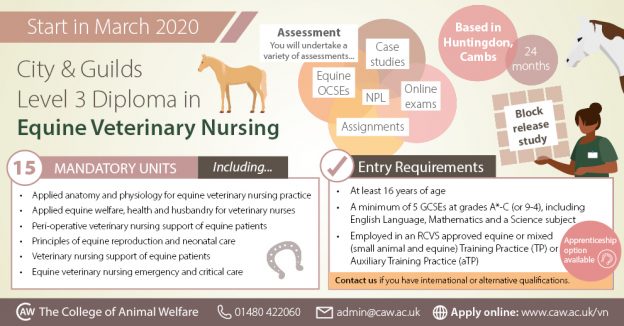
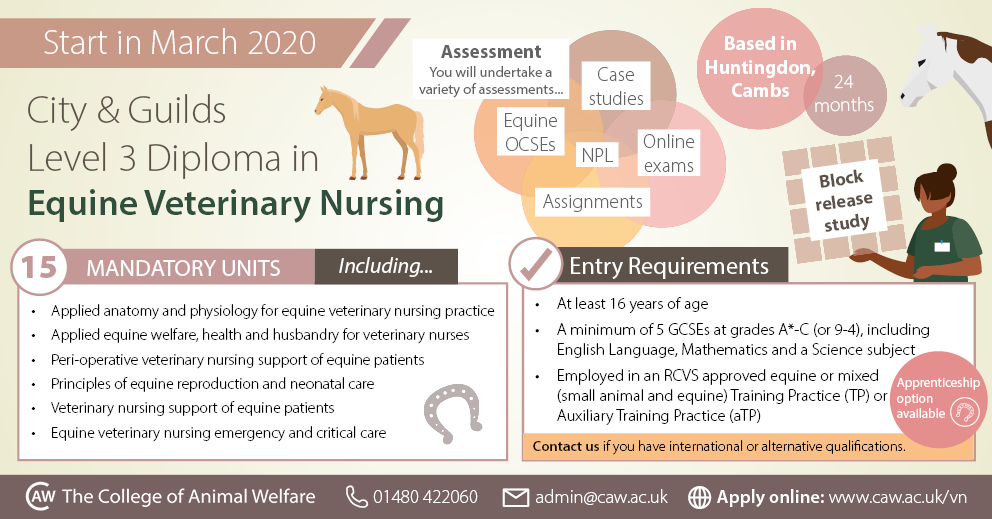
Start training as an Equine Veterinary Nurse in March 2020

We’re delighted to announce applications for our *NEW* Level 3 Diploma in Equine Veterinary Nursing, starting in March 2020, are now open! 

A career as an Equine Veterinary Nurse is a natural choice for those who wish to make a real difference to the lives of horses every single day.

College attendance will run on a block release basis from our centre in Huntingdon. You will attend college for four x two week blocks per year for two years. The rest of your time will be spent gaining practical experience via employment in an equine or mixed (small animal and equine) veterinary practice through employment.

We can help source local accommodation for you during your blocks at College if required – please contact us for details and costs.

Discover more about the course and apply online

Equine Veterinary Nursing Course Infographic

Horse Groom Job Profile

Gaining Employment in an Equine Veterinary Practice (Tips & Advice)

If you’re interested in studying equine veterinary nursing with us, you may have noticed that entry onto our Level 3 Diploma in Equine Veterinary Nursing programme requires you to have secured employment within an equine or mixed (small animal and equine) veterinary practice that is an RCVS approved TP or aTP.

Equine veterinary nursing is a popular profession and entry onto our training programme is often very competitive, therefore work experience opportunities for aspiring student veterinary nurses can sometimes be hard to come by…

If you’re struggling to gain the employment needed to apply for the course, don’t give up! Take a look at our tips and advice about how to gain employment in a veterinary practice:

Check local newspapers and online job boards

Job boards such as the CAW jobs boardVet Times Jobs or Animal Jobs Direct list advertisements from veterinary practices for student equine veterinary nurses.

Follow local veterinary colleges and veterinary practices on social media

Many training providers and veterinary practices will post their latest vacancies for student veterinary nurses on their social media pages, so it’s worth following those pages to ensure you are the first to see any new opportunities. Follow The College of Animal Welfare on Facebook

Check out your local veterinary practices’ websites

Many practices have their own vacancy page or further information about placement opportunities on their website, which can help you learn more about what they’re looking for. This way, you’ll also read more about who the practice is and what they do. Find an equine veterinary practice near you

Contact your local veterinary practices directly

By contacting practices to introduce yourself and enquire about employment opportunities directly, you are putting a face to your name and showing commitment and enthusiasm! You can drop them an email, give them a call or even stop by the practice to meet staff members in person. Even if they are unable to offer you a placement at that moment, they may be able to hold your details ready for future opportunities, or introduce you to other members of the profession who can help you gain a placement. Find an equine veterinary practice near you

Be aware that veterinary practices are often very busy, so don’t be disheartened if you aren’t able to speak to someone straight away. Practices are particularly busy at peak times such as Mondays and Fridays, so it’s worth trying to contact them mid-week.

Ensure your CV is up-to-date

Keeping your CV up-to-date means you’ll be able to apply for positions as soon as they become available. Make sure your CV contains any relevant experience or hobbies that you may have that will complement your application for work experience, for example any additional animal care studies or work experience in a related environment such as a farm, rehoming centre or kennels/cattery.

Attend relevant open evenings and career days

Career days such as our Careers With Animals Day bring local veterinary employers and colleges under one roof, which is the perfect opportunity to discuss your career plans and gain advice from industry professionals. What’s more – they can be a good opportunity to meet with local practices directly to enquire about work opportunities.

Gain other relevant veterinary work experience

Any experience you can gain working with animals will help to boost your employability prospects and increase the likelihood of you securing work in a veterinary practice at a later date. For example, if you’re struggling to get a job as a student nurse in practice due to lack of experience, could you volunteer elsewhere to build up more skills and knowledge – for example in a local stables?

You could even look into undertaking work experience abroad. Many experience providers such as Oyster Worldwide offer veterinary and animal care internships/work placements abroad for those keen to gain more experience. These projects give you the opportunity to gain practical experience with animals and in some cases shadow qualified vets and vet nurses to learn more about what they do.

If you have any questions about the entry requirements for the Level 3 Diploma in Equine Veterinary Nursing programme, please do not hesitate to contact us at admin@caw.ac.uk or call us on 01480 422060.

Clinical Coach Congress Talk

Clinical Coach Congress 2020 is open for registration!

Our annual Clinical Coach Congress, the UK’s largest conference dedicated solely to supporting clinical coaches and those involved in veterinary nurse training, is now open for 2020 registrations!

Sponsored by Millpledge Veterinary and running from Monday 16-Tuesday 17 March 2020, this year’s congress is returning to the wonderful East of England Arena and Events Centre in Peterborough, a multi-purpose events venue offering generous conference space and state-of-the-art facilities. For those looking to stay overnight, discounted room rates are available to all delegates at the Marriott Hotel just five minutes away from congress.

As an RCVS recognised Clinical Coach standardisation event, the congress offers Clinical Coaches the ideal opportunity to network with fellow clinical coaches and industry speakers and achieve up to 12 hours of CPD.

This year’s event will include lectures on exam techniques, common OSCE mistakes, building strong coach and student relationships, time management and much more. Delegates will also be able to speak to a variety of exhibitors from across the veterinary profession.

Be an early bird and book before 31 January 2020!

Delegates who book before 31 January 2020 will be able to attend both days of congress for the fantastic early bird price of just £249+VAT. A full event agenda, and further details about how to book, can be found at www.caw.ac.uk/ccc or by calling 01480 422060.

Government calls for views on mandatory cat microchipping

The government has launched a call for evidence on cat microchipping as part of plans that could help reunite lost cats with their owners, tackle pet theft and identify cats injured or killed on roads.

The government is seeking to find out what the effect of mandatory cat microchipping would be on owners, rescue and rehoming centre’s and cats themselves. In particular they’re looking for evidence on the benefits and drawbacks of requiring owners to microchip their cats, how microchipping could help fix problems, how they could make, check and enforce rules and any exemptions they should consider.

This consultation closes at 5pm on 4 January 2020. If you would like to contribute to the call for evidence you can do so by emailing animalwelfare.consultations@defra.gov.uk or writing to: Animal Welfare Team, Area 2D Nobel House, 17 Smith Square, London SW1P 3JR.

Clocks changing image

These 10 tips will help you stay safe as the clocks go back…

As the clocks go back and the nights draw in, we want to emphasise the importance of staying safe in the dark and ensuring you’re visible when you’re travelling at night.

For veterinary nurses, SVNs and others working in the profession, this is especially important when you’re working night shifts in practice and need to travel to and from work.

Read on to check out all of our top tips…

  1. Check all your car or bike lights are working fully before the darker nights set in. Particularly check your fog lights, as it may be some time since you have used them.
  2. If you’re cycling or walking to work after dark or in poor visibility (eg foggy or overcast days) you should wear bright, reflective clothing and tape to draw drivers’ attention.

  3. Be aware that other road users may not be taking steps to make themselves visible. Look out for them; better use of your lights will help you see and avoid others.
  4. Make sure you keep blankets, a torch and basic safety equipment in your car in case you break down in adverse weather conditions.
  5. Don’t forget about your dogs! Hi-Vis dog leads and flashing collars will help your dog to be seen in the dark.

  6. Be aware of your surroundings when walking in the dark. Take out your earphones and be conscious of using your phone in dark areas.
  7. Make plans for your journeys and ensure you know who you will be travelling with. If you plan to take a taxi, either book it in advance or get one from the taxi rank.
  8. Be mindful that some of you or your colleagues may feel different during darker months. Seasonal Affective Disorder (also known as ‘winter depression’) can cause people to feel low or lethargic due to the reduced exposure to sunlight. It usually takes around 3 days for your body to adjust to the clock change. You may feel more tired and have difficulty concentrating until you adjust to the extra hour in the day, however if you feel consistently low and are struggling to cope please visit your GP.
  9. Try to get outside during daylight hours. Cold dark days can impact your mood so spend time outside during brighter hours.
  10. Don’t forget to set your alarm clocks! It can be even more difficult to get up and out of bed when it’s still dark outside. Make sure you set a few different alarms and ensure you leave enough time to defrost your car before setting off for work or college.

Further reading

Clocks changing image

These 10 tips will help you stay safe as the clocks go back…

As the clocks go back and the nights draw in, we want to emphasise the importance of staying safe in the dark and ensuring you’re visible when you’re travelling at night.

For veterinary nurses, SVNs and others working in the profession, this is especially important when you’re working night shifts in practice and need to travel to and from work.

Read on to check out all of our top tips…

  1. Check all your car or bike lights are working fully before the darker nights set in. Particularly check your fog lights, as it may be some time since you have used them.
  2. If you’re cycling or walking to work after dark or in poor visibility (eg foggy or overcast days) you should wear bright, reflective clothing and tape to draw drivers’ attention.

  3. Be aware that other road users may not be taking steps to make themselves visible. Look out for them; better use of your lights will help you see and avoid others.
  4. Make sure you keep blankets, a torch and basic safety equipment in your car in case you break down in adverse weather conditions.
  5. Don’t forget about your dogs! Hi-Vis dog leads and flashing collars will help your dog to be seen in the dark.

  6. Be aware of your surroundings when walking in the dark. Take out your earphones and be conscious of using your phone in dark areas.
  7. Make plans for your journeys and ensure you know who you will be travelling with. If you plan to take a taxi, either book it in advance or get one from the taxi rank.
  8. Be mindful that some of you or your colleagues may feel different during darker months. Seasonal Affective Disorder (also known as ‘winter depression’) can cause people to feel low or lethargic due to the reduced exposure to sunlight. It usually takes around 3 days for your body to adjust to the clock change. You may feel more tired and have difficulty concentrating until you adjust to the extra hour in the day, however if you feel consistently low and are struggling to cope please visit your GP.
  9. Try to get outside during daylight hours. Cold dark days can impact your mood so spend time outside during brighter hours.
  10. Don’t forget to set your alarm clocks! It can be even more difficult to get up and out of bed when it’s still dark outside. Make sure you set a few different alarms and ensure you leave enough time to defrost your car before setting off for work or college.

Further reading

Domestic Violence Awareness Month Blog Featured Image

Domestic Violence Awareness Month: Supporting Yourself and Others

Domestic violence affects millions of people, both women and men, of every race, religion, culture and status. On average, the police in England and Wales alone receive over 100 calls relating to domestic abuse every hour.* Read on to learn more about the signs of domestic abuse, including where to go for help if you need it and how to support others.

Warning signs of an abusive relationship

We all have arguments with our partners and family members occasionally, and sometimes we say or do hurtful things that we later regret and apologise for. But if this behaviour is becoming a regular pattern, then it may be a sign of domestic abuse.

Abuse comes in many different forms and includes more than just physical violence. It’s stalking, manipulation, yelling, humiliation, coercion, threats and isolation. It can also be stealing a pay check, checking phones and social networks or calling someone stupid so often they believe it. The common trait is that it’s always about having control and power over the other person.

If you’ve ever felt afraid of your partner/family member, or changed your behavior because you’re afraid of what they might say or do, you may be experiencing domestic violence.

Ask yourself whether your partner or family member does any of the following to you. If you answer yes to any of them, you may be in an abusive relationship…

AbuseSigns
Emotional abuse• Deliberately belittles or humiliates you alone as well as in front of others
• Decides what you wear or eat, or how you spend your money
• Unfairly accuses you of flirting or cheating
• Stops you from going to work or school
• Makes unreasonable demands for your attention
• Isolates you from seeing your friends and family
• Blames you for his or her abusive behavior or violent outbursts
Physical abuse• Hurts you physically (e.g hitting, beating, punching, pushing, kicking, choking, biting) including with a weapon
• Throws things at you
Threats and intimidation• Threatens to hurt you, your children, other loved ones, your pets or themselves
• Harasses or follows you
• Stands over you or invades your personal space
• Destroys things that belong to you
Sexual abuse• Touches you in a way you don’t want to be touched
• Make unwanted sexual demands
• Hurts you during sex
• Forces you to have sex when you don’t want to
• Pressures you to have unprotected sex
• Controls your birth control or insists that you get pregnant
Financial abuse• Controls your money, or refuses to give you enough money to buy food or other essential items
• Requires you to account for everything you spend
• Limits your access to your own or shared bank accounts
Online abuse • Checks your phone, email or social networks without your permission or insists they monitor and have access to your passwords/online activity

If you think you may be in an abusive relationship, it’s important to remember that you’re not responsible for your partner or family member’s behaviour, you don’t deserve to be treated this way despite what they may say and you don’t need to stay silent in fear of the person who is hurting you. There are many people who can offer support and help keep you and your loved ones safe.

What to do if you decide to seek help

You don’t need to wait until you’re in immediate danger or in an emergency situation to seek help. If you decide you want to tell someone and gain some advice and support, you can do so by:

  • Speaking to your doctor, health advisor or midwife
  • Calling a helpline
    • Women can call the free 24 hour National Domestic Violence Helpline on 0808 2000 247
    • Men can call the Men’s Advice Line free on 0808 801 0327 (Monday-Friday 9am-5pm) or ManKind on 01823 334 244
  • In an emergency, call 999

If you’re worried about how you will support yourself if you decide to leave your partner or cut ties with a family member, Women’s Aid provides a free handbook providing practical support and guidance on every aspect of seeking support; including legal rights, money issues, supporting children, health, well being and much more.

How to help others who may be in an abusive relationship

If you’re worried someone you know is in an abusive relationship, let them know you’ve noticed something is wrong and you’re there to help them if they ever need it. It’s not your place to tell them to leave the relationship if they’re not ready to do so – it’s their decision. However, you can be there for them as a friend and help them in lots of ways if they confide in you:

  • Listen without judgement
  • Tell them nobody deserves to be treated in the way they’re being treated, despite what the abuser has said
  • Ask if they have suffered physical harm and go with them to a hospital or GP if needed
  • Help them report their abuser to the police if they choose to do so
  • Encourage them to talk about their feelings and experiences, but don’t push them if they don’t want to
  • Provide information on organisations who can help if needed

Sources

This article has been informed by the following sources, where you can find further information about domestic violence: