Author Archives: Amber Tennant

What Makes a Good Veterinary Nurse

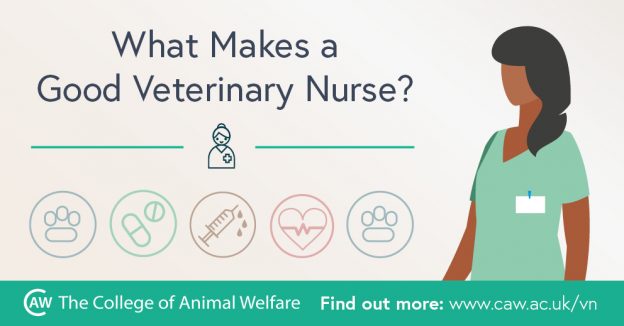
What Makes a Good Veterinary Nurse?

Veterinary nurses use their technical knowledge and expertise to care for our pets with skill and empathy every single day. It goes without saying that working as a veterinary nurse is a great choice for those who are caring, giving and motivated to do the best for animals. There are also lots of other qualities that can help someone succeed in the role.
If you’ve considered training as a veterinary nurse before, you may have wondered whether the role is right for you and asked yourself: what makes a good veterinary nurse? To answer that question, take a look at just some of the skills and traits we think make a great veterinary nurse:

Passion and understanding of the role

Veterinary nursing is varied profession. In any given day you may find yourself: taking x-rays, medicating patients, doing consults, maintaining equipment, monitoring anaesthetics, dressing wounds, answering phones, cleaning and the list goes on! You need to make sure you have a realistic expectation of what the job will be like, so that you’re ready to get stuck in and make a real difference.

Good team working skills

Teamwork is essential among veterinary nurses, as often you will be required to work together to complete certain tasks. It’s critical to your practice’s success that everyone gets along and is willing to help each other.

Commitment to professional development

As a veterinary nurse you should be passionate about learning new skills and undertaking regular continuing professional development (CPD). Not only is it a professional requirement, but being committed to lifelong learning will ensure veterinary practices continue to provide the best possible care to patients. What’s more – CPD allows you to pinpoint where you want your career to go in the future. For example, you may wish to pursue a specialist area of nursing, complete an advanced qualification such as the Level 5 Advanced Diploma in Veterinary Nursing (Practice Nurse), top up your veterinary nursing qualification to degree level, become a clinical supervisor, or become a head nurse.

Willingness to work flexibly

Not all veterinary practices offer emergency or out-of-hour services, but many do, so you should consider whether you would be open to working out-of-hours and stepping in during emergencies. Veterinary Nurses also often work on weekends, bank holidays and evenings.

Good technical knowledge and communication skills

Veterinary nurses often provide information, advice and guidance to owners on the care of their pets. You could be asked about any form of nursing or procedure, from blood work and IV catheter placement to recovery from anaesthesia. To this end, it’s important to have a good technical knowledge base in order to deal with client questions that go beyond simply “yes” or no”.

Resilience

Veterinary nursing is a rewarding profession, but it’s not always sunshine and rainbows! Seeing animals suffer from an illness or accident can be difficult to experience, especially for passionate animal lovers. In these situations it’s important to be able to separate your own feelings in order to get on with the job. You need to get the right balance between being compassionate and doing your job without breaking down.

Subscribe to receive updates about our veterinary nurse training

* indicates required
School of Veterinary Studies

Career Development for Veterinary Nurses

10 Career Development Opportunities for Veterinary Nurses

So you’ve achieved your veterinary nursing qualification and joined the RCVS register of veterinary nurses…now what?

It’s well documented that career opportunities for qualified veterinary nurses are excellent. Here, we look at just a few opportunities for career development for veterinary nurses…

  1. Complete an advanced veterinary nursing diploma, or top up your veterinary nursing qualification to degree level

If you’re eager to continue your professional development, an advanced veterinary nursing qualification could be your next step. Our Level 5 Advanced Diploma in Veterinary Nursing (Practice Nurse) is intended to equip you with advanced practical skills and underpinning knowledge relevant to the role of a Registered Veterinary Nurse in practice and consulting environments.

You could also consider completing the Veterinary Nursing BSc (Top Up) programme, which offers diploma and foundation degree level registered veterinary nurses the opportunity to top up their qualification to degree level. Studying at degree level offers a range of benefits, including exploring professional interests, developing skills in research and academic writing, and paving the way to further postgraduate training at masters or even PhD level. Discover more benefits of topping up your veterinary nursing qualification

  1. Land a great role in veterinary practice

Many veterinary nurses choose to remain in first opinion veterinary practice, however there are also options for RVNs with a particular interest to work in specialist practices (e.g. feline, equine, reptile or large animal practices), emergency vet practices, referral practices (e.g. orthopaedic, cardiology, oncology, ophthalmology) or veterinary/university hospitals. You could also become a locum veterinary nurse and gain experience in a range of different veterinary environments. If you’re looking for a place to start, check out the CAW Jobs Board.

  1. Undertake further veterinary nurse training in a specialist area

Nurses must continue to study and log professional development hours to maintain their registration throughout their careers. This means there is plenty of opportunity to pursue professional interests and undertake specialist training in a range of topics, particularly the care of exotic pets, feline medicine, anaesthesia and dentistry.

  1. Join the education industry

Many RVNs use their qualifications to pass on skills and expertise to the next generation of veterinary nurses in education roles such as lecturing. Teaching positions can vary widely, but veterinary nurses who choose to take up a role in education might be writing and developing course content, presenting lectures, workshops and practical teaching sessions, providing student support and guidance, assessing and moderating students, or undertaking research and representing educational institutions at conferences and exhibitions. Read more about becoming a Veterinary Nursing Lecturer.

  1. Work towards a leadership or management role

If you’re looking for leadership and management opportunities within veterinary practice, you could become a head nurse or even work towards becoming a veterinary practice manager over time. Our leadership and management courses, accredited by the Institute of Leadership and Management (ILM) and offered at levels 3 and 5, will enable you to take better advantage of opportunities for development, build your confidence and develop your leadership skills and capabilities.

  1. Become a Clinical Coach

Beside every great veterinary nurse is a great clinical coach, who supported them through their formal training and helped them develop their practical skills in practice. If you’re passionate about veterinary nursing and keen to help others flourish in the industry, you could consider training as a clinical coach and help to train student nurses in practice. Find out more about Clinical Coach training

  1. Pursue a sales role

Another career route you may take once you have qualified as a veterinary nurse is working for one of the many companies and service providers that supply the veterinary industry as a sales representative. Becoming a veterinary sales representative is one of the less-recognised career paths open to veterinary nurses. It offers a fantastic opportunity to travel, meet new people and help veterinary surgeons, veterinary nurses and other professionals to deliver better care to their patients.

  1. Spend time working abroad

Do you want to the opportunity to travel the world whilst gaining valuable skills as a veterinary nurse? Whether you’re a newly qualified veterinary nurse looking to gain more experience, have been working in industry for years and fancy taking on a new challenge, or just want to do something good with your time off – taking on a voluntary placement abroad could be for you! Volunteering worldwide is a great way to use your veterinary nursing skills to help animals in need.

The Worldwide Veterinary Service is an animal welfare charity that provides opportunities for vets and veterinary nurses to volunteer their skills and experience on placement in countries including India, Thailand, Peru, Malawi, South Africa, Costa Rica – and many more.

  1. Train in rehabilitation

As a qualified veterinary nurse, you could grow your career by training to become a veterinary physiotherapist or hydrotherapist. Rehabilitation following veterinary referral can help animals recover following surgery and from a variety of conditions such as pack pain, sprains, strains, fractures and sporting injuries. It has become a growing service within specialist veterinary hospitals, referral centres and first opinion practices. You can visit our career profiles to find out more about how to pursue a career in veterinary rehabilitation.

  1. Undertake academic writing and research

If you have studied to become a veterinary nurse at degree level, you may wish to pursue a career in conducting and publishing research. This work is essential to developing veterinary nursing techniques and championing evidence-based practice. You could also take your academic development in a new direction by speaking at industry congresses and events. If you have a creative flair, you could also aim to become a freelance writer. You could even start your own blog!

Subscribe to receive updates about our courses, CPD and events for veterinary nurses

* indicates required
School of Veterinary Studies

CPD, Short Courses and Congresses

New Top Up Degree Launched for Registered Veterinary Nurses

The College of Animal Welfare now offers the opportunity for Registered Veterinary Nurses to top up their veterinary nursing qualification to a BSc Honours Veterinary Nursing degree, in partnership with Middlesex University.

Delivered predominantly via distance learning, the new programme aims to give learners the skills, experience and knowledge needed to become a critically thinking individual who can enhance the standing of the veterinary nursing profession.

Throughout the programme, learners will develop skills in critical evaluation, academic writing and complex decision-making. Veterinary Nurses will be able to tailor the degree to their professional interests by choosing from a range of elective modules including Nursing Exotics and Wildlife, Equine Nursing and Emergency and Critical Care. In addition, completion of the pharmacology module culminates in eligibility for Companion Animal Suitably Qualified Person status (C-SQP).

Dr Catherine Hemingway MRCVS, BSc VN Top Up Programme Leader at The College of Animal Welfare, said: “We’re delighted to be working in partnership with Middlesex University to deliver this programme, which is designed to provide learners with a variety of transferable skills which will enhance their veterinary career and continue their professional development.”

Applications to study the BSc Honours Veterinary Nursing Top Up Degree are open to start in September 2020 or January 2021. For more information about the programme visit www.caw.ac.uk/vn or contact the college on 01480 422060.

– Ends –

For more information please contact:
Tel: 01480 422060
Email: marketing@caw.ac.uk

Notes to editors:
The College of Animal Welfare is one of the UK’s leading providers of veterinary nurse and animal care training and education; operating from five training centres around the UK.

The College has a well-earned reputation for excellence and has created a number of unique achievements that have created new opportunities for learning.

For more information about The College of Animal Welfare please visit www.caw.ac.uk


BSc Hons Top Up Degree Veterinary Nursing Middlesex University Featured Image

New Top Up Degree Launched for Registered Veterinary Nurses

We’re delighted to announce we now offer the opportunity for Registered Veterinary Nurses to top-up their qualification to a BSc Honours Veterinary Nursing degree, in partnership with Middlesex University. 

Delivered predominantly by distance learning, the course aims to give you the skills, experience and knowledge needed to enhance your veterinary career and continue your personal and professional development.

Key Facts

  • Attendance: This programme is delivered predominately by distance learning with minimal classroom attendance required for one module.
  • Duration: Full time study – 2 years; Part time study – 3-4 years
  • Start Date: September 2020, January 2021
  • Location: Hendon, Huntingdon or Leeds

Throughout the programme you’ll develop skills in critical evaluation, academic writing and complex decision making. What’s more, you can tailor your degree to your professional interests with elective modules including:

  • Management and Business
  • Nursing Exotics and Wildlife
  • Companion Animal Behaviour and Training
  • Equine Nursing
  • Veterinary Education and Professional Development
  • Applied Emergency and Critical Care
  • International Veterinary Nursing

In addition, completion of the pharmacology module culminates in eligibility for Companion Animal Suitable Qualified Person status (C-SQP).

Applications are open to start the programme in September 2020 or January 2021. 

Find out more about the BSc Honours Veterinary Nursing Top Up Degree (Middlesex University)

Why Become a Veterinary Nurse Featured Image

Why Become a Veterinary Nurse?

Veterinary nursing is a natural choice for those with their minds set on working with animals. If you have a passion for animal welfare, then you are likely already familiar with the profession and the important role that veterinary nurses play in raising animal welfare standards.

Read more about why veterinary nursing could be the career for you:

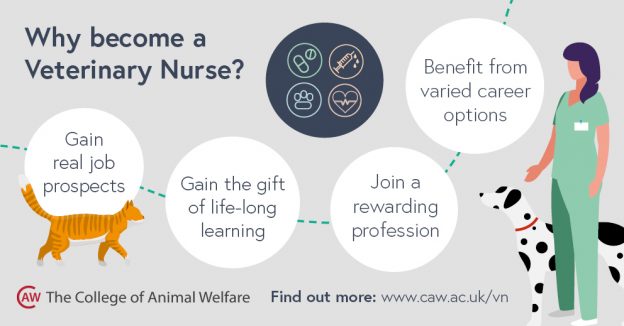
Gain real job prospects

Job prospects for registered veterinary nurses continue to remain high in veterinary practice and in related industries. What’s more – salary expectations have increased significantly in recent years, the median salary package for qualified veterinary nurses is now £30,500 (SPVS Salaries Survey 2022/3).

Join a rewarding profession

Veterinary nurses make a real difference to the lives of animals every single day. The sense of purpose that comes from nursing an ill, abandoned or stray animal back to health, and the long-lasting friendships fostered whilst working as part of a close-knit team in practice, makes veterinary nursing a rewarding and worthwhile career.

Benefit from varied career options

Upon completion of formal studies, veterinary nurses have numerous professional opportunities. You could remain in first opinion practice; move into referral practice and specialise in a particular area, train as an equine veterinary nurse, or find work in related industries such as management, research, teaching, sales or rehabilitation with further training. Read more about what you can do with a veterinary nursing qualification

Gain the gift of life-long learning

Continuing Professional Development (CPD) is a mandatory requirement for Registered Veterinary Nurses (RVNs), with 45 hours being required by the RCVS over a three year period. This gives those working in the profession the gift of life-long learning and education, and leaves plenty of opportunity to pursue professional interests and undertake specialist training in a range of topics, particularly the care of exotic pets, feline medicine, anaesthesia and dentistry.

Equine Apprenticeships for Employers

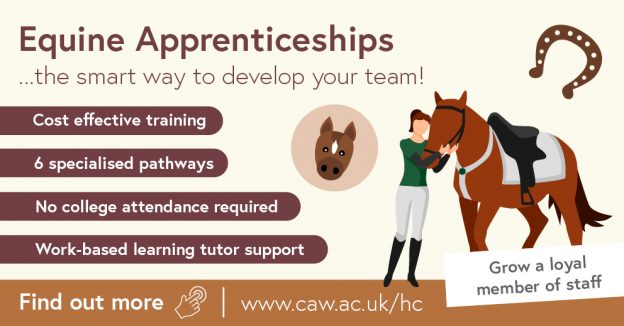
Equine Apprenticeships – the smart way to develop your team!

Apprenticeships have been around for some time and there are more benefits to employers than ever before. Not only do they provide an opportunity for someone to gain a qualification and valuable experience working with horses, they can help equine employers to expand and grow their team in a cost effective and practical way.

Quick facts about equine apprenticeships at The College of Animal Welfare:

  • The National Minimum Wage (NMW) for apprentices is currently just £3.90 per hour.*
  • Apprentices can now be part-time.
  • Existing staff can use apprenticeships to upskill or retrain – they are not just for new employees.
  • Apprentices can be any age (as long as they are over 16 years of age).
  • Apprentices do not attend college and they can start at any time! Our assessors visit at mutually convenient times and provide email and telephone support between visits.
  • We can help you recruit, screen candidates and even arrange interviews – for free!

£1,000 incentive to employers taking on a new apprentice

Take on a new apprentice aged 16-18 years of age and you will receive a £1,000 incentive towards their training fees (in two staged payments). What’s more, if your business has less than 50 contracted employees, the course fees for those aged 16-18 will be fully funded!

What will my apprentice learn?

Our Equine Apprenticeship programmes run within a 90 mile radius of our Huntingdon centre. They will equip apprentices with the practical skills and knowledge needed across key horse care skills. Examples of units include:

  • Safe Working Practices
  • Yard and Field Routines and Duties
  • Horse Anatomy, Physiology and Welfare
  • Horse Handling, Care and Appearance
  • Saddlery and Equipment
  • Travelling Horses
  • Non-Ridden Exercise

In addition to the core knowledge, skills and behaviours your apprentice will undertake further learning relevant to their job role and interests. There are five specialised routes you can choose, from each of which have specific knowledge and skills: Breeding, Riding, Driving, Non-Riding and Racing.

Not looking to recruit new staff? Train your current staff!

If you would like to train an existing member of staff, your employee will need to select the equine apprenticeship they are interested in and apply online.

If you would like to speak to a member of our team directly regarding our equine apprenticeship training, please contact us at admin@caw.ac.uk or on 01480 422060.

Suicide awareness and prevention

Suicide Awareness and Prevention: Supporting Yourself and Others

In the UK and Ireland alone, over 6,000 people died by suicide in 2018.*

If you’re feeling like you want to die, it’s important to reach out for help in any way you feel comfortable doing so.

It’s crucial to remember that you don’t need to struggle with difficult feelings alone; help and support is available right now if you need it.

Here are just some of the different ways to get help:

  • Talking with a close friend or family member you trust  
  • Calling or texting the Mind Infoline on 0300 123 3393 or text 86463
  • Calling a hotline or helpline –
    • Samaritans is available for everyone, 24/7 on 116 123 / samaritans.org
    • Campaign Against Living Miserably (CALM) is available for men from 5pm-Midnight every day on 0800 58 58 58 / Webchat
    • Childline is available for children and young people under 19 on 0800 1111
  • Scheduling an appointment with a professional therapist, or e counselling if that is more appropriate. Staff and students at CAW can access counselling on an ongoing basis, further information can be found the student support section of our website.
  • Reading others’ stories of hope and recovery. Sometimes reading how others have made it through tough times can help you navigate your own situation
  • Joining a support group (Find your nearest Mind centre here)
  • Calling your GP and asking for an emergency appointment
  • Calling 111 out of hours – they will help you find the support and help you need
  • If you have one, contact your mental health crisis team

If your life is in serious danger, for example if you have taken a drugs overdose, call 999 for an ambulance or go straight to A&E, or ask someone else to call/take you to A&E.

If you’re struggling to cope in the moment, try not to think about the future – just focus on getting through today. Try to be around other people and get yourself to a safe place, such as a friend’s house. More tips for coping with suicidal thoughts in the moment

How to help others who may be feeling suicidal

If you’re concerned that a friend or family member may be feeling suicidal, you shouldn’t be afraid to ask if they’re having thoughts of suicide.

There is still a taboo around discussing suicide, which can make it harder for people experiencing these feelings to open up. Asking direct questions about suicide such as ‘Are you having suicidal thoughts?’ or ‘Have you felt like you want to end your life?’ can encourage someone talk about how they are feeling.

If someone tells you they are feeling suicidal, respond with kindness and care. You could encourage them to talk more about how they are feeling by:

  • Asking open questions that encourage someone to say more than ‘yes’ or ‘no’.
  • Giving them time to share their thoughts and feelings when they’re comfortable, even if you’re anxious to hear their answers.
  • Taking them seriously. Avoid minimising someone’s problems or trying to convince them their mental health problems aren’t that bad, as this may increase feelings of guilt and hopelessness even further. 
  • Listening without judgement. It’s important not to blame the person for how they are feeling, even if you feel shocked, upset or frightened by their words.

You might feel unsure of what to do, but there are lots of other things that might help too. You could:

  • offer emotional support
  • offer practical support
  • help them think of ideas for self-help 
  • help them to make a support plan

Supporting yourself

Supporting someone who feels suicidal can be difficult. It’s important to look after your own mental health too, by taking time out for yourself, being kind to yourself, eating well and getting enough sleep.

To read more about how to support someone who feels suicidal, download the Mind Support Booklet.

Sources

Time to talk mental health day

9 Ways to Start a Conversation about Mental Health

Today is Time to Talk Day.

Talking has the power to change lives… Mental health problems affect one in four of us, yet too many people are made to feel isolated, ashamed and worthless because of this. But the good news is that this is changing, slowly…

Taking about mental health can feel awkward. Knowing what to say to someone who is struggling isn’t always easy, but what you say doesn’t have to be profound, it should simply be compassionate and show that you care. One of the biggest worries people have is saying the ‘wrong’ thing, but not saying anything or avoiding the person can make them feel even more isolated. If you don’t know what to say, say just that and let the person know that you are there for them.

Read on to discover 9 ways to start a conversation about mental health:

1. ‘How are you feeling?’

One of the simplest ways to start a conversation is to be direct.

2. ‘I care’

These two simple words can mean a lot to someone who feeds the world is against them.

3. ‘I’m here for you’

Depression can be isolating and overwhelming, knowing that you are there for them can be very reassuring.

4. ‘Is there anything I can do to help?’

Are there things that you can do physically or mentally to help ease some pressure? Could you help with shopping or housework, or simply provide some company? The person may be reluctant to accept help for fear of being a burden – make it clear that you want to help, in the same way that they would for you. Be specific, for example, instead of just asking what you can do, ask if you can visit on a Sunday morning to carry out a specific task.

5. ‘Have you told your doctor how you are feeling?’

If the person has not yet seen a doctor, encourage them to seek help, reassuring them that there is nothing wrong with asking for some help.

6. ‘Do you need to talk?’

Sometimes the most important thing you can do is to just listen, sympathetically and without interrupting. A listening ear can help the person to relieve the pressure of their pent-up feelings.

7. ‘I understand’

If you have been through what the other person has, it can be helpful for the person to hear that you have been there and got better. However, you should only do this if you really have experienced the same thing, otherwise you could come across as trivialising the person’s experience.

8. ‘You aren’t weak’

People with depression may feel their depression is a weakness or a character flaw – they must be reassured that this is not the case and that they have an illness that takes a lot of strength to fight, so they are stronger than they think.

9. ‘There is hope’

Reassure your friend that there is hope because mental health conditions are treatable or manageable and they have a very good chance of returning to feeling normal again.

If you are concerned about a colleague or student, please contact a Safeguarding Officer or advice. If you ever believe a person to be in imminent danger, you should call 999.

Further sources of help and support for those struggling with a mental health condition can be found below:

Equine Apprenticeships Benefits

10 Benefits of Equine Apprenticeships

Equine ApprenticeshipsFor those with their hearts set on a job working with horses, an equine apprenticeship can help you pave the way to a successful career.

As a horse care apprentice, you’ll have the opportunity to gain practical skills and experience on-the-job, as well as earn a wage. Take a look at the key reasons why an apprenticeship could be the perfect career move…

1. You’ll get paid for pursuing your passion for horses – right from the get go!

Equine apprenticeships emphasise work-based training in a real job, meaning you’ll be paid for your work and benefit from having a regular income. The National Minimum Wage for Apprentices currently sits at around £3.90 per hour*, however many employers pay more than this, and often apprentices’ earnings rise as they become more experienced. Not only this…

2. Your employer will pay for your training!

An equine apprenticeship is a debt free route to a career in horses. Not only will you be earning a wage, you will have no course fees to pay as these are covered by your employer! In other words, you will be gaining valuable experience in the workplace for FREE!

What’s more – as an equine apprentice at CAW you may be eligible to purchase an TOTUM card for just £12, meaning you could make big savings on many of the top brands, including Amazon, The Co-operative Food and Odeon!

3. You’ll undertake an employer-led programme of study!

Our equine apprenticeships have been developed in conjunction with employers, meaning you will learn the most relevant and up-to-date skills required by industry. Over the course of your apprenticeship you will cover everything from horse anatomy, physiology and welfare, to yard and field routines and safe working practices.

4. You’ll gain real job prospects!

An equine apprenticeship offers the opportunity to secure a permanent position with your employer of choice on completion of formal studies. Starting out as an apprentice has proved to lead to real job prospects for many. According to research by the National Apprenticeship Service, 85% of apprentices will remain in employment on completion of their apprenticeship, with 64% of those staying with the same employer.* 

If you’re looking for job security and the opportunity to progress in your career, an equine apprenticeship could be the most secure way to develop with further education and training.

5. You can tailor your programme to your job role and interests!

Our equine apprenticeships are studied on a work based learning basis. There are five specialised routes to choose from (Breeding, Riding, Driving, Non-Riding and Racing) allowing you to tailor the course to your interests, job requirements and career objectives. Not only this, but as the apprenticeship is work-based you may start at any time of the year, and will not be required to attend college for tuition!

6. Tutors and colleagues will help you grow into your role!

A combination of workplace experience and online tuition means you will be mentored by tutors and colleagues with a wealth of knowledge each and every day. This will allow you to develop your confidence, knowledge and practical skills faster; and make meaningful industry connections that will prove invaluable as your career develops. Additionally, as our equine apprenticeships are work-based, one of our experienced Work-based Learning Assessors will support you through your qualification via email and telephone contact and regular visits to your place of work.

7. You will begin a rewarding career early, and get a head start in the world of work!

If you’re a horse lover, chances are you jump any opportunity to interact with horses. By undertaking an equine apprenticeship, you will be able to put your love of horses to good use straight away and make a real difference to the lives of horses every single day – and this will prove invaluable when it comes to seeking employment in future.

Proving you have relevant, practical experience is essential to securing your first role in any industry, but no more so than in horse care. In a competitive job market, a theoretical knowledge of horse care alone is simply not enough to stand out. You have to be able to understand how this knowledge applies to real scenarios. Gaining years of experience in horse care as part of an equine apprenticeship is therefore a significant advantage and addition to your CV!

8. You will start contributing to the economy early!

Apprenticeships are forecast to contribute over £3bn by 2022, and it is estimated that the average apprentice improves business productivity by £214 per week.* As such working as an apprentice means you will be playing your part in boosting productivity both within the workplace and the economy!

9. You will lay the foundations for further study!

For many people university is the dream, but choosing an apprenticeship over university now doesn’t mean you will never make it to campus in the future. On the contrary, successful completion of the Senior Equine Groom (Level 3 Apprenticeship) could help you lay the foundation for higher education (subject to individual university entry requirements).

10. You’ll have a competitive edge!

Consider what position you will be in once you’ve completed your apprenticeship. You will be qualified to undertake a range of horse care duties and be able to work towards higher certifications if you wish to do so. You will have gained real world experience and skills learnt from on-the-job training.

Not only this, you’ve achieved all of this without paying a penny. Put simply, you will be turning your passion into a career – and being paid for the opportunity to do so! What’s not to love?

If you’re thinking that an apprenticeship could be the perfect way for you to turn your love of horses into a career, start your journey with The College of Animal Welfare today! Our work-based apprenticeship programmes can be undertaken within a 90 minute radius of our Huntingdon (Cambridgeshire) centres.

Our Equine Apprenticeships at a glance…

Useful sources to get started
Clinical coaches student support

Clinical Supervisor training now available

Please note our Clinical Supervisor training is now available. 

Our clinical supervisor training sessions are offered to those who meet the below criteria and can be undertaken in the form of an attended day course at one of our centres or an online training course; both of which are offered free of charge.

In order to attend our clinical supervisor training, you must comply with either of the following:

  •  You are a Registered Veterinary Nurse or Veterinary Surgeon currently employed by a The College of Animal Welfare (CAW) affiliated Training Practice
  • You are undertaking the training in order to support a CAW student within your practice
  • Your student is completing the VetSkill Level 3 Diploma in Veterinary Nursing (Companion Animal)

 To book a place, visit our website.