Veterinary Nursing Awareness Month 2026: How Veterinary Nurses Show Compassion and Empathy Every Day
Veterinary Nursing Awareness Month 2026 takes place this May, and this year the theme focuses on Compassion and Empathy.
This month is an opportunity to recognise the many ways veterinary nurses bring compassion and empathy into their work, and the difference it makes to animals, clients, and the wider veterinary team.
So what does compassion and empathy look like in the role of a veterinary nurse?
Understanding animals without words
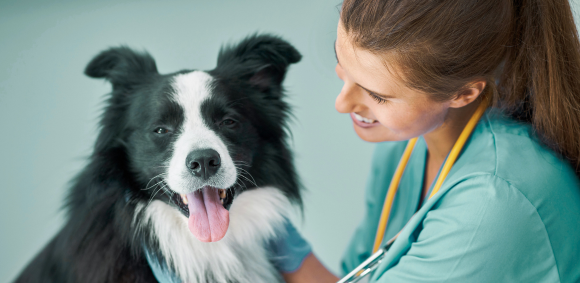
Animals cannot explain how they feel, which makes empathy a crucial part of patient care. Veterinary nurses learn to read subtle signals such as body language, behaviour, and small changes that may indicate fear or pain.
A nervous dog in a waiting room or a cat recovering from surgery doesn’t just need treatment. They need calm handling, reassurance, and a sense of safety. Veterinary nurses provide this through gentle approaches and by creating environments that reduce stress as much as possible.
Supporting owners through emotional moments
For many people, pets are family. This means veterinary practice visits can be emotionally charged, especially when something is wrong.
Veterinary nurses often take time to explain procedures, answer questions, and offer reassurance. They help translate complex medical information into something understandable, while also recognising when someone simply needs a moment of kindness or support.
In more difficult situations, such as end-of-life care, empathy becomes even more important. Being present, patient, and compassionate can make an incredibly hard experience feel just a little more manageable.
The human side of veterinary care
Compassion also plays an important role within the veterinary team. The working environment can be busy and emotionally demanding, and strong teamwork helps maintain a positive atmosphere.
Veterinary nurses support colleagues during challenging situations and help create a culture of understanding within the practice. This contributes to better care for patients and a more supportive workplace.
The emotional labour behind the role
Showing compassion every day is not always easy. Veterinary nurses regularly care for sick or injured animals while supporting worried or grieving owners.
This emotional responsibility is a significant part of the role, even if it isn’t always visible. It requires resilience, self-awareness, and the ability to balance care for others with care for themselves. Recognising this aspect of the role helps build a better understanding of the profession.
Compassion as a skill
Compassion is a key part of professional practice. It influences how veterinary nurses communicate, handle patients, and build trust with clients. By combining clinical knowledge with empathy, veterinary nurses help improve outcomes, reduce stress, and create better experiences for everyone involved.
Next time you visit your veterinary practice, take a moment to notice the veterinary nurse. They are often the calm presence during appointments, the person offering reassurance, and the one providing hands-on care for your pet.
Veterinary nursing brings together skill, understanding, and empathy in a way that makes a real difference every day.
I’m Already A Veterinary Care Assistant – Do I Need a Veterinary Care Qualification?
If you’re already working as a Veterinary Care Assistant (VCA) in a veterinary practice, at some point you may have looked at formal training options and asked yourself: do I really need a veterinary care qualification if I’m already doing the job?
It’s a completely valid question. After all, you’re gaining hands-on experience every day, learning directly in a real clinical environment, and building practical skills that matter. So where does a formal veterinary care qualification fit into all of that?
Why a veterinary care qualification matters
Deepening understanding of the “why” behind what you do
Working in a veterinary practice gives you invaluable hands-on experience. You build confidence handling animals, learn clinical routines, and develop the ability to support your team effectively in a fast-paced environment.
However, on-the-job learning is often focused on getting through the day, which means the deeper reasoning behind tasks isn’t always explained. You might be doing things correctly, but not fully understanding why certain techniques, protocols, or procedures are used.
A structured veterinary care qualification helps bridge that gap. It builds on your existing experience by connecting practical skills with the theory behind them – giving you a clearer, more complete understanding of your role and helping you feel more confident when handling new or unfamiliar situations.
Building stronger confidence in a clinical environment
Confidence in a veterinary setting isn’t just about experience – it comes from truly understanding what you’re doing and why. While many VCAs feel comfortable with routine tasks, it’s completely normal to feel less certain when situations fall outside of that routine -whether that’s handling something unexpected, answering detailed questions from pet owners, or assisting with unfamiliar procedures.
This is where structured learning makes a real difference. By reinforcing your existing knowledge and filling in the gaps, it helps turn uncertainty into confidence. Instead of second-guessing, you’re able to make informed decisions, communicate more clearly, and step into situations with greater assurance.
Over time, this deeper confidence allows you to take on more responsibility within the practice, recognise potential issues earlier, and play a more proactive role in patient care – all of which can make your day-to-day work feel more manageable and rewarding.
Gaining formal recognition for the work you do
Even if you’re already capable in your role, a veterinary care qualification adds something your experience alone can’t always provide: recognition.
Your current team may know how skilled you are – but outside of that environment, it’s not always easy to demonstrate. Having a formal qualification can:
Validate the skills you’ve already developed
Show commitment to your role and professional growth
Strengthen your CV when applying for new positions
Support progression into roles like student veterinary nurse
It essentially translates your day-to-day experience into something that’s more widely understood.
Keeping your career options open
You might not be thinking about career progression right now, but it’s worth considering where this role could take you in the future. Many VCAs later decide to move to a different practice, specialise in certain areas of veterinary care, undertake qualifications in related subjects, or train as a veterinary nurse.
In these situations, having a formal veterinary care qualification can make the next step more accessible. Without one, it’s still possible – but it may take longer or require additional steps.
A common concern is that studying a veterinary care qualification means going back to the beginning. In reality, if you’re already working as a VCA, you’re in a strong position. Much of what you learn will feel familiar – you’ll simply be adding depth to your existing knowledge.
In many cases, this makes learning easier to understand, more relevant to your daily work and quicker to apply in practice. Rather than starting over, you’re building on the foundation you’ve already created.
Do you need a veterinary care qualification?
So, do you need a formal qualification to work as a VCA?
Not always – it very much depends on the veterinary practice recruiting as to what they expect. Some may be happy to employ someone with enthusiasm and experience, others may ask for an accredited veterinary care qualification.
However, the more important question is: What could a veterinary care qualification help you achieve that experience alone might not?
For many Veterinary Care Assistants, the answer includes greater confidence in their knowledge, stronger career opportunities, and a clearer path for progression.
Veterinary Care Qualifications at The College of Animal Welfare
For those who want to grow in their role as a VCA, feel more confident in their abilities, or keep future opportunities open, structured training is one way to help you achieve that. If it’s something you’ve been considering, it may be worth exploring further.
Our veterinary care qualifications can help you develop the skills and experience needed to build a successful career in veterinary care. They can be studied alongside work or volunteering in a veterinary practice, and they can also be a great stepping stone into veterinary nurse training in the future if you wish to do so.
Key facts
Get qualified in as little as 12-18 months
Part time or full time study options
Study online – no college attendance required
Start at any time and study from anywhere
No formal academic entry requirements
Employment, or a voluntary placement, in a veterinary practice is required prior to application. If you are not currently employed or volunteering in a veterinary practice, read our tips and advice here.
Apprenticeship option available
Learn about animal health and welfare, animal accommodation, animal anatomy and physiology, animal handling and much more
Our Loans2Learn scheme can help you spread the cost of learning into smaller monthly payments.
If you’ve ever wondered whether an industry event is worth your time and money, Dog Grooming Congress makes a strong case. This one-day gathering is designed specifically for groomers and grooming students, giving you a chance to learn, connect and get inspired all in one place.
Whether you’re newly qualified or have been grooming for years, attending Congress can genuinely refresh how you think about the job, the tools you use and how you run your salon.
See live demonstrations you can put to work
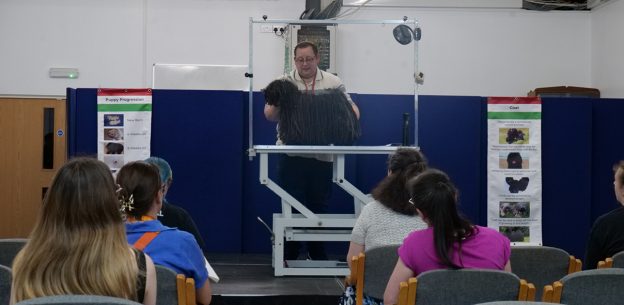
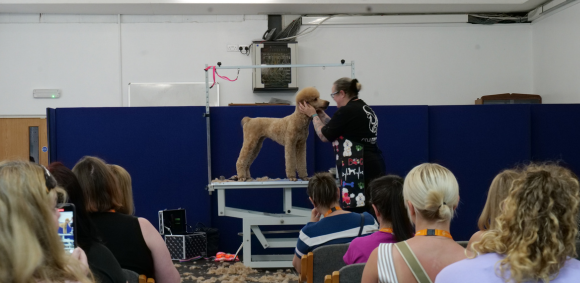
One of the biggest draws of Dog Grooming Congress is the programme of live demos. Experienced groomers and industry speakers showcase real techniques on stage, explaining not just what they are doing but why.
Watching someone work in real time gives your learning a different depth. You see how they handle specific coat types, manage timing and make decisions based on the dog’s behaviour. Plus, because everything is live, you can ask questions there and then.
Get straight to the source with practical takeaways
Events like Dog Grooming Congress are not about abstract ideas. They focus on things you can take straight back to your salon and use. Whether that’s refining your prep routine, adjusting how you handle nervous dogs, or trying a new grooming approach, you leave with practical insight rather than just notes.
You also get direct access to exhibitors who can talk you through products and tools. It’s a chance to compare clippers, equipment or coat care products with the people who know them well.
Connect with other groomers
One underrated part of any industry event is the networking. Grooming can be a solitary job at times, so spending a day around people who understand the same challenges and joys you do can be surprisingly energising.
You get to share experiences, ask about how others handle certain situations, and make connections that last long after the event. For some groomers, this is where friendships form; for others, it’s where new business ideas start.
Hear from expert speakers
Dog Grooming Congress also hosts presentations on wider topics that affect your work, from canine behaviour and welfare to the business side of running a salon. These broader discussions help round out your skillset in a way that benefits every appointment.
Ideal for every stage of your career
One of the best things about Dog Grooming Congress is that it is genuinely useful, whether you’re a student looking to build confidence or an experienced groomer looking to stay current. The content caters to a range of skill levels and interests, and you’re free to focus on what matters most to you on the day.
If you’re thinking about entering competitions, starting your own business or simply raising the standard of your everyday work, this sort of event gives you the space to explore those ambitions alongside like-minded professionals.
In short, attending Dog Grooming Congress is an investment in yourself. You get real, practical learning, access to expert voices, new ideas to try in your salon, and the chance to be part of the dog grooming community. It’s the kind of event that can make you look at your work in a slightly different, more confident way – and that is something every professional can benefit from.
Curious about what we get up to at Dog Grooming Congress? Check out the highlights from 2025:
What Support Do Students Receive During Veterinary Nurse Training?
Starting veterinary nurse training is an exciting step towards a career working closely with animals, pet owners and veterinary teams. At the same time, it’s completely natural to feel a little nervous about what lies ahead. Many prospective students wonder how challenging the course will be, what support they’ll receive during placements, and who they can turn to if they need help.
At The College of Animal Welfare, we understand these concerns. That’s why our veterinary nurse training programmes are designed to support students throughout their learning journey – academically, practically and personally. Our aim is to help every student develop the confidence and skills needed to become a capable veterinary professional.
Academic support from veterinary nursing tutors
Veterinary nursing involves learning a range of scientific and clinical subjects, including anatomy, physiology, infection control, pharmacology and nursing care. For many students, some of these topics may be completely new.
Our experienced veterinary nursing tutors guide students through these subjects step by step, helping them build their understanding gradually. Lessons are structured to make complex topics easier to grasp, and students are encouraged to ask questions and seek clarification whenever they need it.
Throughout our veterinary nursing qualifications, our tutors provide feedback on assignments, help students prepare for exams and offer guidance whenever additional support is needed. Our veterinary nursing courses are designed to meet the standards set by the Royal College of Veterinary Surgeons (RCVS), ensuring students gain the knowledge required for safe and professional practice.
Support during clinical placements
A large part of veterinary nurse training takes place in a real veterinary practice. This is where students begin to apply what they have learned in the classroom to real patients and clinical situations.
While this can feel daunting at first, students are not expected to work independently from the start. In the UK, student veterinary nurses are supported by an experienced registered veterinary nurse known as a clinical supervisor. This mentor helps guide the student through practical tasks, demonstrates procedures and supervises the development of clinical skills.
Clinical supervisors provide valuable feedback and encouragement as students gain confidence. They help bridge the gap between theory and practice, ensuring that students learn how to perform procedures safely and professionally.
Veterinary nursing is a hands-on profession, and our training programmes reflect this. Students develop their practical skills progressively, gaining experience in areas such as animal handling, patient monitoring, theatre preparation and more.
These competencies are introduced gradually and practised under supervision. Students continue building their skills until they are confident and competent in each area. This structured approach ensures that students develop practical ability at a manageable pace while maintaining high standards of patient care.
With time and guidance, tasks that initially seem unfamiliar soon become part of a student’s everyday clinical routine.
Wellbeing and personal support
Veterinary nurse training can sometimes feel demanding, particularly when balancing academic study with clinical placements. Students may also encounter emotionally challenging situations when caring for sick or injured animals.
At The College of Animal Welfare, we recognise the importance of supporting students beyond the academic aspects of their veterinary nursing qualification. We check in with students regularly, offering guidance on managing workloads and maintaining a healthy balance between study and personal life. Additionally, our students can access online mental health and wellbeing support through TogetherAll, as well as up to six free counselling sessions.
Learning alongside other student veterinary nurses
One of the most valuable aspects of veterinary nurse training is the opportunity to learn alongside others who share the same passion for animal care.
Students at The College of Animal Welfare often build strong connections with their peers through group discussions, shared learning experiences and conversations about their clinical placements. Studying alongside others who are working towards the same goal can provide motivation, encouragement and a sense of community.
These relationships often continue long after qualification, becoming part of a wider professional network within the veterinary industry.
A clear path towards becoming a Registered Veterinary Nurse (RVN)
Our veterinary nursing courses provide a clear structure that guides students towards professional qualification. Throughout their veterinary nurse training, students complete academic modules while developing their clinical competencies in practice.
We support students through every stage of this process, helping them understand what is required to meet professional standards and preparing them for the next step in their careers. By the time students complete their veterinary nurse training, they have developed both the knowledge and practical skills needed to work confidently as veterinary nurses.
Beginning veterinary nurse training may feel like a big step, but students are not expected to face the journey alone. With guidance from tutors, support from clinical supervisors and encouragement from fellow students, aspiring veterinary nurses develop their skills in a structured and supportive environment.
Dog Grooming Events and Professional Development: Why It Matters and How to Build It into Your Career
Dog grooming is practical, creative and demanding. No two days are quite the same. One appointment may be a well maintained pet trim, the next a matted rescue dog who needs patience and careful handling. In a profession with so much variation, it’s important to keep learning.
Professional development gives groomers a structured way to keep improving. It helps you stay current, work safely and confidently, and build a reputation that reflects the standard you aim to uphold.
Why further learning is important for dog groomers
Keeping your skills current and relevant
When you are grooming every day, it is easy to rely on familiar techniques. The challenge is that small habits can form over time, and without outside input it becomes harder to spot where improvements could be made.
For example, attending a breed specific seminar often highlights subtle refinements that make a noticeable difference. It may be a more efficient prep routine, a cleaner outline, or a better understanding of coat texture. These are not dramatic changes, but they build steadily and elevate the overall quality of your work.
Strengthening welfare and professional judgement
As a dog grooming training provider, one of the most important reasons we encourage ongoing learning is welfare. Every dog that comes into a salon brings its own needs, whether that is age, health considerations, coat condition or behaviour.
Ongoing education sharpens your ability to assess those factors and adapt your approach. A seminar on canine behaviour might change the way you structure your appointments. Training in first aid can give you the confidence to act quickly and appropriately if something unexpected happens. Learning more about skin conditions and coat disorders can help you identify when to adjust your grooming plan or suggest veterinary advice.
Professional development reinforces the responsibility that comes with the job and supports better decision making, which benefits both the dog and the owner.
Building confidence in your pricing and positioning
There is also a business side to professional development that often gets overlooked. Dog groomers sometimes hesitate to review pricing or introduce new services because they are unsure whether their skill level justifies it.
When you invest in further training, that confidence grows naturally. You understand the technical reasoning behind your work. You can explain your approach clearly to clients. You are better equipped to position your services appropriately within your local market. Courses on time management, client communication or marketing can also have a direct impact on how smoothly your salon runs.
Practical ways to continue your development
There are many accessible routes for dog groomers looking for further learning opportunities:
Workshops and practical training days
Hands on workshops remain one of the most effective ways to refine technique, and smaller group settings allow for individual feedback. Whether the focus is advanced scissoring, hand stripping, creative styling or managing challenging coats, practical sessions encourage you to step outside your usual routine. They also provide the opportunity to ask questions openly and learn from the experience of others in the room.
Industry congresses and educational events
Congresses and larger educational events bring together groomers from across the industry. Demonstrations from experienced professionals allow you to observe technique in detail, often with commentary that explains not just how something is done, but why.
These events also create space for conversation. Speaking to other groomers about common challenges, pricing structures or workflow can be just as valuable as the formal sessions.
Dog Grooming Congress Dog Grooming Congress aims to provide valuable knowledge and skills to both seasoned professionals and trainees in the dog grooming industry. It offers dog groomers the ideal opportunity to learn from award-winning dog groomers, network with fellow groomers and brush up on their professional skills.
Curious about what we get up to at Dog Grooming Congress? Check out the highlights from 2025:
Trade shows offer a different kind of learning. Being able to handle equipment, compare tools and speak directly with suppliers helps you make informed decisions about what you use in your salon. Live demonstrations often introduce new techniques or products that can improve comfort and efficiency. Even small changes to equipment or layout can have a meaningful impact over time.
Dog grooming competitions
Competitions are sometimes seen as intimidating, but they can be powerful development tools. Preparing for a class encourages attention to detail, disciplined coat preparation and strong time management.
For those who prefer not to compete, observing is still highly educational. Watching experienced competitors work under pressure highlights efficient techniques and finishing touches that can be adapted for everyday salon work.
Online learning and peer discussion
Webinars and online courses provide flexibility, particularly for groomers balancing busy salons and family life. Peer groups, both in person and online, also play an important role. Discussing challenging grooms or sharing practical solutions keeps you thinking critically about your own approach.
For groomers at every stage of their career, ongoing learning is what keeps standards high and enthusiasm strong. It ensures that the service you provide continues to evolve, alongside both the industry and the dogs you care for every day.
Is a Dog Grooming Apprenticeship Worth It for Employers?
With rising demand for dog grooming services and increasing pressure on staffing, some salon owners may be looking at recruitment options and asking: is a dog grooming apprenticeship worth it for employers?
Apprenticeships require time and commitment, so it’s completely reasonable to want to understand the return on investment before getting started. This article looks at the real benefits, common concerns, and why more grooming businesses are choosing dog grooming apprenticeships as a recruitment solution.
What employers need to weigh up
When considering a dog grooming apprenticeship, most employers think about the time needed to support training, cost and wages, impact on productivity, and whether the apprentice will stay long term.The value of an apprenticeship lies in how well it balances these concerns with sustainable skills development and business growth.
The business case for dog grooming apprenticeships
1. You train a dog groomer that meets the needs of your salon
One of the biggest advantages of a dog grooming apprenticeship is that training happens in your salon, not in isolation. With a Level 2 Dog Groomer Apprenticeship, apprentices learn:
Core grooming skills in real working conditions
Your standards, routines, and expectations
Professional behaviours alongside technical ability
Rather than retraining someone later, you develop a dog groomer who grows into your business from day one.
2. Apprentices can help address staff shortages in your dog grooming salon
Experienced groomers can be difficult to recruit, and competition for staff can be costly.Apprenticeships allow you to grow your own dog groomers, reduce reliance on external recruitment, and plan for future capacity rather than reacting to gaps. Over time, apprentices become confident, capable dog groomers who support day-to-day operations and long-term growth.
3. Apprenticeships support staff loyalty and retention
Employers who invest in training often see stronger commitment in return.Apprentices often stay with the business that trained them and progress internally rather than move on.For many employers, this improved retention alone makes a dog grooming apprenticeship worth it.
What about the time commitment?
It’s true that apprentices need support, especially at the beginning. However, apprenticeships are designed to be realistic for small and independent businesses.
Key points to remember:
Formal learning and assessment are delivered by the training provider
Off-the-job training can be wide-ranging and often workplace-based
Apprentices contribute productively as their skills develop
With the right structure, the time invested early on pays off significantly as the apprentice becomes more confident and capable.
Is it cost-effective?
Apprenticeships can be a cost-effective recruitment option for many employers because:
Government funding may be available to help cover the costs of apprenticeship training
Employers may be eligible for a £1,000 incentive payment if they take on an apprentice aged under 19
The national minimum wage for apprentices is currently just £8 per hour (April 2026)
Free recruitment support is available from CAW if you’re looking to take on someone new
Training providers can also help employers understand funding, wages, and eligibility so there are no surprises.
What support do employers get?
One of the most common misconceptions is that employers must manage everything themselves. In reality, working with an experienced provider such as The College of Animal Welfare means employers receive support with:
Assessing whether a dog grooming apprenticeship is right for their business
Recruitment (including advertising and screening candidates)
Structuring off-the-job training
Paperwork, compliance, and progress tracking
This support significantly reduces the administrative burden for employers.
When might an apprenticeship not be the right fit?
An apprenticeship may not be suitable if you cannot offer a genuine role with time to support learning, or you’re looking for immediate, fully independent capacity.
That said, many dog groomers who initially doubt their readiness find that, with provider support, a dog grooming apprenticeship is far more achievable than expected. If you’re interested in apprenticeships but not sure whether they’re right for your business, request a call back here and we can advise you on your options.
So, is a dog grooming apprenticeship worth it for employers?
For employers looking to build skills sustainably and reduce recruitment challenges, a Dog Groomer Level 2 Apprenticeship offers a structured, supported route to developing capable groomers who grow alongside your business – making it a worthwhile investment for many salons.If you’re considering whether an apprenticeship is worth it for your salon, the best next step is to request a call back to discuss what support is available and how the programme could work in practice.
Ready to get started with dog grooming apprenticeships?
At The College of Animal Welfare, we deliver the Level 2 Dog Groomer Apprenticeship as a work-based course with online learning – perfect for both newcomers to the dog grooming industry, as well as current members of your team who wish to undertake a formal dog grooming course.
This apprenticeship is available anywhere in England, and is a practical option to develop skills within your business. Plus, there are clear benefits for employers:
Apprentices can start at any time and train in your workplace.
Apprentices can be full or part-time.
The apprenticeship is employer-designed and focuses on practical grooming skills and knowledge.
Experienced dog grooming tutors provide ongoing support to both you and your apprentice.
No college attendance required – instead, your apprentice attends one afternoon per week of online lessons, and will have an allocated tutor to support them.
We have over 10 years’ experience delivering dog grooming training and supporting employers, with tried and tested methods of course delivery and student support.
Please note that the information in this post is correct at the time of publishing and may be subject to change.
Dog Grooming Congress 2026 is open for registration now!
We’re excited to announce our annual Dog Grooming Congress is returning in June!
This year’s event is sponsored by Simpsons Grooming Supplies and is taking place on Sunday 14 June 2026 from our training centre in Huntingdon, Cambridgeshire.
Dog Grooming Congress aims to provide valuable knowledge and skills to both seasoned professionals and trainees in the dog grooming industry. It offers dog groomers the ideal opportunity to learn from award-winning dog groomers, network with fellow groomers and brush up on their professional skills.
Watch award-winning dog groomers in action
This year’s congress boasts a fantastic programme of live demonstrations. Attendees can look forward to sessions on:
Asian freestyle fundamentals by Joseph Warrant Ywayan
Spiral Technique on a Toy Poodle by Vasileios Barlos
As well as chatting to exhibitors and watching demos, dog groomers can listen to a series of presentations being held throughout the day:
What is Tellington TTouch® by Alex Wilson
Cooperative Handling at Home:What Every Dog Groomer Can Ask Owners to Practise by Paul Daly
PetBookr: Software Made by Groomers, for Groomers by Connor Todd
How to Market Your Pet Grooming Business Both Online & Offline by Bill Betts
Book now for just £65
Dog groomers can attend Dog Grooming Congress for just £65. A discounted price of £35 is available to CAW dog grooming students and alumni (contact us for the discount code). A full event agenda, and further details about how to book, can be found on our website or by calling 01480 422060.
What is Live Online Veterinary Nurse Training?
Live Online learning is becoming an increasingly popular delivery model for Student Veterinary Nurses (SVNs) studying the Level 3 Diploma / Apprenticeship in Veterinary Nursing with us – and for good reason. It combines structured teaching, hands-on clinical experience, and modern learning technology to help students build confidence and competence in practice.
If you’re an employer considering this delivery model for your SVNs, or you’re considering applying for the diploma and want to understand how it works, here’s a clear guide to what Live Online veterinary nurse training involves:
Day release theory lessons in our online classroom
Online learning activities between sessions
Practical skills training days in-centre (approx. 10 days during the programme)
Free access to Virtual Reality anatomy and physiology, and OSCE preparation software
Day-to-day learning via employment or a placement in veterinary practice
How do Live Online lessons work?
Students attend regular timetabled virtual lectures delivered by tutors through our innovative online teaching platform. These sessions are interactive and designed to mirror the engagement of a physical classroom. Activities can include:
Group discussions and live chat
Breakout room tasks
Polls and Q&A sessions
Research and problem-solving exercises during class
Sessions are recorded so students can revisit material for revision and consolidation. Theory exams may be taken online via remote invigilation or in person at a training centre.
What learning happens outside Live Online lessons?
Live Online students also complete independent online learning activities before or after their scheduled classes. These tasks help prepare them for upcoming topics and reinforce key knowledge.
Students typically access this material through our advanced Virtual Learning Environment (VLE), where they can view lesson resources, submit assignments, track their progress and access recorded sessions. This structured digital support helps keep learning organised and accessible.
Do students still attend sessions in-centre?
Yes – practical, hands-on training remains an essential part of our veterinary nurse training. The majority of practical learning takes place within the student’s veterinary practice, supported by a clinical supervisor.
Live Online students also attend a training centre for approximately 10 days across the programme to complete practical skills training. These sessions focus on developing and refining clinical techniques in a purpose-built learning environment.
Where do practical skills days take place?
As one of the UK’s most established veterinary nurse training providers, we deliver practical skills days from centres across the UK.
Satellite training centres Many of our satellite centres are based within modern veterinary environments, giving students access to high-quality facilities. Current satellite locations include:
Blue House Veterinary Centre, Stoke-on-Trent (Biddulph)
GSPCA, Guernsey
Kernow Farm & Equine, Bodmin
Pool House Equine Clinic, Lichfield
Sussex Equine Hospital, Horsham
Wheelhouse Veterinary Centre, Chorleywood
Willows Veterinary Centre, Solihull
CAW Training Centres In addition to satellite locations, we operate dedicated training centres in Huntingdon, North London, Wigan, Leeds, and Edinburgh. These centres are easily accessible by car and feature practical skills facilities, lecture rooms with video conferencing facilities, and comfortable breakout spaces for students.
Together, these centres ensure students receive high-quality practical training in well-equipped, professional learning environments – while still benefiting from the flexibility of the Live Online model.
What technology supports Live Online learning?
Our students have access to modern technology and learning tools such as:
Virtual Classrooms Tutors deliver engaging sessions using audio, video, slides, chat, polls, and breakout rooms, allowing real-time interaction.
Virtual Learning Environment (VLE) A web-based system that hosts learning materials, lesson recordings, assignments, assessments, and progress tracking.
Virtual Reality (VR) Clinical Skills We are the first veterinary nurse college in the UK to incorporate VR into training. All CAW veterinary nursing students will be granted a license to use our anatomy and physiology, and OSCE preparation VR software. As well as exploring the anatomy and physiology of animals, students can practise OSCE-style tasks such as taking x-rays, packaging samples, and identifying parasites – helping build muscle memory and reduce exam anxiety.
When can students start the programme?
We offer multiple start points during the year for students who are not yet working in a veterinary practice. If you’re already employed in practice, you can start your training at any time. View the next start dates here.
How are employers supported?
Whether you’re thinking about taking on another student veterinary nurse, looking to switch training providers, or want to become a Training Practice (TP) for the first time, we work in partnership with employers to support both the learner and the practice. This includes:
Free clinical supervisor training and standardisation events
Ongoing support from a dedicated IQA team member
Guidance with the Training Practice (TP) approval process where required
Access to a resource-rich VLE, eLibrary, and supervisor forum
Supporting more sustainable learning Students only need to travel to their chosen training centre for around ten days across the entire programme for practical skills training (and exams if they prefer to sit these in person). Reducing regular travel helps lower the overall carbon footprint associated with training.
Ongoing support for students and employers We provide extensive support throughout the programme. Students benefit from regular one-to-one sessions with their tutor and 24/7 access to digital wellbeing and learning resources. Employers are supported too, with free clinical supervisor training, guidance from a dedicated IQA team member, and assistance with the Training Practice approval process where needed.
Innovative learning tools and resources Students have access to CAW’s advanced learning technology, including a comprehensive Virtual Learning Environment (VLE), interactive virtual classrooms, and a virtual reality clinical skills platform designed to help prepare for practical exams and build confidence.
Flexible start dates year-round There are multiple start points throughout the year for those who are not employed in a veterinary practice. Students already working in a veterinary practice can begin their training at any time that suits both them and their employer.
I’d like to find out more about how Live Online. What next?
If you are an employer and would like to discuss how we can support your veterinary practice with veterinary nurse training, request a call back here.
If you are an applicant who wishes to start live online veterinary nurse training, you can apply here.
Why practices with in-house SVNs thrive: a look at culture, retention and Return on Investment (ROI)
Training student veterinary nurses (SVNs) in-house may require time, planning and supervision, but for many practices, it’s a strategic investment that delivers far more than clinical support. In-house training builds a culture of learning, strengthens team retention, and can provide a real return on investment.
Whether you’re already a Training Practice (TP) or considering becoming one, here’s how supporting SVNs within your team contributes to long-term success – and why more practices are choosing to grow their own RVNs.
Strengthening team culture and morale
Training an SVN brings a natural focus on learning and development and encourages the whole team to reflect on how they work. Clinical supervisors often report that supporting a student helps them revisit core principles, stay current with best practice, and feel a renewed sense of purpose.
Workplace-based mentorship, regular feedback and structured reflection are key to developing confidence and competence in student veterinary nurses. Practices that embed this type of learning culture may see stronger collaboration and improved clinical standards.
Supporting retention and team stability
Veterinary nurse retention is a well-known challenge in the sector. However, training SVNs in-house offers a proactive solution. By the time a student completes their veterinary nurse training in your practice, they’ve gained a deep understanding of your systems, workflows and culture – and may be more likely to stay on as a Registered Veterinary Nurse (RVN).
This is supported by a study of the anonymised employment data of 1,642 veterinary nurses, which found that tenure (time spent within a practice) was associated with reduced likelihood of resignation. The same study, conducted by CVS Group, highlighted that practices with strong facilities and career pathways were more successful in retaining their staff.
Training your own SVN can be a part of a recruitment strategy that builds long-term loyalty.
Improving clinical standards through reflection
Students often ask “why” we do things a certain way. This question can prompt useful conversations and reflection across the team. Supporting an SVN encourages clinical supervisors and other colleagues to re-evaluate procedures, explain reasoning behind decisions, and maintain high standards.
Embedding these approaches within practice culture can help ensure consistent professional development for student veterinary nurses, while also supporting the wider team by reinforcing good habits and aligning standards of care.
Return on investment: time well spent
While it’s true that training a student requires time and supervision, the financial and operational benefits are clear. SVNs, particularly in their final year of training, can perform a wide range of clinical tasks under supervision, freeing up qualified nurses and vets to focus on more complex duties.
The cost of recruitment, onboarding, and integrating new staff externally often far exceeds the resource investment required to support a student already embedded in the team. Additionally, practices that invest in training tend to gain a reputation for being forward-thinking and supportive, which can help to attract strong candidates across all roles.
How we support practices to train SVNs effectively
While the benefits of training SVNs are well-established, we recognise that the practicalities can be challenging, especially in busy practice settings. The College of Animal Welfare (CAW) Training Practices receive:
Free clinical supervisor training and standardisation events
Ongoing support from a dedicated Internal Quality Assurance (IQA) team
Help with TP/aTP registration if needed
Access to our VLE with resources and a clinical supervisor forum
Training SVNs is about nurturing a student’s professional journey from passionate learner to confident RVN, as well as building a team culture that values growth, development and shared success.
For practices willing to invest the time, the return is clear: stronger culture, better retention, and a future RVN who already understands what makes your practice unique. If you’d like to explore what becoming a Training Practice might look like for your team, we’re here to help.
Strengthen Your Veterinary Practice with Formal Training for Veterinary Care Assistants (VCAs)
Veterinary Care Assistants (VCAs) – also known as Animal Care Assistants (ANAs) and Patient Care Assistants (PCAs) – play a vital role in your practice, supporting veterinary surgeons and nurses, caring for patients, and keeping operations running smoothly. But have you considered how formal veterinary care training could take your veterinary care team to the next level?
Why invest in veterinary care assistant training?
Structured, accredited veterinary care training equips your VCAs/ANAs/PCAs with the skills, knowledge, and confidence to deliver exceptional care and client service. Our veterinary care qualifications are designed around the real needs of vet practices, offering a cost-effective way to develop competent, motivated, and loyal staff.
Courses can be completed alongside work, making them ideal for current team members and new recruits alike.
Each programme covers the essential veterinary care skills every assistant needs, from animal handling and infection control to client communication and teamwork.
Affordable veterinary care training options for every practice
If training costs are a concern, our Loans2Learn scheme offers a simple way to spread payments. For example, choosing to take out one of these loans for the City & Guilds Level 2 Diploma for Veterinary Care Assistants over a three year period could mean 36 monthly payments of just over £55 per month*.
Alternatively, choosing the veterinary care apprenticeship route can also reduce costs. For smaller practices, the government covers 95% of apprenticeship training fees, meaning you would pay only 5% (£250). Even better, apprenticeship training could be completely free for apprentices under 22 if your practice has fewer than 50 employees.
*Based on current fees and interest rates. Awarding body fees not included.
Career progression for Veterinary Care Assistants
Supporting your VCAs to develop professionally is a proven way to improve staff retention and clinical standards. Once qualified, there are several exciting career pathways in veterinary care to explore:
Veterinary Nurse Training Many VCAs progress into veterinary nurse training. Their hands-on experience and existing veterinary care qualifications can help meet entry requirements for veterinary nurse diplomas or apprenticeships. Explore veterinary nurse training
VetSkill VTEC Level 2 Certificate in Assisting Veterinary Surgeons in Monitoring Anaesthetised and Sedated Companion Animals A new qualification for VCAs assisting vets during anaesthesia and sedation — ideal for practices looking to enhance patient safety and surgical support. Find out more
VetSkill VTEC Level 4 Award for Animal Medicines Advisors (SQP – Companion Animal) A six-month, online qualification that enables VCAs to prescribe and supply POM-VPS and NFA-VPS medicines, expanding their role in client care and pharmacy support. Find out more
VCA Congress: Learning, networking, and CPD for veterinary care professionals VCA Congress is a dedicated event for veterinary care professionals bringing together expert speakers from across the sector for lectures focused on practical skills and career development.
Held annually as a virtual event, the congress offers the perfect opportunity for your VCAs, ANAs or PCAs to gain valuable CPD hours, stay updated with best practice in veterinary care, and connect with others who share their passion for animal welfare and professional growth.
Empower your veterinary care team and strengthen your practice
Investing in veterinary care assistant training delivers long-term benefits for your team, your patients, and your clients. Whether you choose a VCA certificate, diploma, or veterinary apprenticeship, structured training helps every assistant become a confident, skilled, and valued member of your veterinary team.