Author Archives: Amber Tennant

dog looking at camera - puppy farm awareness blog

Puppy Farm Pups – What to look out for! (Puppy Farm Awareness Day – 19 Sept)

Today is Puppy Farm Awareness Day!

Puppy farming is the mass commercial production of puppies purely for profit. Dogs and pups in puppy farms are often kept in dark conditions, left completely unsocialised and prone to infectious diseases. The puppies bred are then sold en-masse by dealers, with many dying soon after reaching their new home.

If you’re looking to purchase a new puppy, read more about what to watch out for to make sure you’re not supporting this cruel practice!

You should be suspicious of puppy farming if the breeder refuses to allow you to see the mother, or if excuses are given for the mother’s absence; such as being at the vets, being sick or ‘belonging to a friend or relative’. A puppy needs to remain with its mother and litter mates until they are at least 8 weeks of age, therefore if there is no mother present this can be a major warning sign. Pups bred from a puppy farm will likely be taken away from the mother soon after birth in order to sell quickly and maximise profits. Never buy a puppy if you have not seen the puppy interacting with its mother unless you are really sure there is a genuine reason.

The main aim behind Puppy Farming is to produce as much profit as possible; therefore price can be a key indicator as to whether you’re purchasing a Puppy Farm Pup. Red flags include very cheap prices (£100-£350) or very expensive prices (£2000+).

Crucially, you should be allowed to visit the facilities where your puppy is being cared for. If the breeder is reluctant to arrange this, or refuses to allow you to see the rest of the litter, they may have something to hide. Dogs and pups bred in puppy farms are often subject to unhealthy and dangerous living conditions.

Make sure you pay attention to the condition of any facilities you visit, and apply common sense when assessing your surroundings: dogs should be visibly comfortable, and have access to clean water and food. Additionally there should be enough space for pups to exercise and move around – they should not be cooped up in cages – always trust your instincts!

If you are looking for a puppy, an ideal place to start is by looking for a Kennel Club Assured Breeder or from a rescue centre that’s a registered charity. Kennel Club Assured Breeders have to meet set breeding criteria and have their premises inspected. You can find out more about the Assured Breeder scheme on the Kennel Club website. Be extremely wary of purchasing puppies from online sellers, pet shops, garden centres or from free newspaper advertising. Many puppy farmers will transport their puppies to dealers who sell them via these means, as it makes it much more difficult to identify where the puppy came from.

And lastly – do not feel sorry for the puppy and buy it… This only adds fuel to the fire and allows puppy farmers to continue to breed and sell to people, like you! Instead please walk away and report your suspicions to the correct people (details below).

If you suspect you are dealing with a puppy farmer, you can report the incident to your local authority. Alternatively you can call Consumer Direct on 08454 040506.

Find out more:

https://www.thekennelclub.org.uk/our-resources/kennel-club-campaigns/puppy-farming/
http://www.pupaid.org/puppy-farming/how-do-we-stop-puppy-farms/

health and fitness tips blog - sunset on a beach

Health and Fitness Tips of the Month: September

Forgiveness

When somebody or something makes you unhappy, you have two choices. You can dwell on hurtful events and situations, or you can accept what has happened and focus on moving forward. It’s easy to hold onto resentment, but studies show that forgiveness can lead to a range of health benefits. These include healthier relationships, less anxiety and stress, greater psychological wellbeing, and higher self-esteem. By comparison, holding onto a grudge risks bringing anger and bitterness into your relationships with others. You risk becoming so wrapped up in negativity that you’re unable to see the bright side in anything.

Choosing to let go of resentment is not about forgetting that something painful has occurred, or about condoning bad behaviour. It is about taking responsibility over your feelings and putting yourself before those who have hurt you. Next time you’re feeling angry at someone or something, ask yourself whether it’s really worth sacrificing your health over. Instead: put it behind you and focus on your own happiness.

Eye health

Did you know the average blink lasts for about 1/10 of a second? Looking after our eyes is very important. One way to make sure your eyes are healthy is regular eye tests. The suggested time frame for our eyes to be tested is every two years; this can differ depending on age and eye conditions.

Some of the different health issues that can occur to the eye are eye disease, eye cancer, conjunctivitis and dry eye. If you think you have a health issue with your eyes seek information and help from your doctor.

If you think you may have a sight issue you can go to your local optician for an eye test which will determine what help you need e.g. Glasses.

For further information please visit the NHS website.

Reading

When was the last time you read a good book? If you’d rather be doing something else, you’re not alone. Many people struggle to find the time to read, or find more comfort in television and film; but if you’re part of the 36% of people in England that do not read for pleasure, you could be missing out on a wealth of mental health benefits.

According to a study from the University of Sussex, reading for just six minutes a day can be enough to reduce stress levels by up to 68%. Different from reading short news articles, or your social media messages – sitting down with a book involves long periods of focus and attention, keeping your mind stimulated and boosting concentration in everyday life.

Engaging with the experiences and feelings of others through reading is also associated with higher levels of empathy and improved relationships with others. If you’re looking to revitalise a love of reading, why not take a look at Amazon’s 100 Books to Read in a Lifetime?

International Literacy Day (8 September) – How an English Functional Skills qualification could transform your life!

Today is International Literacy Day! Roughly 12 percent of the world’s population is considered functionally illiterate, with only basic or below average literacy levels in their native languages. What’s more – 781 million people worldwide cannot read or write at all, including 126 million youth.*

Functional illiteracy is not just a problem limited to developing nations. In the UK, poor literacy skills are widespread. 16% of adults (around 5.8 million) people in England and Northern Ireland scoring at the lowest level of proficiency in literacy.*

This is where an English Functional Skills qualification comes in!

From better career prospects and increasing confidence, to further educational opportunities and greater independence; the power of literacy knows no bounds. Our English Functional Skills courses have no formal academic entry requirements, and are open to anyone based in the UK. Undertaking a formal qualification will help to you participate fully in society, transforming your life in more ways than one…

You will give yourself the freedom to live life in the way you choose!

Think about all the daily tasks which require basic literacy skills. Applying for jobs, doing the weekly shop, arranging appointments and travelling to name just a few. Improving your literacy will therefore help give you the freedom to take charge of tasks and situations you might have ordinarily relied upon others to handle. What’s more – with independence will come bucket loads of new found confidence and self-esteem that you can use to excel in your educational, work and personal life!

You will be well on the way to further learning!

Functional Skills form a vital part of all apprenticeship frameworks in England and can, in some cases, be used to progress onto higher level programmes of study.  See current apprenticeship vacancies at The College of Animal Welfare

You will increase your career prospects and pave the way to higher wages!

Learning to read, write and communicate effectively will be a solid asset in the jobs market, helping you stand out among stiff competition. This starts right from your CV. Something as small as a spelling or grammar mistake could be the difference between getting shortlisted and receiving a rejection email. Higher literacy will also allow you to expand your job role and take on more responsibility at work. This will pave the way to promotion and higher wages!

You will be able to pass on your skills to others!

Imagine how wonderful it would feel to be able to help others by passing on your literacy skills. If you have children, you will be able to support them with homework throughout their time at school.

Being able to read, write and communication effectively can enhance your career prospects for life. Our English Functional Skills courses have no formal academic entry requirements, and are open to anyone based in the UK. More information on how to apply can be found on our website.

white swiss shepherd dog new kennel club breed

New Breed – White Swiss Shepherd Dog!

white swiss shepherd dog new kennel club breed

The White Swiss Shepherd Dog will become the 219th pedigree dog breed recognised by the Kennel Club, coming into effect on 1st October 2017.

The breed is a type of herding dog developed in Switzerland in the twentieth century. It comes in two coat types, medium length and long-haired. Once a Kennel Club breed standard has been developed and published, the breed will be able to be entered at Kennel Club licensed shows.

Further information can be found on the Kennel Club website.

International Day of Charity (5 September) – 5 ways to make a difference without donating money

International Day of Charity is the natural day to think about how we can support people who are less fortunate. Donating to charity is the most immediate way to help improve life for others, but not everyone has the money to spend.

The good news is that money isn’t the only way you can make a difference. More often than not your actions will speak louder than your words pay check when it comes to charitable efforts in your local community. There are plenty of ways you can help others without it digging into your pay packet. Check out what you can do, and start making a habit out of doing good deeds…

Give blood

Most people aged 17-65 are able to give blood. It is easy to register as a blood donor online and, once you have found your local donor centre and set up an appointment, donating blood takes as little as 10 minutes of your time. Become a blood donor

Register as an organ donor

Put simply: you won’t have much use for your organs once you’re dead, but someone else could! Only 29% of us are registered as an organ donor, but your death could spell a new beginning for someone in need of a transplant. Join the organ donor register

Be a friend

Did you know that loneliness can be as harmful for our health as smoking 15 cigarettes a day? We all need somebody to talk to now and again, especially when times get tough – but not everyone has someone they can turn to in times of need.

Charities such as Childline and Samaritans, who provide vital support to vulnerable children and adults, rely on volunteers to man their phones. Why not pick up the phone and help someone with as little as a one-to-one conversation?

If you’re looking to make a difference face-to-face, why not join Age UKs befriending scheme? This is where, as a volunteer, you would visit an older person once a week in their own home. Befriending can provide someone with valuable support, and a link to the outside world that often acts as a gateway to other services. Become a befriender

Donate what you don’t need

If you have old clothes, books or toys hanging around that you no longer need, your local charity shop will gladly accept them. Even if you’re not sure what use certain items could be, it is well worth donating them, as you never know – it could be a life saver for somebody else. So go on – clean out those closets!

Raise awareness

If you have a particular cause or charity you’re passionate about, shout about it! From social media and blogging; becoming a charity advocate and making people aware of the great work they do will help to keep the money coming their way.

be bold go gold - childhood cancer awareness

Be Bold, Go Gold – Childhood Cancer Awareness Month

As part of Childhood Cancer Awareness Month this September, the Children’s Cancer and Leukemia Group (CCLG) is asking people across the UK to get involved in its Be Bold, Go Gold campaign.

Cancer in children and young people…

  • In the UK, 1 in every 500 children under 15 develops a cancer
  • Around1,600 children (up to the age of 15) in the UK are diagnosed with cancer each year.
  • In the UK, around 2,200 teenagers and young adults (15-24 years old) are diagnosed with cancer every year.

Be Bold, Go Gold…

Gold is the international colour of childhood cancer awareness, with many supporters choosing to wear a gold ribbon throughout September. Holding a Be Bold. Go Gold. event is a simple way of getting involved and making a difference. For example you could hold a dress-down day at work or non-uniform day at school in exchange for donations.

For more information about Childhood Cancer Awareness Month visit www.cclg.org.uk campaign poster - childhood cancer awareness month

animal care apprenticeships facebook open day image

Find out everything you need to know about becoming an animal care apprentice!

Find out everything you need to know about animal care apprenticeships on our virtual Facebook Open Day (14 September, 11am-2pm)!

Whether you are just starting out on the road to a successful career in animal care, already working in industry, or looking to gain the skills to change career – undertaking an apprenticeship (incorporating an Animal Care City & Guilds qualification) could be your next career move!

If you’re looking to train in animal care, join our virtual Facebook Open Day on Thursday 14 September and find out all you need to know about what it’s like to get industry qualified as an apprentice!

From benefits and admissions, to fees and course content – the CAW team will be taking to Facebook to answer any queries you may have about animal care apprenticeships. We’ll be discussing everything you need to know about gaining an internationally recognised qualification in animal care, whilst training on-the-job!

This is an excellent opportunity to speak to course advisors and gain valuable information about your career options on completion of an apprenticeship, without the need to attend an open day in person.

To join the online discussion, or post a question to a member of our team, simply join us on Thursday 14 September, any time from 11:00 am – 14.00 pm (UK time) on our event page!

If you’d like to speak to a member of our team directly, contact us on 01480 422060. Further information on our animal care programmes can be found at www.caw.ac.uk/ac

animal care apprenticeships facebook open day image

students grooming dog - level 3 diploma in dog grooming blog

Level 3 Diploma in Dog Grooming – Open for registration!

We are delighted to announce that our Level 3 Diploma in Dog Grooming  is now open for registration!

The Level 3 Diploma in Dog Grooming is ideal if you are looking to build upon the skills and abilities needed to succeed as a professional dog groomer.

Upon gaining this qualification you will be able to handle and groom a range of dogs of differing breeds, identify normal and abnormal behaviour, know how to undertake health checks – and much more!

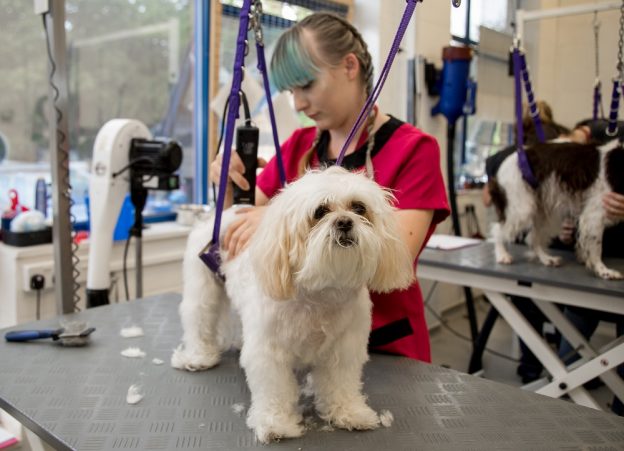
During your dog grooming training, you will work alongside qualified dog groomers in our state-of-the-art grooming suites, complete with professional dog grooming equipment and access to a variety of dogs on which to practice the techniques you will be learning.

This qualification runs on a day release basis for one academic year at our centres in Huntingdon (Cambridgeshire) and Leeds (West Yorkshire).  Hurry – there’s still time to apply for courses starting on Wednesday 13 September!

Find out more and apply online!

Please note applicants must have achieved the City & Guilds Level 2 Certificate for Dog Grooming Assistants prior to enrolling onto the programme.

Autumn pet safety tips

Autumn Pet safety tips: What to watch out for…

Autumn Pet safety tips: What to watch out for…

As summer comes to a close and the weather begins to change, as do the needs of our pets.  From household poisons to cold weather hazards, there are plenty of safety issues to consider! See our top autumn pet safety tips below to help keep your pet happy and healthy this autumn.

Watch out for conkers and acorns

Not only do conkers pose a choking hazard, they also contain a poison called aesculin, which is found in all parts of the Horse Chestnut Tree, including the leaves. Serious cases of conker poisoning in dogs are rare, as for toxicity to occur dogs normally need to ingest a number of conkers, however you should still be weary when taking your dog(s) for walks in the autumnal months. Signs of poisoning can include vomiting, diarrhoea, salivation, increased thirst, abdominal pain and a reduced appetite.

Keep the parasites at bay

When fleas bite and suck blood, it can cause itching and skin irritation in your pets; fleas can also spread diseases and a variety of medical problems. Don’t let fleas make life miserable for your pet; speak to your vet about appropriate flea control!

BOO! Look out for your pet on Halloween…

A night of spooky shenanigans is great fun for humans, but Halloween can frighten your pets – therefore it is important to plan ahead. If you know your pets are sensitive to noise, keep them in a quiet room where you can keep an eye on them. In addition, be aware of chocolate and hard candies floating around on the night; chocolate can be extremely harmful to dogs and cats, and hard candies could pose a choking hazard.

Clear garden leaves

The changing colours of leaves are one of the pleasures of autumn; however they can cause problems for pets. Damp leaves, especially when piled up, are prone to bacteria and mould. If ingested by your dog or cat, this could lead to digestive problems such as a loss of appetite, vomiting or diarrhoea.  If you decide to burn leaves in your garden, ensure your pet stays clear when you do so, and thoroughly check for wildlife such as hedgehogs hiding in piles of leaves before you light that match!

dog and cat together - animal care apprenticeships blog

10 reasons why an animal care apprenticeship could be the route of choice for animal lovers

For those aspiring to an exciting career working with animals, undertaking an apprenticeship (incorporating a City & Guilds Animal Care qualification) is an excellent way to gain practical skills and knowledge, work experience, a wage and a qualification – all at the same time! Take a look at the key reasons why an apprenticeship could be the perfect career move…

  1. You’ll get paid for making the world a better place for animals – right from the get go!

As an animal care apprentice, on-the-job training means you will be paid for your efforts, and benefit from having a regular income. Apprentices will immediately start earning a wage when they begin employment. The average pay rate for an apprentice stands at around £170 per week*, with many apprentices’ earnings rising as they become more experienced and take on more responsibility. But wait, there’s more…

  1. Your employer will cover the cost of your training!

An animal care apprenticeship is a debt free route to a career in animal care. Not only will you be earning a wage, you will have no course fees to pay as these are all paid by your employer! In other words, you will be gaining valuable experience in the workplace for FREE! What’s more – as an animal care apprentice at CAW you will be eligible to purchase an NUS card for just £12, meaning you could make big savings on many of the top brands, including Amazon, The Co-operative Food and Odeon!

  1. You’ll study a trusted, industry recognised programme!

As many animal care apprenticeships have been developed in conjunction with employers, this means you will learn the most relevant and up-to-date skills required by industry. Over the course of your apprenticeship you will cover everything from animal accommodation, animal control, travelling with animals, reducing health and safety risks, maintaining bio security, feeding/cleaning – and much, much more!

  1. You’ll gain real job prospects!

You know what they say – once you’re in, you’re in. An apprenticeship offers the opportunity to secure a permanent position with your employer of choice on completion of formal studies. Starting out as an apprentice has proved to lead to real job prospects for many. According to research by the National Apprenticeship Service, 85% of apprentices will remain in employment on completion of their apprenticeship, with 64% of those staying with the same employer.* If you’re looking for job security and the opportunity to progress in your career, an apprenticeship could be the most secure way to develop with further education and training.

  1. You will benefit from flexible study options!

Our animal care apprenticeships are studied on a work based learning basis. Whilst the majority of students choose to undertake the Animal Care and Welfare pathway of this qualification, there are other pathways available such as Animal Training and Pet Care and Retail; allowing you to tailor the course to your interests, job requirements and career objectives. Not only this, but as the apprenticeship is work-based you may start at any time of the year, and will not be required to attend college for tuition!

  1. You will grow into your role with the help of tutors and colleagues!

A combination of workplace experience and online tuition means you will be mentored by tutors and colleagues with a wealth of knowledge each and every day! This will allow you to develop your confidence, knowledge and practical skills faster; and make meaningful industry connections that will prove invaluable as your career develops.

  1. You will begin a rewarding career early, and get a head start in the world of work!

If you’re an animal lover, chances are you jump any opportunity to interact with animals; whether that is by walking your dog, petting the neighbourhood cat, or offering to look after other people’s pets while they are away. By undertaking an apprenticeship you will be able to put your love of animals to good use straight away – and this will prove invaluable when it comes to seeking employment in future.

Proving you have relevant, practical experience is essential to securing your first role and kick-starting your career in any industry, but no more so than in animal care. In a competitive job market, a theoretical knowledge of animal welfare alone is simply not enough to stand out. You have to be able to understand how this knowledge applies to real scenarios. Having several years’ worth of direct, practical experience on completion of your apprenticeship is therefore a significant advantage and addition to your CV!

  1. You will start supporting the economy early!

Apprenticeships are forecast to contribute over £3bn by 2022, and it is estimated that the average apprentice improves business productivity by £214 per week.* As such working as an apprentice means you will be playing your part in boosting productivity both within the workplace and the economy!

  1. You will pave the way to higher study!

For many people university is the dream, but choosing an apprenticeship over university now doesn’t mean you will never make it to campus halls in the future. On the contrary, successful completion of the Advanced Apprenticeship in Work-based Animal Care will lay the foundation for higher education, such as a foundation degree in animal management (subject to individual university entry requirements) or related courses in behaviour and training.

  1. You’ll have a competitive edge!

Think about where you’ll be once you’ve completed your apprenticeship. You will be qualified to undertake a range of animal care duties and be able to work towards higher certifications if you wish to do so. You will have the competitive edge of real world experience and skills learnt from on-the-job training. What’s more – think about what you will be paying for this opportunity…absolutely nothing! Your employer will cover the cost of your training. Put simply, you will be turning your passion into a career – and being paid for the opportunity to do so! What’s not to love?

If you’re thinking that an apprenticeship could be the perfect way for you to turn your love of animals into a career, start your journey with The College of Animal Welfare today! Our work-based apprenticeship programmes can be undertaken within a 90 minute radius of our Huntingdon (Cambridgeshire), Potters Bar (London) or Leeds (West Yorkshire) centres.

Our Animal Care Apprenticeships at a glance…

Animal Care and Welfare Assistant Apprenticeship (Level 2)
Intermediate Apprenticeship in Work-based Animal Care (Level 2)
Advanced Apprenticeship in Work-based Animal Care (Level 3)

Useful sources to get started

Apprenticeships Explained

Latest apprenticeship opportunities with The College of Animal Welfare