Author Archives: Amber Tennant

Day for the Remembrance of the Slave Trade and Its Abolition (23 August)

International Day for the Remembrance of the Slave Trade and its Abolition is intended to raise awareness of the tragedy of the slave trade, and encourage collective consideration of the historic causes, the methods and the consequences of this tragedy.

Slavery in Africa existed before the arrival of Europeans; however their arrival transformed the way in which the trade was conducted. Driven by a desire to profit from the newly discovered territories of the Americas, slaves were often subjected to inhuman living and working conditions. Slave owners generally supplied only the minimum food and shelter required for survival, and expected their slaves to work 48 hour shifts in order to maximise profitability during harvest time.

The desire for profit also transformed the scale of the slave trade. Over the course of four and a half centuries up to 12 million Africans were enslaved and transported to the Americas. 6 million slaves were transported during the 18th century alone, with Britain being the largest trader during this time, responsible for the transport of over 2 million Africans.

During the seven week journey from Africa and the Americas, slaves were tightly packed on board ships which could carry between 350 and 600 people. As slaves were left with as little as 4ft space, this meant that disease travelled quickly and approximately 15% of slaves died during this time.

The 23 August marks the night of the uprising in Santo Domingo (today Haiti and the Dominican Republic) which acted as a crucial trigger in the abolition of the transatlantic slave trade.

Learn more about the Transatlantic Slave Trade

Sources

https://www.gilderlehrman.org/history-by-era/slavery-and-anti-slavery/resources/facts-about-slave-trade-and-slavery
http://www.encyclopedia.com/social-sciences-and-law/political-science-and-government/military-affairs-nonnaval/slave-trade
https://www.theschoolrun.com/homework-help/the-atlantic-slave-trade
http://africa.mrdonn.org/slavetrade.html

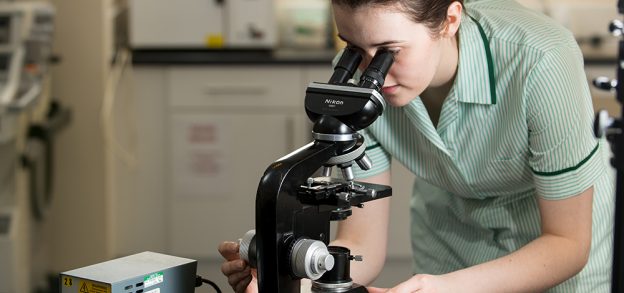
Student veterinary nurse looking through a microscope

Qualifying as a veterinary nurse: University or Diploma?

For those looking to train as a veterinary nurse, the good news is that there is more than one way to make your dreams a reality! Aspiring veterinary nurses can achieve professional registration with the Royal College of Veterinary Surgeons (RCVS) through either a university degree or via a level 3 diploma.

The way in which your training is structured and delivered will differ depending on which path you choose to undertake, however both programmes of study offer unique benefits and are recognised as evidence of a high quality education.

Varied learning opportunities is great news for vet nurses to-be everywhere, as it means you can choose the programme of study that is best suited to your circumstances. All this being said; having more than one programme on offer naturally begs the question: which one is right for you?
Let’s take a look at both routes and find out…

Level 3 Diploma in Veterinary Nursing / Advanced Apprenticeship

The Level 3 Diploma in Veterinary Nursing can be studied by those who are already employed in a veterinary practice, as well as those who have not been able to secure a paid training position in practice.

College sessions offer diverse teaching, learning and assessment approaches catered for the individual needs of learners, enabling you to develop the required knowledge and skills needed to work as a qualified, Registered Veterinary Nurse (RVN).

Provided you find suitable employment in a veterinary Training Practice (TP or aTP), the programme can also be undertaken as part of an apprenticeship. The main benefit of studying the diploma as an apprentice is that your training will be paid for by the employer, meaning it would be a debt-free route into the profession. View the latest apprenticeship opportunities at CAW

For those who do not hold the qualifications needed to enrol onto a degree programme, the diploma could be an excellent alternative. In order to apply for the diploma you must have a minimum of 5 GCSEs at grades A*-C (or 9-4) including English Language or Literature, Mathematics and a Science subject.

Another route into veterinary nursing: Study Veterinary Care and Functional Skills

If you do not meet the GCSE entry requirements, other qualifications may be acceptable. For example, at The College of Animal Welfare successful completion of our Level 2 Certificate for Veterinary Care Assistants or Level 2 Certificate in Veterinary Care Support qualification, in combination with a full level 2 qualification in Maths and English (e.g. GCSE Grade A*-C or Level 2 functional skills qualifications), will allow you to apply for the Level 3 Diploma in Veterinary Nursing or Advanced Apprenticeship in Veterinary Nursing programmes, subject to employment in a veterinary practice that is approved to train veterinary nurses (a TP or aTP).

Entry onto the diploma programme can be very competitive, take a look at how you can strengthen your application.

Diploma students can qualify as a veterinary nurse in as little as 2 1/2 years, meaning the programme could be the route for if you are perhaps not in the position where you can take the three to four years of study necessary to gain a degree.

If you think this could be the option for you, your next step would be to find a suitable training provider. There are various colleges around the UK that offer this programme, a list can be found on the RCVS website. The College of Animal Welfare offers the Level 3 Diploma in Veterinary Nursing programme from centres all over the UK, with intakes starting throughout the year.

Apply to start the Level 3 Diploma in Veterinary Nursing

BSc (Hons) Veterinary Nursing / FdSc Veterinary Nursing

For those who would prefer to study at degree level, or are eager to experience the university life for all that it entails; such as moving away from home, mixing with new people and gaining new experiences – undertaking a veterinary nursing degree programme could be for you.

Degree programmes are generally either three or four years in length. During this time you will have the opportunity to undertake work placements in a variety of veterinary practices.

Going to university offers the opportunity to be taught by world renowned clinicians who are experts in their field. If you’re interested in post-graduate opportunities such as training in specialist areas like physiotherapy, or training for a career in teaching, university study is for you.

There are various universities around the UK that offer this programme, a list can be found on the RCVS website. The College of Animal Welfare offers the FdSc Veterinary Nursing and BSc Honour Veterinary Nursing degree programmes in conjunction with universities across the UK. For more information about these courses, including entry requirements and application details, click on the links below…

If you would like to have an informal chat with one of our course advisors about which training option would best suit your circumstances, a member of our Customer Advice Team (CAT) can be contacted at admin@caw.ac.uk or on 01480 422060.

Subscribe to receive updates about our veterinary nurse training

* indicates required
School of Veterinary Studies

Black Cat Appreciation Day! (17 August)

Today is Black Cat Appreciation Day (17 August)!

If you’re looking to welcome a new pet into the family, have you considered adopting a black cat? For centuries black cats have faced suspicion as a result of the bad luck they are said to carry with them. They are often overlooked in rehoming centres and can take approximately 13% longer to find their new home than a more colourful cat. For many this means they will never experience life in a loving home – but you could change that.

Your local rescue organisation can talk you through all aspects of cat ownership and find a cat that is best suited to your circumstances. Alternatively, you can search for cats looking for a home in your local area on the Cats Protection website at http://www.cats.org.uk/adopt-a-cat

Take part in the SPVS Salary Survey 2017!

The Society of Practising Veterinary Surgeons (SPVS) is looking for veterinary professionals to complete the SPVS Salary Survey 2017.

The association aims to gather information from a wide range of practice employee. This includes veterinary nurses, practice managers, veterinary surgeons and receptionists.

VPMA and BVNA members will have access through their own association to the Managers and Nurses sections respectively.

To take part in the survey, visit the SPVS website.

Calling all vet nursing diploma students – Upcoming Paper 2 revision days!

Calling all vet nursing diploma students – don’t miss our next revision days at our Potters Bar centre on 23/24 August!

Perfect for students who are coming up to their exams, our targeted revision courses are intensive training and review sessions intended to help you identify your trouble spots and work on fixing them!

Wednesday 23 August – L3 Diploma Revision – Paper 2, Unit 302 (£95)

Delegates will review the theory of Anatomy and Physiology and other topics relevant to Unit 302/VN3.

Thursday 24 August – L3 Diploma Revision – Paper 2, Unit 304 (£95)

Delegates will review the theory of Animal Health and Husbandry and other topics relevant to Unit 304.

To book a place online, visit https://goo.gl/WVQBrv 


Vetnapp: The app putting an end to poorly written paper notes

An app which allows veterinary practitioners to record the vital details behind an anaesthetic procedure has been developed.

Developed by veterinary anaesthesia specialist Alastair Mair, the app aims to put an end to incomplete and poorly penned paper records of anaesthetic procedures. The app allows the digital entry of:

  • drugs administered
  • physiological parameters – such as heart rate, respiratory rate and blood pressure
  • complications occurring during an anaesthetic procedure

The final anaesthetic chart can be converted to a PDF and attached to patient records.

Mr Mair said: “My motivation for creating the app was borne of my frustration while working in Australia about how many handwritten anaesthetic records were incomplete and poorly filled in.” He added: “[The app] allows storage of thousands of records, therefore allows easy retrieval of records and prevents lost records, which is common with paper records.”

Vetnapp is available for download on Apple iOS devices. Further information can be found at https://goo.gl/Tcd4kv 


Turn your Love of Animals into a Career!

For those aspiring to an exciting career working with animals, there’s no better place to start than our annual Careers With Animals Day near Leeds on Saturday 14 October!

Running at our education and training centre in Tingley, the event offers the ideal opportunity to speak to exhibitors from some of the leading animal welfare and veterinary organisations, and gain key ideas and information needed to launch a new career. Whether you’re a school leaver working out what your next move is going to be, an adult looking for a career change, or unemployed and eager to get back to work – everyone is welcome. What’s more, entry is completely free of charge!

A jam packed timetable of careers talks will be held throughout the day, covering everything from veterinary nursing and dog grooming, to veterinary medicine and wildlife conservation. This year’s event boasts another great line up of exhibitors, including African Conservation Experience, Royal Veterinary College, Jerry Green Dog Rescue, PDSA, Cats Protection, SMJ Falconry, Northern Institute for Canine Professionals – and many more!

The event will be held at our education and training centre in Tingley, West Yorkshire (WF3 1DR). Doors are open from 10am until 3pm and entry is completely FREE! For more information please visit www.careerswithanimals.co.uk or call us on 01480 422060.

Turn your Love of Animals into a Career!

For those aspiring to an exciting career working with animals, there’s no better place to start than our annual Careers With Animals Day near Leeds on Saturday 14 October!

Running at our education and training centre in Tingley, the event offers the ideal opportunity to speak to exhibitors from some of the leading animal welfare and veterinary organisations, and gain key ideas and information needed to launch a new career. Whether you’re a school leaver working out what your next move is going to be, an adult looking for a career change, or unemployed and eager to get back to work – everyone is welcome. What’s more, entry is completely free of charge!

A jam packed timetable of careers talks will be held throughout the day, covering everything from veterinary nursing and dog grooming, to veterinary medicine and wildlife conservation. This year’s event boasts another great line up of exhibitors, including African Conservation Experience, Royal Veterinary College, Jerry Green Dog Rescue, PDSA, Cats Protection, SMJ Falconry, Northern Institute for Canine Professionals – and many more!

The event will be held at our education and training centre in Tingley, West Yorkshire (WF3 1DR). Doors are open from 10am until 3pm and entry is completely FREE! For more information please visit www.careerswithanimals.co.uk or call us on 01480 422060.

International Cat Day (8 August)

Today is International Cat Day!

Created by The International Fund for Animal Welfare, International Cat Day is a day to celebrate one of the world’s most cherished pets.

Here are some fun feline facts to purrrrfectly start your day:

  • A group of cats is called a Clowder.
  • A cat has five toes on his front paws, and four on the back, unless he’s a polydactyl.  Polydactyl cats are also referred to as “Hemingway cats” because the author was so fond of them.
  • Sir Isaac Newton, among his many achievements, invented the cat “flap” door.
  • A cat’s nose pad is ridged with a unique pattern, just like the fingerprint of a human.
  • The furry tufts on the inside of cats’ ears are called “ear furnishings”

Shaping the Dog Groomers of Tomorrow: CAW Grooming School one year on…

It has now been just over a year since we opened our dog grooming school at our education and training centre near Leeds. Having already successfully set up a grooming school at our head office in Cambridgeshire in 2009, the purchase of Leeds-based commercial pet centre, Campus Vets and Pets, in 2015 presented us with the ideal opportunity to offer City & Guilds accredited training to those looking to pursue a career in dog grooming in the north.

On Monday 18 April 2016, we welcomed our first two students, Jade and Victoria on the City & Guilds Level 2 Certificate for Dog Grooming Assistants intensive five week block course. Both Jade and Victoria passed their qualification with flying colours and returned a few weeks later to undertake the Level 3 Certificate in Introductory Dog Grooming; an indication of the success that has followed the grooming school ever since.

Of course, where there are students, there must be dogs… And so, alongside the launch of the grooming school, was the opening of the dog grooming salon at Campus Vets and Pets. The money generated from the grooming courses has allowed the cost of dog grooming services to be offered at an affordable level to dog owners throughout the local community; a combination that supports our ethos of raising standards of animal welfare. Initially, in order to build up the client base needed to run the grooming courses, the salon offered each dog a free groom for their first visit, with a further opportunity for a free groom if they recommended a friend. With local advertising, social media campaigns, and the excellent work of the dog grooming team and students, the word quickly spread; bringing us to today where there is a six week wait for an appointment. The low cost of grooming has encouraged owners to rebook visits to the salon on a more frequent basis, a win-win situation all around for the dogs, owners and students alike.

Dog Groomer and Practical Skills Trainer, Michelle Saunders, has been the lead trainer at the grooming school since its inception in early 2016. With over 25 years of experience in the industry prior to joining the College, Michelle was drawn to the role to share her grooming knowledge and inspire groomers of the future, ‘Dog grooming is a fundamentally practical profession and the training programme at the College reflects this; we use our facilities to help equip up and coming groomers with all the necessary skills needed to maintain and exceed industry standards’ She continued ‘Spending so much time working in the grooming salon with a wide variety of dogs makes the transition between training and work seamless’.

Opportunities to train with us are met with high competition, and demand shows little sign of slowing. The level 2 and 3 City & Guilds certificates are run on either a five week intensive block, or a six month day release basis. Students come from all walks of life; some wishing to train to change career or get back into employment, and others who are already working in the industry looking to gain formal recognition of their skills and experience.

One such student is Alisa Youngman. Alisa, owner of Alisa Lyn Youngman Dog Grooming Services based in Beverley, set up her own business post training. As well as modern facilities and supportive tutors, Alisa credits an emphasis on practical work as one of the many benefits of formal training with us. She said: I found [CAW Grooming School] such a great place to train, everyone was so welcoming and the staff were extremely knowledgeable and helpful. The course was perfect for me as it was a block course meaning I was hands on grooming full time for 10 weeks. Overall, I would qualify quickly and have a good amount of experience and knowledge behind me to confidently set my own business up – which I have and it’s really taken off! The intensity really aided my confidence and I felt I had a lot of opportunities to work with different breeds more regularly.”

The early success of the grooming school raises questions as to how the training provision will continue to grow in years to come. In response to the increasing need for varied, flexible learning opportunities; among many planned developments include the launch of the Level 3 Diploma in Professional Dog Grooming, to be run at the school on a day-release basis from September 2017. We are also looking for an additional Dog Groomer and Practical Skills Trainer to join our team in Summer 2017 to keep up with the expansion. See the vacancy 

Speaking about the future, Michelle is excited at the prospect of continuing to teach at the grooming school. “I have no doubt that we will continue to grow as awareness increases further and new services begin to open at the centre. Training has never been so important and accessible; through recognised training and experience, we can increase the recognition of the vital work that dog groomers do on a daily basis to members of the public and drive the profession forward’.

If this year acts as a benchmark for future success, then we can only expect good things to come from the grooming school. One thing is for sure: it is shaping the dog groomers of tomorrow: one paw at a time.

CAW Grooming School is based at Campus Vets and Pets (www.campusvetsandpets.co.uk), the ambitious expansion of animal welfare training provider The College of Animal Welfare. A new and modern animal welfare and training hub, the centre will eventually host a state-of-the-art veterinary practice, boarding kennels and cattery, animal physiotherapy, hydrotherapy and dog training classes. Further information on the College’s dog grooming courses delivered by CAW Grooming School can be found at www.caw.ac.uk/dg

Originally published in the July 2017 edition of Total Grooming Magazine.