Author Archives: Amber Tennant

Apprenticeship Frameworks Update

Apprenticeships update: All apprenticeship frameworks to be withdrawn from 1 August

In 2015, the government announced that as part of their efforts to improve apprenticeship training, all apprenticeships would be moving from frameworks onto standards as of 1st August 2020. To meet this goal, the Education Skills Funding Agency (ESFA) will be ending enrolment on all framework apprenticeships from 31st July 2020.

As we move closer towards this date, apprentices and employers may have questions about how the switchover may affect them. Here, we’ve covered the main points you should be aware of and provided some more information about what apprenticeship standards are all about:

Why is this happening?

The switch from frameworks to standards is part of a wider government response to employer demand for a training solution that is current, relevant and fit for purpose. The purpose of the behind these changes is to make apprenticeships more employer-led and improve on-the-job learning.

How will this change affect current apprenticeships at The College of Animal Welfare and CAW Business School?

The switch over from frameworks to standards means that from 1st August 2020, you will no longer be able to enrol on the following apprenticeship programmes we offer:

  • Advanced Apprenticeship in Work-based Animal Care
  • Intermediate Apprenticeship for Nursing Assistants in a Veterinary Environment (VCA)
  • Advanced Apprenticeship in Customer Service
  • Intermediate Apprenticeship in Business Administration
  • Higher Apprenticeship in Business Administration
  • Intermediate Apprenticeship in Medical Administration

If you or a member of your staff have already started on one of these apprenticeship frameworks, there’s no need to panic. Any framework apprenticeships started before the 1st August will still be eligible for completion and the qualification will still be valid, even if you do not finish until after the cut-off point.

If you or a member of your staff were planning on enrolling onto one of these apprenticeship frameworks, we would encourage you to have a look at the apprenticeship standards we offer:

Make sure to keep an eye on our blog or follow us on our social media for updates about new standards we may offer as they become available:

[ss_social_follow networks=”facebook;twitter;instagram;pinterest” columns=”4″]

What do I need to know about apprenticeship standards?

They are designed by employers, for employers

Standards have been developed in conjunction with groups of employers known as “trailblazers”. They can be tailored to a specific job-role and contain a list of all the skills, knowledge and behaviours needed for learners to be job-ready upon completion.

Standards offer lots of choice for students and employers

Every job which can be entered via an apprenticeship will have its own standard (there were around 250 apprenticeship frameworks under the old system, compared with over 600 standards.) What’s more – standards have been designed for jobs which require differing levels of skills and knowledge.

Robust assessment methods are embedded into standards 

In order to finish their apprenticeship, learners on standards will need to complete an End-Point Assessment (EPA) to show they can perform all the responsibilities their job role demands and they have gained the skills, knowledge and behaviours outlined in the standard.

Apprentices must spend 20% of their time training “off-the-job”

All apprentices must spend 20% of their working time allocated to ‘off-the-job-training’. This can include time being allocated to work on activities such as reflective logs or portfolio tasks, or perhaps undertaking a research project or reviewing working processes. There are many ways in which you can use this allocation to the advantage of both the apprentice and the business. Download our Off-the-Job Training Guidance for Apprentices

Employers can benefit from reduced fees

The government have agreed to fund 95%* of the apprenticeship fees for small employers (those with an annual payroll of less than £3 million). Additionally, if you have less than 50 employees and your apprentice is under 19 years of age there are no fees to payand you’ll get a £1,000 grant If you are a large employer (with an annual payroll bill of more than £3 million) the apprenticeship fees are payable via the apprenticeship levy money in your digital account. Please visit our individual course pages for further information on fees.

Further Information:

If you have any further queries about the switch over from an employer or learner perspective, please don’t hesitate to get in touch with us on 01480 422060 or admin@caw.ac.uk.

*Updated inline with the funding rate change on 1 April 2019

Equine Apprenticeships

Turn your passion for horses into a career with an Equine Apprenticeship

Are you passionate about horses and love being outdoors? Perhaps you own a horse, or ride horses in your spare time? If so, then a career in the equine industry could help you turn your hobby into a living and gain a job you’re really passionate about.

Our Equine Groom (Level 2 Apprenticeship) is designed for people who are new to a horse care role, and covers the key skills and knowledge needed to pave the way to a successful career in the equine industry. Not only this, you’ll gain lots of practical experience working with horses!

Is horse care for you? Download our FREE careers guide and find out…

Working with horses is incredibly rewarding and there are many career options in the equine industry, including jobs such as a Horse Groom, Riding Instructor, Racer, Equine Veterinary Nurse…and many more! Download the booklet here

Home Dog Grooming Blog Post Image

Home Dog Grooming: Top Tips and Advice

As it has been impossible to visit the groomers over the past few months, and we’re only just beginning to adjust to the “new normal” as lockdown eases, grooming your dog may have fallen off your radar. You may even think that dog grooming isn’t that important—after all, his coat looks to be in okay shape, so why bother?

Grooming goes way beyond a quick swipe with a brush. Grooming is about looking after your whole dog – it’s skin, eyes, ears, nails, teeth, and yes, coat. Imagine if you put off washing and combing your hair for weeks or even months—yikes! Understandably, you’d feel grubby and uncomfortable…and it’s no different for your dog! If not groomed regularly, some dogs may also develop painful mats and skin problems or suffer from overgrown nails.

Grooming is an essential part of caring for your dog and by maintaining your dog’s coat in between visits to the groomers, you will ensure that the coat and skin is kept in good condition all year round.

Now more than ever is a great time to get clued-up on home dog grooming, because they’re woof it!

From scruffy schnauzers, to tangled Terries – check out our top tips and information we’ve put together about how to pamper your pooch at home and maintain those lockdown locks safely.

Understand your dog’s coat requirements

Home dog grooming begins by getting to know your dogs’ coat and skin by routinely checking it. This is really important, as a change in either can be the first time that you are aware that there could be an underlying health problem. Dog grooming treatments and techniques can also vary greatly depending on coat types.  For example, you should be mindful that long-haired or double coated breeds require extensive maintenance. “Long hair don’t care” is not a good mantra for dogs with these coat types. Without regular brushing, these dogs can quickly develop painful mats on various parts of their bodies. Check out our visual gallery for more information on coat types:

[ngg src=”galleries” ids=”5″ display=”basic_imagebrowser”]Fun fact: Different dog breeds have different coat styles, and these usually stem from the jobs that dogs have done in the past. For instance a fox terrier will have protection around the muzzle and front of the face, as they were used to keep foxes at bay, this hair would protect their face.

Don’t over bathe your dog

Only give your dog a bath when it’s really needed, such as if they’ve gotten smelly or dirty during a muddy walk. Washing dogs’ coats strips them of their natural oils and can cause skin and temperature-regulating issues if overdone. What’s more, don’t used perfumed or scented human bath products, as these can irritate your dogs’ skin or nose, and always pat your dog dry with a soft towel rather than rubbing, in order to prevent tangles and matts.

Check your dog for ticks after walks

After taking your dog for a walk, it’s a good idea to check them for ticks.  You can do this by moving your hands over their body to check for any unusual small bumps, particularly around their ears, head, neck, groin, armpits and feet. Ticks are big enough to spot and regular grooming helps to remove/discover them.

Generally, grooming regularly is a good opportunity to look out for parasites and irritants on your dog’s skin. Check our visual gallery to learn more about the kinds of parasites you should look for and how you can prevent and treat these conditions:

[ngg src=”galleries” ids=”6″ display=”basic_imagebrowser”]

Treat your dog with kindness and patience

It’s important to approach any home grooming with empathy. Go slowly and pay close attention to how your dog reacts to what you’re doing. If you spot signs of stress such as trembling, whining, or panting that’s not heat-related, you should take a break if needed. Be sure to make the grooming process a positive experience by giving lots of praise, petting, cuddles and treats. If you treat your dog with kindness and patience, your dog will eventually feel more comfortable with grooming at home.

Choose a reputable, qualified dog groomer

If your dog gets something stuck in its fur that you cannot brush out, you may feel confident enough to snip it out. However, be mindful that many dogs have been injured from amateur groomers making mistakes. It’s important to maintain regular visits to the groomers where possible, and leave expert clipping and cutting to a professional, qualified dog groomer.

As a responsible dog owner, it’s crucial to choose a groomer who is professionally qualified to carry out the care of your loved companion. Look for dog groomers who have undertaken a recognised course. This shows that they have learnt about different grooming techniques, different types of equipment, and how to use it safely. Qualified Groomers will have learned about parasites, and other diseases and disorders that can affect the health, and coat and skin. They will also have learned to look at body language, and how to handle dogs in their care with consideration and kindness.

The College of Animal Welfare runs three commercial grooming parlours; CAW Grooming School Huntingdon (Cambridgeshire), CAW Grooming School Wigan and Campus Vets and Pets in Leeds (West Yorkshire). We pride ourselves on offering a professional and friendly service at affordable prices to those in the local community. Dogs are groomed by City & Guilds Dog Grooming students under the supervision of experienced and qualified dog groomers. Find out more about our dog grooming services

Follow us on social media for more dog grooming information and advice:

[ss_social_follow networks=”facebook;twitter;instagram;pinterest” columns=”4″]

British Veterinary LGBT+ Logo

Vicki Nielsen joins British Veterinary LGBT+ committee

We’re delighted to say that one of our staff members, Vicki Nielsen, has joined the British Veterinary LGBT+ committee as one of their Veterinary Nursing Representatives!

The British Veterinary LGBT+ Society is made up of people from all over the veterinary industry. The group develops LGBT+ networks, provides sources of help and support, creates resources to reinforce open and inclusive working environments, raises awareness of LGBT+ issues in the veterinary profession and spreads messages of equality and diversity.

Vicki’s role will focus on raising awareness of the organisation in the veterinary education sector. On her new role, Vicki said:

“I am working alongside Sam Morgan, who was former President of the BVNA and is one of the Directors of Abbeydale, a veterinary nursing college. Together, we want to raise awareness of BVLGBT+ among educational providers and establishments and for the group to be a resource of information, advice and guidance to all those supporting and training LGBT+ student veterinary nurses both in the workplace in training practices as well as in the educational setting.”

“I am very excited about trying to increase awareness of the group in the veterinary education sector and reaching out to our training practices that are supporting our future generation of veterinary nurses that may be struggling with their sexuality or identity and providing them with resources and information to help.”

Congratulations Vicki!

To keep up to date with the group’s latest news, events and activities, make sure you like the British Veterinary LGBT+ Facebook page.

Suitably Qualified Person (SQP) - Companion Animal Training

Prescribe yourself with some professional progression in lockdown

Working in veterinary practice during these challenging times means veterinary nurses need to be more adaptable and efficient than ever before. With this in mind, now could be the perfect time for you add another ‘string to your bow’ by studying to become a Suitably Qualified Person (SQP). 

What is an SQP and what do they do?

A SQP is an animal medicine advisor who is qualified to prescribe and/or supply certain veterinary medicines under the Veterinary Medicines Regulations.

Why gain SQP status?

Obtaining an SQP qualification will enable you to bring more to the table at your current practice, boost your credentials and help you to stand out against other candidates when applying for jobs in the future. Gaining this formally recognised qualification allows you to offer a more effective and efficient approach to medicine in these extraordinary times!

More information about the Level 4 Certificate for Suitably Qualified Persons (SQP) – Companion Animal

Completion of the VetSkill Level 4 companion animal SQP qualification at The College of Animal Welfare will allow you to join the VetSkill SQP register, qualifying you to prescribe and dispense POM-VPS and NFA-VPS medicines to companion animals.

The programme covers:

  • Legislation and Professional Requirements
  • An Introduction to Companion Animal Anatomy, Physiology and Nutrition
  • Companion Animal Health, Disease and Parasite Management
  • Prescribing and Supplying Veterinary Medicines to Owners/Keepers of Companion Animals

The course is delivered via distance learning, meaning you can start at any time and study from anywhere in the UK or overseas*

As some of us may be at home during lockdown, now could be the perfect time to take the opportunity to invest some time in developing your skill set. For more information about the course, visit our website.

*Please be aware attendance at a CAW centre will be required for the unit exams and final OSCE examination.

Veterinary Nursing September 2020 Intake

Autumn Veterinary Nursing Intake Open for Applications

Applications are open for the September intake of our Level 3 Diploma in Veterinary Nursing (Companion Animal Pathway).

With many of us staying at home or working reduced hours due to the coronavirus pandemic; if you’ve always wanted to work with animals, now could be the perfect time to review your career goals, take a leap of faith and start working towards a job you’re really passionate about.

Throughout the course you will develop the key skills and knowledge needed to thrive as a veterinary nurse, as well as gain significant industry experience in a veterinary practice. Visit our website today to apply for the September intake. If you’re wondering whether veterinary nursing is for you, read on to find out more about the role and where a VN qualification can take you on your career path…

Discover the benefits of joining the veterinary nursing profession

By training as a veterinary nurse, you’ll…

  • Gain a rewarding job where you can make a real difference to the lives of animals
  • Secure real job prospects with roles available in veterinary practice, teaching, sales and more
  • Benefit from life-long learning with advanced qualifications and opportunities to specialise

Find out more benefits of becoming a veterinary nurse

Learn what life as a veterinary nurse involves

Outside of the consulting room, RVNs handle most of the care required by our pets. They provide nursing care, carry out technical work and perform a range of important diagnostic tests and medical treatments.

Discover the different types of veterinary nursing roles in practice

Read more about career progression for veterinary nurses

Veterinary nursing is a varied, rewarding career path that has a wide range of professional opportunities. After completing your formal training, you could…

  • Work in a first opinion veterinary practice, referral practice or a veterinary hospital
  • Work as a sales representative for veterinary suppliers
  • Teach future veterinary nurses in education roles
  • Lead teams as a Head Veterinary Nurse

Check out more career paths for registered veterinary nurses

Types of Veterinary Nursing Roles in Practice

6 Types of Veterinary Nursing Roles in Practice

Have you ever wondered what life as a veterinary nurse involves?

Outside of the consulting room, RVNs handle most of the care and attention required by our pets. Their registration with the Royal College of Veterinary Surgeons (RCVS) shows that they are responsible for their professional conduct and remaining up-to-date with their professional skills and knowledge.

Veterinary Nurses carry out nursing and technical work and perform a range of important diagnostic tests, medical treatments and minor surgical procedures under veterinary surgeon direction. Beyond technical work, RVNs also educate owners on the welfare of their pets. In many practices they run their own nursing clinics.

Read on to learn about the responsibilities of a veterinary nurse and the various nursing roles you may come across in practice.

1. Nursing care

RVNs are responsible for carrying out nursing care during the course of the case. Like nurses in NHS hospitals they perform a wide range of important tasks such as medicating patients, dressing wounds and monitoring intravenous fluids. Beyond this, RVNs also handle the basic needs of the patient including exercising and feeding your pet, cleaning accommodation and providing lots of fuss and cuddles.

2. Pet owner education and nursing consultations

Veterinary nurses undertake a rigorous training programme and continue to study throughout their careers to maintain professional expertise. Many go on to develop specialisms in areas such as dentistry, feline nursing or anaesthesia. Some also complete additional, advanced qualifications in veterinary nursing, such as the Level 5 Advanced Diploma in Veterinary Nursing (Practice Nurse). As such, many veterinary practices offer nurse-led clinics on areas including weight management, dressing changes, post-operative checks, puppy training and socialisation, microchipping and diabetic clinics.

3. Clinical supervision

Clinical supervisors are veterinary nurses tasked with supporting student veterinary nurses in practice, ensuring they are practicing safely and providing opportunities for them to complete their Nursing Progress Log (NPL) or e-portfolio to complete their veterinary nursing qualifications. Becoming a clinical supervisor is a great avenue for Continuing Professional Development (CPD) in coaching and mentoring skills, which can also pave the way to formal qualifications.

4. Diagnostic Testing and Procedures

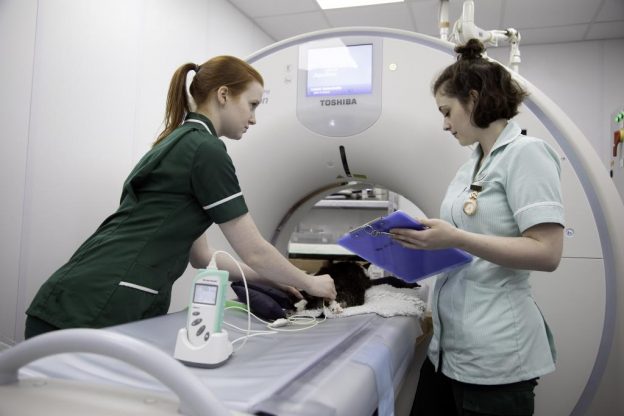
RVNs undertake many laboratory tests in-house. They are trained to take and process x-rays as requested by the veterinary surgeon. This is often a critical step in the process of diagnosing illness or injury in your pet.

5. Veterinary Nurse Team Management

Some veterinary nurses have team management responsibilities. Head Veterinary Nurses lead veterinary nursing and veterinary care teams in practice, in order to manage day-to-day workflow efficiently. Day-to-day, this usually covers many areas in team management, for example: recruitment, development, absence reporting and monitoring. Sometimes head veterinary nurses are also involved with managing expenditure to ensure the practice is using resources cost-effectively. The role is perfect for those looking to have a bigger influence over practice life; whether that be over developing staff, customer service or clinical practice.

6. Surgical Nursing and Anaesthesia

Veterinary nurses undertake a rigorous training programme in order to assist veterinary surgeons as part of the surgical team. They monitor the levels of patient anaesthesia throughout operations. They’re able to recognise different stages of anaesthesia and potential problems, as well as legally undertake minor surgical procedures under veterinary surgeon supervision. This could be the suturing of wounds or dental scaling and polishing following assessment and removal of any damaged teeth by the vet.

Subscribe to receive updates about our veterinary nurse training

* indicates required
School of Veterinary Studies

Togetherall Homepage ad

Gain free mental health support through Together All (formerly Big White Wall)

We’re delighted to announce all our staff and students can now access free online mental health and wellbeing support through Together All (formerly Big White Wall) This service can be used at any time of the day or night, all year round.

Whether you’re suffering from stress, problems with sleep, feeling low or unable to cope, or simply need someone to talk to, Together All can help you get support, take control and feel better. Most members report feeling better and more able to cope as a result of using the service. What’s more – nearly 90% use Together All outside of 9-5pm.

The service enables members to get things off their chest in a safe, anonymous global community. You can access a library of self-care resources. This includes clinical tests, tips and guided group courses covering a range of topics. Trained professionals are online 24/7 to keep all members safe and provide extra support. Together All can help with adopting useful coping strategies and behaviours to help improve mental health and wellbeing. On Together All, people are totally anonymous to other members, and personal information is kept secure.

The college will not be informed of those who are signed up to Together All or activity on the service unless they are seriously concerned about safety whilst on campus. To join, go to the Together All website and sign up under ‘I’m from a university or college’ using a staff or student e-mail address.

Accessing Together All – Students

  1. Visit https://togetherall.com/en-gb/
  2. Click ‘Register’
  3. Select “I’m from a university or college”
  4. Enter your college email address (surname in lowercase + your six-digit VLE number + “@caw.ac.uk”). Example: surname123456@caw.ac.uk If you don’t already have access to this email account, follow next set of instructions (below).
  5. Log into your email to confirm your registration.
  6. 6. The Big White Wall website will then walk you through all of its’ features

Log into your Student email and Microsoft Office 365

Microsoft Office 365 is a free service provided by CAW for its’ students. It gives you all the software required for your studies (Word, PowerPoint, etc). It is available as a download or you can work on documents online through any of your devices as well as dedicated apps. Registration is easy, so what are you waiting for?

  1. Visit https://www.office.com/login/
  2. Enter your student email address (surname in lowercase + your six-digit VLE number + “@caw.ac.uk”):
  3. surname123456@caw.ac.uk
  4. Click ‘Next’
  5. Then select “Forgotten my password”

This will send an email to your personal email address that you typically use with CAW.

Follow the link contained within this email and set your new password Access your student email by visiting https://www.outlook.com and signing in with your student email.

We hope this provides a valuable service to both our students and our staff. Together All will compliment our College counselling service, who continue to be available via phone, email or video call.

How to Show You're Ready for Promotion in Veterinary Practice

10 Ways to Show You’re Ready for a Management Position in Veterinary Practice

If you’re working in veterinary practice and feel you’re doing a great job in your current position, it’s only natural to want to develop and grow. Perhaps you’ve been working as a veterinary nurse for some time and chasing that elusive promotion to Head Veterinary Nurse? Or maybe you’ve always wanted to be a Practice Manager?

Not matter your reasons, if you know you’re ready to take on more responsibility and want to show your organisation you have the skills to do so, here are a few ideas for what you can do to show you’re the right fit for a management position in your veterinary practice:

1. Step up for bigger projects and come up with new ideas

Opportunities to impress or take on more responsibility don’t always arise naturally. Sometimes you need to create these chances for yourself. This means jumping at the opportunity to take on more responsibility, stepping up for jobs others may not want to do, or coming up with new ideas to implement to make the practice better. For example, if you’re a veterinary nurse this could be offering new nursing clinics or coming up with new ways to promote the practice in the local community. This shows you care about your organisation and you’re a team player who is willing to put themselves forward for the greater good of the veterinary practice.

2. Let your aspirations be known 

Key decision makers may not always think to consider you for managerial positions if they don’t know you’re keen to develop, or if they don’t even know you – so put yourself out there and start making connections. Letting your aspirations be known means you can ask for advice and feedback about how to put yourself in a better position. Your boss may be able to help you by allocating you a mentor in practice, or arranging more opportunities for you to job shadow managers or lead on projects of your own, to help you build the relevant skills and knowledge needed to become an effective manager in the future.

3. Strengthen your clinical and management skills and knowledge

It’s important to acknowledge that nobody stops learning and that you should never pass up the opportunity to learn something new. As a leader in a veterinary setting, you will need to be committed to keeping your clinical skills up-to-date and open to ongoing education, so that you can support and develop more junior members of the team.

Not only this, supporting teams requires excellent leadership and management skills. Whether you have management experience or not, undertaking a leadership and management qualification could help you develop your leadership capabilities and confidence to deal with a range of management challenges by undertaking a leadership and management qualification. Formal study could also pave the way to a promotion or further on-the-job training working towards a leadership role.

Head Nurse Congress

Head Nurse Congress

If you’re aiming for a Head Veterinary Nurse position in particular, have you considered coming along to our annual Head Nurse Congress? Head Nurse Congress is an event solely focused on the role of the head veterinary nurse and practice manager – exploring the many different responsibilities, to the challenges that are faced on a daily basis.

During the congress you will be able to listen to a jam packed timetable of relevant talks, as well as gain lots of best practice information and tips on leadership/management to help lay the foundation for a promotion in the future. Not only this, you will gain valuable CPD hours! 

No matter how you choose to do so, it’s important to ensure that you keep up –to-date with industry trends and news, and undertake regular continuing professional development (CPD) to provide valuable inside knowledge to your colleagues.  

4. Be aware of what is going on around you in the wider organisational picture

As a leader in a veterinary setting, you need to have the respect and ear of all the stakeholders: the veterinary nurses, the vets, partners, receptionists – and so on. By watching and learning you can discover a wealth of useful information to assist you in building better relationships with all stakeholders and identifying opportunities for progression in the practice.

Identify other leaders around you, such as those in other departments, or your own boss, and establish what it is that makes them stand out as being deserving of the title ‘leader’. This way, you can better understand what wider business goals for the practice are, enabling you to generate ideas that will garner attention and contribute towards wider strategic objectives – which won’t be forgotten when internal opportunities for promotion come around.

5. Take opportunities to teach and help other team members

Veterinary team leaders such as Head Veterinary Nurses and Practice Managers spend a lot of time developing their staff members; whether this be by providing feedback on work, teaching them new skills, undertaking probation reviews or providing opportunities for development in areas they would like to improve in.

In this sense, it’s important that you have the ability to work with other people and they feel comfortable coming to you for help and guidance. Don’t be afraid to share your knowledge and skills with others, as this will mean that other people can grow and you’re building trust and rapport with your team members.

More than this, you could develop your teaching skills by volunteering for roles such as clinical coaching or undertaking a relevant qualification, such as in coaching and mentoring or leadership and management.

6. Get to know your co-workers

As a leader, delegation and monitoring can help you juggle intense workloads. You’ll be able to do this much better if you understand what your co-workers strengths are, what they enjoy doing and what they are good at. More than this – you work with your co-workers every single day,

7. Be professional and lead by example

It’s important to lead by example and follow your practice’s protocols and policies. Good leaders cannot enforce lateness if they are always late, or keep a strict dress code if they continuously break it, for example. Rules are there for a reason and it is often a manager’s responsibility to ensure others abide by them. Show your boss and senior management that you’re willing to be a good example for other team members, and you’re sure to be considered for future managerial opportunities.

8. Have confidence in your skills and abilities

Being responsible for teams is no easy task and is no role to sign up for lightly. You’re not always going to have all the answers or know exactly what to do; and you don’t need to pretend that you. What you do need to do, is believe in what you are doing and take responsibility for your actions. This confidence also needs to be instilled in those around you. Speak with confidence and have faith in your own ability. This will be noticed by those around you – including the key decision makers.

9. Motivate others and become the ‘go-to person’ in veterinary practice

A big part of leadership is inspiring those around you to be the best that they can be and go the extra mile for the veterinary practice. You want to be the person who encourages those around you to be motivated and contribute to practice objectives, as well as pursue their own professional goals. This doesn’t mean you need to give a pep talk at every turn – leading by good example is far more powerful than any ‘motivational speech’ you could give. 

More than this, leaders aren’t necessarily the individuals who are ‘the boss’ or have ‘manager’ in their job title. It’s possible to lead from anywhere in an organisation, and a true leader is one that is followed without force. This is demonstrated when you become the person that your team always look to for support or to bounce ideas off. Make yourself this person by always giving input when asked, and offering constructive advice.

10. …lastly, don’t give up on your goals

Sometimes, you could take all of these steps and still have trouble finding opportunities. It may be that your veterinary practice simply doesn’t have the capacity or room for progression at the moment – but that may not be the case forever. If it’s something you really want, you always have the option to look for veterinary management roles elsewhere. You never know what opportunities are around the corner.

Being a leader is not about having control of other people. It is about being proactive, asking questions (and listening to the answer), demonstrating a good example and stepping up when something needs to be done. Ensure you remain in tune with what is going on around you and develop your management skills, and you will soon be on the way to landing that elusive managerial role and becoming an inspiring leader.

An ILM leadership and management qualification can help you gain the skills needed to become a manager or leader in your practice

If you’re an aspiring head veterinary nurse or practice manager, our ILM accredited leadership and management courses can help you nurture the skills needed to motivate your co-workers, manage stress levels in your team and deal with difficult situations, all whilst boosting your career and salary prospects. You’ll also look at:

  • Manage team dynamics and deal with conflict
  • Utilise individual strengths and motivate teams
  • Delegate workloads and set objectives
  • Give direction and guidance 
  • Contribute to planning, problem solving and decision making
  • Apply discipline in the workplace

Starting in June, the courses offer a combination of online learning and study days, allowing you to fit your studies around your day-to-day commitments. What’s more – if you’re employed in a veterinary practice, you can save over £500 on course fees this Summer, and get a year’s free membership to the Veterinary Management Group.

Apply for a leadership and management qualification today

Clinical Coach and SVN

5 Tips for Effective Clinical Coaching

If you’re a clinical coach or mentor in your veterinary practice, you’ll know the responsibility for supporting junior team members goes way beyond helping them learn the technical knowledge needed to do their job, or achieve a qualification. It’s also about creating well-rounded, dedicated staff who understand the unwritten rules and responsibilities of the profession.

To this end, we’ve put together some tips for more effective clinical coaching…

1. Master the art of “active listening”

Active listening skills are critical to being a good clinical coach, because the success of coaching is built upon how well you communicate with each other. Coaches who know how to listen actively will not simply sit back and listen to what someone has to say. Instead, they will go the extra mile to make sure they’re being heard. Active listeners will sit up straight, take notes, ask open questions that push discussion, repeat what they’ve heard to clarify their understanding, and provide verbal gestures to show they’re following what you’re saying.

2. Invest in your team’s success 

People who are not just in it for themselves and genuinely care about the success of a business make the best clinical coaches, because they’re not greedy or coy with the skills and experience they have to offer. Instead, they’re actively invested in the success of others in the organisation, want to see people do well and are willing to teach others what they know in order to help them.

3. Act as a positive role model

More than anything else, good coaches should be good role models to the people they’re developing. The best coaches are people who take pride in what they do, want to grow and truly care about their own careers. This is because they are more likely to want to make the most out of their coaching programme. What’s more – because they carry high expectations for themselves, they will bring high standards into the relationship and push for ambitious goals in their mentees too.

4. Focus on helping others to “problem solve”

Good coaches understand the value of practical guidance and feedback in helping someone to solve problems constructively. This is what coaching and mentoring is all about. What’s more – they can ask the right questions and prompts that allow others to understand their strengths and weakness and set appropriate career goals for themselves.

5. Value ongoing learning and growth

Good coaches don’t just believe they can learn something from anyone and anything, they know they can and therefore actively look out for opportunities to learn something new. They understand that they have just as much to gain from mentoring as their mentee, and that the relationship can expose them to new ideas and ways of thinking that will aid their personal and professional growth.

If you’re interested in developing your coaching and mentoring skills, our Coaching and Mentoring qualifications, accredited by the Institute of Leadership and Management (ILM), can help you support development within the workplace, as well as gain confidence in influencing, guiding and supporting those around you. For further information on our courses, or details about how to apply, visit the CAW Business School website.