Author Archives: Amber Tennant

Training as an SQP: FAQs

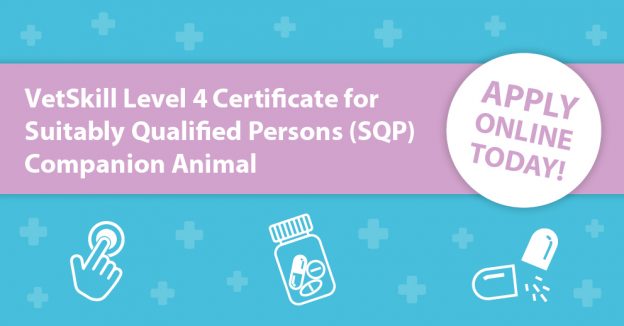
Following the launch of our VetSkill VTEC Level 4 Award for Animal Medicines Advisors (SQP – Companion Animal) qualification, you may have a number of questions about the role of an SQP and the training process. Here, we answer them…

What is an SQP and what do they do?

A Suitably Qualified Person (SQP) is an animal medicine advisor who is qualified to prescribe and/or supply certain veterinary medicines under the Veterinary Medicines Regulations.

The role of the SQP is to:

  • Ensure that statutory requirements in respect of the prescription and/or supply of certain veterinary medicines are respected
  • Advise animal owners on choice of medicine and their safe and effective use, irrespective of how the product is supplied e.g. via postal supply, from a registered retailer premises or from a website etc

What medicines can SQPs prescribe and/or supply?

An SQP is entitled to prescribe and/or supply the categories of medicines within the scope of the qualification they have achieved and the registration they hold.  Below are the distribution classifications for the range of veterinary medicines available to SQPs:

  • NFA-VPS- (Non-Food Animal – Veterinarian, Pharmacist, SQP)
  • POM-VPS – (Prescription-Only Medicine – Veterinarian, Pharmacist, SQP)
  • AVM-GSL – (Authorised Veterinary Medicine – General Sales List)

Learners will undertake study for each SQP qualification they wish to achieve. Completion of each qualification, in turn, allows SQP registration for its relevant category. Provided they are qualified to do so, SQPs may register for multiple categories.

All SQPs will undertake a common base unit and will then select additional units depending on the category of SQP qualification they want to achieve. The different units are:

  • C – Companion Animal
  • J – Equines
  • L – Farm Animal
  • A – Avians

Below is a table detailing the SQP categories and the permissible medicines they can dispense:

SQP Category Unit (s) passed Permissible Medicines
R-SQP All (Companion, Equine & Farm) All VPS Medicines
C-SQP Companion VPS – Companion animals only
J-SQP Equines VPS – Equines only
L-SQP Farm VPS – Farm animals only
A-SQP Avians VPS – Avian only
E-SQP Companion & Equines VPS – Companion & Equines only
K-SQP Companion & Farm VPS – Companion & Farm only
CA-SQP Companion & Avians VPS – Companion & Avians only
G-SQP Equines & Farm VPS – Equines & Farm only
JA-SQP Equines & Avian VPS – Equines & Avians only
EA-SQP Companion, Equines & Avians VPS – Companion, Equines & Avians only

Why qualify as an SQP?

There are a number of benefits to training as an SQP…

  • Boost career prospects in practice: Obtaining Suitably Qualified Person (SQP) status will boost your credentials and help you to stand out against other candidates when applying for jobs in the future, as you will understand the importance of looking after medicines properly and will be up-to-date with relevant legislation.
  • Improve efficiency in a veterinary practice: Having a designated, qualified person in charge of a veterinary practice dispensary can improve dispensary tidiness, stock control and implementation of protocols, and so help to reduce errors.
  • Gain SQP status faster as a veterinary nurse: Registered Veterinary Nurses (RVNs) looking to undertake the VetSkill SQP qualification will be eligible for exemptions from relevant parts of the qualification.

More information about the VetSkill VTEC Level 4 Award for Animal Medicines Advisors (SQP – Companion Animal)

Completion of the VetSkill Level 4 companion animal SQP qualification at The College of Animal Welfare will allow you to join the VetSkill SQP register, qualifying you to prescribe and dispense POM-VPS and NFA-VPS medicines to companion animals.

The programme covers:

  • Legislation and Suitably Qualified Person (SQP) Status for the Supply of veterinary Medicines
  • Companion Animal Health for the Suitably Qualified Persons (SQP)
  • Prescribing and Supplying Veterinary Medicines for Companion Animals 

The course is delivered via distance learning, meaning you can start at any time and study from anywhere in the UK or overseas!

Want to become an SQP? Apply today!

The VetSkill VTEC Level 4 Award for Animal Medicines Advisors (SQP – Companion Animal) qualification is available to study now. For more information about the programme visit our website or contact us on 01480 422060.

Subscribe to receive updates about our courses, CPD and events for veterinary nurses

* indicates required
School of Veterinary Studies

CPD, Short Courses and Congresses

Why study the VetSkill Level 3 Diploma in Veterinary Nursing (Companion Animal)?

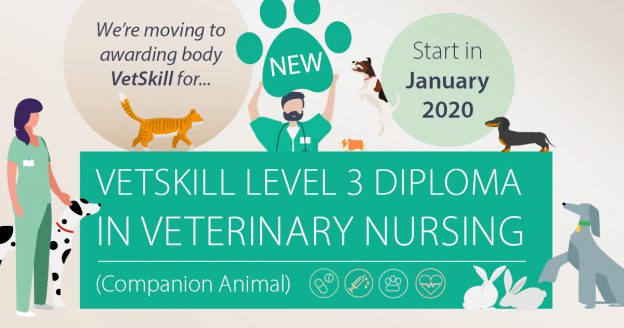
Following the announcement of our move to awarding body VetSkill for all new companion animal diploma veterinary nursing students starting from January 2020, you may be wondering why you should study the new qualification.

Here, we go through the many benefits of studying the VetSkill Level 3 Diploma in Veterinary Nursing (Companion Animal):

Employer-led learning

The qualification has been developed following consultation with training providers, veterinary surgeons and veterinary nurses to ensure it is fit for purpose and produces veterinary nurses with the necessary skills and competences required in today’s veterinary practice.

Streamlined content

The programme supports learners by focussing on the practical RCVS Day-One Skills and Competences and underpinning knowledge relevant to the role of the Registered Veterinary Nurse, whilst encouraging a holistic approach to nursing in the profession. Throughout the programme, you will undertake the following units:

  • Professional Veterinary Nursing Responsibilities
  • Diagnostic Principles
  • Principles of Veterinary Nursing Care 1
  • Pharmacology and Dispensary Management
  • Practical Veterinary Nursing Skills 1
  • Anaesthesia and Theatre Nursing Skills
  • Life Stage Nursing Care and Support
  • Principles of Veterinary Nursing Care 2
  • Surgical Nursing and Patient Care
  • Practical Veterinary Nursing Skills 2

You may notice there is not a unit dedicated to Anatomy and Physiology. Instead, this is embedded throughout each of the units to encourage sequential and practical learning.

Read more about the course content

Embedded SQP training

Embedded within the qualification is the training required for students to become a Suitably Qualified Person (SQP) for companion animals, allowing candidates to register for both RVN and SQP-C status on the successful achievement of the required assessments.

Embraced technology

An e-Portfolio is completed by students to evidence their practical competence against the RCVS Day One skills.

Applications to start the VetSkill Level 3 Diploma in Veterinary Nursing (Companion Animal) in January 2020 from all of our centres are open now.

If you have any further questions about the new qualification or VN training please do not hesitate to get in touch by calling us on 01480 422060 or emailing admin@caw.ac.uk

Apply to start training as a veterinary nurse this January

VetSkill VN Diploma FAQs

VetSkill Level 3 Diploma in Veterinary Nursing (Companion Animal) – FAQs

Following the announcement of our move to awarding body VetSkill for new student veterinary nurses starting from January next year, you may be looking for more information about the VetSkill Level 3 Diploma in Veterinary Nursing (Companion Animal).

Here, we discuss the course in more detail and answer common questions you may have…

Who are VetSkill?

VetSkill is an Ofqual and CCEA approved awarding organisation and professional regulatory body, offering a growing portfolio of qualifications for delivery by approved centres. VetSkill is authorised by the Veterinary Medicines Directorate (VMD) as a regulatory body to maintain a register for Suitably Qualified Persons (SQPs) to prescribe and supply veterinary medicines classified as POM-VPS and NFA-VPS. You can read more about VetSkill’s work on their website.

Is the VetSkill qualification approved by the RCVS?

In May 2018, the qualification was given official provisional accreditation by the Royal College of Veterinary Surgeons (RCVS) as a Licence to Practice qualification. Students achieving this qualification may apply to join the RCVS Register of Veterinary Nurses.

Why should I study this diploma?

This qualification offers a number of unique benefits, namely:

Employer-led learning

The qualification has been developed following consultation with training providers, veterinary surgeons and veterinary nurses to ensure it is fit for purpose and produces veterinary nurses with the necessary skills and competences required in today’s veterinary practice.

Streamlined content

The programme supports learners by focussing on the practical RCVS Day-One Skills and Competences and underpinning knowledge relevant to the role of the Registered Veterinary Nurse, whilst encouraging a holistic approach to nursing in the profession.

Embedded SQP training

Embedded within the qualification is the training required for students to become a Suitably Qualified Person (SQP) for companion animals, allowing candidates to register for both RVN and SQP-C status on the successful achievement of the required assessments.

Embraced technology

An e-Portfolio is completed by students to to evidence their practical competence against the RCVS Day One skills.

What does the qualification cover?

The VetSkill Level 3 Diploma in Veterinary Nursing (Companion Animal) covers cats, dogs, rabbits and guinea pigs. Throughout the programme, you will undertake the following units:

  • Professional Veterinary Nursing Responsibilities
  • Diagnostic Principles
  • Principles of Veterinary Nursing Care 1
  • Pharmacology and Dispensary Management
  • Practical Veterinary Nursing Skills 1
  • Anaesthesia and Theatre Nursing Skills
  • Life Stage Nursing Care and Support
  • Principles of Veterinary Nursing Care 2
  • Surgical Nursing and Patient Care
  • Practical Veterinary Nursing Skills 2

You will note that there is not a unit dedicated to Anatomy and Physiology. Instead, this is embedded throughout each of the units to encourage sequential and practical learning. Read more about the course content

How will I study this qualification?

You can study the qualification on a day release (attending college one day per week) or block release (attending college in blocks) basis, depending on which centre you wish to study from. Approximately a third of the course content is delivered online. The rest of your time will be spent gaining practical experience in veterinary practice; either through employment or work placement. Additionally, you can also undertake this programme as part of an apprenticeship.

How is the qualification assessed?

You will undertake a variety of assessments including online examinations, assignments and case studies. You will also complete an e-portfolio over the course of your training, as evidence of practical competence. At the end of year one there is a formative practical assessment. Final practice examinations (OSCEs) are on successful completion of all other assessments. Read more about course assessment

What are the entry requirements for this course?

You must have a minimum of 5 GCSEs at grades A*-C (or 9-4), including English Language, Mathematics and a Science subject to register as a Student Veterinary Nurse with the Royal College of Veterinary Surgeons (RCVS) and start this programme. If you do not meet the GCSE requirement, there are alternative qualifications that may be acceptable.

The work-based nature of the course means that, in addition to meeting the entry requirements, you will also need to either:

  • have completed a minimum of two weeks’ work experience in a veterinary environment within the last 12 months (non-employed students), or;
  • have secured employment within an RCVS approved TP or aTP that is willing to support you through the qualification (employed students).

Students who are already employed in a veterinary practice looking to undertake this qualification must be at least 16 years of age. Non-employed students must be a minimum of 19 years of age on the 1st of the month in which the course starts. Please note non-employed students who are 16 years of age or over and hold the Level 2 Diploma for Veterinary Care Assistants qualification are welcome to apply.

What if I don’t hold UK qualifications?

If you have alternative or international qualifications, and would like to know if these will allow you to undertake the diploma, please contact our administration team for advice.

If you are coming to the UK to study you should have proof of competence in the English Language by holding either the ESOL qualification at levels C1 or C2 or IELTS at a minimum score of 6.0 (with a minimum of 5.5 in each element) where your international qualifications were not taught and assessed in English. You will also be required to have your foreign qualifications officially translated into English with a notarised stamp.

If you are over 19 years of age, live outside the UK and wish to come to the UK to study you will need to obtain a student visa and will need to meet certain requirements under UK law.
View the entry requirements in full

Can you tell me more about the Veterinary Nurse Apprenticeship?

This programme can also be undertaken as part of an apprenticeship. In addition to the above entry requirements you will need to be living and working in England for at least 50% of your time and employment must be in an RCVS approved Training practice. You will need to be earning at least the National Minimum Wage for Apprentices.

Your course fees will be paid for by your employer and will vary depending upon if your employer is consider to be a levy or a non-levy payer. Find out more on our website.

What are the progression opportunities for VetSkill diploma students?

The VetSkill Level 3 Diploma in Veterinary Nursing (Companion Animal) allows learners to apply to join the RCVS Register of Veterinary Nurses and use the post nominal term RVN. Entry onto the register allows you to legally practise as a veterinary nurse under the direction of a veterinary surgeon. Candidates can also register for SQP-C status on the successful achievement of the required assessments.

A shortage of registered veterinary nurses in the UK means that job prospects once qualified are excellent.

Many veterinary nurses choose to remain in first opinion practice; others pursue different opportunities such as working in referral practice or large veterinary hospitals in more specialist roles. Other career routes could include sales, research, management, teaching or rehabilitation (some of which may require further training in specialist areas). Some veterinary nurses also choose to top up their diploma level qualification to the RCVS Advanced Diploma in Veterinary Nursing or a BSc (Hons) degree.

Is veterinary nursing the career for me?

Veterinary nursing is a natural choice for those with their minds set on working with animals. In any given day you could find yourself involved in a variety of different tasks, including:

• Preparing animals for surgery and performing minor surgical procedures
• Monitoring anaesthetised animals
• Nursing sick animals and administering medication
• Taking x-rays and carrying out diagnostic tests
• Advising owners on the health and welfare of their pets
• Taking bookings, payments and completing necessary paperwork
• Running nurse clinics, such as diet, worming and grooming consultations

Read more about whether veterinary nursing is the career for you

Can I become an RVN without being an SQP?

Registering as a Suitably Qualified Person (SQP) for companion animals is not a requirement for entry onto the RCVS Register for Veterinary Nurses; however, the VN diploma offers the opportunity to do so following successful achievement of the required specific SQP assessments.

Can I become an SQP without being an RVN?

If you do not pass the VetSkill Level 3 Diploma qualification but you are successful in passing the SQP elements of this this you may be an SQP but not an RVN.

You do not need to be a Registered Veterinary Nurse in order to undertake SQP training. The VetSkill Level 4 Certificate for Suitably Qualified Persons (SQP) – Companion Animal is available as a standalone qualification, and is aimed at anyone looking to prescribe and dispense POM-VPS and NFA-VPS medications to companion animals.

When can I apply to start training?

Applications to start the VetSkill Level 3 Diploma in Veterinary Nursing (Companion Animal) in January 2020 from all of our centres are open now.

Visit our website to find out more and apply

The college will be holding a roadshow of information events for employers, clinical coaches and prospective students. These are free to all including those of other providers and will be held at Edinburgh (28th October), Leeds (29th October), Wigan (30th October), Huntingdon (4th November) and at North London (5th November). The briefings will start at 6pm and will include an update on the Apprenticeships for Veterinary Nursing. Visit our website to book

We also run a number of open days ideally suited for students seeking career and training information about veterinary nursing. Visit our website to book onto an open day.

If you have any further questions about the new qualification or VN training please do not hesitate to get in touch by calling us on 01480 422060 or emailing admin@caw.ac.uk. Additionally, follow us on social media to be the first to see any new updates and information about our Level 3 Diploma in Veterinary Nursing:

[ss_social_follow networks=”facebook;twitter;instagram;pinterest”]
CAW moves to VetSkill for VN diploma

New VetSkill Level 3 Diploma in Veterinary Nursing (Companion Animal) open for applications!

We’re pleased to announce we’re moving to awarding body VetSkill for all new student veterinary nurses starting from January next year – and applications are now open! 

VetSkill’s new Level 3 Diploma in Veterinary Nursing (Companion Animal) qualification supports learners by focussing on the RCVS Day-One Skills and Competences and underpinning knowledge relevant to the role of the modern Registered Veterinary Nurse. Embedded within the qualification is the opportunity to also become a Suitably Qualified Person (SQP) for companion animals.

If you want to find out more about the new qualification you can do so by attending one of our roadshow information events taking place this Autumn, calling us on 01480 422060 or visiting our website!  

Please note existing students will remain on their current programme and will not be transferred.

Masquerade Ball – Prizes and Sponsorship Opportunities

Calling all local businesses!

We’re hosting a charity Masquerade Ball in Peterborough on Friday 1st November – and we need your help!

We’re currently looking for businesses to get involved in a number of ways:

  • To attend: This black-tie ball promises to be a fabulous evening with a welcome drinks reception, delicious three-course dinner, great entertainment, dancing to a live band, a DJ, live auction and raffle. It will be a great way to impress your clients or treat your team! Tickets are £65 each or £600 for a table of 10. To find out more about the event and book tickets visit: https://www.caw.ac.uk/masquerade-ball/
  • To provide auction or raffle prizes: A charity auction will be held on the night to help raise funds for the Get Jo Walking Rehabilitation Fund, and we’re looking for kind donations from local businesses. Examples of what we have received so far include a 12 month gym membership and family admission passes to any National Trust property!
  • Sponsorship: We have a variety of sponsorship packages available to business looking to increase brand awareness within the local community during the event. Visit our website to read more about the packages on offer.

The event is being held at the East of England Arena & Events Centre, in aid of the Get Jo Walking Rehabilitation Fund. Jo is currently trying to rebuild her life after suffering a spinal infarction (more commonly known as a spinal stroke), which has left her paralysed from the waist down. We hope to raise significant funds to help Jo continue and build upon her specialised neurological rehabilitation.

This is a black tie event you will not want to miss! It will be a fun and exciting evening of fabulous food, dancing, great entertainment, prizes and an auction. If you can help us, please contact us on 01480 422060 or admin@caw.ac.uk.

VetSkill Level 4 Certificate for Suitably Qualified Persons (SQP) cover image

VetSkill Level 4 Certificate for Suitably Qualified Persons (SQP) – Companion Animal launched!

We’re delighted to announce we now offer the VetSkill Level 4 Certificate for Suitably Qualified Persons (SQP) – Companion Animal qualification!

Successful completion of the course allows learners to register as an SQP on the VetSkill SQP register, qualifying them to prescribe and dispense POM-VPS and NFA-VPS medicines to companion animals.

Delivered via distance learning, the qualification covers the legislation and professional responsibilities behind the role of an SQP, as well as companion animal anatomy and physiology, disease and parasite management and supplying veterinary medicines to owners. Distance learning provision means the programme can be started at any time and all study materials can be accessed from our online Virtual Learning Environment (VLE).

The VetSkill Level 4 Certificate for Suitably Qualified Persons (SQP) – Companion Animal qualification is available to study now. For more information about the programme visit our website or call us on 01480 422060.

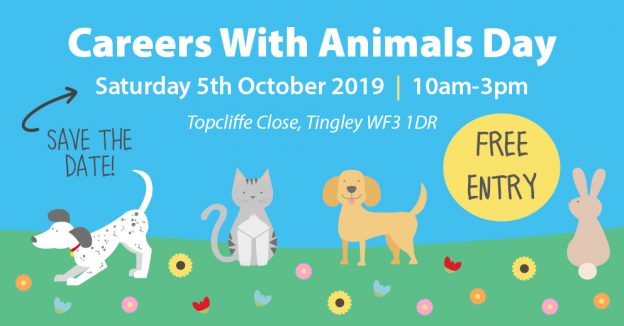
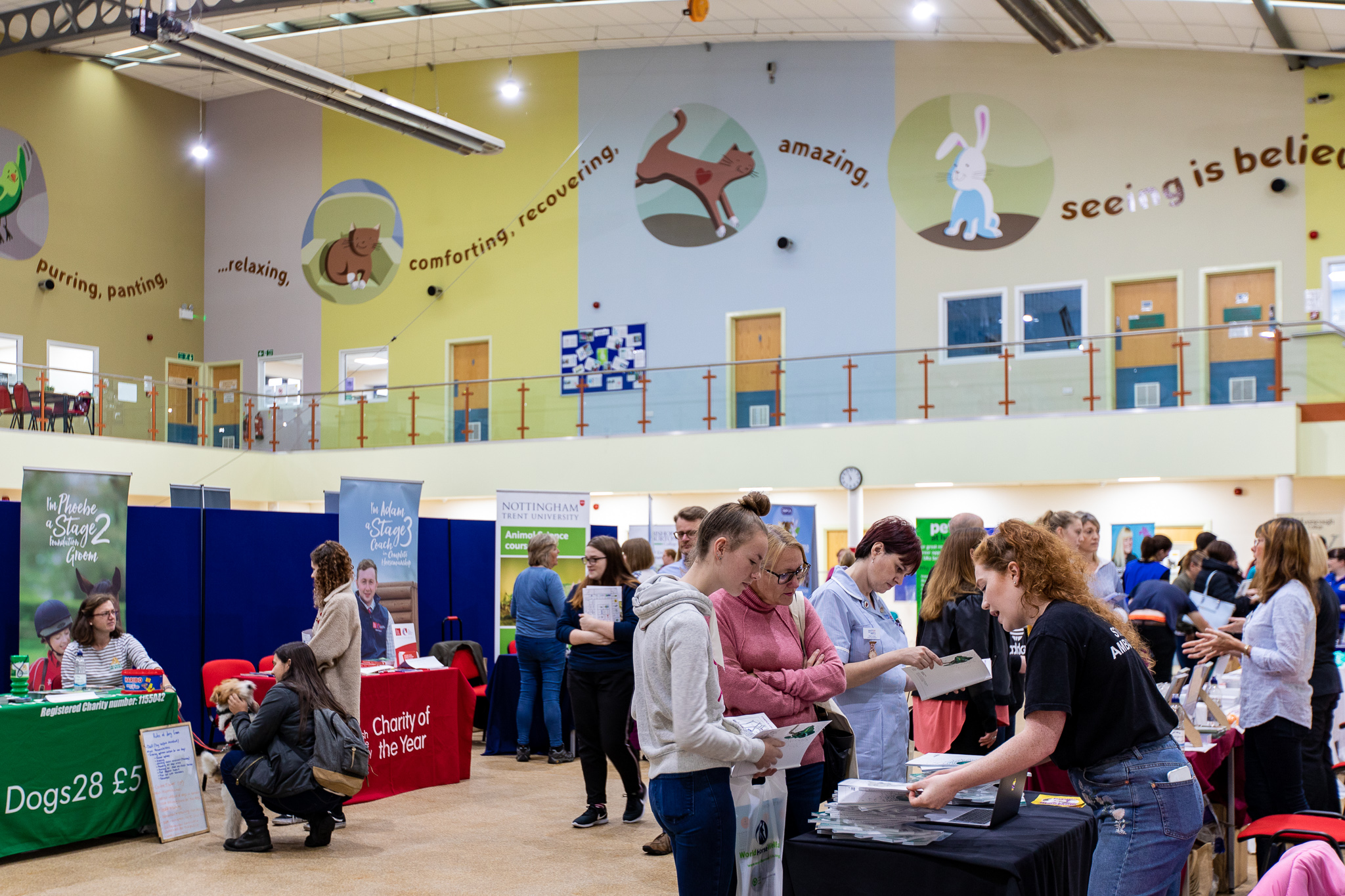
Careers With Animals Day Tingley Leeds 2019

Interested in working with animals? Come along to Careers With Animals Day this October!

If you’re interested in working with animals, come along to our next Careers With Animals Day taking place at our centre in Tingley on Saturday 5th October!

Whether you’re at school and looking at your options, employed in a different field and looking for a career change, or unemployed and looking at how you can get back into work; Careers With Animals Day will give you the chance to meet with relevant people and organisations within the animal care industry, gain advice and ask questions.

The event is set to be jam packed full of useful career talks from experts in the animal care industry. What’s more – there will also be a range of national and local exhibitors available to discuss what it’s really like to work in industry, and how you can start to turn your dreams of working with animals into a reality.

Exhibitors attending this year’s event include Cats Protection, Northern Racing College, Dogs Trust, RSPCA, Medivet, PDSA, Jerry Green Dog Rescue, The Royal Veterinary College – and many more! See a full list of exhibitors

The event is taking place at The College of Animal Welfare in Tingley (WF3 1DR) on Saturday 5th October. Doors are open from 10am until 3pm and entry is completely free of charge. For more information please visit http://bit.ly/2K8QW9l or call us on 01480 422060.

Careers With Animals Day Leeds 2018

Veterinary nursing CPD training dogs

CAW ALUMNI ONLY: Gain massive discounts on selected CPD courses this Autumn!

As an alumni of The College of Animal Welfare, special discounted rates are available on a number of our upcoming CPD courses this Autumn:

How to Deal with the Poisoned Patient (Huntingdon, Saturday 14th September 2019, 10am-1pm): £145 £50!

Toxicological emergencies are very common within veterinary practice. This course will look at dealing with these cases; from the first stage of advice during the initial telephone call to the practice, through to the treatment of the most commonly seen poisonings.

Anaesthesia Update for Veterinary Nurses with Chris Miller (Edinburgh, Friday 1st November 2019, 10am-4pm): £265 £75!

This one day course will refresh and update you on the techniques, equipment and drugs available to the modern veterinary surgery. Find out about the newest ways to give your patients the best in anaesthetic practice.

To access these special alumni rates, simply call us directly on 01480 422060 to book!*

*alumni status will be confirmed on booking

Careers With Animals Day Leeds 2018

Careers With Animals Day to provide a hub of careers advice to veterinary nurses

For veterinary nurses looking to learn more about their career options, The College of Animal Welfare’s (CAW) annual Careers With Animals Day is the perfect place to start!

Running from the College’s education and training centre in Tingley on Saturday 5 October, veterinary nurses will be able to chat to industry experts about the opportunities open to them in industry – from veterinary team management and research, to teaching and rehabilitation.

A great line up of local and national exhibitors will be on hand to help vet nurses gain an insight into their respective specialisms, and work out whether it might be for them. Exhibitors include Torrington Orthopaedics, Calder Vets, Paragon Veterinary Referrals, Abbey House Veterinary Hospital, Cloud 9 Veterinary Physiotherapy, The Association of Zoo and Exotic Veterinary Nurses (AZEVN), Hydro Paws – and many more.

In addition, visitors can also benefit from a busy schedule of career talks running throughout the day, covering careers ranging from animal law to exotics veterinary nursing. What’s more – entry is completely free of charge!

Whether you’re a newly qualified veterinary nurse looking for your first job in industry, an experienced veterinary nurse looking to take your career to the next level, or currently unemployed and looking to get back into the industry – everyone is welcome.

The event will be held at The College of Animal Welfare in Tingley (WF3 1DR) on Saturday 5 October. Doors are open from 10am until 3pm and entry is completely free of charge. For more information please visit www.careerswithanimals.co.uk or call 01480 422060.

VCA Apprenticeship

Grow a loyal veterinary care support professional that meets the needs of your practice!

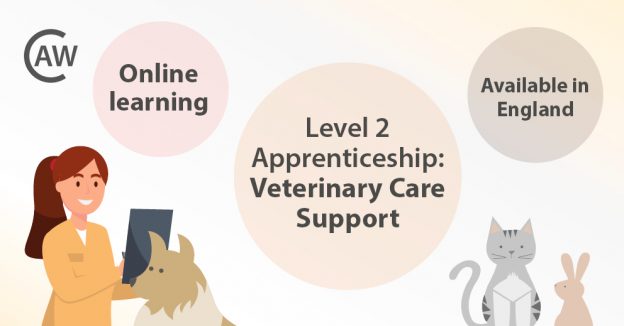
If you’re looking to recruit a veterinary care apprentice, or want to train up an existing member of your veterinary care team, then look no further than our Level 2 Apprenticeship in Veterinary Care Support!

This apprenticeship covers the key skillsknowledge and behaviours needed to ensure staff members maintain safe working practices and take responsibility for themselves, others and the animals in their care – coming out at the end of the programme fully equipped to thrive in their role!

Quick facts about the programme:

  • Distance learning: no college attendance required, start at any time
  • Typical duration: 12-18 months
  • 20% of time spent studying off the job
  • Cost effective apprenticeship training, fees as little as £250 for small businesses

Apprenticeships are an ideal way to increase productivity, improve performance and build a committed and skilled workforce in your practice. What’s more – apprenticeships are a cost effective way to train new or existing members of staff, as employers only pay 5% towards apprenticeship training fees!

Find out more about the Veterinary Care Support: Level 2 Apprenticeship 

If you would like to discuss apprenticeship training in further detail please do not hesitate to contact us at admin@caw.ac.uk or call us on 01480 422060.