Author Archives: Amber Tennant

What You’ll Learn in our Dog Grooming Courses

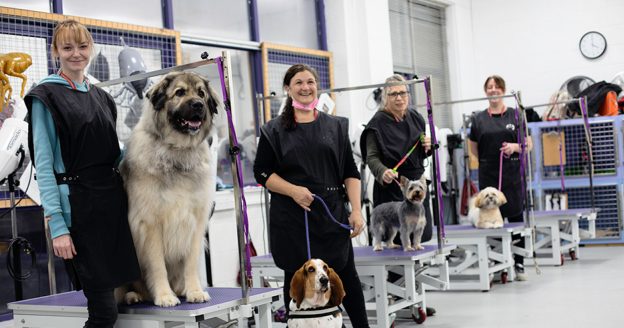
What You’ll Learn in our Dog Grooming Courses: A Peek Inside the Grooming Salon

If you’ve ever thought about becoming a dog groomer, you’ve probably wondered what actually happens in a professional dog grooming course. What skills do you learn? How hands-on is the experience? Will it prepare you for the realities of the job?

Whether you’re considering a career change, looking to start your own dog grooming business, or just curious about working with dogs, our dog grooming courses offer more than just technique – they give you the knowledge, confidence and practical ability to thrive in the industry.

Here’s what you can expect to learn when you step into our grooming salons and complete our Level 2 and 3 City & Guilds accredited dog grooming courses.

Understanding dog breeds and coat types

A key part of any dog grooming course is learning to identify different breeds and coat types, and understanding how these influence the dog grooming process. For example, poodles, spaniels and terriers all require different techniques, tools, and finishing styles. You’ll learn how to work with double coats, wiry coats, curly coats and more – along with when and how to clip, trim, or hand-strip for the best results.

This foundation helps you work safely, efficiently, and with professional polish – especially when dealing with mixed breeds or client-specific requests.

Practical dog grooming skills from start to finish

Dog grooming is a hands-on job, and training reflects that. You’ll be guided through the dog grooming process, including bathing, drying, brushing, detangling, clipping, and scissoring.

Each skill is taught in a structured way, with expert supervision to help you build confidence and technique over time. Our dog grooming courses also provide the chance to groom real dogs under the guidance of our experienced tutors, an invaluable experience that prepares you for real working conditions.

Health, safety and animal welfare

Professional grooming isn’t just about appearance. It also plays an important role in a dog’s overall health and wellbeing. That’s why training includes how to carry out basic health checks, recognise signs of discomfort or illness, and work with dogs in a safe, calm and compassionate manner.

You’ll also learn about health and safety in the dog grooming environment – including how to clean and maintain tools, manage your workspace, and handle dogs of different sizes and temperaments.

Client communication and professional practice

Groomers often work directly with dog owners, so part of your training will focus on building your professional skills, such as how to explain services and handle client expectations with clarity and confidence. You’ll also be exposed to the practicalities of working in or running a dog grooming business, from time management to basic record-keeping.


Ready to take the first step into dog grooming?

Our dog grooming courses offer the chance to build the skills, knowledge and confidence you need to work professionally with dogs. We offer the following programmes from our fully equipped dog grooming salons in Huntingdon (Cambridgeshire) and Leeds (West Yorkshire), with intakes starting throughout the year:

As an alternative training option, if you live in England and are working in a suitable dog grooming environment, you might be eligible to train as a dog groomer as part of a dog grooming apprenticeship.

Learn more about our dog grooming courses here.

What Is Evidence-Based Veterinary Nursing and Why Every RVN Should Be Doing It

What Is Evidence-Based Veterinary Nursing – and Why Every RVN Should Be Doing It

“Evidence-based veterinary nursing” is a phrase you’ve probably heard a lot in CPD sessions, journal articles, or team meetings. But what does it actually mean in the day-to-day life of a Registered Veterinary Nurse (RVN)? More importantly, how can it shape the future of your veterinary nursing career?

The answer isn’t just about research papers. It’s about clinical confidence, patient outcomes, and making sure your care is based on the best possible information. Here’s what evidence-based veterinary nursing is all about, why it matters, and how you can develop your evidence-based practice:

What is evidence-based veterinary nursing?

Evidence-based veterinary nursing means using a combination of the best available scientific evidence, your own clinical expertise, and the patient’s individual needs and circumstances. Rather than following tradition or habits (saying “we’ve always done it this way”), evidence-based veterinary nursing involves asking questions like:

  • What does the current research say?
  • How does this apply to my patient?
  • What outcome am I aiming for – and how can I measure it?

Fundamentally, evidence-based veterinary nursing is about making informed decisions, and being able to explain and justify them with clarity and confidence.

Why does it matter for RVNs?

Evidence-based veterinary nursing improves outcomes, reduces errors, and helps veterinary nurses stay current in a rapidly changing field.

For RVNs, adopting an evidence-based mindset means delivering better, safer care, being able to challenge outdated protocols, contributing more meaningfully to clinical discussions, and feeling more confident in your role – especially when taking on advanced duties. It also supports client communication. When you can back up your nursing recommendations with evidence and clinical reasoning, clients are more likely to trust your guidance.

Studying evidence-based veterinary nursing

Veterinary nursing isn’t always set up to support evidence-based thinking. Time pressures, limited access to journals, or lack of confidence in interpreting research can all get in the way. That’s where structured education can make a real difference.

Our BSc (Hons) Veterinary Nursing Top-up Degree, delivered in partnership with Middlesex University, covers research literacy and evidence-based practice. Through flexible, online study, RVNs learn more about:

  • Professional body expectations
  • Literature searching, literature critique and use of frameworks and checklists
  • Analysis and interpretation of evidence to inform practice
  • Clinical audits and governance
  • Reflection and reflective models
  • Academic writing, referencing and journal clubs

These skills don’t just help you study, they transform how you work. Being able to justify your decisions, improve patient care, and contribute to change makes you a respected, resilient and valued member of the team. It also opens the door to specialist roles, leadership positions, and teaching or mentoring others. In a time where the veterinary profession is evolving fast, the ability to engage with evidence is essential.

Evidence-based veterinary nursing is about being empowered to ask better questions, make smarter decisions, and improve the care you give every day. If you’re ready to deepen your knowledge and grow in confidence as a veterinary nurse, the BSc (Hons) Veterinary Nursing Top-up Degree could be the next step that brings it all together.

Writing as an RVN Could You Be the Next Published Author

Writing as an RVN: Could You Be the Next Published Author?

If you’re a Registered Veterinary Nurse (RVN), chances are you’ve read an article in VN Times, Veterinary Nurse Journal (VNJ), or an online CPD platform and thought, “That’s really useful.” But have you ever considered writing something yourself?

You don’t need to be an academic, a specialist, or a lifelong writer to contribute to the profession. In fact, some of the most powerful and practical ideas and insights come from RVNs working on the front line. Here’s why your voice matters, how to take your first steps towards becoming a published veterinary nursing author, and how you can gain key academic writing skills:

Why your voice matters: We need more RVNs publishing!

Veterinary nursing is rich with experience, insight, and innovation. Every day, RVNs problem-solve, lead patient care, mentor students, audit protocols, and communicate complex ideas with clarity. Yet too often, that knowledge stays inside the practice walls or inside your head.

Publishing your work helps share valuable ideas and real-world insight with the wider profession, build your confidence and credibility, spark discussion, and shape the future of evidence-based care and reflective practice. Most importantly, when more RVNs publish, the veterinary nursing profession becomes more visible, respected, and self-defined.

What to write: Case Studies, audits, reflections and more

You don’t need to discover a new clinical technique to write something meaningful. Some of the most valuable articles are based on what’s already happening in your practice. For example, you could write about:

  • A patient case that challenged your thinking
  • A clinical audit or protocol you helped improve
  • A reflective piece on communication, ethics, or team dynamics
  • A QI (Quality Improvement) project or evidence-based change you led
  • A review of current literature on a topic that interests you.

Start by asking: What have I learned recently that others could benefit from too?

Where to publish: Veterinary nursing publications, journals and online platforms

There are several respected outlets you could submit to, including:

  • VN Times – Practical, reflective pieces from nurses in all settings
  • The Veterinary Nurse – Academic and peer-reviewed articles
  • Veterinary Nursing Journal (VNJ) – Profession-led, peer-reviewed content
  • Online CPD providers – Blogs, case studies or resource development
  • Veterinary Nursing blogs such as the CAW Blog
  • Practice or group websites and newsletters – Great for building confidence before submitting to wider publications

Many platforms welcome new voices and will offer editorial support to help shape your article.

Overcoming the fear of writing: Tips to get started

It’s completely natural to feel apprehensive about putting your ideas in print — especially if you don’t have much experience writing or haven’t written formally for a while. Here are some ways to get past the block:

  • Start small – Reflective pieces or short case summaries are a great first step
  • Write like you speak – Focus on clarity, not sounding “academic”
  • Ask a colleague to read your draft – A second set of eyes helps more than you think
  • Use a template or past article as a guide – Deconstruct how others structure their work
  • Don’t aim for perfect, aim for useful – Your experience is valuable, even if you’re still learning

Remember: writing is a skill – and like any skill, it improves with practice and support.

How topping up your veterinary nursing qualification to degree-level develops writing and research confidence

If you’re interested in writing but don’t feel confident tackling structure, referencing, or critical thinking, topping up your veterinary nursing qualification to degree level (if you haven’t already done so) can be a great foundation for developing these skills.

The BSc (Hons) Veterinary Nursing Top-Up Degree, delivered in partnership with Middlesex University, is designed to help RVNs grow their academic confidence whilst exploring evidence-based clinical practice.

You’ll gain experience in academic writing and referencing, confidence in reviewing research and literature, and a structured opportunity to explore reflective and evidence-based topics with the support of tutors who really understand the RVN experience. Many students find that by the time they complete the programme, they’re well prepared to contribute to journals, conferences, or even pursue further study.

Find out more about the BSc (Hons) Veterinary Nursing Top-Up Degree.

Your first article checklist

Ready to give it a go? Here’s a simple checklist to get started:

  • Pick a topic you care about and know well
  • Jot down the main learning points you want to share
  • Choose a suitable format — case study, reflection, clinical review
  • Read recent articles in your target journal for structure
  • Draft your piece, then edit for clarity and flow
  • Ask a colleague or mentor to review it
  • Submit — and don’t be afraid of constructive feedback

You don’t need to be a published academic to make a valuable contribution to veterinary nursing literature. You just need an idea, a little guidance, and the courage to get started. When RVNs write, the profession grows stronger — one article at a time.

What Is Reflective Practice and How Can It Improve Your Veterinary Nursing

What Is Reflective Practice – and How Can It Improve Your Veterinary Nursing?

In a busy clinical environment, most Registered Veterinary Nurses (RVNs) are experts at doing. Tasks are ticked off, patients are cared for, and problems are solved. But how often do you stop and think: “What just happened — and what can I learn from it?”

That’s the essence of reflective practice, and for veterinary nurses, it can be one of the most valuable tools for professional growth, wellbeing, and better patient care.

What is reflective practice?

Reflective practice is the process of thinking critically about your experiences, both good and bad, to gain insights and improve future actions. It means asking questions like:

  • What went well today, and why?
  • What didn’t go as planned?
  • How did I feel, and how did that affect my actions?
  • What would I do differently next time?

It might happen formally (e.g. in a written reflective journal or CPD log) or informally, in your head on the drive home. Either way, it’s a habit of thinking with purpose.

Why it matters in veterinary nursing

Veterinary practice is fast-paced and emotionally demanding. Without space to reflect, it’s easy to fall into autopilot — or worse, burnout. By reflecting regularly, veterinary nurses can:

  • Build clinical confidence by learning from mistakes and reinforcing successes
  • Improve patient outcomes through more thoughtful decision-making
  • Strengthen communication skills by understanding interpersonal dynamics
  • Process emotional experiences and reduce compassion fatigue
  • Support CPD goals by aligning experience with professional standards

It’s not about overthinking everything, but rather giving yourself the space to grow. When reflective practice is encouraged in a team setting, it promotes a more open, supportive workplace culture.

Reflective practice in degree-level study

If you’re a diploma or foundation degree level RVN and thinking about returning to education, reflective practice is a core skill developed throughout our BSc (Hons) Veterinary Nursing Top-up Degree, delivered in partnership with Middlesex University. The course includes modules that guide you in writing structured reflective assignments, analysing your clinical experiences, linking theory with real-life practice, and improving clinical intelligence.

Find out more about the BSc (Hons) Veterinary Nursing Top-Up Degree.


Ultimately, reflective practice isn’t a box-ticking exercise. It’s a way to improve how you nurse, understand how you work, and grow into the kind of professional you want to be. In a profession that’s always changing, reflection is what helps you stay grounded and keep getting better.

Should You Top Up Your Veterinary Nursing Qualification To A Degree

Should You Top Up Your Veterinary Nursing Qualification To A Degree? 8 Questions RVNs Should Ask Before Returning To Education

If you’re a registered veterinary nurse (RVN) who qualified with a diploma or foundation degree, you may have considered topping up your qualification to a full honour’s degree.

Many RVNs are choosing to complete a veterinary nursing top-up degree for a variety of reasons: to open up new career opportunities, enhance their professional practice, or simply challenge themselves academically. Whether you’re feeling stuck in your role and are eager for a new challenge, or you’re aiming to step into a leadership role, completing a top-up veterinary nursing degree could be a fantastic way to fuel your passion for veterinary nursing.

But is returning to study the right decision for you? Resuming your academic journey – especially at degree level – is a big decision. Before you move forward, ask yourself these questions:

What’s your motivation?

To decide whether a return to education is right for you, a good starting point is to be clear on your end goal. What is it that you want to achieve by completing a veterinary nursing degree? Is it a career change, a specialisation, to upskill, to explore a professional interest, or something else? Then, you can work out which course and pathway will take you there.

For example, if you’d love to see your name in a veterinary journal one day, studying a top-up veterinary nursing degree gives you a strong foundation in evidence-based practice, academic writing, and critical thinking – all essential tools for professional publishing.

Can you realistically manage study alongside your work and home life?

Whilst achieving a degree is a fantastic milestone, it’s no secret that the achievement doesn’t come easily. From attending tutorials and completing coursework, to reading textbooks and writing your final dissertation – undergraduate study is a serious commitment.

This is why it’s essential to understand the basics when researching a top-up veterinary nursing degree. How many hours will you need to study? Are you required to attend campus? If so, what does your commute look like? Can you get support with childcare or other commitments? These are all key factors to consider before you decide and will be personal to your situation. 

Many students complete their degree whilst working full-time and managing family commitments – it’s challenging, but very possible with support and flexibility. A variety of top-up courses, including the BSc Hons Veterinary Nursing Top-Up degree programme we deliver in partnership with Middlesex University, are delivered via online learning, which will allow you to study wherever you want, without compromising your lifestyle. You can also choose to study part-time or full-time, speeding up or slowing down the programme to suit your needs.

It’s worth attending open events and speaking to the tutors who lead your chosen programme, so you can gain a better understanding of the course requirements and the time commitment required.

What skills do you want to develop?

It is well documented that degree-level study supports far more than just clinical expertise. It also builds academic writing and research skills, ethical reasoning, reflective thinking and professional confidence. But what skills do you want to develop, and will a degree support this?

To answer this question, it might help to picture yourself at the end of your degree and think about the new skills you’ll have, or how you might use your new qualification in practice. For example, if you see yourself becoming a head nurse, you’ll need leadership, communication, and management skills – all of which can be developed with undergraduate study.

Do you need a degree for where you want to go?

Many RVNs choose to top-up their veterinary nursing qualification as a way to branch out into a particular specialism within their work, or move forward in a field outside of clinical practice such as teaching. Therefore, it’s worth investigating whether the role you’re aiming for requires degree-level study.

Depending on your career goals, a degree may be essential, or simply a strong advantage. For example, in the world of education, veterinary nurse lecturer roles at universities or colleges often look favourably on a BSc level veterinary nursing qualification. Additionally, clinical specialism in referral or advanced practice may be easier to access with a degree behind you.

Can you afford to do a degree?

Returning to education is a significant investment, and it’s important to think about whether it’s financially viable for you. That includes considering the tuition fees, but also how your study might influence your working hours, income, and other commitments.

Take some time to explore how the course fits into your wider financial picture. You may be eligible for student finance or may get financial help from your employer, especially if the degree aligns with your role or long-term goals. Some practices are open to supporting academic development as part of a career progression plan, so it’s always worth having the conversation.

Whilst the cost of study is a key factor, many RVNs find that the long-term value of a degree in terms of increased confidence, career progression and personal achievement makes the investment worthwhile.

Are you ready for academic work again?

Everyone learns in different ways; the academic writing and critical thinking that comes with degree-level study can feel unfamiliar. However, that doesn’t mean you can’t succeed. The key is to be honest about your learning style, seek out support from tutors, and choose a course that understands the needs of returning learners.

What support will you have along the way?

Returning to study can feel daunting, especially if it’s been a while since you last opened a textbook. That’s why it’s so important to consider what support systems will be in place to help you succeed. Will you have access to tutors who understand the challenges of RVNs? Is there flexibility if life gets in the way? What kind of academic guidance is offered, especially when it comes to assignments, research, or using new online tools?

At The College of Animal Welfare, the BSc (Hons) Veterinary Nursing Top-up Degree (Middlesex University) is designed with support in mind. From dedicated programme leaders to flexible online learning and regular contact with tutors, students are never far from advice and guidance. We understand that many of our students are juggling work, family and study, so we’re here to help every step of the way.

Will you enjoy learning again?

If you’ve enjoyed CPD, mentoring, or teaching others in practice, the chances are you’ll thrive in a more structured learning environment too. That said, returning to study can feel daunting. It’s normal to feel “rusty” at first, but many RVNs find the process incredibly rewarding, especially once they start applying new skills directly in practice.

Still not sure if university study is for you? Speak to a client advisor

Choosing to study at university is a big decision. If you’re unsure whether it’s the right move, or you have questions about our top-up veterinary nursing degree itself, our client advisors are here to help you choose the best path for your goals. They can also arrange a chat with a programme tutor if you wish, so you can ask course-specific questions and get a feel for what studying will really be like.

Enrolling now: BSc Hons Veterinary Nursing Top Up Degree (Middlesex University)

Our BSc (Hons) Veterinary Nursing Top-Up Degree programme, awarded by Middlesex University, is open for applications and starting in September.

This programme provides diploma and foundation degree level registered veterinary nurses the opportunity to top up their qualifications to a BSc Honours Veterinary Nursing degree. Delivered by distance learning, the course aims to give you the skills, experience and knowledge needed to enhance your veterinary career and continue your personal and professional development.

With no campus attendance required and part- or full-time options available, you can study around your existing commitments. During the course you will study evidence-based veterinary nursing skills and knowledge at degree level.

Enrolling now: BSc Hons Veterinary Nursing Top Up Degree (Middlesex University)
How Veterinary Nurses Can Improve Owner Compliance

Bridging the Gap: How RVNs Can Improve Pet Owner Compliance

As a Registered Veterinary Nurse (RVN), you might sometimes feel like you’ve delivered a clear, thorough consult – only to discover a week later that the pet owner hasn’t followed the treatment plan, refilled the medication, or even given the first dose. It’s frustrating, and you’re not alone in feeling it. But rather than seeing these moments as failures, it’s helpful to see them as gaps in understanding, trust, or communication that you are uniquely positioned to bridge.

Improving client compliance isn’t about being more persuasive or pushing harder. It’s about creating nursing consults that are collaborative, empathetic, and realistic. The good news? These are skills veterinary nurses can develop and refine through experience, reflection, and advanced veterinary nursing qualifications.

Understanding why compliance breaks down

There are many reasons why pet owners don’t follow veterinary advice, and most of them aren’t due to negligence or lack of care. Often, it’s about:

  • Confusion: Medical terminology or instructions might have been unclear.
  • Overwhelm: The owner may have felt emotionally flooded and unable to take everything in.
  • Financial worry: Cost concerns that weren’t voiced during the consult.
  • Fear or guilt: Especially if the pet’s condition is serious or the owner blames themselves.
  • Forgetfulness or lifestyle fit: A busy home life can easily derail a dosing schedule or recheck plan.

As RVNs, you’re in a unique position to address these barriers during nurse consultations. With a little extra time and a tailored approach, you can dramatically increase the chance that clients understand, agree with, and follow through on veterinary recommendations.

Practical ways to improve client compliance

1. Make it a two-way conversation
Rather than delivering instructions, invite the client into the conversation. Ask questions like, “How does this plan sound to you?” or “What concerns do you have about doing this at home?” This not only uncovers barriers, but also empowers the client to take ownership of their role in the plan.

2. Tailor the message to the client
Avoid one-size-fits-all explanations. If the client is nervous or new to pet ownership, break things down simply. If they’ve had pets for years, tie your explanation to their experience: “You’ve managed arthritis with your last dog. This will be similar, but with some newer options.”

3. Clarify key actions in plain language
Don’t assume clients understand after one explanation. Summarise the “must-dos” clearly before the end of the consult, and if possible, provide simple written or visual aids to reinforce them. This helps combat post-consult overwhelm or forgetfulness.

4. Follow up
A quick call or message a few days later can make a big difference. It shows the client that you care, reinforces key actions, and gives them a chance to ask questions they may not have thought of during the nurse consult.

5. Create a no-judgement space
Clients are more likely to open up if they don’t fear being judged. Reframe non-compliance not as “refusal” but as “misalignment.” The tone you set can mean the difference between a defensive owner and one who’s ready to re-engage with the care plan.

How CPD can help you close the gap

Improving owner compliance isn’t just about soft skills, it’s about structured communication techniques, emotional intelligence, and an understanding of client behaviour. These are all areas where continuing professional development can make a real difference.

Courses like the Level 5 Advanced Diploma in Veterinary Nursing – Practice Nurse explore communication models, consult structure, and reflective practice. They’re designed to help RVNs lead more effective nurse consults and support owners through complex decision-making processes.

By learning how to guide conversations with confidence, ask the right questions, and truly tailor advice to each individual, you can transform your consults—and ultimately, your patient outcomes.


Owner compliance isn’t just a veterinary issue, it’s a communication one. RVNs are perfectly placed to bridge the gap between professional advice and real-world action. With the right approach, you can turn that frustrating “they didn’t follow through” into a moment of connection, understanding, and change.

Tools for Handling Difficult Conversations in Vet Nurse Consults

When the Vet Nurse Consult Gets Complicated: Tools for Handling Difficult Conversations

As an RVN, you’re often the first point of contact for clients seeking advice, reassurance, or support. Whilst many nurse consultations go smoothly, others can quickly veer off course. It might be a client questioning a treatment plan, becoming emotional in the middle of a conversation, or pushing back on costs. These moments, although difficult, are part and parcel of the role. With the right tools, mindset, and training, they can be managed with confidence and compassion.

Let’s explore how to navigate these complex conversations while preserving the client relationship and protecting your own wellbeing.

1. Recognising a difficult nurse consult early

Challenging nurse consults don’t always announce themselves from the start. Sometimes, what begins as a routine check-up can shift in tone unexpectedly. This can be triggered by a client’s emotional state, confusion over the recommendations being given, or perhaps even a sense of being overwhelmed by financial or ethical concerns.

You might notice subtle cues. For example, a change in body language, defensive replies, or hesitation to follow advice. Being attuned to these early signs gives you the opportunity to gently redirect the conversation before it escalates, creating space for empathy, clarity, and mutual understanding.

2. Communication strategies that make a difference

Handling these moments with professionalism doesn’t mean having all the answers — it means knowing how to respond, even when emotions are running high. A useful approach involves three key steps: first, recognising the emotional tone of the nurse consult, whether it’s frustration, fear, or sadness; second, reflecting this back to the client in a calm and empathetic way, such as saying, “I can see this is really upsetting for you”; and finally, responding with clarity and reassurance, rather than becoming defensive.

Asking open-ended questions can be a powerful way to bring the client into the conversation during nurse consults. A question like, “What are your thoughts on the treatment plan we’ve discussed?” not only shows respect for their perspective but often reveals concerns you can address directly.

Validation is also key. Sometimes a simple acknowledgement like, “It’s completely understandable that this feels overwhelming” can ease tension and help the client to feel seen and be heard. Pairing this with calm, steady communication and body language helps de-escalate heightened emotions and maintain control of the consult in a supportive way.

3. Handling common challenging scenarios

In practice, certain comments come up time and again. Take, for example, the client who says, “I’ve had pets all my life. I know what I’m doing.” Rather than challenge their experience, it’s often more effective to lean into curiosity and collaboration: “Absolutely. It sounds like you’ve had a lot of experience. I’m here to help support you and your pet with the latest clinical advice too, so we can work together.”

If a client raises concerns about cost, jumping into a detailed breakdown of fees can feel defensive. A better approach might be to acknowledge the concern and offer clarity: “I know cost can be a real concern. Would it help if I explained what’s included and why we’ve recommended it?”

When emotions run high during nurse consultations, such as after an unexpected complication or side effect, it’s important to stay calm and acknowledge the distress: “That must have been really stressful. Let’s take a moment to talk everything through and make a plan moving forward.”

These phrases aren’t rigid scripts — they’re simply starting points for more compassionate, client-centred conversations. With experience and confidence, your own language and style will naturally develop.

Building confidence during nurse consults through advanced CPD

It’s easy to assume that strong communication during nurse consultations is just something you either have or don’t, but in reality, it’s a skill like any other in veterinary nursing. It can be taught, practiced, and strengthened through the right training.

Courses like the Level 5 Advanced Diploma in Veterinary Nursing – Practice Nurse are specifically designed to help RVNs develop their consultation and communication skills. As well as building clinical and consultation skills, the programme explores how to plan nurse consults and the key factors to consider to provide good client care.

Developing these skills doesn’t just benefit clients and patients — it builds your confidence, supports your wellbeing, and opens the door to a more advanced, autonomous role within your practice.


Challenging conversations are part of the job, but they don’t have to derail your day. With practical tools, reflective communication, and continued professional development, they become opportunities to strengthen trust, educate owners, and ultimately improve patient care. So next time a nurse consult gets complicated, pause, breathe, and remember: you’re equipped for this.

Compassion Fatigue in Veterinary Nurse Consults

Compassion Fatigue in Vet Nurse Consults: How to Care Without Burning Out

Veterinary nurses are known for their deep compassion. It’s what drives you to sit patiently with an anxious client, gently reassure a worried owner, and care for patients in ways that extend far beyond clinical routines. But when you’re constantly offering emotional support – consult after consult, day after day – it’s no wonder that, eventually, you might begin to feel emotionally depleted.

This is the quiet and often invisible weight of compassion fatigue. It’s a very real challenge in the profession, especially for RVNs who carry out nurse-led consults. These conversations often involve managing client distress, supporting long-term conditions like diabetes or arthritis, and guiding families through end-of-life care. Over time, that level of emotional engagement can start to take its toll. But with the right awareness, strategies, and support systems in place, it’s entirely possible to care deeply for others without neglecting yourself.

What is compassion fatigue?

Compassion fatigue is a form of emotional exhaustion that arises when you’re consistently exposed to others’ suffering. It’s often mistaken for burnout, but there’s a difference. Burnout tends to develop gradually and is often linked to workload, time pressures, or systemic stressors within the workplace. Compassion fatigue, on the other hand, is more personal. It can come on suddenly and stems from absorbing the emotional weight of your clients’ experiences.

If you’ve ever walked out of a nurse consult feeling emotionally heavy, found yourself withdrawing from client interactions, or noticed creeping irritability or cynicism where there used to be empathy, you may be experiencing the early signs of compassion fatigue.

Why nurse consults take an emotional toll

Nurse consultations require a unique combination of clinical skill and emotional presence. As an RVN, you’re balancing medical reasoning with a client’s emotional reality and trying to stay calm while they express fear, frustration, or grief.

These moments require more than medical knowledge; they demand empathy, patience, and emotional resilience. And because many of the cases RVNs manage involve long-term care, the relationships – and emotional investments – grow over time. It’s an incredible privilege to walk alongside owners through their pet’s journey, but it’s also an ongoing emotional pressure.

How to protect yourself during nurse consults while still caring deeply

Managing compassion fatigue doesn’t mean shutting off your empathy. It means learning how to channel it in ways that protect your wellbeing while still showing up for clients and patients. Here are some practical ways to do that:

  • Set emotional boundaries: Remind yourself, “Their feelings are valid, but I don’t have to carry them.” You can care deeply without absorbing the emotional load.
  • Decompress after difficult consults: Take a few minutes to pause, breathe, reflect, or talk with a colleague. Small resets can help prevent emotional build-up.
  • Build a strong support network: Seek connection with peers, mentors, or online RVN communities. Being heard and understood is vital in emotionally demanding roles.
  • Know your limits: It’s not your responsibility to fix everything. Your role is to guide and support, not to take on every burden.
  • Invest in CPD that nurtures your role: Training in communication, client psychology, and reflective practice can give you tools to manage consults with more confidence and less emotional toll.

Courses like the Level 5 Advanced Diploma in Veterinary Nursing – Practice Nurse are designed to strengthen your confidence and competence in nurse-led consults. The course focuses on advanced consultation and communication skills, which can help you feel more prepared and supported when handling more complex or emotional nurse consults.

Compassion fatigue is a sign you’ve been giving too much for too long without the space to recharge. RVNs often pride themselves on giving the best care to every patient and client. However, to continue doing that, you must also care for yourself with the same empathy and understanding you offer others.

The next time a consult feels emotionally heavy, know this: it’s okay to step back. It’s okay to protect your emotional energy, and with the right strategies and support, you can continue to care without burning out.

Veterinary Nurse Progression

Veterinary Nursing Awareness Month 2025: What Does Progression Look Like for You?

Facebook sharing image

Veterinary Nursing Awareness Month 2025 is in May – and this year, the theme is all about Progression.

What does progression mean to you as a Registered Veterinary Nurse (RVN)? For some, it might be about climbing the career ladder. For others, it’s about feeling more confident, more fulfilled, or more in control of their professional journey. It could mean stepping into a leadership role, running nurse-led clinics, pursuing specialist interests, or simply reconnecting with the reason you became a veterinary nurse in the first place.

Whatever it looks like for you, this month we’re shining a spotlight on all the ways you can move forward in your career – at your pace, in your own direction.


Land a great new role in veterinary practice

Many RVNs build rewarding careers in first opinion practice – but that’s just one of many paths available to you. If you have a particular area of interest, you could also explore roles in:

  • Specialist practices (e.g. feline, equine, reptile, or large animal care)
  • Emergency and out-of-hours clinics
  • Referral practices offering advanced care in areas like orthopaedics, cardiology, oncology, or ophthalmology
  • Veterinary hospitals and university teaching hospitals

Alternatively, you might enjoy the variety and flexibility of locum work, gaining hands-on experience across a range of clinical settings while expanding your skills and professional network.

If you’re eager for a change and looking for a new role, the CAW Jobs Board is a great place to start your search.


Top up your veterinary nursing diploma to a degree

If you’re currently working with a diploma or foundation degree, topping up to a BSc Honours in Veterinary Nursing could be your next step.

As the profession evolves, more RVNs are choosing to study at degree level to deepen their clinical knowledge, explore evidence-based care, and open doors to leadership and teaching roles.

If this sounds like your next step, we’re enrolling now for our BSc Honours Veterinary Nursing Top-Up Degree, delivered in conjunction with Middlesex University (voted Number 1 for Veterinary Nursing in the National Student Survey 2024) and starting this September. Don’t miss our webinar on 12 May 2025, 7–8pm to find out more about the programme.

Apply to start in September.


Study an advanced qualification such as the VetSkill Level 5 Advanced Diploma in Veterinary Nursing (Practice Nurse)

For many RVNs, qualifying is just the beginning. As confidence grows in practice, some nurses feel ready to develop their clinical and consulting skills further. That’s where advanced qualifications come in – and they can be a powerful part of your progression.

Our new VetSkill Level 5 Advanced Diploma in Veterinary Nursing (Practice Nurse) could help you enhance your consulting and communication abilities. If you’re passionate about running clinics, providing advice to pet owners, and excelling in consultations, this course is designed with you in mind. It’s ideal for those who want to:

  • Run dedicated nurse clinics with confidence
  • Provide in-depth client education on preventative healthcare and treatment plans
  • Improve compliance and patient outcomes through effective communication
  • Work towards senior roles such as Head Nurse or Clinical Supervisor
  • Explore new career paths in management or teaching

Find out more about the VetSkill Level 5 Advanced Diploma in Veterinary Nursing (Practice Nurse).


Join the education industry and become a veterinary nursing lecturer

Are you passionate about helping others learn and grow? A move into education could be a rewarding next chapter. Many RVNs transition into teaching roles, using their clinical knowledge to train student nurses and shape the future of the profession.

Lecturers play a vital role in delivering lectures and practical sessions, developing course materials, mentoring students in practice, and contributing to research and academic development. You can start your journey into education with introductory qualifications such as the City & Guilds Level 3 Award in Education and Training.

Further resources:
Guide to Becoming a Veterinary Nursing Lecturer
Interview with CAW Lecturer Kelly Baldy
Day In the Life of a Lecturer Video with Nina DeFranco MRCVS
Becoming a Lecturer at CAW FAQs


Progress into a leadership and management position

If you’re looking for leadership and management opportunities within veterinary practice, you could become a head nurse or even work towards becoming a veterinary practice manager over time.

Our leadership and management courses, accredited by the Institute of Leadership and Management (ILM) and offered at levels 3 and 5, will enable you to take better advantage of opportunities for development, build your confidence and develop your leadership skills and capabilities.

Further resources:
Power Up Newsletter
Free management resources for veterinary practice staff
The Power Hour – bitesize leadership webinars for veterinary practice staff


Train as a Clinical Supervisor

Beside every great veterinary nurse is a great clinical supervisor (formerly known as clinical coach), who supported them through their formal training and helped them develop their practical skills in practice.

If you’re passionate about veterinary nursing and keen to help others flourish in the industry, you could consider training as a clinical supervisor and help to train student nurses in practice.

Find out more about clinical supervisor training.


Become a Suitably Qualified Person (SQP)

Becoming an SQP is a valuable next step for any RVN looking to broaden their scope of practice and take on greater professional responsibility. Our recognised Animal Medicines Advisor qualification allows you to prescribe and supply certain veterinary medicines under the Veterinary Medicines Regulations, deepening your expertise in pharmacology and animal health.

Find out more about the VetSkill Level 4 Award for Animal Medicines Advisors (SQP – Companion Animal).


Pursue your professional interests with expert-led CPD

Progression doesn’t always mean a new job or title. It can also mean showing up for yourself, learning something new, and investing in your future.

Whether you’re looking to boost your clinical skills, explore a new area of practice, or simply stay inspired in your role, our highly popular one-day virtual congresses run throughout the year and offer a convenient, impactful way to invest in your professional growth. Each event delivers around 7 hours of CPD, helping you easily meet your annual continuing professional development requirements — all from the comfort of your home or practice.

Explore CPD and short courses.


Veterinary nursing is a diverse, dynamic profession – and progression isn’t one-size-fits-all. Whether you’re looking for new challenges or rediscovering what you love most about being an RVN, Veterinary Nursing Awareness Month is the perfect time to reflect and take your next step. So, what does progression mean to you?

If you’d like to discuss your career options further or have any questions about our CPD or qualifications, our friendly Client Advisors are here to help. Whether you’re unsure about your next step or just want to explore what’s possible, don’t hesitate to get in touch. You can reach us by calling 01480 422060 or by requesting a call back, emailing admin@caw.ac.uk or starting a live chat on our website.

Guide to Becoming a Veterinary Nursing Lecturer

New Guide to Becoming a Veterinary Nursing Lecturer

Are you a Registered Veterinary Nurse (RVN) or Veterinary Surgeon (MRCVS) thinking about taking your experience into the classroom?

Whether you’re already mentoring students in practice or just curious about what a teaching role could look like, our new guide all about how to become a Veterinary Nursing Lecturer is here to help!

This easy-to-follow resource walks you through everything you need to know about making the transition from practice to teaching, including:

  • What qualifications and experience you’ll need
  • What the role involves day to day
  • Insights from current lecturers
  • How to get started – even if you’ve never taught before

Whether you’re a Registered Veterinary Nurse or a veterinary surgeon, this guide is packed with practical advice to help you explore a career path in education.

Download the guide now and take your first step toward becoming a veterinary nursing lecturer!