Author Archives: Amber Tennant

Becoming a TP

5 Benefits of Becoming a Training Practice (TP)

In order to train veterinary nurses, veterinary practices have to be approved as either a Training and Assessment Practice (TP) or an Auxiliary Training Practice (aTP) by an Approved Centre (Primary Centre).

Becoming a Training Practice offers veterinary practices the chance to grow and strengthen their team in a cost-effective, sustainable way. From developing your own talent through to enhancing team dynamics and improving patient care, the benefits are clear. Plus, contributing to the profession’s future by supporting student training is a rewarding way to give back while securing your practice’s long-term success. Here are five key advantages:

1. Develop your own veterinary nurses

By hiring an student veterinary nurse or offering placements to student veterinary nurses (SVNs), you can nurture and train staff from the ground up. This allows you to mould them into skilled professionals who understand your practice’s specific needs and culture. Apprentices and SVNs contribute hands-on assistance while learning, providing immediate support while building a foundation for future staff development. Over time, they become fully trained veterinary nurses who are already familiar with your team and protocols, reducing recruitment challenges.

2. Cost-effective recruitment options

Training apprentices and offering unpaid work placements to SVNs can reduce the need for expensive recruitment efforts. Apprentice veterinary nurses offer an affordable staffing solution while they work towards their qualification, and SVNs who complete unpaid placements offer additional hands-on support to your team during their training. In both cases, this is a low-risk way to assess the potential of future team members, ensuring that when you’re ready to hire qualified staff, they’re already well-integrated into your practice.

3. Enhanced team dynamics

As a Training Practice, you are actively involved in the training and development of new nurses, which can improve teamwork and collaboration within your practice. Senior staff can take on mentoring roles, fostering leadership skills and encouraging a positive learning environment. This dynamic enhances team morale as staff work together to support and guide SVNs, creating a cohesive and skilled workforce.

4. Improved patient care

By training SVNs, your practice benefits from having additional hands to assist with patient care. Students can help with basic nursing tasks under supervision, allowing your more experienced staff to focus on more complex procedures. Over time, as these students progress in their training, they can take on more responsibilities, directly contributing to high-quality care and improving overall practice efficiency.

5. Contribution to the profession

Becoming a TP demonstrates your commitment to the veterinary profession by helping to train the next generation of veterinary nurses. Not only do you provide valuable opportunities for students to gain practical experience, but you also play a part in shaping the future of the profession. By investing in training, you contribute to maintaining a strong, skilled workforce for the industry, which benefits both your practice and the wider veterinary community.

Read more about becoming a Training Practice

Looking to expand your veterinary nursing team? Grow your own veterinary nurse with The College of Animal Welfare

If you’re looking to expand your veterinary nursing team, have you considered taking on a student veterinary nurse? By doing so, you could gain an extra pair of hands whilst saving money on recruitment costs!

You can support an SVN by offering an apprenticeship vacancy or unpaid work placement in your practice, and meet your recruitment needs at the same time. Join over 500 practices who have chosen to become a CAW training practice and receive:

  • Keen and motivated placement students
  • FREE training and standardisation events for clinical supervisors
  • Ongoing support from a dedicated IQA
  • Discounts on all CAW virtual VN events
  • FREE recruitment help if you wish to hire an apprentice
  • Guidance through the TP approval process

If you would like to have an informal, non-obligatory chat, to talk through your options and any concerns/queries, please call our team on 01480 422060 or leave your details here and our team will be in touch.

Veterinary nurse placements

Why offer work placements to Student Veterinary Nurses?

Recruiting qualified veterinary nurses is an ongoing challenge, with the demand far outstripping supply in many practices. Offering work placements to student veterinary nurses provides a practical and cost-effective solution to this issue. Here’s why it’s beneficial:

Nurture a future veterinary nurse with long-term potential

Supporting a student veterinary nurse gives your practice the opportunity to nurture and train someone who could later join your team full-time. It ensures they are well-versed in your protocols, culture, and values, making the transition smoother once they qualify. This also reduces future recruitment challenges, as the student becomes a qualified, familiar face who already understands the requirements of your practice.

You can host students for a one-off placement, or retain a student for the duration of their programme if you wish, giving you plenty of time to assess their development and contribution to the practice, at which point you could consider offering them paid employment. Not only this, you can interview the student beforehand if you wish to ensure they are a good fit with your team and practice.

Gain immediate staffing support

Whilst students are still in training, they can take on essential but non-specialised tasks within the practice. This helps alleviate workload pressures on your current team, freeing up qualified veterinary nurses and veterinary surgeons for more complex procedures. Although they are unpaid, student nurses often become a valuable asset to the practice, contributing to daily operations.

Low-cost recruitment option

With no wages or course fees to pay, and no additional insurance required – taking on a placement student is a low-cost way to gain an extra pair of hands in practice and support the next generation of veterinary professionals.

Extensive employer support from CAW

We offer practices who work with us free clinical supervisor training, an allocated IQA to support your practice and we can guide you through the TP approval process if applicable.

Offering placements contributes to the wider veterinary community by helping to train the next generation of nurses. It supports the industry’s growth and ensures a steady flow of well-prepared professionals into the workforce. For practices committed to the long-term success of veterinary nursing, this is a vital step.

Grow your own veterinary nurse with our Practice Placement Scheme

We currently have diploma and degree level student veterinary nurses looking for unpaid work placements in veterinary practices across the UK. If you would like to have an informal, non-obligatory chat, to talk through your options and any concerns/queries, please call our team on 01480 422060 or leave your details below and we will call you. You can find out more about our Practice Placement Scheme here.

How to grow your veterinary nurse team

10 Ways to Grow, Build and Refine Your Veterinary Nursing Team

Building a strong veterinary nursing team is essential for the long-term success of your practice. It involves not only recruiting skilled staff but also investing in their development and creating a supportive working environment. Here are ten practical strategies to help grow, build, and refine your veterinary nursing team.

1. Hire an apprentice veterinary nurse

Hiring a veterinary nursing apprentice can provide a cost-effective way to build your team whilst training future staff. Apprentices work and study at the same time, giving them the opportunity to learn on the job and gain practical experience within your practice. This approach allows you to mould the apprentice into a fully integrated team member who understands your protocols and the specific needs of your patients.

Over time, they will become a valuable asset to your practice, with the advantage that you have been directly involved in their training from the start, ensuring they are aligned with your standards.

2. Offer work placements to student veterinary nurses (SVNs)

Another way to support the growth of your nursing team is by offering unpaid work placements to student veterinary nurses (SVNs). These students, during their training, can take on certain responsibilities under supervision, such as assisting with patient care and monitoring animals.

Offering placements not only provides immediate support for your team but also creates a potential recruitment pipeline. Many practices find that SVNs remain with them after qualifying, ensuring a seamless transition from student to fully-fledged veterinary nurse. This is a low-risk way to assess potential future team members while easing the workload in your practice.

Find out more about offering work placements to student veterinary nurses.

3. Provide Continuous Professional Development (CPD)

Investing in the ongoing professional development of your veterinary nursing team is essential for maintaining high standards of care. By offering CPD opportunities, you ensure that your nurses stay up-to-date with the latest clinical practices, technologies, and regulatory changes. This investment in education not only enhances patient care but also shows your team that you are committed to their growth and development. In turn, this can lead to higher levels of job satisfaction, improved retention rates, and a more knowledgeable, skilled nursing team that can handle a wide range of clinical situations with confidence.

Explore our veterinary nursing CPD and veterinary nursing congresses.

4. Create clear career pathways

Establishing clear career progression opportunities within your practice can be a strong motivator for veterinary nurses to stay and grow with your team. Whether it’s through additional training, specialisation in a specific area of veterinary nursing, or moving into leadership roles, having defined career pathways gives your team a sense of purpose and direction. By regularly discussing individual career goals and offering support in achieving them, you demonstrate a commitment to their long-term development, which can boost morale and reduce turnover. This proactive approach helps build a more skilled and dedicated team.

Discover career development options for registered veterinary nurses.

5. Foster a positive work environment

The work environment plays a significant role in team retention and performance. By fostering a positive and supportive workplace culture, you can help your veterinary nursing team feel valued and motivated. Encouraging open communication, recognising staff achievements, and promoting teamwork can contribute to a more harmonious and productive practice. Mental health support is also crucial, as the demands of veterinary nursing can be emotionally taxing. Ensuring that your team feels supported and listened to can help prevent burnout and improve overall job satisfaction, leading to a more stable and committed workforce.

6. Invest in leadership and management training

Strong leadership is key to maintaining an efficient and cohesive veterinary nursing team. By offering leadership and management training to senior nurses or those with management potential, you can help build a more effective and empowered team. Leadership training can cover areas such as team management, conflict resolution, and decision-making, all of which are crucial in ensuring that your practice runs smoothly. Well-trained leaders can also help mentor and guide less experienced staff, contributing to the overall growth and development of your nursing team and the practice as a whole.

7. Regularly assess and rebalance workloads

Ensuring that workloads are evenly distributed is essential for maintaining morale and preventing burnout in your nursing team. Regularly reviewing and rebalancing workloads can help prevent staff from becoming overwhelmed, particularly during busy periods or when the team is understaffed. Delegating non-clinical tasks to support staff or utilising temporary help during peak times can allow your nurses to focus on their core responsibilities. By proactively managing workloads, you create a more sustainable work environment that supports long-term team performance and wellbeing.

8. Offer flexible work arrangements

Offering flexible working options, such as flexible hours, job sharing, or adjusted shift patterns, can greatly improve job satisfaction and staff retention. Many veterinary nurses have personal or family commitments, and by accommodating these needs, you make your practice a more attractive and supportive place to work. Flexibility can also help reduce stress and fatigue, ensuring that your team remains motivated and engaged. In the long term, providing flexible work arrangements helps to retain skilled staff who might otherwise leave the profession due to incompatible work-life balance.

9. Use locums to cover short-term recruitment gaps

Locum veterinary nurses can provide essential relief during periods of high demand or staff absence. While this may not be a long-term solution, locums can help ensure that patient care continues uninterrupted and prevent your permanent staff from becoming overworked. By using locums strategically, you give your team the support they need during busy periods, allowing them to maintain high levels of patient care without feeling overwhelmed. This can be particularly useful during holiday seasons or when unexpected absences occur, helping your team maintain balance.

10. Conduct regular performance reviews

Regular performance reviews offer a valuable opportunity to provide feedback, set goals, and discuss career progression with your veterinary nursing team. These reviews help ensure that each team member is performing at their best while also identifying any areas for improvement or additional support. Performance reviews should be seen as a two-way conversation, where both the practice and the employee can discuss achievements, challenges, and future aspirations. This not only helps refine individual performance but also strengthens the overall team dynamic by ensuring that everyone is aligned with the practice’s objectives.

Building and refining your veterinary nursing team is a long-term commitment that requires strategic planning and consistent support. By investing in apprenticeships, offering student placements, fostering professional development, and creating a positive work environment, you can grow a skilled and dedicated team that meets the demands of your practice. Additionally, regular performance reviews, flexible working options, and leadership development help ensure that your team remains motivated, well-balanced, and focused on delivering high-quality care. These strategies will not only help your team thrive but also contribute to the long-term success of your practice.

Looking to expand your veterinary nursing team? Grow your own veterinary nurse with The College of Animal Welfare

If you’re looking to expand your veterinary nursing team, have you considered taking on a student veterinary nurse? By doing so, you could gain an extra pair of hands whilst saving money on recruitment costs!

You can support an SVN by offering an apprenticeship vacancy or unpaid work placement in your practice, and meet your recruitment needs at the same time. Join over 500 practices who have chosen to become a CAW training practice and receive:

  • Keen and motivated placement students
  • FREE training and standardisation events for clinical supervisors
  • Ongoing support from a dedicated IQA
  • Discounts on all CAW virtual VN events
  • FREE recruitment help if you wish to hire an apprentice
  • Guidance through the TP approval process where applicable

If you would like to have an informal, non-obligatory chat, to talk through your options and any concerns/queries, please call our team on 01480 422060 or leave your details here and our team will be in touch.
Student Veterinary Nursing Congress returns in January 2025

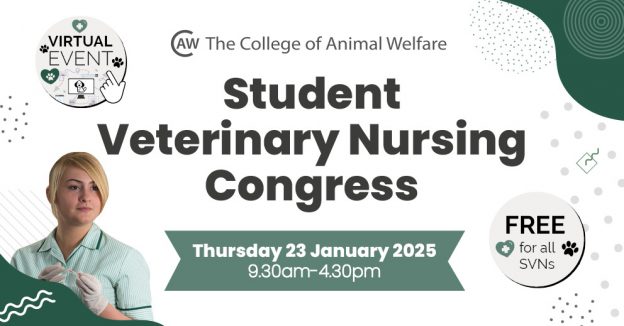
We’re pleased to announce that Student Veterinary Nursing Congress is back by popular demand, and will be taking place on Thursday 23 January 2025.

Student Veterinary Nursing (SVN) Congress is a free, virtual event specifically for veterinary nursing students. With its comprehensive programme, esteemed speakers, and the convenience of a virtual format, this congress provides an invaluable opportunity to advance your education, network with peers, and gain insights from leading industry professionals. Find out more and register for SVN Congress

5 lectures that support your veterinary nurse training

SVN Congress offers a well-rounded programme packed with informative sessions. From in-depth discussions on anaesthesia monitoring to care techniques for rabbits, the event covers a wide range of topics useful to student veterinary nurses. Highlights also include sessions focused on referral nursing, evidence-based practices, and self care when preparing for OSCEs. You can view the full programme on our website.

Learn from expert speakers

Student Veterinary Nursing Congress 2025 boasts a fantastic lineup of expert speakers, who have all made significant contributions to veterinary nursing. These industry professionals will share their insights and experiences, as well as take part in live Q&A sessions to allow students to gain clarity on topics and receive personalised advice and guidance. You can find out more about our speakers on our website.

Register now to avoid missing out

SVN Congress is free of charge and is open to anyone currently studying Veterinary Nursing on a diploma, degree, or apprenticeship programme, including students currently training with other providers.

This event has limited capacity and tickets are available on a first come first served basis, so we would recommend securing your spot ahead of time.

In order to book onto this event, you will need to request a booking link. If you wish to request a booking link, please email admin@caw.ac.uk using your student email address and tell us the name of your training provider. Once you have received your booking link from us, simply register for free on Eventbrite!

Find out more and register for SVN Congress

Looking to expand your veterinary nursing team? Grow your own veterinary nurse with The College of Animal Welfare

If you’re looking to expand your veterinary nursing team in an affordable way, have you considered taking on a student veterinary nurse?

There are student veterinary nurses looking for apprenticeship vacancies and unpaid work placements in practices across the UK. By supporting an SVN, you can gain an extra pair of hands at your practice whilst saving money on recruitment fees! Explore the recruitment options you could consider…

Recruit an apprentice with our Veterinary Nursing Apprenticeship Standard

Veterinary nursing apprenticeships have been around for some time and can help veterinary employers to expand and grow their team in a cost effective and practical way.

Delivered in the right way, they can create skilled, committed, and loyal veterinary nurses, who want to progress within your veterinary practice. What’s more – 95% of the training fees are covered by the government for small employers with digital accounts. If you choose CAW as your training provider, we can also help you recruit free of charge.

Download our Employer Guide to Veterinary Nursing Apprenticeships to learn more

Offer an unpaid placement to a student with our Practice Placement Scheme

We currently have diploma and degree level student veterinary nurses looking for unpaid work placements in veterinary practices across the UK.

There are no wages to pay, no course fees to pay and everything to gain; including the possibility of a fully qualified member of staff at the end of it all! And what’s more…

  • All work placements are unpaid!
  • You interview the student beforehand!
  • There’s no need for extra insurance!
  • Gain a keen and motivated student who can free up other staff members for more complex activities
  • Upon qualification you could even find that your student becomes your next loyal qualified RVN!

We offer practices who work with us free clinical supervisor training, an allocated IQA to support your practice and we can guide you through the TP approval process if applicable.

Explore our Practice Placement Scheme in more detail

Nutrition Congress

Dive into the world of animal nutrition at Nutrition Congress 2024

Save the date, as Nutrition Congress is back on Thursday 5 December 2024! Nutrition Congress is a must-attend virtual event for veterinary nurses looking advance their knowledge of animal nutrition and improve the nutritional advice they give to clients.

With our Early Bird discount available until 11 October 2024, now is the best time to book as you will save £60 on your ticket! Register now

Explore diets and nutritional requirements for companion animals and wildlife species

This years’ event features engaging sessions on feline obesity and wildlife nutrition, as well as insights on insect-based pet foods, nutrition for diabetic patients, and the microbiome. Download the agenda

Connect with virtual exhibitors and network with fellow veterinary nurses

During congress a range of industry organisations will be joining us virtually to showcase the fantastic products and services they have to offer. Exhibitors so far include Hills Pet Nutrition, Purina, Millpledge Veterinary, Vetlife, Pet Remedy and CAW Business School. Discover our exhibitors

Plan ahead and secure your spot at Nutrition Congress

If you register before Friday 11 October 2024, you’ll qualify for our Early Bird price of just £125+VAT, saving you £60! Book now and save £60

Roll-On Roll-Off – Frequently Asked Questions

What is Roll-on, Roll-off (RORO)?

The RORO study programme has been put in place for those students who are already employed in an approved training practice and ready to start studying the Level 3 Diploma in Veterinary Nursing (Companion Animal).

You can enrol at any time and, once enrolled with the Royal College of Veterinary Surgeons (RCVS) and the Awarding Body (VetSkill), can start pre-course learning and induction activities (VN Kickstart) and logging your practice hours before your classroom (virtual or in centre) lessons begin.

What does the VN Kickstart student area consist of?

The VN Kickstart student area focusses on initial learning and induction activities including course induction, preparing for study activities, Nursing Progress Log (NPL) guidance, health & safety, introduction to anatomy and physiology, and policies and responsibilities i.e. Code of Conduct, Fitness to Practise.

Once I’m enrolled with the RCVS and the Awarding Body, can I start completing practical skills activities linked to the Nursing Progress Log (NPL)?

Yes, this is one of the benefits of the RORO programme. It allows you to become accustomed to using the NPL and to potentially start claiming competency towards certain skills before starting the taught programme.

How will the taught element of the RORO programme work?

The theoretical programme is provided as day release with each unit delivered on a rolling basis. Progression from one unit to the next will be determined as and when specific achievement and progression targets are met. If you do not meet the specified targets then you will not progress onto the next unit, however this will provide opportunities for you to complete a programme re-study or focus on revision/further research in support of completion. Additionally, it will allow for focused completion of the NPL before then progressing onto the next steps. As a general rule, each unit block will be delivered on a quarterly basis.

Will there be any breaks between units?

Yes, there will be approximately three weeks of study breaks between each unit. This will allow you to continue focusing on NPL skills development and some initial preparation for the next unit alongside the opportunity to take a break.

Will there be the opportunity to complete practical skills development within centres?

Yes, practical skills development blocks will be available for you to access at the appropriate time to support your practical skills development with particular focus on preparation for the OSCEs. There will also be some sessions included within some of the units (included within scheme of work) and again, the focus will be on specific OSCE tasks.

What are the requirements for progression from one unit to the next?

You will be required to meet certain benchmarks (i.e. pass unit examinations) in order to progress from one unit to the next. These will be defined and explained within the student academic advising sessions during the first few weeks of teaching delivery.

Apply to start the Level 3 Diploma in Veterinary Nursing (Companion Animal)

Subscribe to receive updates about our veterinary nurse training

* indicates required
School of Veterinary Studies

Top-Up Degree for Registered Veterinary Nurses Undergoes Successful Revalidation

Middlesex University BSc Honours Veterinary Nurses at Graduation

The College of Animal Welfare’s BSc Honours Veterinary Nursing Top-Up Degree, delivered in partnership with Middlesex University, has recently undergone a successful revalidation process and is now open for applications to start in September 2024.

The robust revalidation involved a consultation with current, former and prospective students on planned changes to the BSc programme. Respondents were surveyed on all aspects of the course and invited to share their experiences of what worked well and where they saw opportunity for improvement. Feedback was used to enhance the structure and delivery of the degree, to ensure it continues to meet the needs of students and wider industry.

Now delivered entirely online, on a full-time or part-time basis, the newly revalidated programme offers the opportunity for diploma and foundation degree level Registered Veterinary Nurses (RVNs) to top up their qualification to a BSc Honours Veterinary Nursing degree. The programme aims to provide veterinary nurses with a variety of transferable skills which will enhance their veterinary career and continue their professional development.

Throughout the course, students will deepen their understanding of veterinary nursing practice, including the latest evidence-based research and techniques in the profession. A comprehensive curriculum will see veterinary nurses studying a wide range of topics, from surgical nursing to anaesthesia and critical care, ensuring a well-rounded skill set that can meet the demands of modern veterinary practice.

Applicants must hold a Level 3 qualification or Foundation degree in Veterinary Nursing and be registered with the RCVS as a Registered Veterinary Nurse (RVN), or hold internationally equivalent qualifications and registration. As part of the application process, applicants must also meet the Recognition of Prior Learning (RPL) requirements of the programme.

Dr Catherine Hemingway BVetMed CertAVP PGCDE MRCVS, BSc VN Top Up Programme Leader at The College of Animal Welfare, said: “We’re delighted to announce the successful revalidation of our top up degree programme, a vigorous approval process which allowed us to respond to important feedback and ensure our programme remains up-to-date and fit for purpose. This significant development reflects our ongoing commitment to offering a comprehensive educational experience to our students.”

Applications to study the BSc Honours Veterinary Nursing Top Up Degree are still open to start in September 2024. For more information about the programme visit www.caw.ac.uk/vn or contact the college on 01480 422060.

Does your child want to work with animals?

Man and woman with animals

Is your child passionate about animals and eager to pursue a career involving their care and wellbeing?

It’s natural to want to support your child’s aspirations, especially when they have a clear interest in something as rewarding as working with animals. After completing relevant training and work experience, there are numerous pathways they can take to turn their passion into a fulfilling career.

Here’s some more information to help you navigate the training options and roles available:

Career Options Working with Animals

With the right qualifications and experience, there are numerous career paths open to those who want to work with animals:

Does your child want to work with animals, but not sure what role they would like to work in?

If you’d like to learn more about the job roles available in the animal care and veterinary industries, you can explore our career profiles on our website, or join us for our next virtual Careers With Animals Day, where a range of organisations and industry professionals gather to deliver presentations on animal careers and answer questions.

Training options for careers working with animals

1. A-Levels and University

For those who have a specific academic career goal in mind, or are eager to experience the university life, pursuing A-Levels followed by a degree is a traditional and effective route to a career working with animals. Animal degree pathways include:

2. Vocational qualifications and apprenticeships

Vocational qualifications offer hands-on experience and are ideal for those who prefer practical learning, providing a strong foundation for those who wish to work with animals in businesses such as kennels and catteries, veterinary practices, animal day care centres, animal shelters and charities, stables and many more.

These qualifications often lead directly to employment or further specialised training.

3. Volunteer work and work experience placements

Gaining practical experience is invaluable for those aspiring to work with animals. Volunteering and work experience placements can provide hands-on experience and enhance their CV, as well as help meet the entry requirements for training programmes and get a foot in the door at a workplace who may offer paid opportunities in the future. Volunteering is also a great way of learning about different animal care roles if your child is not sure what path they wish to take.

Depending on what animals they’re interested in working with, you could look for volunteer work and work experience placements at veterinary practices, animal shelters, kennels, catteries, wildlife trusts, zoos, aquariums, farms and stables.

Next steps…

Supporting your child’s ambition to work with animals involves understanding the various educational pathways and career options available. Whether through traditional academic routes, vocational training, or hands-on experience, there are numerous ways to turn a passion for animals into a rewarding career. Encourage your child to explore different options, gain practical experience, and follow their passion with dedication and enthusiasm. With the right support and guidance, they can find a fulfilling career working with the animals they love.

If you would like to chat through training options and explore the different education pathways available, please don’t hesitate to contact our Client Advisor team by calling 01480 422060, emailing admin@caw.ac.uk, starting a live chat on our website or requesting a call back.

Subscribe to receive updates about career and training options working with animals

* indicates required
School of Animal and Environmental Studies

School of Veterinary Studies

Newsletters

General

Are you wild about exotics? Join us at Wildlife and Exotics Congress 2024

We’re delighted to be hosting out next virtual Wildlife and Exotics Congress on Wednesday 16 October 2024.

Join us virtually for 7 hours of specially curated CPD all about the care of wildlife and exotic species. Whether you are already a wildlife enthusiast looking to learn more, or you work in general practice and come across these patients but feel that you need a little more confidence to care for them to the best of your ability, this congress is for you.

What’s on at Wildlife and Exotics Congress 2024?

We have five excellent lectures planned, all about avian anaesthesia, the care of hedgehogs, rabbit nursing, monitoring anaesthesia in small furries and hibernation in tortoises.

  • Avian Anaesthesia – Keeping it safe
  • An introduction to monitoring anaesthesia in small furries
  • Hibernation: Let’s dispel myths and legends to face it safely
  • Nursing Care for Hedgehogs
  • What’s Up Doc? – Top Tips for Rabbit Patients

Download the agenda

Throughout the day, as well as listening to presentations, you will have the opportunity to interact with speakers through live Q&A sessions, network with other delegates and take part in a virtual exhibition.

During congress a range of industry organisations will be joining us virtually to showcase the fantastic products and services they have to offer. Exhibitors so far include Millpledge Veterinary, Vetlife, Pet Remedy, CAW Business School and Pinmoore Animal Laboratory Services Limited (PALS).

Find out more and book online