
VetSkill Level 3 Diploma in Veterinary Nursing – Equine Pathway
Start dates
January 2027
Location
Live Online lessons with 10 practical skills training days at Huntingdon.
Duration
30 months
Formats
Day Release (one day per week).
Why choose us?
 Ofsted rated GOOD providerMatrix Standard - Demonstrating the provision of quality Information, Advice and Guidance
 Royal College of Veterinary Surgeons Approved
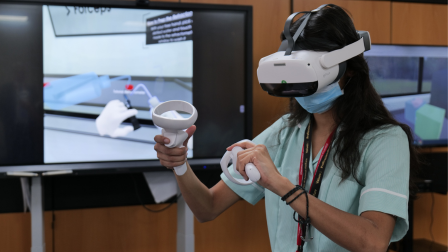 Free access to virtual reality
Overview
Completion of the VetSkill Level 3 Diploma in Veterinary Nursing (Equine) qualification will allow you to apply for professional registration as an equine Registered Veterinary Nurse (eRVN) with the Royal College of Veterinary Surgeons (RCVS).
As the largest provider of veterinary nurse training in the UK, you will join a community of like-minded students that are passionate about improving the welfare of animals, learning under the guidance of our enthusiastic and experienced lecturers.
The programme combines academic theory and practical training, alongside employment in an RCVS approved veterinary training practice, giving you the knowledge and hands-on skills to work confidently as a Registered Veterinary Nurse.
You will be loaned a free virtual reality headset for the duration of your programme to help you develop your clinical skills and prepare for your practical examination.
Course details
What will you study?
The qualification consists of a number of core units which cover the following subjects:
- Professional Equine Veterinary Nursing Responsibilities – Professional responsibilities of the student and registered veterinary nurse, including the RCVS Code of Conduct, health and safety in the veterinary practice and legal/ethical duties
- Diagnostic Principles – Key principles of imaging and laboratory techniques to support the veterinary surgeon in diagnosis; including microscopy, endoscopy, ultrasound and radiography
- Equine Veterinary Nursing Care Principles – Underpinning knowledge relating to the care of equine patients in a veterinary environment including anatomy, physiology, fluid therapy, pain assessment and preventative care
- Supply of Veterinary Medicines – Basic veterinary pharmacology and its application, including the prescription, storage and supply of medicines
- Practical Equine Veterinary Nursing Skills – Developing practical skills in RCVS approved Training Practices through the compilation of a portfolio of evidence
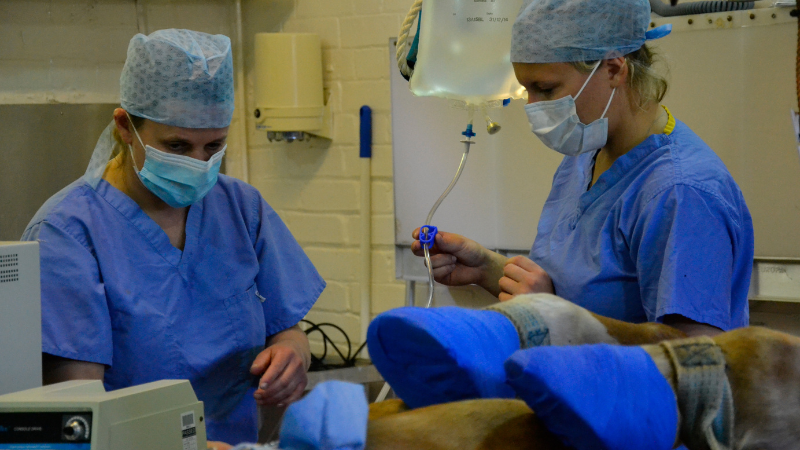
- Equine Anaesthesia – The principles of anaesthesia including the preparation for, and monitoring of, equine patients during anaesthesia and sedation
- Equine Theatre Nursing Skills – The principles of theatre practice including surgical instruments, assisting in theatre
- Life Stage and Medical Nursing Care and Support – How the patient’s life stage influences their individual needs. The patient’s response to disease and trauma, reproduction, nursing care of medical conditions, palliative care and euthanasia
- Surgical Nursing and Patient Care – Specialised knowledge in surgical nursing, including pre, peri and post-operative nursing from admission to discharge
How you study
Theory lessons – you will undertake you theory lessons for one day a week via our Live Online classroom. Our Live Online classroom offers real-time interactive lessons that allow you to engage with your tutors and peers. During online lectures you will take part in a diverse range of learning and assessment activities including live chat, group chat, breakout room activities, independent activities e.g. research, polls and Q&A sessions.
Online course materials - our Virtual Learning Environment (VLE) provides a wide range of learning resources including interactive online lessons, revision and study support materials, recordings of classroom lessons for you to rewatch, an extensive eLibrary, access to journal articles and career resources.
Practical skills training – you will attend our Huntingdon centre for practical skills training days, there are approximately 10 of these across the programme.
Tutor support – you will be allocated a personal tutor to provide 1:1 support and guidance and be a point of contact throughout your programme.
Virtual reality (VR) – You will be loaned a free virtual reality headset for the duration of your programme that will allow you to use our two exclusive software programmes. The OSCE preparation software will help you to prepare for your OSCEs (practical exams) by creating muscle memory and alleviating exam anxiety. You can practise the OSCE tasks that you may come across in your real exam, such as taking x rays, packaging samples and identifying parasites. Our anatomy software allows you to explore and learn body systems in details. We are the first veterinary nurse college to use virtual reality and we are very excited about the potential application of it.
Assessment
You will undertake a variety of assessments including online examinations, assignments, case studies and formal practical assessments. You will also complete an online Nursing Progress Log (NPL) over the course of your training, as evidence of practical competence. Final practical examinations (OSCEs) are undertaken on successful completion of all other assessments at the end of your programme.
Start dates
The next available start date is January 2027 (Mondays).
Entry requirements
Learners wishing to undertake this programme must be able to evidence capability in numeracy, literacy, science, and written English and mathematics; this typically includes GCSEs at grades 9 to 4 (or A* to C) including English, mathematics and a science subject, or equivalent qualifications. Examples of equivalent qualifications that may be acceptable are:
- Maths and English – Level 2 Functional Skills
- Science – City & Guilds Level 2 Diploma for Veterinary Care Assistants or VetSkill Level 2 Certificate in Veterinary Care Support
Students with Scottish qualifications would typically have National 5 or Higher/Advance Higher at level A, B or C in Maths, English and Science.
Before applying, please ensure you read the Royal College of Veterinary Surgeons (RCVS) Disability Guidance on the Recruitment of VN Students.
Age requirements
You must be employed in an equine or mixed (equine and small animal) veterinary training practice in England, be at least 16 years of age and have the full support of your employer.
International qualifications
You should have proof of competence in the English Language by holding either the ESOL qualification at levels C1 or C2 or IELTS at a minimum score of 6.0 (with a minimum of 5.5 in each element) where your international qualifications were not taught and assessed in English. You will also be required to have your foreign qualifications officially translated into English with a notarised stamp.
Please note, this programme is not available outside of the UK.
Fees and funding
Course Fee
£13,000
This can be paid in full before the course begins or via three annual payments (£5,200 at the start of the programme, £5,200 at the start of year 2 and £2,600 at the start of year 3).
Awarding Body Fees
All student or employers are required to pay the following awarding body fees in addition to the course fees. Please note that these are recharged at cost and may be subject to change.
- RCVS Registration: £228
- VetSkill Enrolment: £264
- Theory exam x 6 at £39 each: £234
- OSCE fee: £995
You can choose to sit your theory exams via remote invigilation (undertaking them at home or work, rather than in a college centre); there is an additional fee of £30 for this.
CAW Loans2Learn
Course fees must be paid in full before the course begins. If you are unable to do so, we offer a personal loan scheme (Loans2Learn) that can help you to spread the cost into manageable monthly payments over a period of up to five years, subject to eligibility. It can be used to fully, or partially, cover your course fee (but does not cover any awarding body fees, such as enrolment and examination fees which are payable on top). More information can be found here.
LOAN CALCULATOR
 The current rate of interest for a CAW Loans2Learn is 9%. Click on the calculator icon to calculate your monthly repayment options based on different repayment term lengths.
General Advice
Sources of financial help can be found on our student finance page. Before making any financial decision it is recommended that you seek advice from an independent source, for example the Money Advice Service.
If you have not achieved your qualification by the planned end date detailed in your individual learning plan, continued support and course access is available by paying monthly direct debit payments, or applying for a supplementary or increased loan, until certification is achieved.
These are current figures and may be subject to change. The differences in course fees reflect the level of funding that is available as a result of government policies and priorities. These may be as a result of age, employment status, previous education achievements, or location for example, and are outside the control of The College of Animal Welfare.
Your future
On completion of the Level 3 Diploma in Equine Veterinary Nursing and the required number of hours of veterinary nursing training, you will be eligible to apply to join the Royal College of Veterinary Surgeons’ (RCVS) Register of Veterinary Nurses and use the post nominal term, RVN. Entry on the register allows you to legally practise as a veterinary nurse under the direction of a veterinary surgeon.
courses
Course highlights / facilities
 Live Online Lessons
FREE loan of a VR headset
Live Online Lessons
FREE loan of a VR headset
 Practical skills training
 Access to our extensive eLibrary
Course gallery
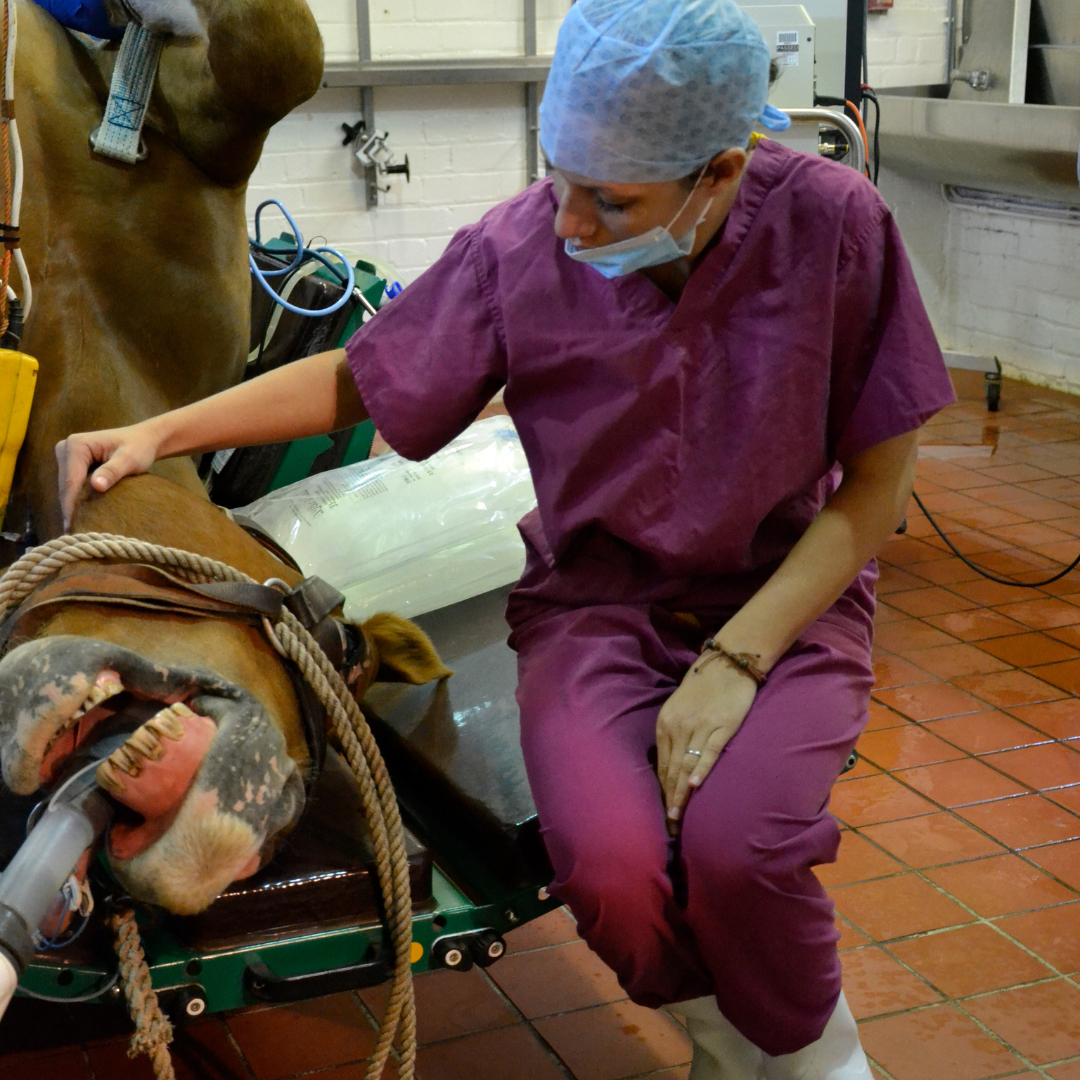
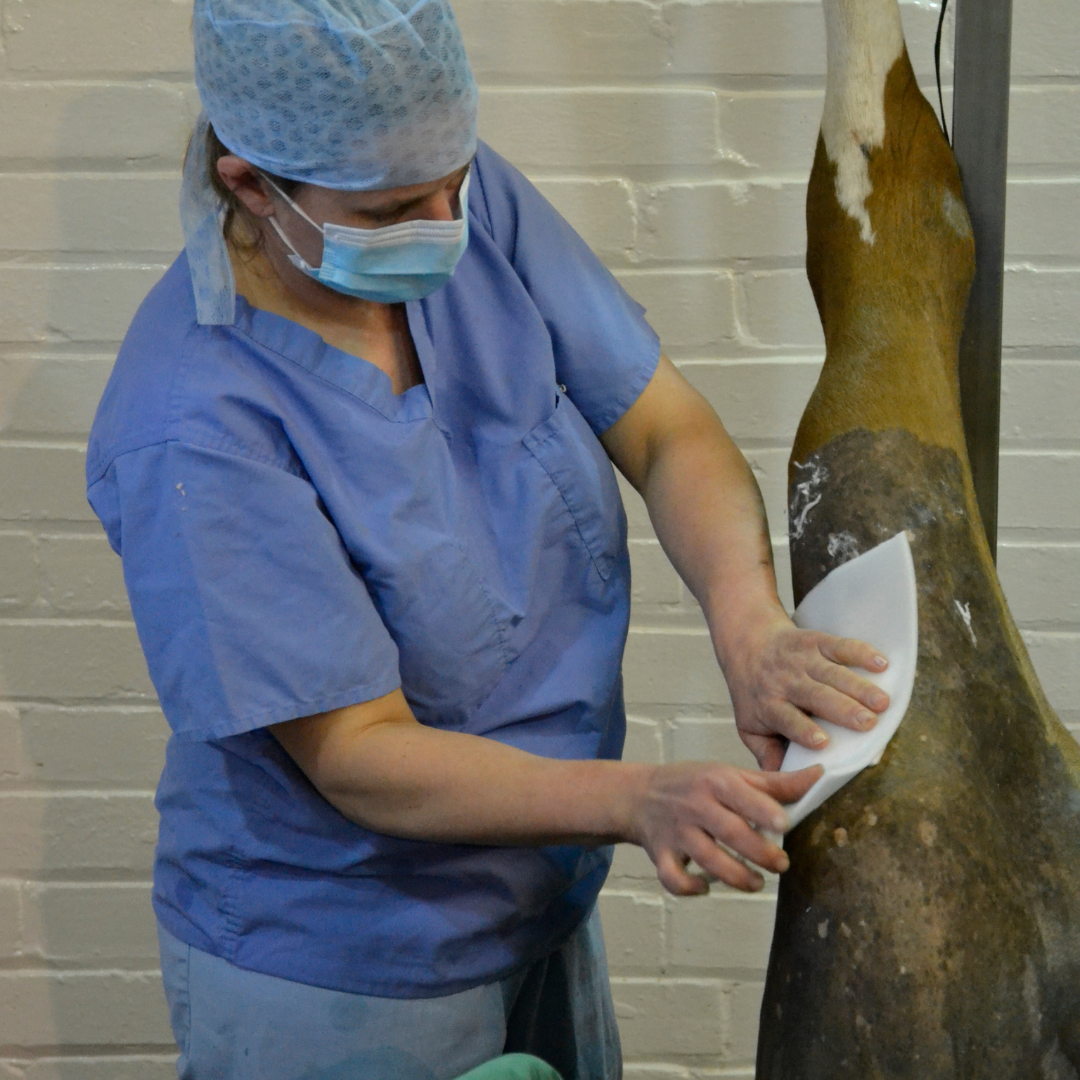
Frequently asked questions
Do I need to be employed in a veterinary practice to start this course?
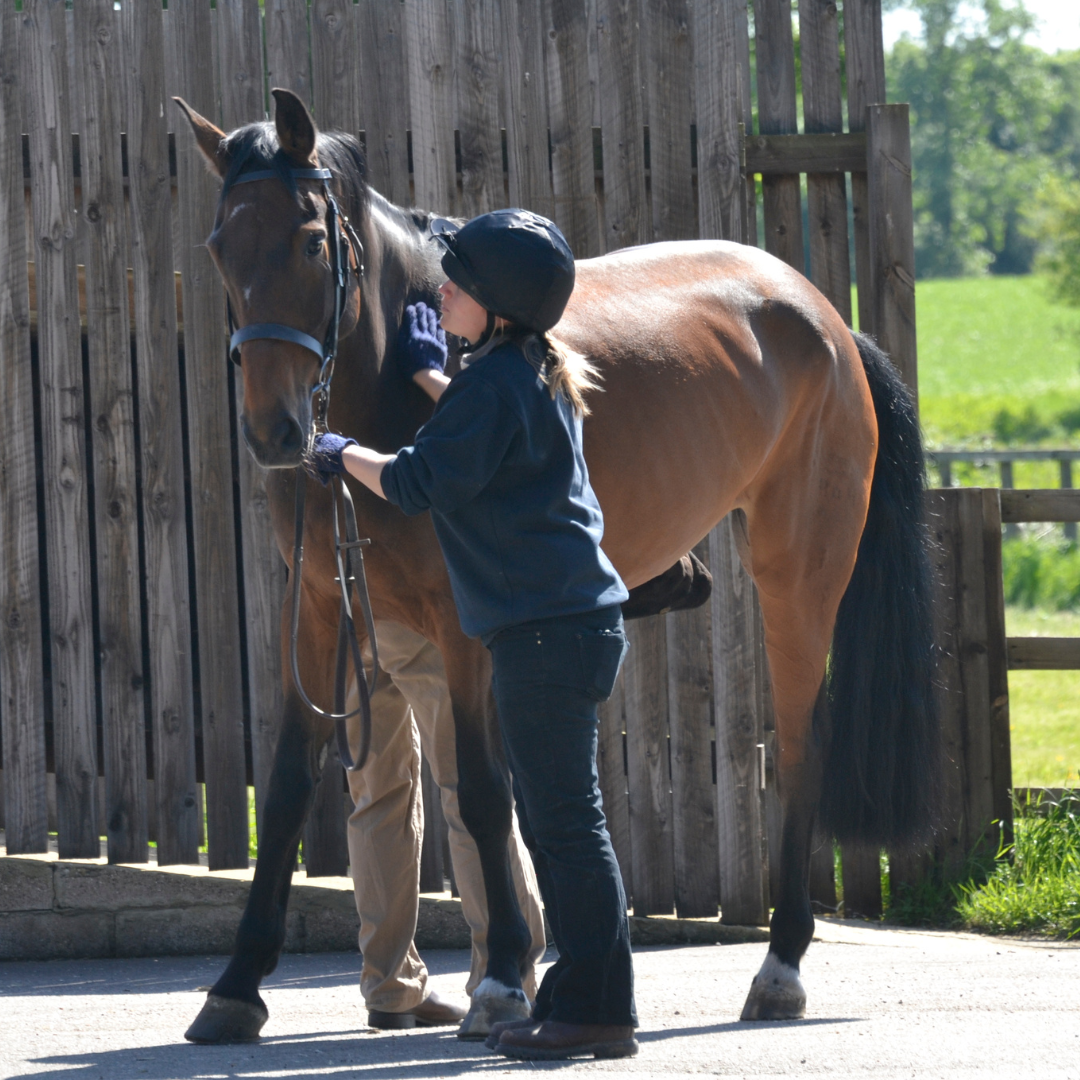
Yes you will need to be employed in either an equine, or mixed (equine and companion animal), practice and have the full support of your employer.
If I complete this qualification, will I be a registered veterinary nurse?
Yes, successful completion of this qualification, along with at least 1,800 hours of employment or work placement in an RCVS approved veterinary training practice, will allow you to apply to join the Royal College of Veterinary Surgeons’ (RCVS) Register of Veterinary Nurses as an Equine Veterinary Nurse.
I am employed in an equine veterinary practice but it is not a TP, can I still apply?
No, unfortunately the veterinary practice you are working in must be an RCVS approved Training Practice (TP/aTP). However, we offer a full Training Practice approval service so we can work with your practice to help them become a TP/aTP if they wish to become one.
How do I find a paid job as a student veterinary nurse?
- Get a foot in the door – many people secure a student veterinary nurse position as they are known to the practice. This could be via work experience, or a change of role from a veterinary receptionist or care assistant, for example.
- Online jobs boards – Keep an eye out on job boards such as the CAW jobs board, Vet Times Jobs, National Apprenticeship Service or more generic ones such as Indeed. The College of Animal Welfare also has an Apprenticeship Vacancy page where you can sign up for new apprenticeship job alerts.
- Contact veterinary practices directly – Introduce yourself, leave your CV and show them how much you would really like an opportunity to train. You can use it as an opportunity to try to gain some work experience too.
I don’t have level 2 English or Maths qualification, can I do them alongside the qualification?
Level 2 English and Maths are required to enrol with the RCVS as a student veterinary nurse so unfortunately you will need to have these before you begin the course. We do run online Functional Skills Maths and English courses that take around six months to complete.
Ready to enrol?
Create an account and start your application today.