
At The College of Animal Welfare, we are always proud to celebrate students who are making a real difference within the veterinary profession alongside their studies.
Kate MacKenzie, a second-year Student Veterinary Nurse (SVN) studying with CAW and working at Highgate Vets in Cumbria, has led sustainability initiatives across two veterinary practice sites through the Positive Pawprint scheme.
In this article, Kate shares her experience of helping her practice achieve Positive Pawprint Partner status and offers practical ideas that veterinary teams can implement to become more sustainable.
Positive Pawprint and Practice Sustainability
Positive Pawprint is an optional initiative through Inspiring Vet Care which aims to help make the Veterinary industry more eco-focused and sustainable. It provides practices with a toolkit centred around sustainability in three key areas: People, Patients and Planet.
Our people are at the centre of our work, so we want to ensure we look after them and make our practice a great place to work. Our patients deserve the highest standard of care delivered using the latest evidence-based approaches. It goes without saying that our planet is the most precious resource of all, and we must do all we can to preserve it for future generations.
I am proud to say that in February 2025, both our sites achieved Positive Pawprint partner status; one of around one hundred Inspiring Vet Care practices to do so.
As someone who has worked hard to bring our sites to compliance, I wanted to share with you some simple changes our practice implemented to become more responsible.
People
Sustainability for our teams means looking after each other, providing support, and ensuring we foster positive, inspiring environments to work in.
Some of the initiatives we introduced include:
- Providing training for some team members to become Wellbeing Champions or Mental Health First Aiders, ensuring colleagues have access to confidential support and signposting when needed.
- Organising regular informal team meetings, lunch break drop-ins, and break-room activities to build friendships and improve wellbeing. Popular choices included mandala colouring and simple crochet projects.
- Arranging social events outside of work at least every three months so the team can bond outside of the clinic environment.
- Building strong community links with local schools, rescues, and charities, bringing a sense of purpose and pride to the team.
Planet
Environmental sustainability is easier to improve than you may think. Simple steps can improve your carbon footprint and positively impact the environment around you.
Some of the changes we introduced include:
- Enhancing biodiversity around our practice by creating wildlife-friendly spaces with bird feeders, bug hotels and floral hanging baskets. These not only support local wildlife but also contribute positively to staff wellbeing.
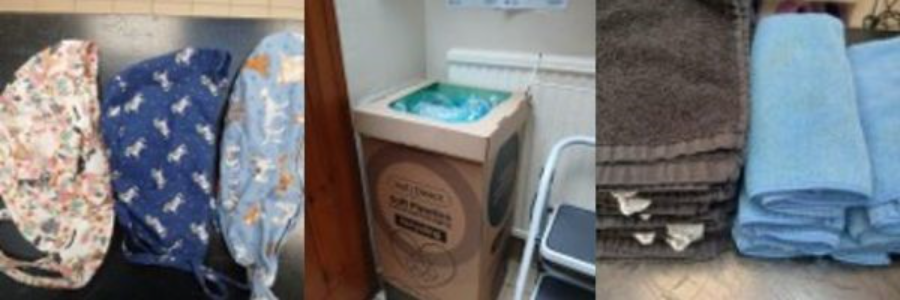
- Replacing several single-use products with reusable alternatives. For example, we use washable scrub hats, reusable eco-gowns and Fur-Magic hair removers instead of disposable lint rollers. We also produce our own distilled water for autoclave use.
- I sourced and introduced washable cloths and handtowels specifically for use within consult rooms, prep areas, and toilets to massively reduce our use of disposable tissue. They are changed twice daily at a minimum and there are enough that a load can be washed at 60 degrees every 3 weeks or so. Tissue is still used for the really gross stuff!
- Reviewing our laundry procedures and reducing standard wash temperatures where appropriate. General bedding is washed on a shorter 40°C cycle, while heavily soiled items are separated and washed at higher temperatures when required.
- I researched and sourced more eco-friendly alternatives to common detergents and cleaning supplies; some are particularly eco-toxic! Suppliers such as IMS have an eco-range of products available to order from.
- Expanding recycling facilities throughout the practice to include blister packs, soft plastics and clean PPE. We also recycle batteries, dental supplies and printing consumables through specialist schemes.
- I reduced the brightness of all practice monitors. Reducing the level from 100% to 70% can reduce energy consumption by around 20%. Staff have also reported that this has also been kinder on their eyes!
- Providing regular refresher training on low-flow anaesthesia techniques to help reduce the use of volatile anaesthetic gases, benefiting both the environment and our patients.
Patients
Providing sustainable patient care also means ensuring clinical decisions are evidence-based, effective and focused on quality improvement.
Some of the ways we support this include:
- Holding ‘blame free’ sessions to discuss cases and improvements to practice standard operating procedures after any significant events, incidents, or complaints.
- Appointing dedicated Infection Prevention and Control and Antimicrobial Stewardship leads and perform regular monitoring and audits of all areas of practice.
- Flagging protected antimicrobials within our dispensary and practice management systems to encourage consideration of more appropriate alternatives before use.
- Providing separate species-specific waiting and kennelling areas to help reduce stress for patients during their visit.
- Proactively carrying out faecal screening on wildlife patients undergoing rehabilitation before administering anthelmintic treatments.
- Regularly reviewing care frameworks for common conditions to promote consistency and high standards of patient care across the team.
- Encouraging quality improvement projects from all members of the practice team, from support staff through to clinical teams, helping ensure patients receive the most up-to-date and effective care possible.
Looking ahead
Thank you for taking the time to consider how you can help make your practice a more sustainable provider, helping to reduce the carbon footprint of the Veterinary industry and preserve our planet and its resources for our future generations.
If you work for an Inspiring Vet Care practice and want to know more about the Positive Pawprint scheme, you can go to the sustainability hub on the Intranet to find more details and start an application.
Further information about environmental sustainability in the Veterinary industry can be found via the Vet Sustain website.
Thank you to Kate for sharing her experience and practical advice. Kate’s work demonstrates how small, achievable improvements can make a meaningful difference for people, patients, and the planet, while helping create a more sustainable future for veterinary care.