
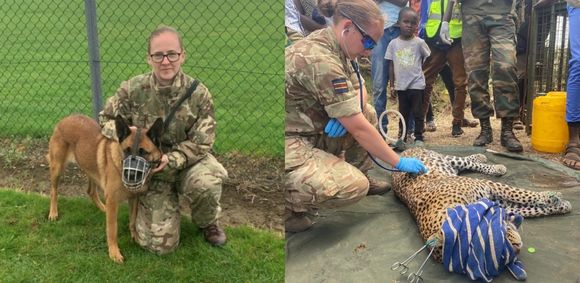
Exploring the wide range of roles available to Registered Veterinary Nurses (RVNs) can open doors to exciting and unexpected career paths. While many nurses remain in clinical practice, others discover opportunities that take their skills far beyond the traditional veterinary setting.
Read on as, Corporal Jemima Riley, Hospital Manager, Veterinary Training Squadron, Defence Animal Training Regiment, shares a first-hand account as an RVN who has built a rewarding and diverse career within the British Army, a role that showcases just how varied and fulfilling life as a veterinary professional can be.
“Back in 2018, when I qualified as an RVN, I wasn’t sure where I envisioned my nursing career going.”
If you’d asked me then where I thought I’d be in five-to-ten years, I might have said I’d still be at the first opinion practice where I did my training during my diploma, or maybe, I would have moved on to work at a referral centre. In July of 2020, I stepped through the doors at the Army Training Centre in Pirbright and began my military journey.
Over the next five months, I completed Phase One (where I learnt to be a soldier) and Phase Two (where I learnt to handle a Military Working Dog (MWD) and completed an induction into how veterinary care works in the military. From there, I was posted to 1st Military Working Dog Regiment (1MWD Regt) and spent four years there looking after MWDs, before moving across to the Defence Animal Training Regiment (DATR) last year, where I cover both MWDs and Military Working Horses (MWH).
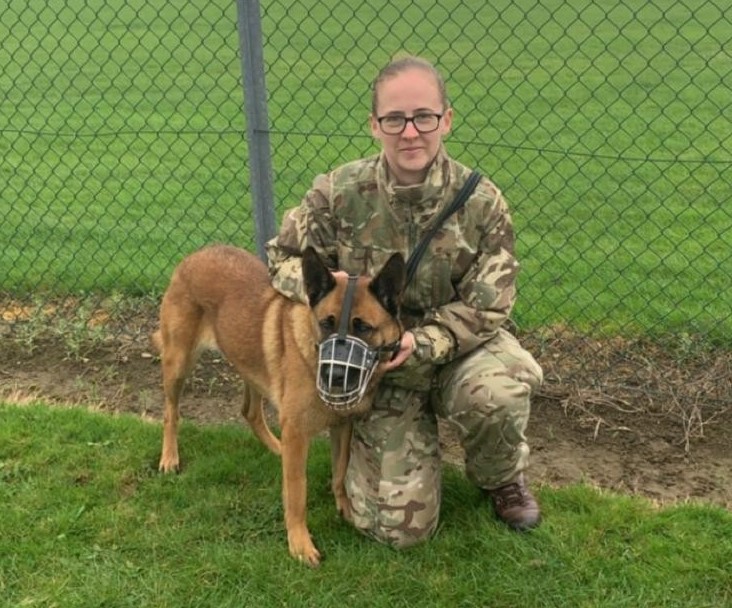
Working out of the veterinary clinic, the day-to-day job involves keeping the MWDs and MWHs up to date with all their preventative veterinary care and dealing with any illness or injuries that arise. The job is to make sure all the military working animals (MWAs) are fit for their role, whether this be an MWH returning to London for the ceremonial season, or a MWD deploying on exercise for months at a time. Sometimes it’s a quick fix, sometimes they need referring to specialists and other times, if they can’t return to work, we rehome them to a cosy sofa or field.
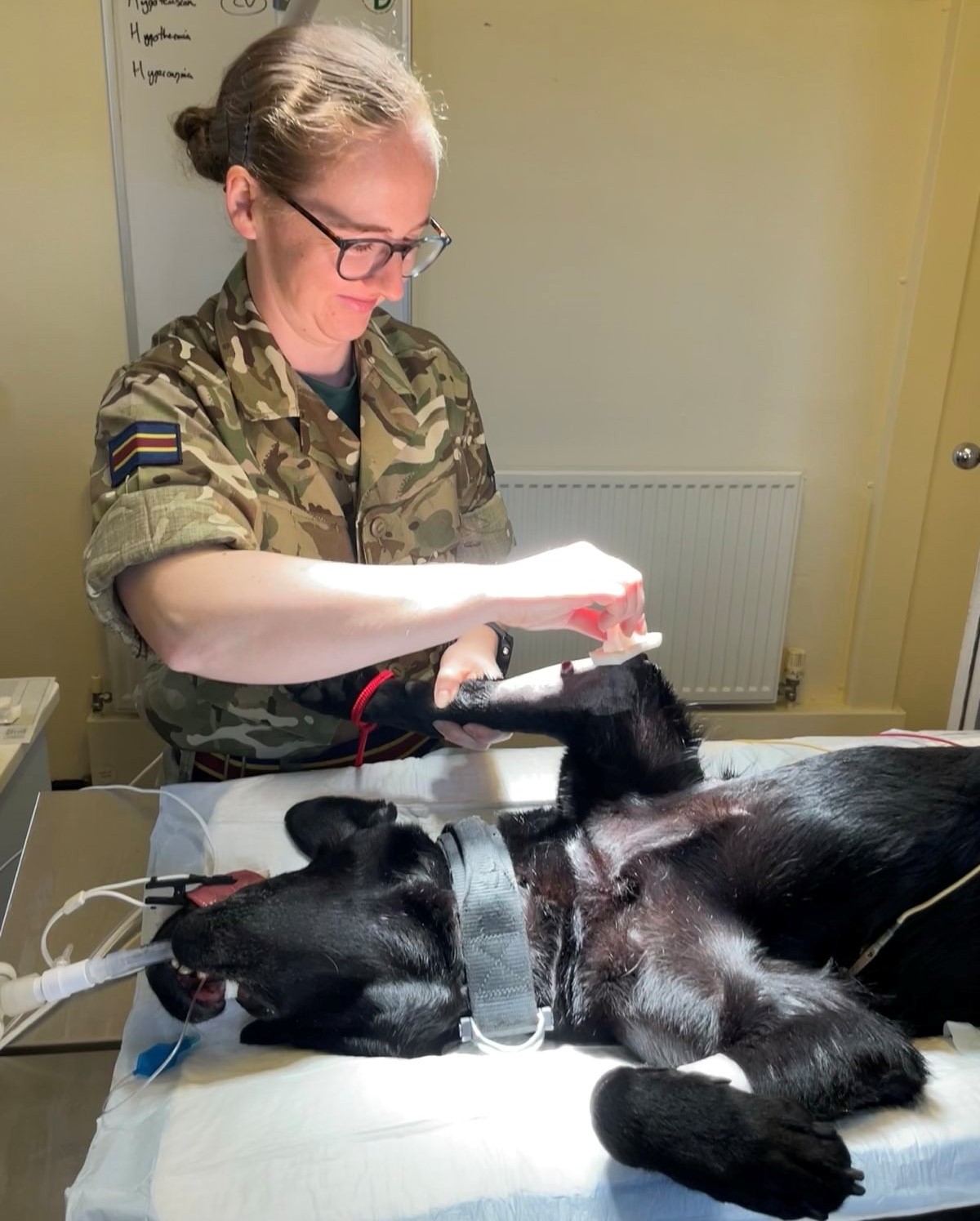
Around the clinical work, we’re expected to keep our fitness up with regular physical training sessions. We also have annual requirements to maintain our physical skills (e.g. first aid and navigation) and knowledge (e.g. Heat illness and fire safety).
“While I’ve been in the army, I’ve been lucky enough to visit The Netherlands, Greece, Cyprus, and Kenya.”
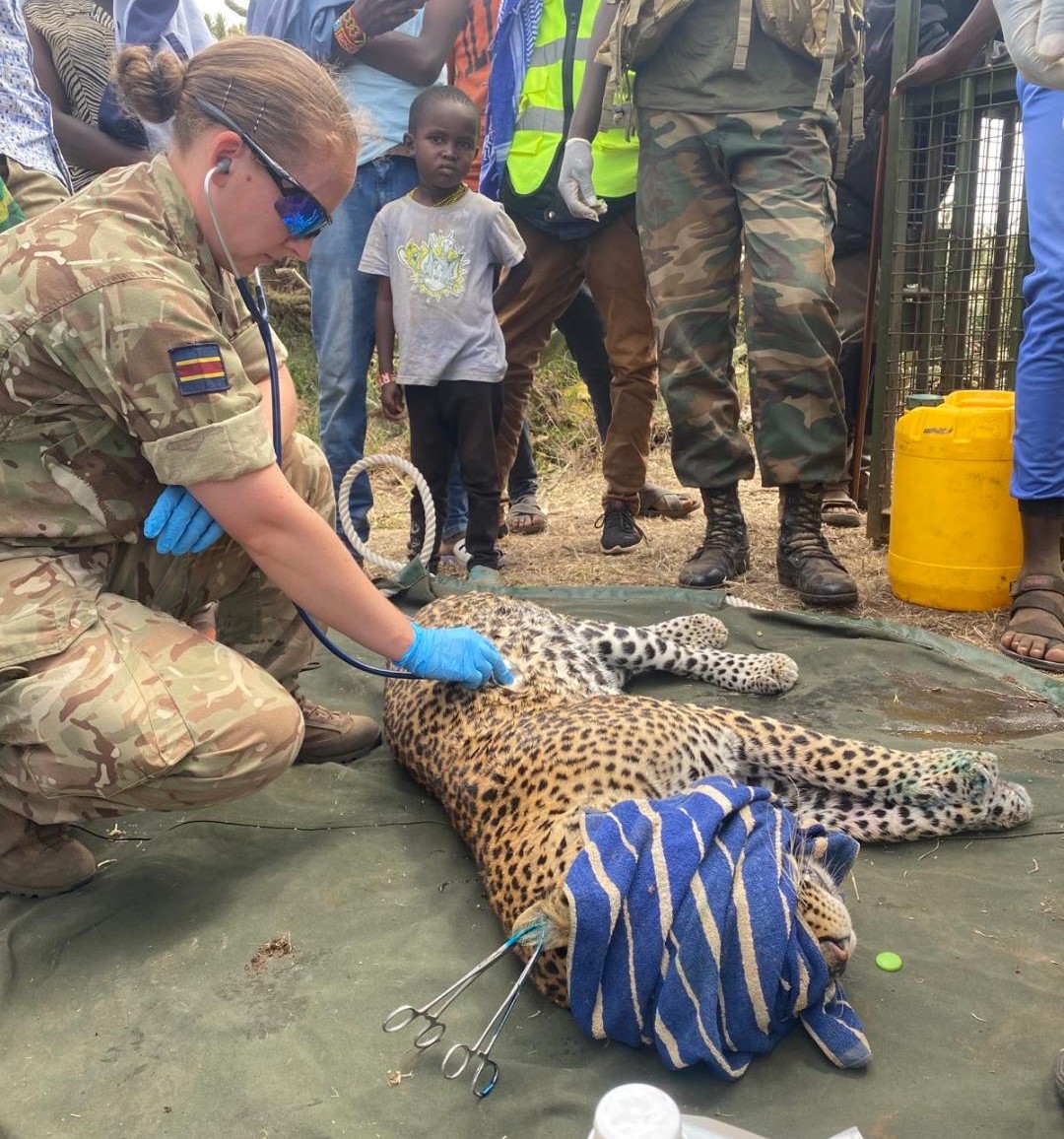
My visits to Holland were to help with veterinary assessments during MWD procurement, while my trip to Greece was for a battlefield study, learning about the impact of the Battle of Crete during the Second World War. As the military has dogs posted out in Cyprus, we have a Veterinary Officer and Veterinary Nurse based out there and I’ve provided cover on multiple occasions (and hope to post out there in the future). The month I spent in Kenya was to provide veterinary cover for the MWDs on exercise out there, alongside some community engagement work with local vets and the Kenyan Wildlife Services. That trip was particularly memorable, as I was able to get up close with unusual patients such as a bongo (type of antelope), a leopard, and a rhino.
As part of annual Adventure Training entitlement some of my colleagues have been away on trips sailing, skiing, and mountain biking. Others actively take part training and competing in various sports, such as rugby, cross country, and horse riding. Opportunities to get involved in sports and adventure training come up frequently – both in the UK and abroad. A fellow vet nurse managed to secure a place on a hockey tour in South Africa and had a great time!
In terms of career development, we get a CPD budget and can also apply for funding for additional courses on top of that. Whilst I’ve been in the army, I’ve completed my SQP (both companion and equine modules), completed a radiation protection supervisor course, completed a certificate in Emergency and Critical Care, attended BVNA Congress and BVA live, and gone on a Schedule Three Surgery course. We also hold our own in-house vet nurse study period every-other-year, alongside lunch and learns, meaning it’s easy to get our CPD hours achieved each year.
“Looking forward, I’ll be at the DATR for a couple more years, after which I’ll either return to 1MWD Regt, move down to London or, if I’m lucky, get posted out to Cyprus.”
The Army does give you some say in where you’d prefer to go, though sometimes it’s a case of you go where the need is, with some jobs being higher priority than others, while others are rank dependent. Continuing to promote will mean the job role changing from more clinically based to managerial, which will help if I want to look at applying for head nurse or practice manager positions in the future, once my military career is over.
While this is not the career I had envisioned for myself when I qualified, it is one I’ve enjoyed for nearly six years. I’ll admit I miss working with cats and I’m still learning my way around a horse (I had no equine background, in or outside of the veterinary environment, before joining) but we do really get to know the MWDs and MWHs we treat, as we focus on a relatively small pool of animals compared to a regular veterinary practice.
“Working in the army has given me multiple opportunities that I would not have had working in a civilian practice.”
With thanks to Jemima for sharing her inspiring journey highlighting how a veterinary nursing qualification can lead to a truly unique and varied career. Whether providing clinical care to Military Working Animals, travelling the world, or developing professionally through a wide range of training opportunities, the role demonstrates just how far an RVN skillset can go.
For anyone considering their next steps or looking for a fresh challenge within the profession, the British Army offers an example of how stepping outside the traditional practice environment can lead to remarkable experiences and long-term career growth.