
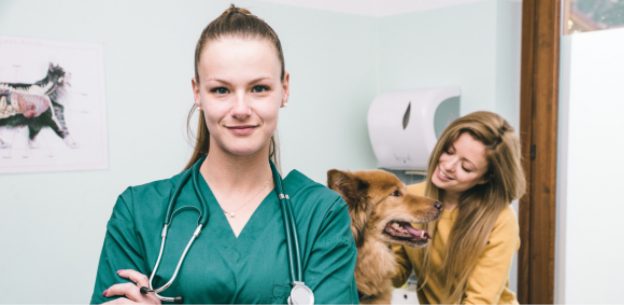
As veterinary professionals, it’s easy to forget just how overwhelming a clinical environment can feel for pet owners. When emotions are high and unfamiliar terminology is flying around, many clients leave the consult room feeling confused, anxious, or unsure about what they’ve just agreed to.
That’s why one of the most valuable roles a Registered Veterinary Nurse (RVN) plays is that of translator. RVNs are uniquely skilled at turning medical language into friendly, accessible explanations that empower clients to make informed decisions about their pet’s care.
Here are practical ways you, as an RVN, can help bridge that understanding gap and make veterinary medicine feel less intimidating for the people behind your patients.
1. Break complex terms into everyday language
Clients don’t need to know the Latin name or pathophysiology of a condition, they just need to understand what it means for their pet.
Instead of saying:
“Your cat has gingivitis and periodontal inflammation.”
Try:
“Your cat’s gums are inflamed, which can be uncomfortable and may lead to dental disease if left untreated.”
By simplifying terminology, you make the information easier to process and more meaningful.
2. Check for understanding, not just agreement
Clients often nod along even when they feel lost. Creating space for clarification makes a huge difference. Try using phrases such as:
- “Would it be helpful if I explained that another way?”
- “What part of the plan would you like us to go over again?”
- “How confident do you feel about doing this at home?”
These questions invite honesty and reassure clients that it’s okay not to understand things the first time.
3. Use analogies to make medical concepts relatable
Analogies turn clinical conditions into something clients can clearly visualise. For example:
- Kidney disease → “like a filter slowly clogging over time.”
- Diabetes → “a bit like the body’s sugar thermostat not working properly.”
- Osteoarthritis → “similar to human joint stiffness as we age.”
Analogies are particularly helpful during nurse consults where lifestyle adjustments or long-term treatment plans need client buy-in.
4. Reinforce the veterinary surgeon’s instructions in a calm, supportive way
After the vet delivers the diagnosis and plan, you often become the reassurance and clarity clients need. Ways to strengthen understanding include:
- Summarising the plan
- Demonstrating medication or home-care techniques
- Providing written or verbal step-by-step instructions
- Clarifying timelines and expected outcomes
- Answering follow-up questions in plain language
Your guidance helps clients leave the practice feeling capable rather than overwhelmed.
5. Reduce the fear factor through empathy and reassurance
Clients may fear procedures, misunderstandings, or the severity of their pet’s condition. A warm, approachable explanation can dramatically reduce that anxiety.
You can help by normalising their concerns, acknowledging their emotions, keeping your tone calm and steady, giving practical advice on what to expect next, and breaking advice into manageable steps. When clients feel heard and supported, their confidence and compliance improve.
The value of strong communication skills in modern veterinary nursing
As RVNs lead more clinics, deliver more client education, and take on greater clinical responsibility, strong communication skills have become essential to the role. Being able to translate medical information in a clear, compassionate way directly improves outcomes for both pets and their owners.
Extra training – VetSkill Level 5 Advanced Diploma in Veterinary Nursing Practice Nurse
Advanced veterinary nursing programmes such as the VetSkill Level 5 Advanced Diploma in Veterinary Nursing Practice Nurse help build these deeper consultation and communication skills. This training supports RVNs in running their own nurse-led clinics and offering higher-level advice with confidence.
Explore the VetSkill Level 5 Advanced Diploma in Veterinary Nursing Practice Nurse
Veterinary nurses are the bridge between clinical expertise and client understanding. By translating veterinary jargon, simplifying complex information, and offering reassurance at every step, RVNs ensure that clients feel supported, informed, and involved in their pet’s care.